

These unusual signs indicate that your tires need replacing immediately.
Car owners should check their tires regularly and replace them immediately if they notice any abnormalities.
Tires are one of the most important components in a car's design, making direct contact with the road and supporting the entire weight of the vehicle. Tires directly affect vehicle operation, assisting with braking, traction, steering, and more.
Due to their direct contact and friction with the road surface, these parts wear out and get damaged quickly. Even if you own a luxury car with advanced technology, if your tires are worn, all the technology becomes meaningless and poses several dangers when driving.
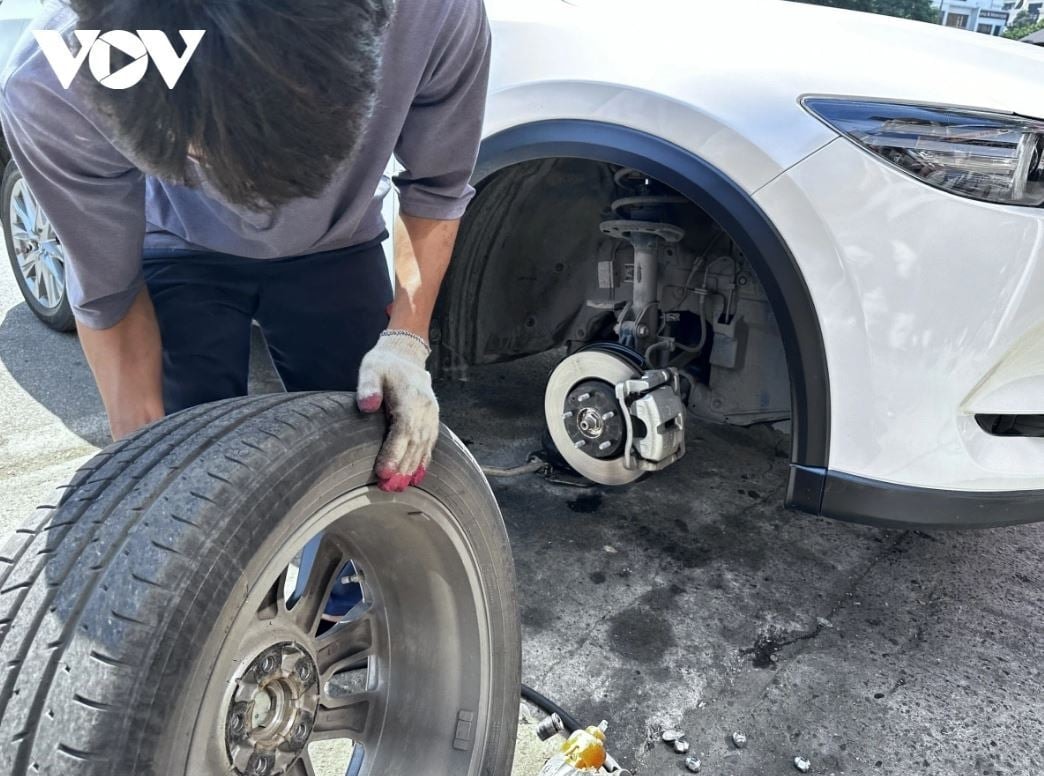
According to car manufacturers' recommendations, users should replace tires after approximately 60,000–100,000 km. However, this limit can vary depending on the type of tire, usage conditions, and driving habits; some car tires allow users to travel up to 130,000 km, while others only allow 50,000 km. Once this limit is reached, owners need to replace their tires to improve vehicle performance. The following signs can help you recognize when you need to replace your tires.
1. Check the tire treads.
Tire treads play a crucial role in traction, especially during sudden braking or when driving on slippery surfaces. If the tread depth is worn down and no longer meets the minimum safety requirements, the tire will be at risk.
All modern tires have a tire wear indicator. If the tread depth is less than 1.6 mm or the wear indicator lines are visible, you should consider replacing your tires to ensure safety while driving, especially on long journeys.
2. Observe for signs of wear, cracks, or tears in the tires.
Cracks, tears, or bulges on the tires are signs of serious tire damage. If you see one tire worn more than the other, or uneven wear between the front and rear tires, it's likely the vehicle is experiencing problems such as wheel misalignment, uneven tire pressure, and a damaged suspension system.
According to Mr. Nguyen Xuan Huu, owner of Minh Ngoc tire garage (Cau Giay, Hanoi), driving on the road with worn tires will result in poor traction, posing a danger to drivers in emergency situations, especially on slippery surfaces or in the rain. When the tire treads are no longer deep enough for proper operation, water cannot drain quickly, causing "hydroplaning." This situation is very dangerous, causing the vehicle to lose control and potentially leading to unfortunate accidents.
In addition, worn tires are more prone to punctures or blowouts, especially at high speeds. Drivers should be aware of this issue and replace their tires promptly.
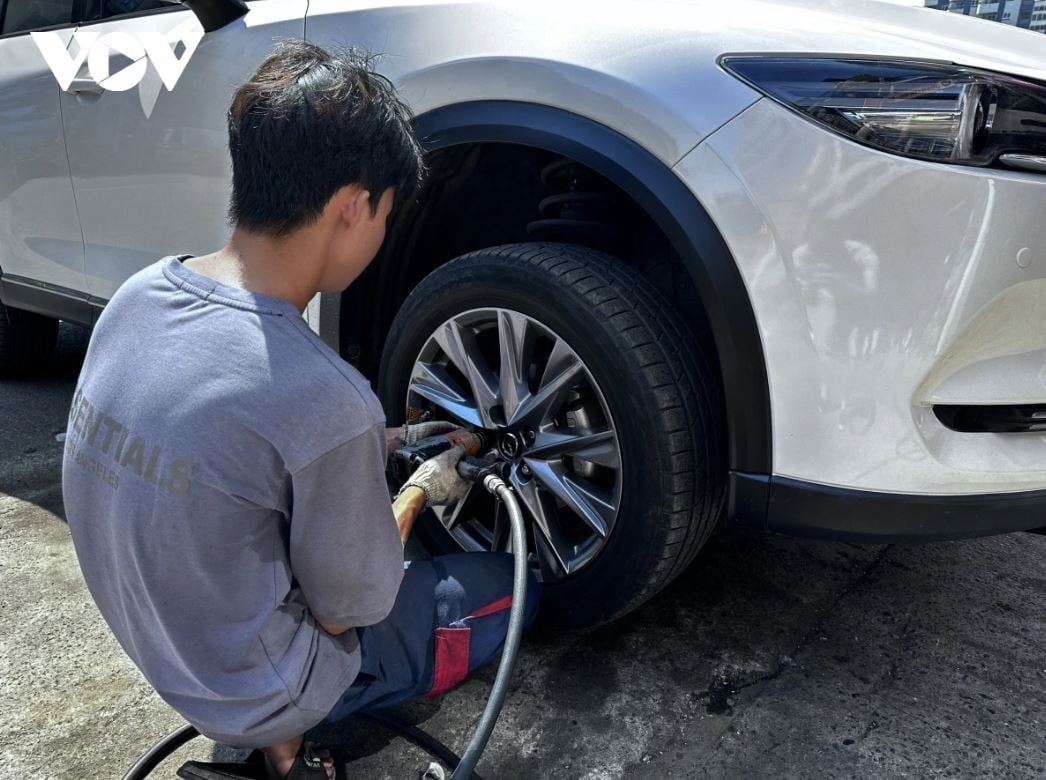
3. Tires are unbalanced, have lost pressure, or are showing signs of aging.
Mr. Huu also noted that car owners should be aware that if they notice noise or vibrations while driving, the car doesn't run smoothly, or is difficult to control, these are signs that the tires may be unbalanced; if the tires frequently lose pressure even after being fully inflated, the tires may be punctured or damaged.
For tires that are cracked, abnormally bulging, have hairline cracks, or where the tire cords are sticking out, these are signs that the tires have aged.
4. Tires that are punctured, have multiple cuts, or have many nails stuck in them.
When driving on the road, it's inevitable that sharp objects or gravel will puncture and cut the tires. Additionally, the sidewall of the tire bears a lot of pressure as the entire weight of the vehicle presses down on the road surface and air is pushed to the sides. If a collision occurs, the sidewall will be punctured and a cut will appear. In this case, the driver should quickly repair or replace the tire to ensure safety while driving.
Currently, the problem of "nail attacks" is still widespread, so getting a nail in your tire is unavoidable when traveling on roads, especially highways. When this happens, car owners should not attempt to remove the nail from the tire themselves. This will cause a sudden drop in tire pressure, making the vehicle difficult to move and posing many dangers. Car owners should take their vehicle to the nearest auto repair shop for tire repair or replacement. If the auto repair shop is far away or closed, they should use the spare tire as a replacement.
5. The recommended lifespan of tires as stated by the manufacturer.
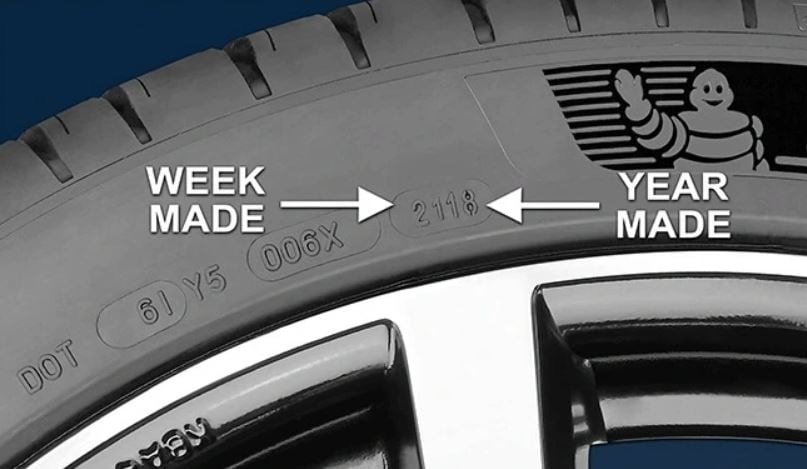
Even if the tires don't show obvious signs of wear, users should still consider the manufacturer's recommended lifespan, as this greatly affects safety. Typically, the lifespan of a tire is calculated from the time it's installed on the vehicle, ranging from 6 to 8 years. Vehicle owners can check the tire's manufacturing year, also known as the "tire date," located near the rim. It's recommended to check the tire's durability after each year of use, as it depends on the types of roads driven and the amount of external impact the tire is subjected to.
Car owners can check the year of manufacture by looking at the last four digits printed on the tire sidewall. For example, 3022 means the tire was manufactured in the 30th week of 2022. Or 4512 (as shown in the image below) means the tire was manufactured in the 21st week of 2018.
"If the tires are still in good condition after 5 years, the owner can keep and continue using them. When the tire's lifespan reaches 8 years, the owner should replace it. This applies to the spare tire as well. If you observe the above characteristics and suspect that the tires have exceeded their lifespan, do not hesitate to replace them before any unfortunate situations occur."- Mr. Huu advised.