

With prices plummeting, farmers in Nghe An province are hoarding rice, waiting for prices to rise.
In the Spring of 2025, farmers in Nghe An province enjoyed a successful rice harvest in terms of yield, but the sharp drop in rice prices left them unhappy after the harvest. While other localities are busy preparing for the Summer-Autumn crop, many households are still unsure how to cope with their recently harvested rice amidst plummeting prices...
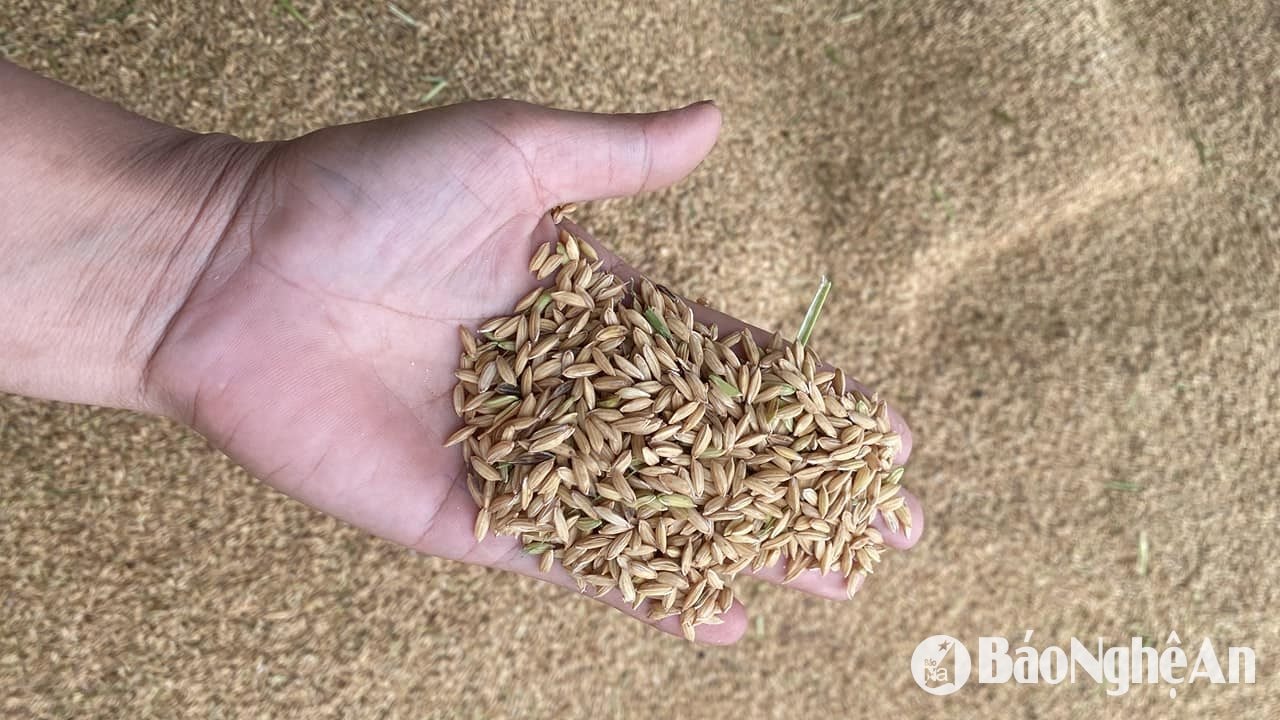
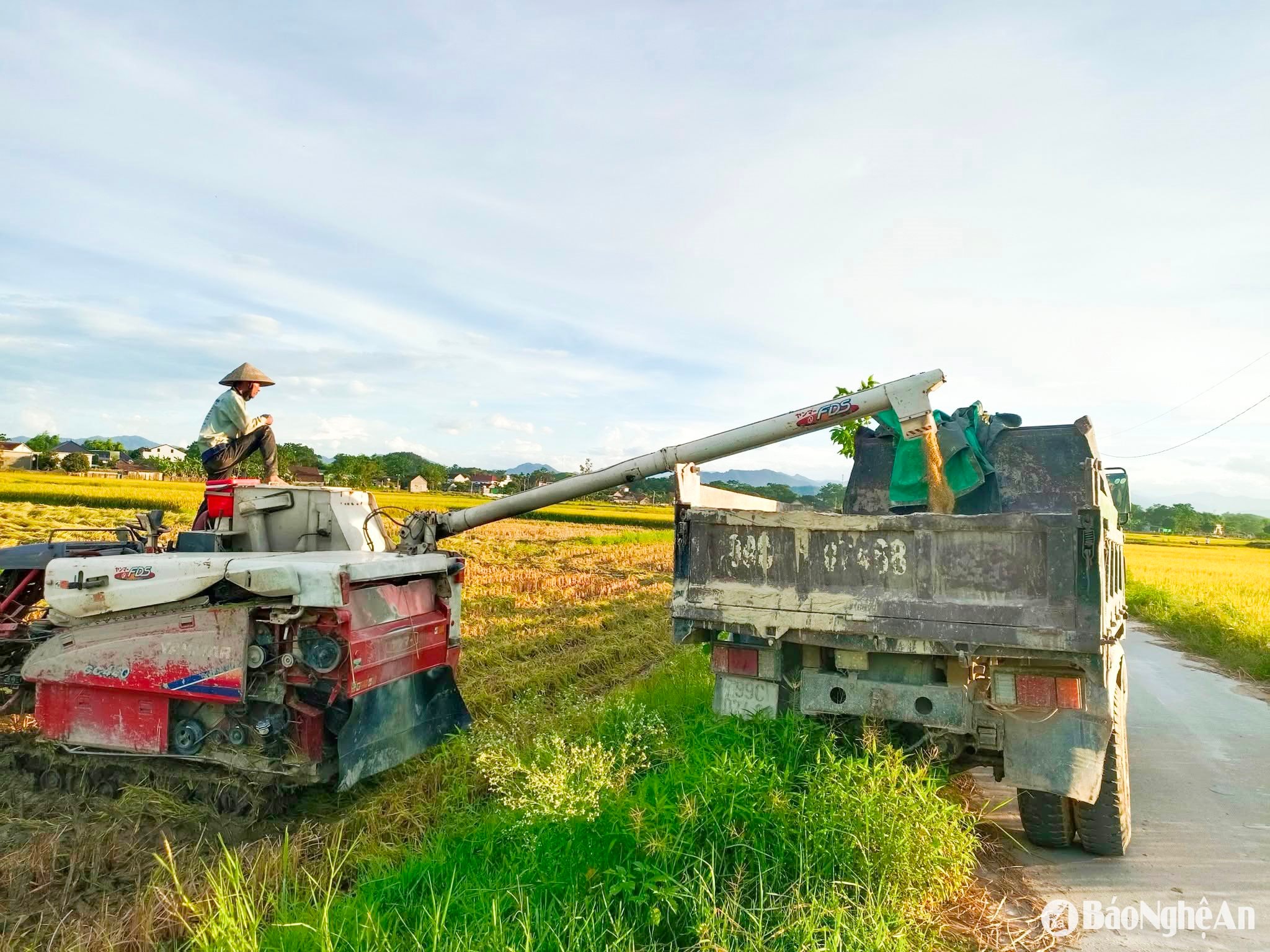
As of now, Nghe An province has completed its spring harvest. According to assessments, this year's spring crop has been remarkably bountiful. Thanks to timely planting, the use of high-quality seeds, favorable weather conditions, and minimal pest and disease problems, the amount of labor required has been significantly reduced. On average, yields reached approximately 3.2 - 3.5 quintals per sao (approximately 1000 square meters), with some areas achieving 4 quintals per sao.
However, rice prices have fallen sharply compared to previous years. While at the beginning of the season, the price of fresh rice at the field was still at 5,500 - 5,600 VND/kg, by the end of the season it had dropped to only 5,200 - 5,300 VND/kg, a decrease of 1,000 - 1,200 VND/kg compared to the same period last year. This sharp decline caught many households off guard, especially with the unusual weather during the harvest season, with frequent unseasonal rains.

Ms. Tran Thi Ty, a farmer from Kim Lien commune, Nam Dan district, said: “My family cultivates two acres of rice fields. This season was very successful, with a yield of about 4 quintals per sao (approximately 1000 square meters). But it rained right then, so we couldn't dry the rice and had to sell it fresh in the field at 5,300 VND/kg. I know it's a loss, but if left for too long, it will easily get moldy, so there's no other way.”
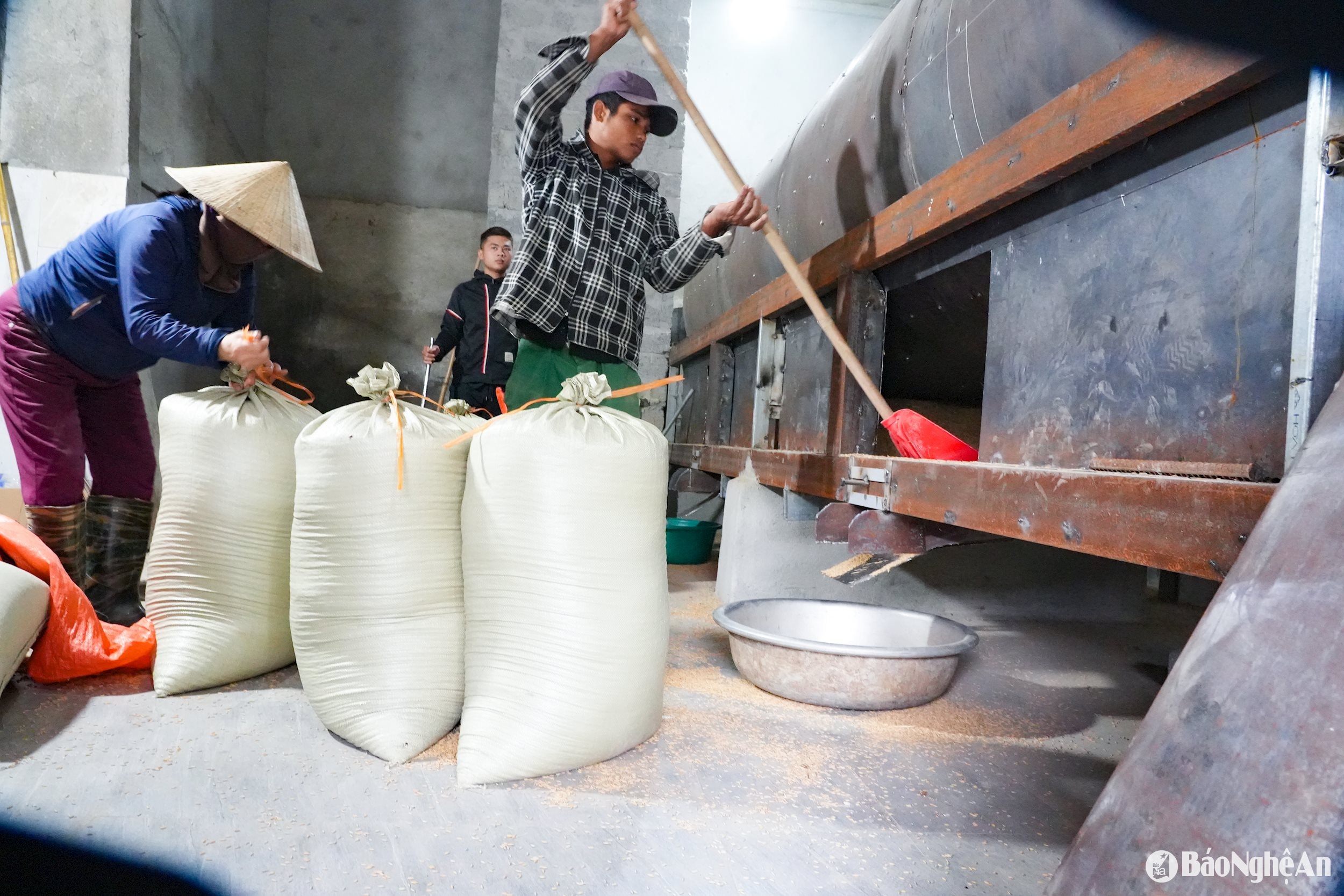
Many households, seeing the price too low, are not in a hurry to sell, even though storing the rice is difficult. Ms. Nguyen Thi Hang in Kim Lien commune, who cultivates 5 acres of rice fields with a yield of 17 tons, has hired a drying machine and stored the rice in a warehouse, waiting for a better price. “With prices this low, it’s not profitable. I hired someone to harvest and dry the rice, then put it in the warehouse, waiting for a better price before selling. It’s more laborious, but at least I can still recoup some losses. Currently, the price of dried rice is only 8,000 VND/kg, so I haven’t sold yet,” Ms. Hang shared.
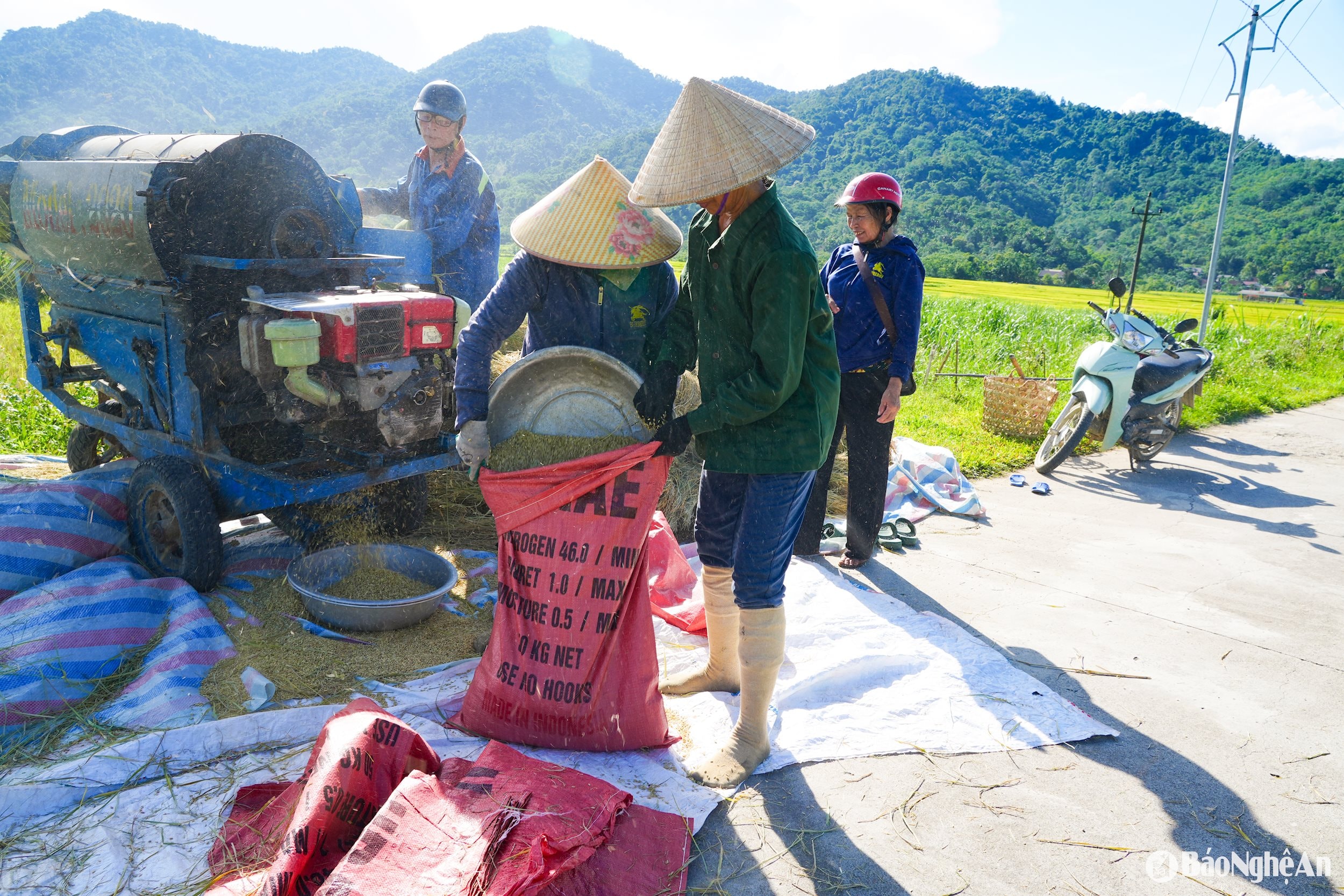
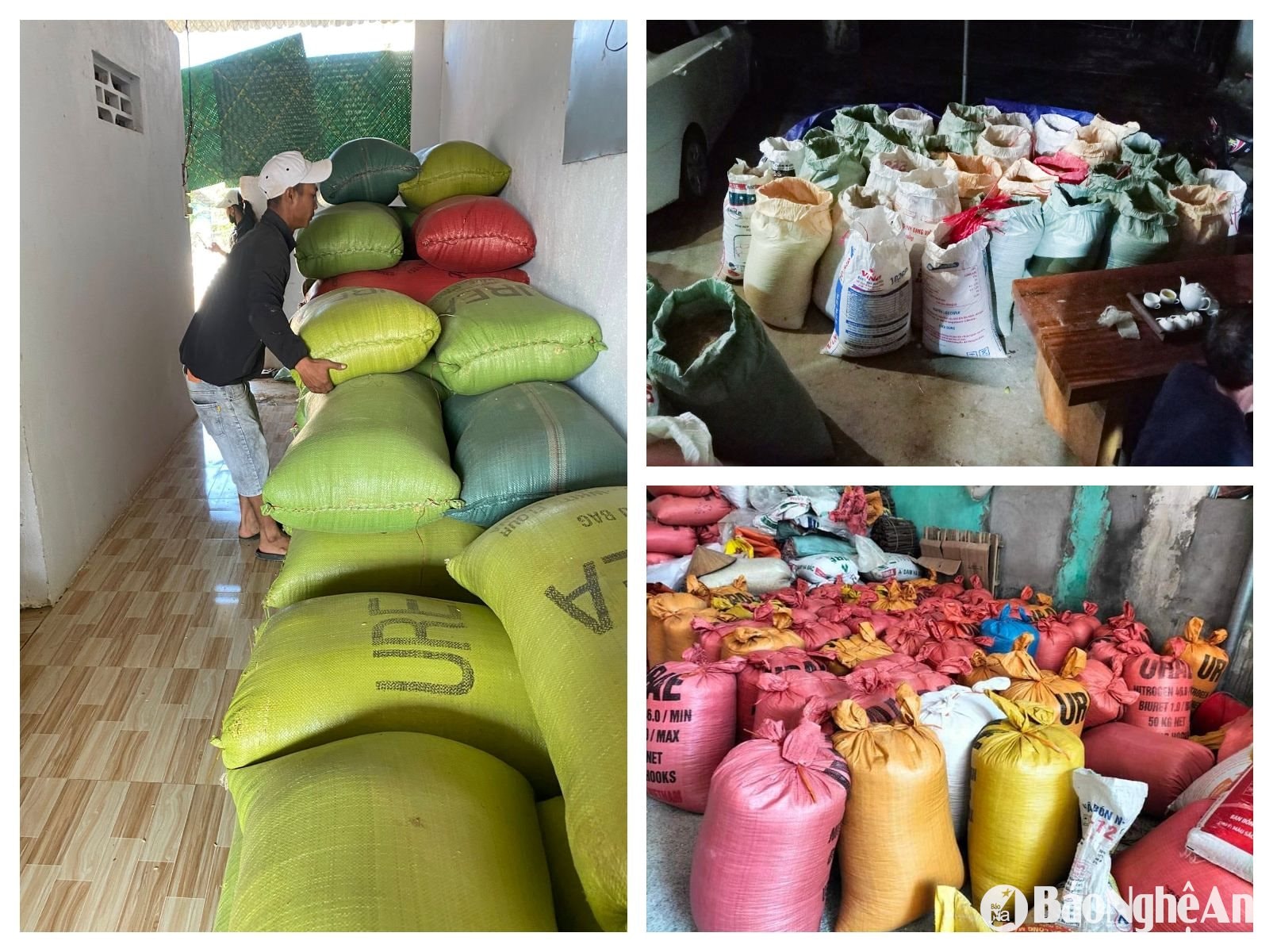
However, not everyone has their own storage facilities for rice. Many households are accustomed to selling their rice directly from the field after harvesting, so they haven't prepared for storage. For example, Mr. Nguyen Van Ha in Tao Son commune, Anh Son district, filled his containers after harvesting but still had over 2 tons of rice left without a place to store it.
“Currently, I have to store it temporarily in sacks and leave it on the porch. I'm afraid it will get moldy if I leave it like this for too long, so I'm selling it even though I know the price is low,” said Mr. Ha. This situation is quite common, especially among households that cultivate many rice paddies, sell the rice fresh, and are not yet familiar with post-harvest preservation methods.
On the purchasing side, traders are also facing difficulties. Mr. Nguyen Duc Thuan, a long-time rice buyer in Nam Dan district, said that this season he collected about 1,200 tons of rice. The rice is of good quality, with firm grains and few empty husks, but sales are slow.
"The initial price was quite good, but towards the end of the season, when a large quantity of rice arrived, consumption in the North slowed down, and the price had to drop by 300-400 VND/kg. The market wasn't as eager to buy as in previous years, while the supply was abundant," Mr. Thuan said.
In fact, the situation of "bumper harvest, low prices" is not uncommon in agricultural production, but this spring crop has seen a deeper decline than predicted.
The main reason is the oversupply during the peak harvest season, along with the impact from the domestic and global rice markets. Vietnam's export rice prices are on a downward trend due to a sharp increase in global supply, while import demand from major markets has significantly decreased.
Notably, India – the world's largest rice exporter – has lifted its export ban, putting further pressure on the global rice market. At the same time, Indonesia and the Philippines – two major customers of Vietnamese rice – are stepping up efforts to achieve food self-sufficiency and reduce imports.
.jpg)
These developments have severely impacted domestic rice prices. Although traders continue to buy all the rice from farmers, they cannot maintain high prices due to the unstable market. Meanwhile, farmers remain the biggest losers, as their rice output still largely depends on traders and lacks strong links with processing or export businesses.
Given this situation, many believe that fundamental solutions are needed to stabilize rice output. This should not only include post-harvest support such as drying machines and storage facilities, but also strengthening supply chain linkages, encouraging businesses to invest in deep processing, domestic consumption, and export.
At the same time, market forecasts need to be more realistic, helping people adjust production accordingly and avoid the current situation of oversupply and price manipulation.