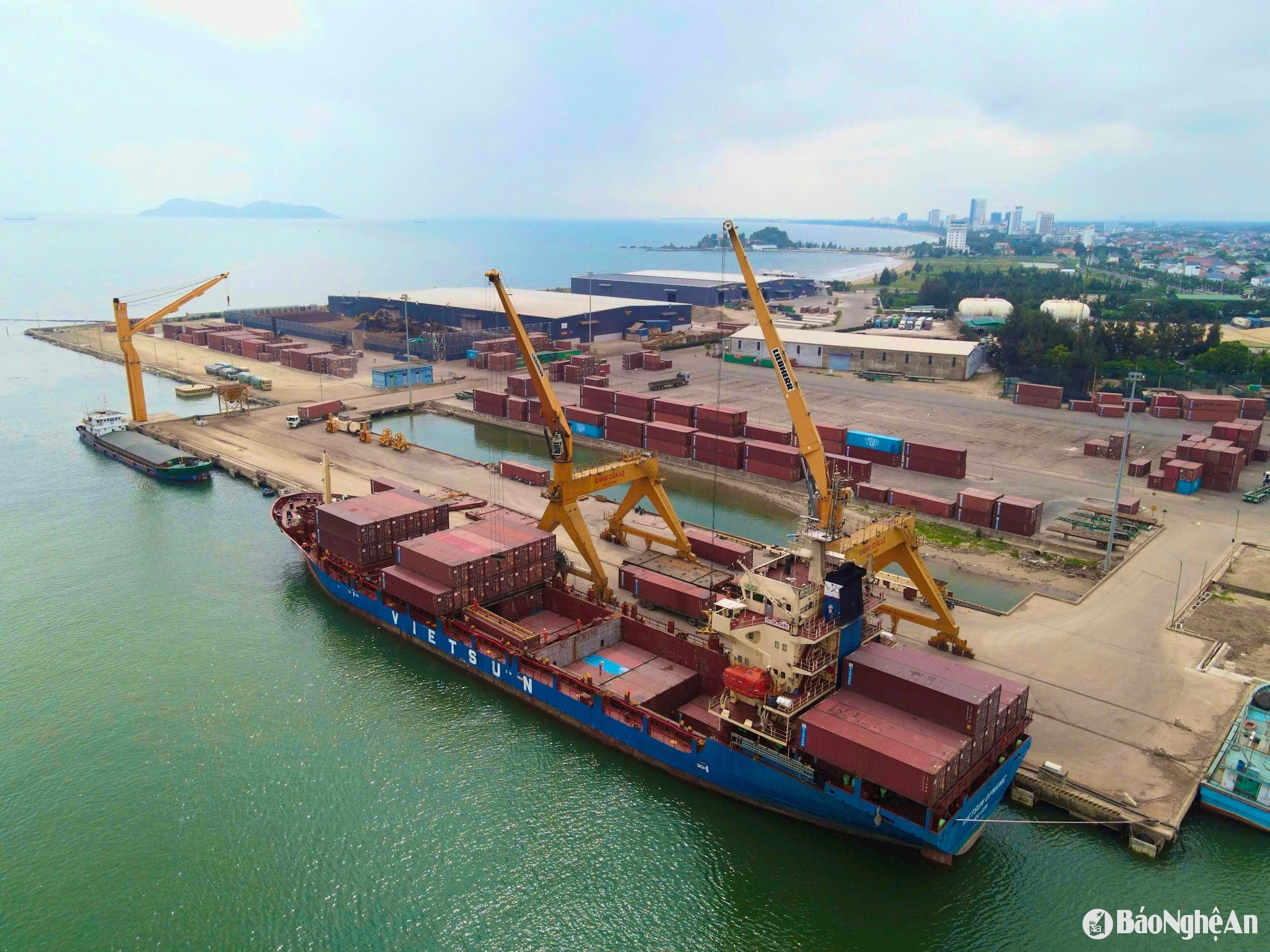
Nghe An will have 9 port areas by 2030.
According to the plan approved by the Government, by 2030, Nghe An province will have 9 port areas and nearly 30 wharves.
Motivation from national planning
Based on Decision No. 1579/QD-TTg dated September 22, 2021, approving the Master Plan for the Development of Vietnam's Seaport System for the period 2021-2030, with a vision to 2050, and Decision No. 140/QD-TTg dated January 16, 2025, of the Prime Minister on the Master Plan for the Development of the National Seaport System, Nghe An is identified as one of the key localities belonging to Seaport Group No. 2. This is a group of integrated seaports, playing an important role in the economic development of the North Central region, connecting international trade, especially with Laos and Northeast Thailand via the East-West Economic Corridor.
.jpg)
Specifically, the Nghe An seaport includes the South Cua Lo wharf area; the North Cua Lo wharf area; the Dong Hoi wharf area; the Ben Thuy and Cua Hoi wharf areas; the Nghi Huong oil and gas buoy wharf; and other buoy wharfs, mooring areas, transshipment areas, and storm shelter areas.
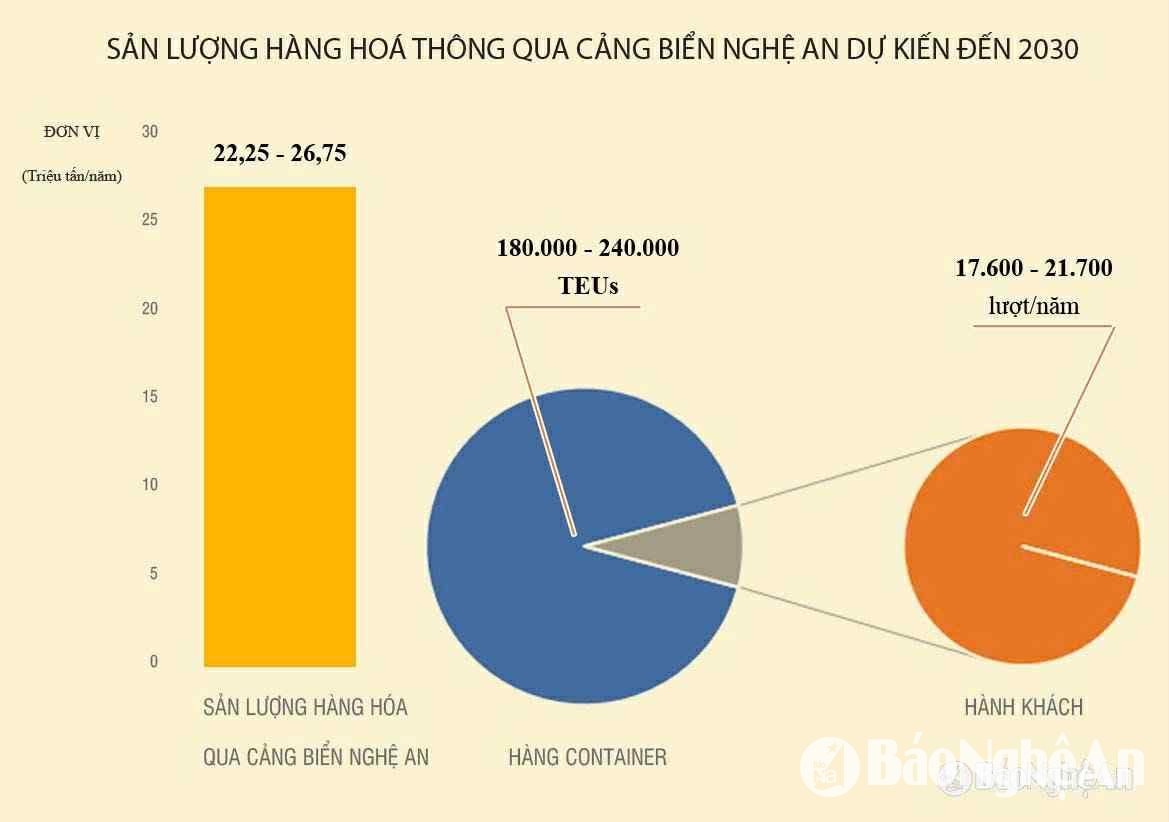
By 2030: Regarding cargo and passenger traffic: Cargo volume from 22.3 million tons to 26.8 million tons (of which container cargo from 0.18 million TEU to 0.24 million TEU); passenger volume from 17,600 to 21,700 passengers. Regarding market share of transport connecting to seaports: Inland waterway transport accounts for 11.9% to 12.2%, road transport accounts for 87.8% to 88.1%.
Planning of ports
According to the plan, specifically: South Cua Lo Port area: 1 port (including 5 to 6 piers) meeting the needs for customs clearance of goods from 5.0 million tons to 5.5 million tons and from 17,600 to 21,700 passengers.
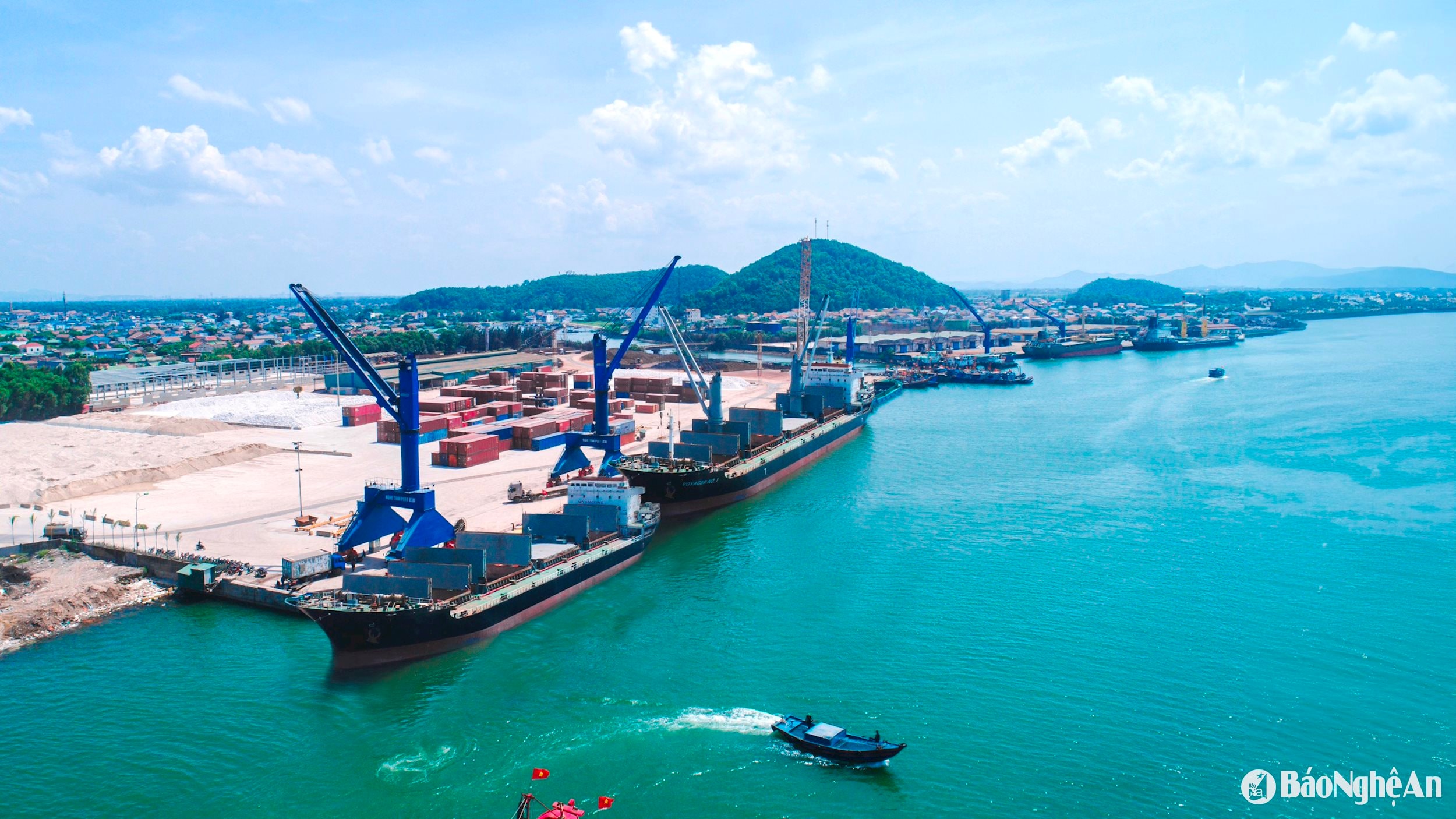
The North Cua Lo port area has 3 berths (including 15 to 17 piers) capable of handling between 12.0 million and 15.5 million tons of cargo.
The Dong Hoi port area, with 3 to 4 berths (including 5 to 6 piers), can handle a cargo throughput of 3.5 million to 4.0 million tons.
The Ben Thuy and Cua Hoi 2 port area (including 5 piers) can handle approximately 0.75 million tons of cargo. Research is being conducted on converting the Ben Thuy port into a local service and tourism port, along with investing in a new replacement location.
Nghi Huong 1 oil and gas mooring buoy is a transshipment and mooring buoy, meeting the cargo clearance needs of approximately 0.5 million tons. Operation is maintained in accordance with energy planning, ensuring safety requirements for fire and explosion prevention.
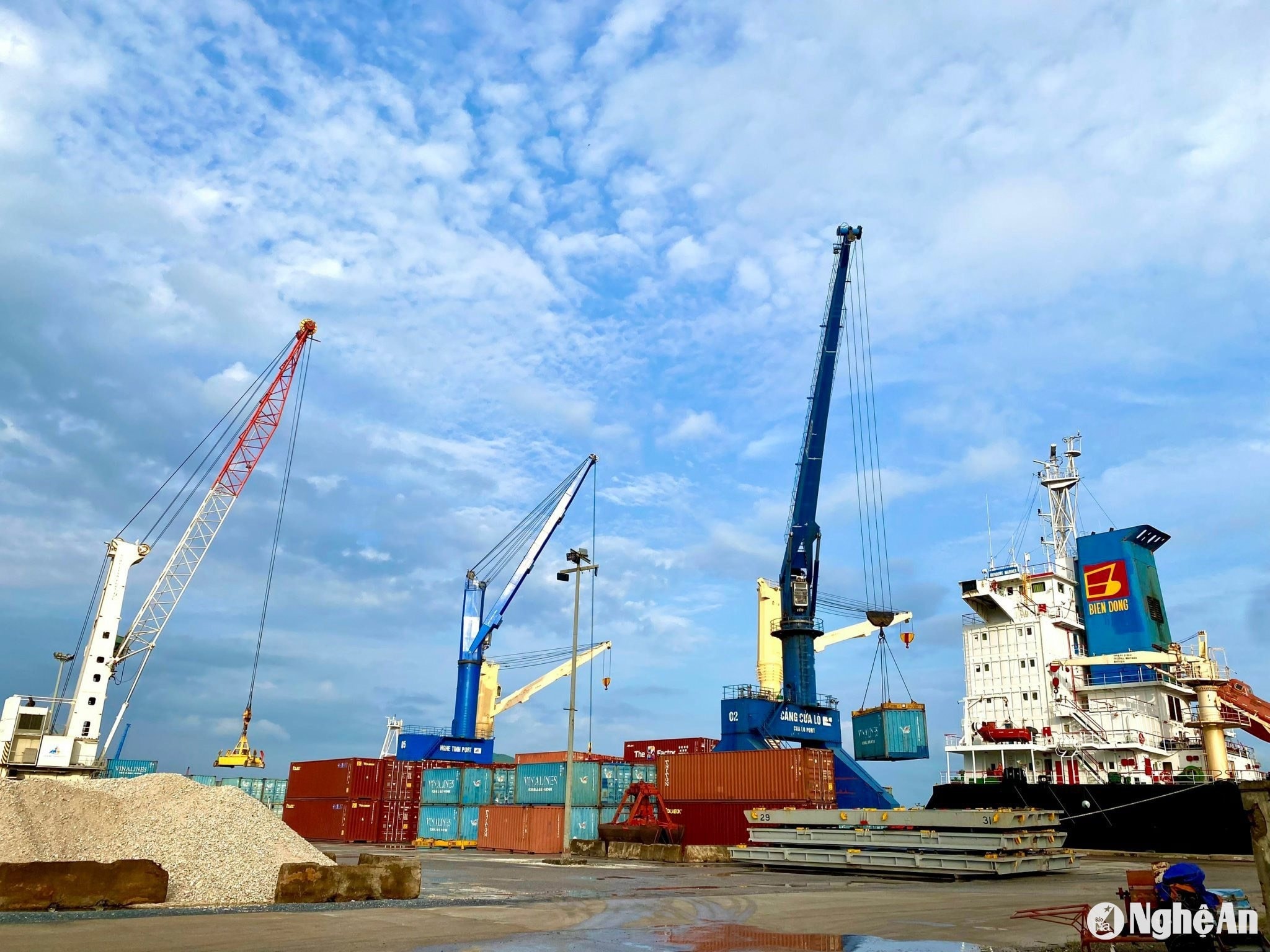
The offshore anchorage and transshipment areas at Dong Hoi and Cua Lo can handle approximately 0.5 million tons of cargo. Anchorage and storm shelter areas are located in the Cua Hoi area (on the Lam River), downstream of the Nghi Quang dam (South Cua Lo), and other suitable areas.
The vision for 2050 is to continue developing new ports to meet the demand for cargo clearance, with an average growth rate of approximately 3.6% to 4.5% per year.
Thus, by 2030, Nghe An will have a total of 27 to 29 wharves with a total length of approximately 5,100 - 5,600 meters. The land area allocated for seaports will reach over 290 hectares and the water area will exceed 24,800 hectares. This plan aims to build a modern port system capable of receiving large-tonnage vessels, making it competitive in the region.
By 2030, the volume of goods handled through Nghe An seaports is expected to reach 22.25 to 26.75 million tons per year, including approximately 180,000-240,000 TEUs of container cargo. Passenger volume is projected to reach around 17,600-21,700 passengers per year.
Currently, the province has 25 wharves and 1 mooring buoy in operation, with a total designed capacity of approximately 16 million tons per year. However, the distribution is uneven among the wharves: While North Cua Lo is exceeding its capacity (reaching 8.65 million tons, compared to the designed capacity of 6.25 million tons), South Cua Lo has only reached 88% of its capacity. Some wharves, such as Cua Hoi and Ben Thuy, have not been exploited to their full potential.
Furthermore, the transportation infrastructure is limited and not yet synchronized between the port and national highways, railways, and the domestic logistics system. The progress of implementing coastal routes, the railway connecting Nam Cam and Cua Lo ports, and the Hanoi-Vientiane expressway is still slow.
Period development aspirations
The director of another seaport in Nghe An said: In the coming time, it is necessary to clarify transportation connections with seaports, especially railways. In addition, it is necessary to clarify supporting satellites for seaports such as logistics centers, inland ports, etc.
By 2050, Nghe An's seaport system will continue to expand, aiming to accommodate large cargo ships and forming coastal industrial and urban clusters linked to port services. This will be one of the important pillars, creating momentum for development in the entire North Central region, making Nghe An truly the "eastern gateway" on the transnational economic corridor.