

Journalism and media admissions in the new context: Opportunities remain wide open.
Amidst mergers and downsizing of many media organizations, the field of journalism and communication continues to attract the attention of prospective students and parents. According to experts, studying journalism and communication is not just about writing articles, therefore opportunities in this field remain abundant.
Diverse job positions
While last year, public attention to the media and journalism industry was focused on the extremely high entrance exam scores, even approaching 30 points, this year candidates and parents are interested in this field for many other reasons.
Nguyen Tran Thu Huong, a 12th-grade student at Da Phuc High School (Hanoi), is wondering whether she should continue pursuing her dream of becoming a journalist. Thu Huong confided that her family advises her to choose a different field of study because, recently, the policy of restructuring the press has been actively implemented. The number of media outlets has decreased, potentially leading to a saturation of the workforce. This means that job opportunities after graduation will be more difficult than before.
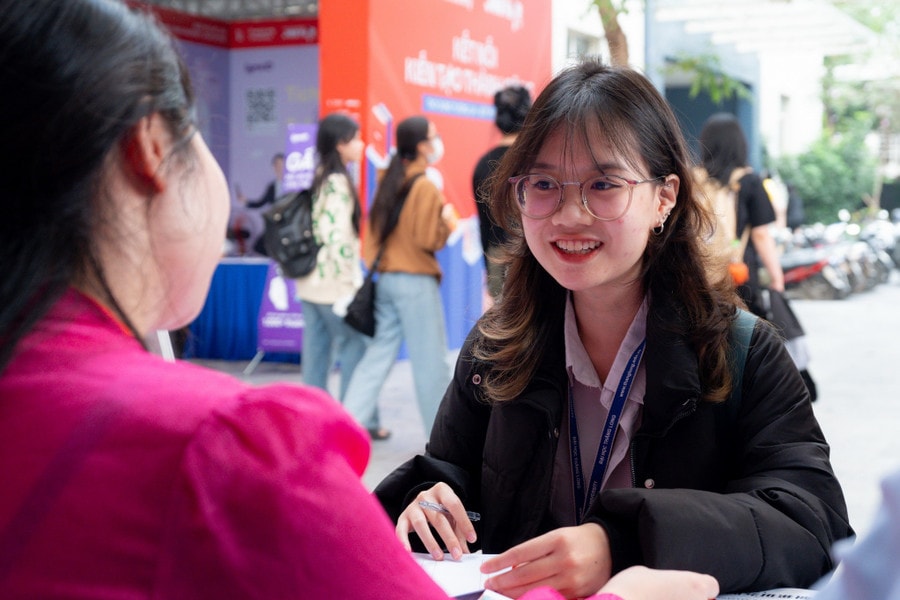
Nguyen Tran Thu Huong's concerns are shared by many parents and students. However, according to Associate Professor Dang Thi Thu Huong, Vice Rector of the University of Social Sciences and Humanities (Vietnam National University, Hanoi), it is not yet possible to assess or conclude on the changes in journalism and communication admissions in 2025.
"Students should view it this way: Studying journalism and communication is not just about writing and working in journalism, because it's a broad field with diverse job opportunities. In fact, this field remains 'hot' not only in Vietnam but also worldwide," Associate Professor Dr. Dang Thi Thu Huong informed.
Instead of worrying and being anxious, the Vice Rector of the University of Social Sciences and Humanities advises students to equip themselves with strong professional knowledge and soft skills to increase their chances of finding a job in the future. Students will be more likely to succeed if they choose professions that match their aptitudes and passions. They should also carefully consider, research, and realistically assess their chosen field of study and career path in relation to their own needs, aspirations, abilities, and strengths.
Dr. Le Thi Hong Nhung, Acting Head of the Department of Communication and Public Relations (Vietnam Trade Union University), said that the field of multimedia communication is present in all aspects of social life, so candidates who love this field of study can rest assured about job opportunities and not worry about unemployment. Studying journalism and communication not only leads to working in the field of journalism, but also in many other agencies, units, and businesses such as: reporters, editors, broadcasters, presenters, cameramen, film editors, and television directors.
Students can also work in the field of public relations, advertising, and marketing as: PR specialist, internal communications specialist, brand management specialist, advertising specialist, digital marketing specialist, event organizer, market research specialist; content creator, digital media channel manager, blogger, vlogger, podcaster, scriptwriter, television/online program producer, etc.
Adapt to change
This year, many universities have changed their admission criteria for media and journalism majors. For example, the Academy of Journalism and Communication has dropped the C00 combination (Literature, History, Geography) in both the academic transcript and high school graduation exam score-based admission methods. Some universities have also added combinations such as: Literature, Natural Sciences, English; Literature, Social Sciences, English; Literature, History, English…
According to Dr. Nguyen Phi Long, Head of Training Department (Vietnam Women's Academy), this change is not a major problem because the university admission regulations allow schools flexibility. The candidates' task is to study well the subject combinations they intend to apply to and choose a school that offers communication and journalism programs that suit their needs.
This year's admissions will not have restrictions on the number of subject combinations for admission, therefore, Dr. Nguyen Phi Long advises candidates to focus on studying well according to their abilities and strengths. Higher education institutions will have to recruit students based on subject combinations that are appropriate for the training program and the requirements set to ensure the quality of the admitted students.
With the rapid development of technology, many people are concerned that AI will replace the work of journalists. Associate Professor Dr. Dang Thi Thu Huong affirms that artificial intelligence (AI) cannot replace journalists. However, as technology develops, it inevitably has negative impacts such as: causing interference, spreading fake information and images, and this poses a challenge to the media industry in general and journalists in particular.
"Such a context makes the role of genuine journalists even more crucial. A journalist's responsibility is not simply to report the news, but also to play a role in critiquing policies and shaping public opinion. Journalists need extensive knowledge to report truthfully and serve the community," Associate Professor Dr. Dang Thi Thu Huong emphasized.
In the general context, Dr. Vu Thi Thanh Nhan - Head of the Multimedia Communication Department, Thang Long University, believes that schools and students must adapt and equip themselves with sufficient skills to meet the requirements of employers. For example, students studying Multimedia Communication at the university will be trained in three main areas: photography; design; and filmmaking, from basic to advanced levels. Importantly, students will spend up to 80% of their time practicing, ensuring they meet the demands of the labor market.
"Studying Multimedia Communications is not easy; it requires students to be truly passionate about pursuing it," Dr. Vu Thi Thanh Nhan noted, adding that candidates interested in this field need to be confident and prepared to adapt. In reality, during the admissions process, many students choose majors based on trends and popular choices. Therefore, students should consider what they truly enjoy and where their abilities lie before making a decision about their major and university.
Keeping pace with AI
From another perspective, Associate Professor Pham Minh Son, Director of the Academy of Journalism and Communication, believes that the development of AI opens up unprecedented opportunities but also poses challenges for journalism, media, and human resource training in this field. AI not only fundamentally changes the processes of producing, distributing, and receiving information, but also opens up outstanding possibilities in improving the quality and effectiveness of communication.
This development also raises many issues regarding professional ethics, legal matters, and information security. In the current context, training and professional development continue to play a crucial role in realizing the goal of building a digital press and media in our country...
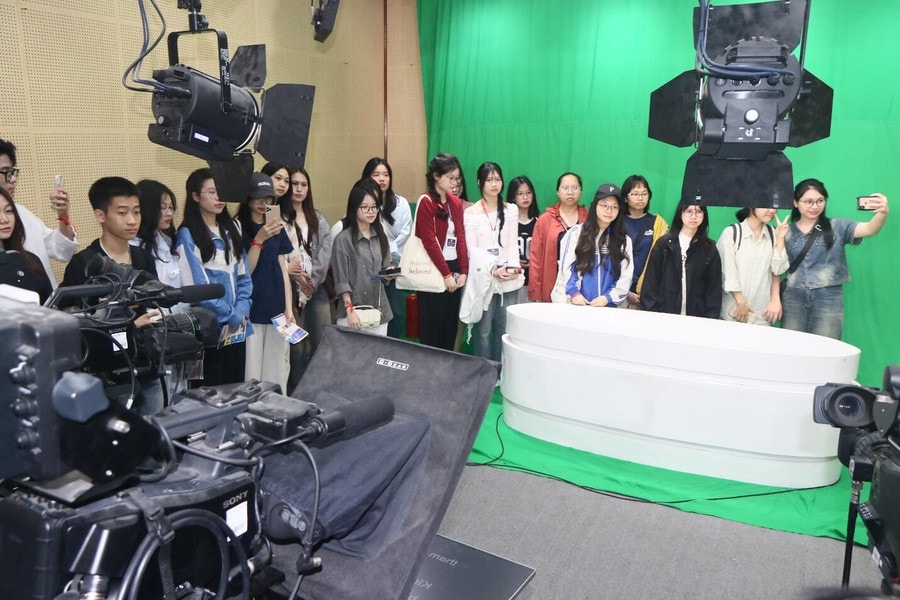
In recent years, journalism and media training institutions have proactively integrated digital transformation content into their training and professional development programs. Simultaneously, they have regularly updated, supplemented, adjusted, and refined the framework and detailed curricula of each specialization to meet the demands of practical realities. However, the context of digital transformation also requires training institutions to redefine their training philosophy and objectives to align with new trends; and to promptly develop a national standard framework for journalism and media training, linked to the requirements and tasks of the new situation.
These are new challenges facing journalism and media training in the country, especially in the context where the quality of training in some places does not meet requirements or is slow to innovate in methods, and there are many shortcomings and deficiencies in investing in facilities and resources, and building a specific mechanism for journalism and media training...
Speaking at the international scientific conference "Journalism and Media in the Context of AI Development," Deputy Minister of Culture, Sports and Tourism Le Hai Binh emphasized that AI is profoundly changing the way people access, produce, and distribute information, while also bringing about major challenges regarding journalistic ethics, fake news, and perception manipulation.
Given this reality, media management – a field with a crucial role in protecting the Party's ideological foundation and shaping public opinion – requires a comprehensive, interdisciplinary, and flexible approach. This necessitates the joint efforts of the State, media organizations, and especially training institutions, in shaping future generations of journalists.
Associate Professor Dr. Le Hai Binh proposed three strategic directions from a state management perspective: perfecting the legal framework for AI in journalism; supporting the application of technology in media organizations; and enhancing the digital capabilities of journalists. From this, the crucial role of training institutions in preparing journalism personnel to adapt to the modern media environment, capable of controlling and effectively utilizing AI without losing the core values of journalism, becomes apparent.
According to Deputy Minister Le Hai Binh, journalism in the age of AI is entering a new era – where technology can create and distribute information faster than humans, but the core values of journalism – authenticity, integrity, and contributing to society – still belong to humans and can only be preserved by humans.
The responsibility of state management agencies, media organizations, and training institutions is to work together to create a humane, sustainable, and responsible media ecosystem. Although we are in the process of reforming, restructuring, and streamlining the system, the prospects for development and job opportunities for journalism and communication graduates remain wide open due to the development of the current digital technology landscape.
Based on a comprehensive assessment of the challenges that AI poses to journalism and media, Associate Professor Dr. Duong Trung Y - Deputy Director of the Ho Chi Minh National Academy of Politics - suggested strategic solutions, including: updating and innovating training programs to equip learners with the necessary knowledge and skills in AI; promoting research on the impact of AI on journalism and media activities; and simultaneously enhancing the capacity of the teaching staff.