

"Keeping the flame alive" of mulberry cultivation and silkworm rearing in the highlands.
Mulberry cultivation, silkworm rearing, and silk weaving are long-standing traditional occupations deeply rooted in the cultural identity of the Thai ethnic minority in Cam Muon commune, Que Phong district. In recent years, through the implementation of the "Effective People's Mobilization" model, mulberry cultivation and silkworm rearing in Cam Muon commune have been restored and developed strongly, opening up a sustainable livelihood path for the people.
.png)
Khanh Ly - Thanh Phuc -Technique:Hong ToaiJune 23, 2025

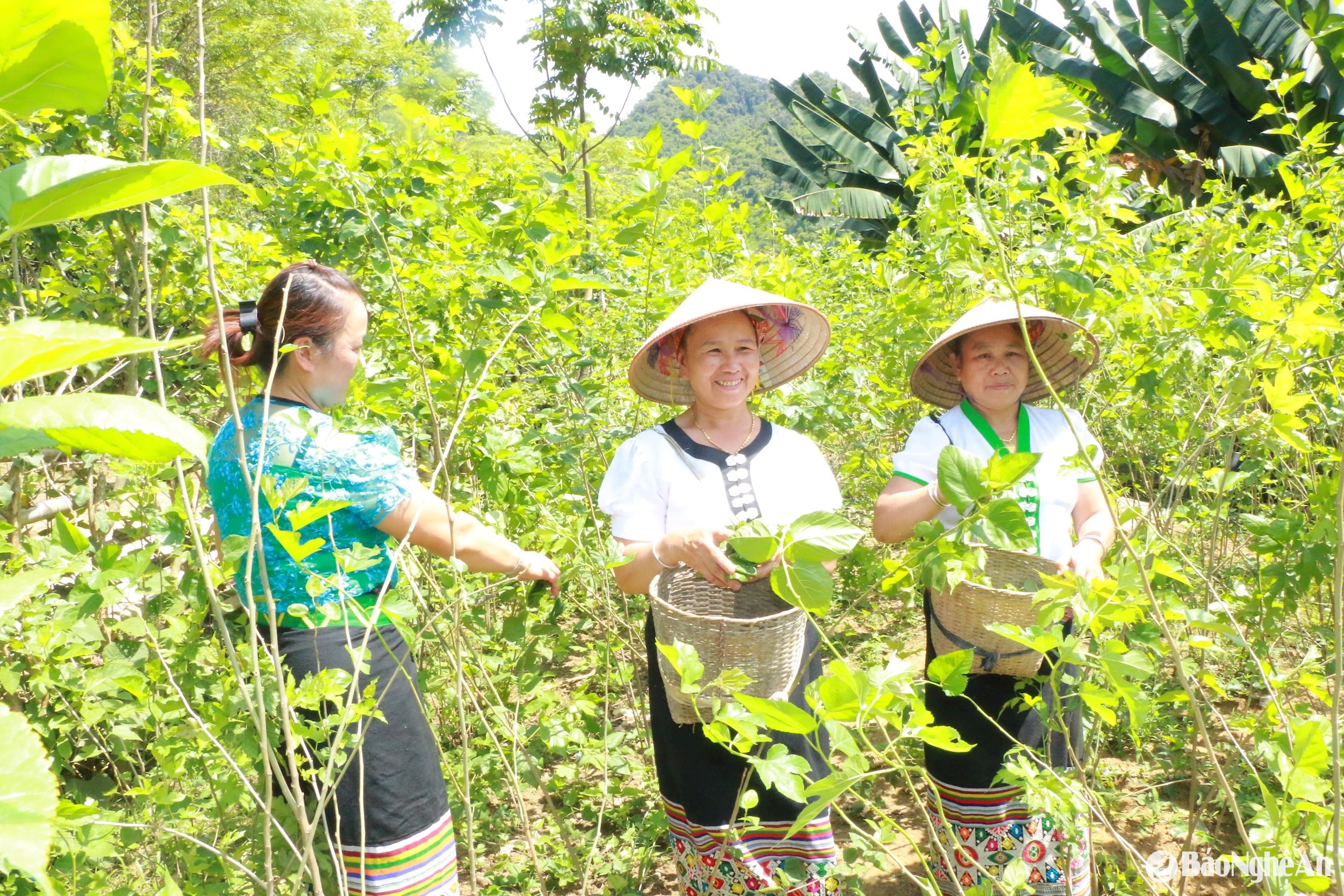
Under the scorching summer sun in the highlands, beneath the ancient, peaceful stilt houses of Mong 1 village, Cam Muon commune, the Thai ethnic women are still diligently working on the various stages of mulberry cultivation and silkworm rearing.
The silkworm breeders, the indigo dyers, the cocoon boilers, the spinners, the reelers, and the dryers of the shimmering golden cocoons…
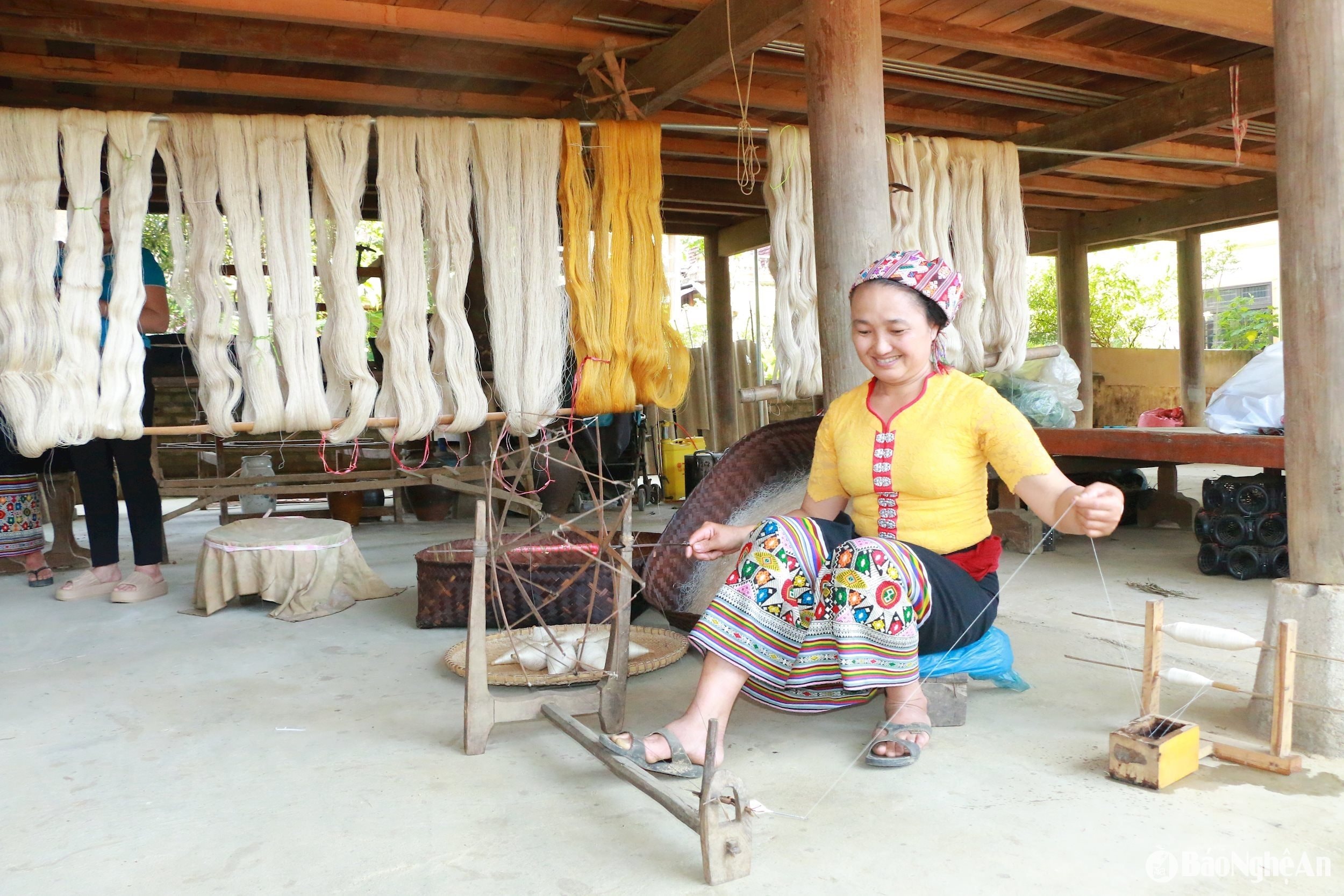
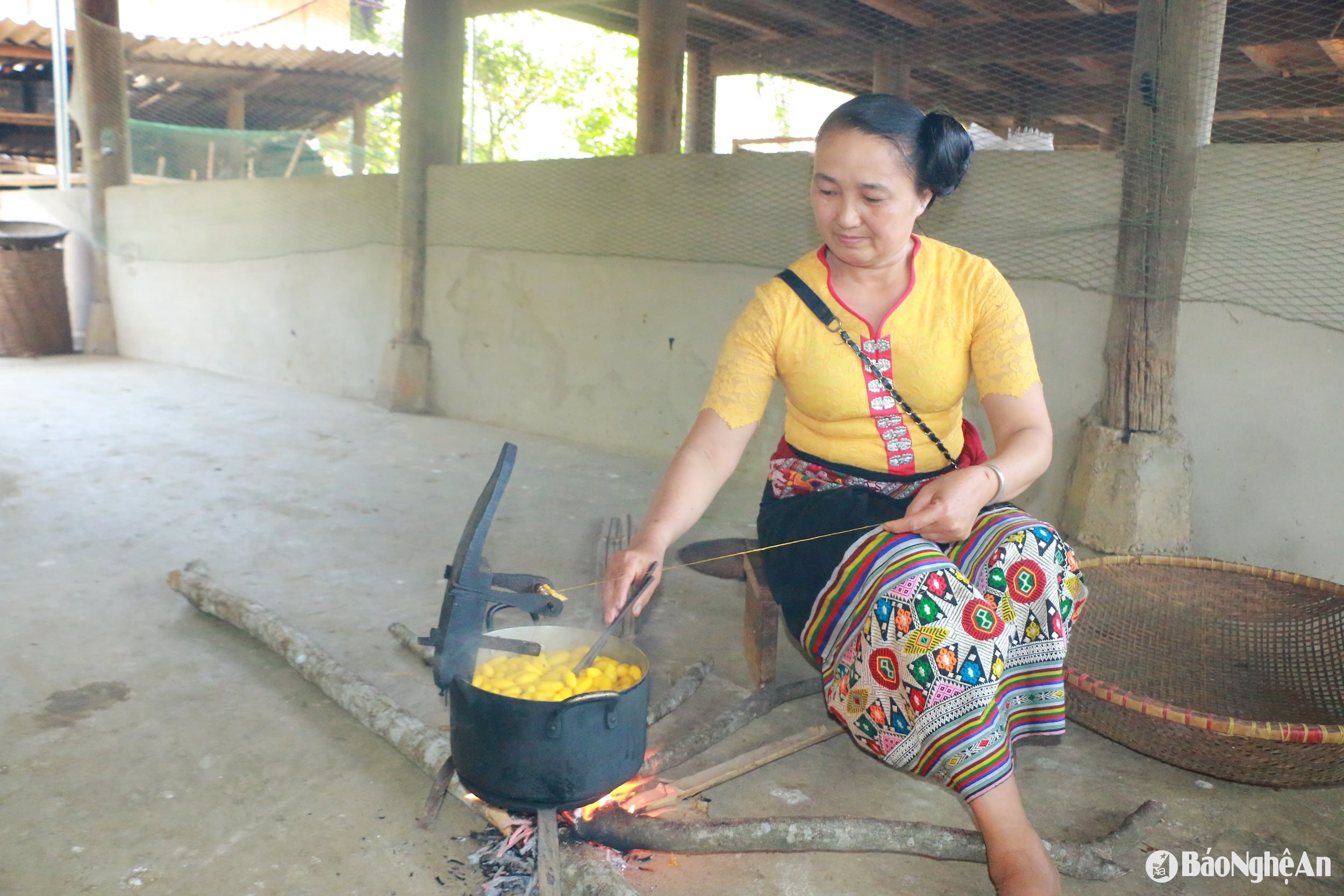
Ms. Lang Thi Hoa (60 years old) from Mong 1 village, while nimbly winding silk threads into oval shapes, happily shared that she learned mulberry cultivation, silkworm rearing, and silk weaving from a young age, a skill passed down from her grandparents and parents.
"Previously, the products were mainly for self-consumption, serving the needs of the family, as dowry for daughters when they got married, or used by people in the upper and lower villages to exchange products with each other. Now, the products from various stages of the craft can be sold as goods, so the people are more enthusiastic," Ms. Hoa shared.
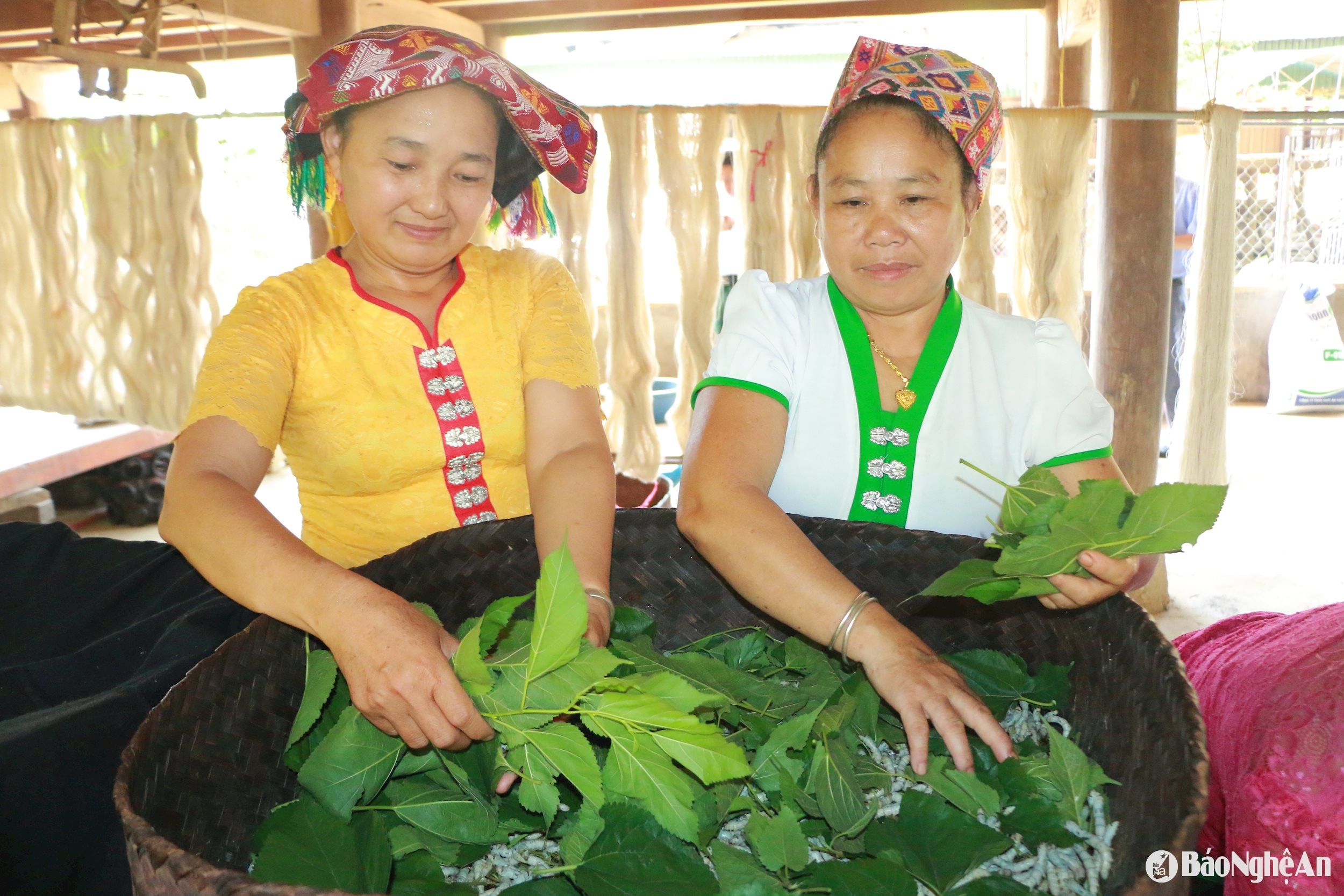
According to the elders in the village, the silkworm farming profession in Cam Muon commune has existed for a long time, passed down from generation to generation. People often utilize the fertile land along the Quang stream to grow mulberry trees as the main food source for silkworms. The silkworms in Cam Muon commune are mainly local varieties, suitable for the local climate. Although small, they produce high-quality cocoons that are easy to spin. Silkworms feed 4-5 times a day.
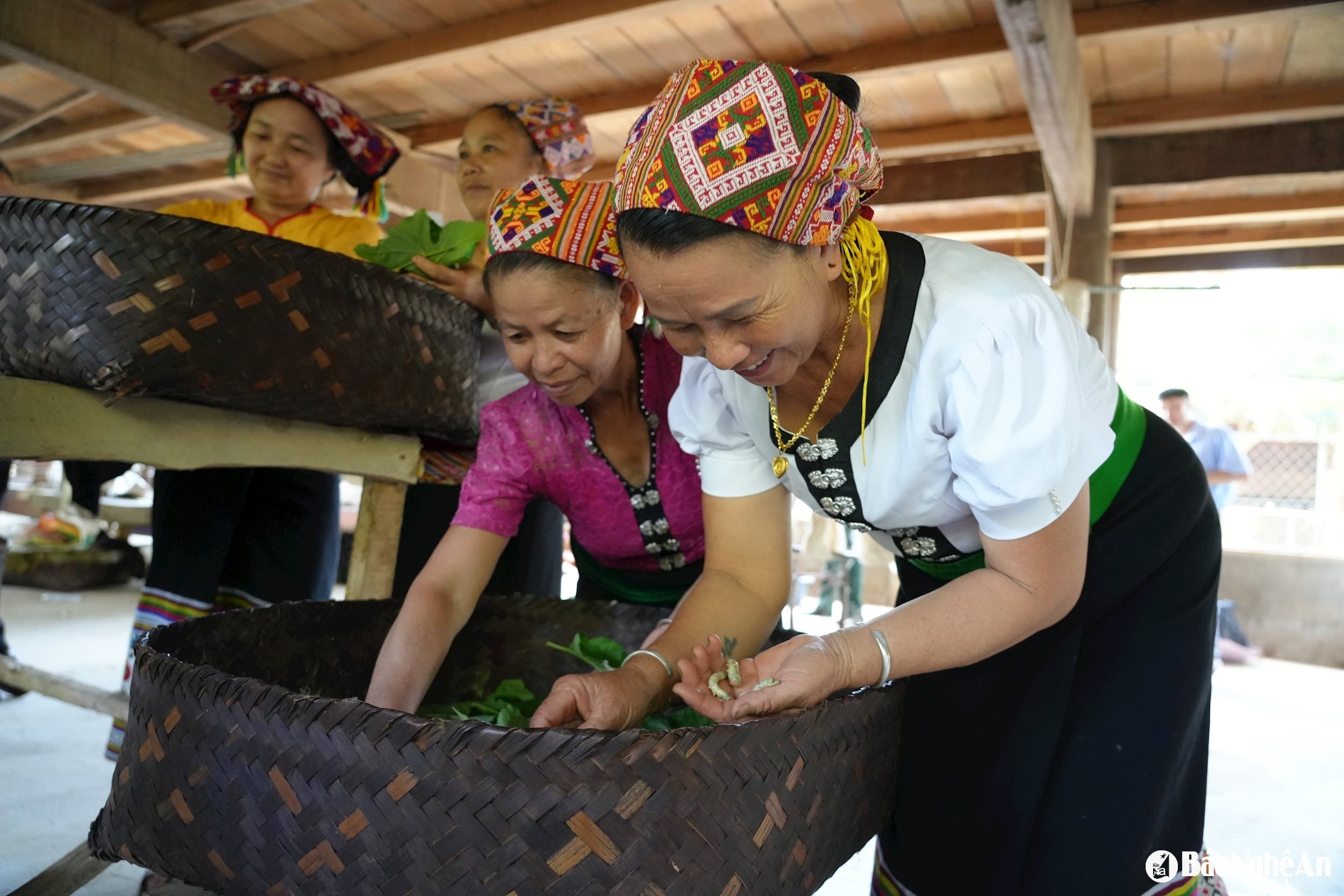
This work requires consistency, patience, and close observation. This is a crucial stage that determines cocoon yield, so it's quite arduous – "raising pigs while lying down, raising silkworms while standing." After nearly a month of care, the silkworms spin their cocoons and release their silk.
The shimmering golden cocoons are the result of a meticulous labor process. The silk reeling process is done manually. The cocoons are boiled and the threads are spun by hand.
After being spun, the silk is dried. The sunnier the weather, the more lustrous the silk will be. If the sun is strong, drying for only 2-3 days is sufficient, while cloudy weather requires drying for a week, affecting the silk's sheen. The finer and more uniform the silk thread, the higher its value, used for weaving brocade and for commercial sale.
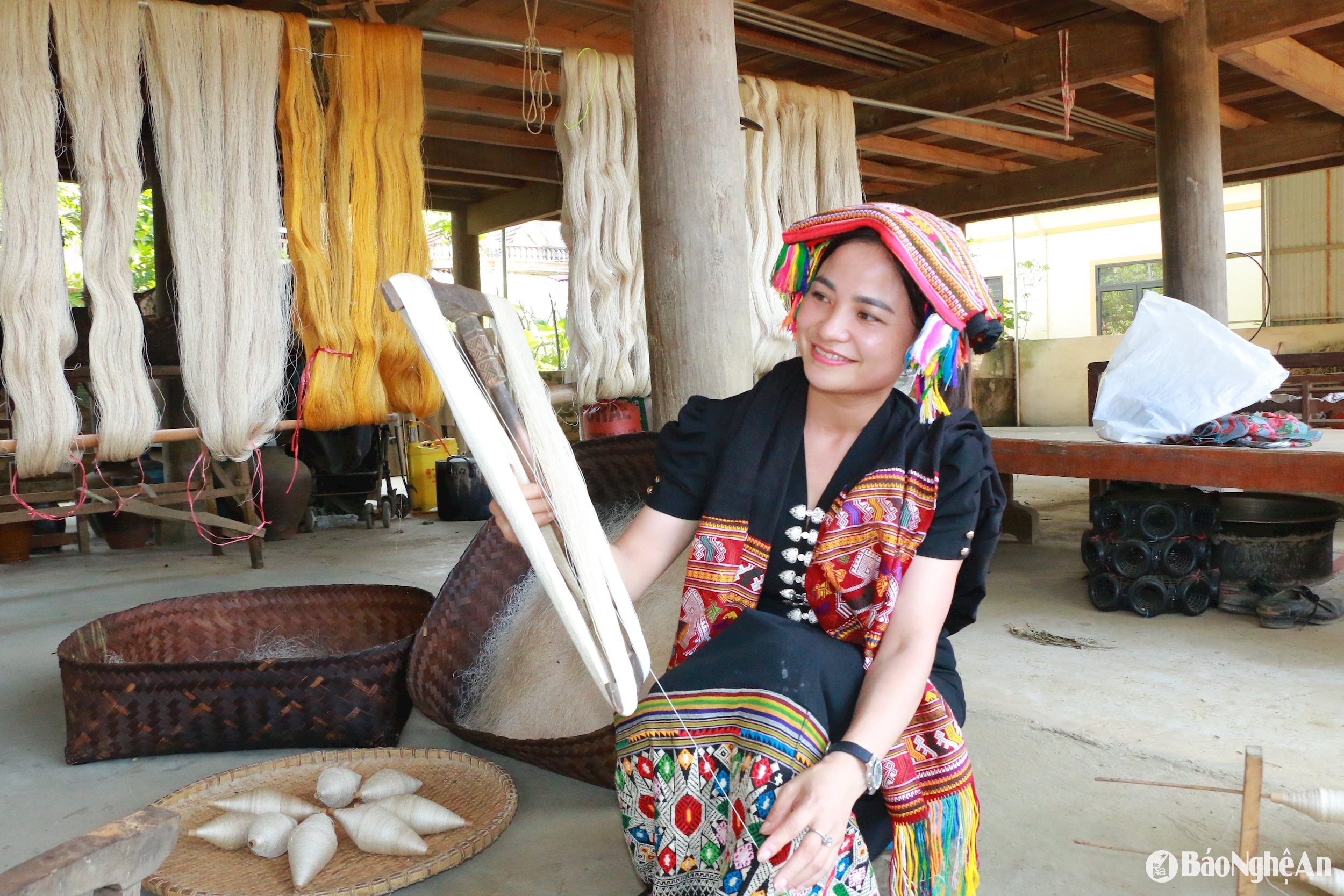
Raw silk is fed into spinning wheels to increase its usability. People can sell the yarn or further process it into fabric, increasing their income. Silk products are used by people to weave brocade dresses, scarves, or sold to other weaving villages, contributing to increased income and helping the people become less dependent on rice and pigs.
According to Ms. Vi Thi Thom from Mong 1 village: Weaving is a traditional secondary occupation of Thai women in Cam Muon commune. Thanks to the availability of local silk, input costs are low, and the products are of high value. After dyeing, the silk is used to embroider patterns onto dresses and blouses. Each product increases in value by 30-50%, expanding the market.
Maintaining and developing the mulberry cultivation and silkworm rearing profession in Cam Muon is both a way to generate income and a contribution to preserving the traditional culture of our ancestors.
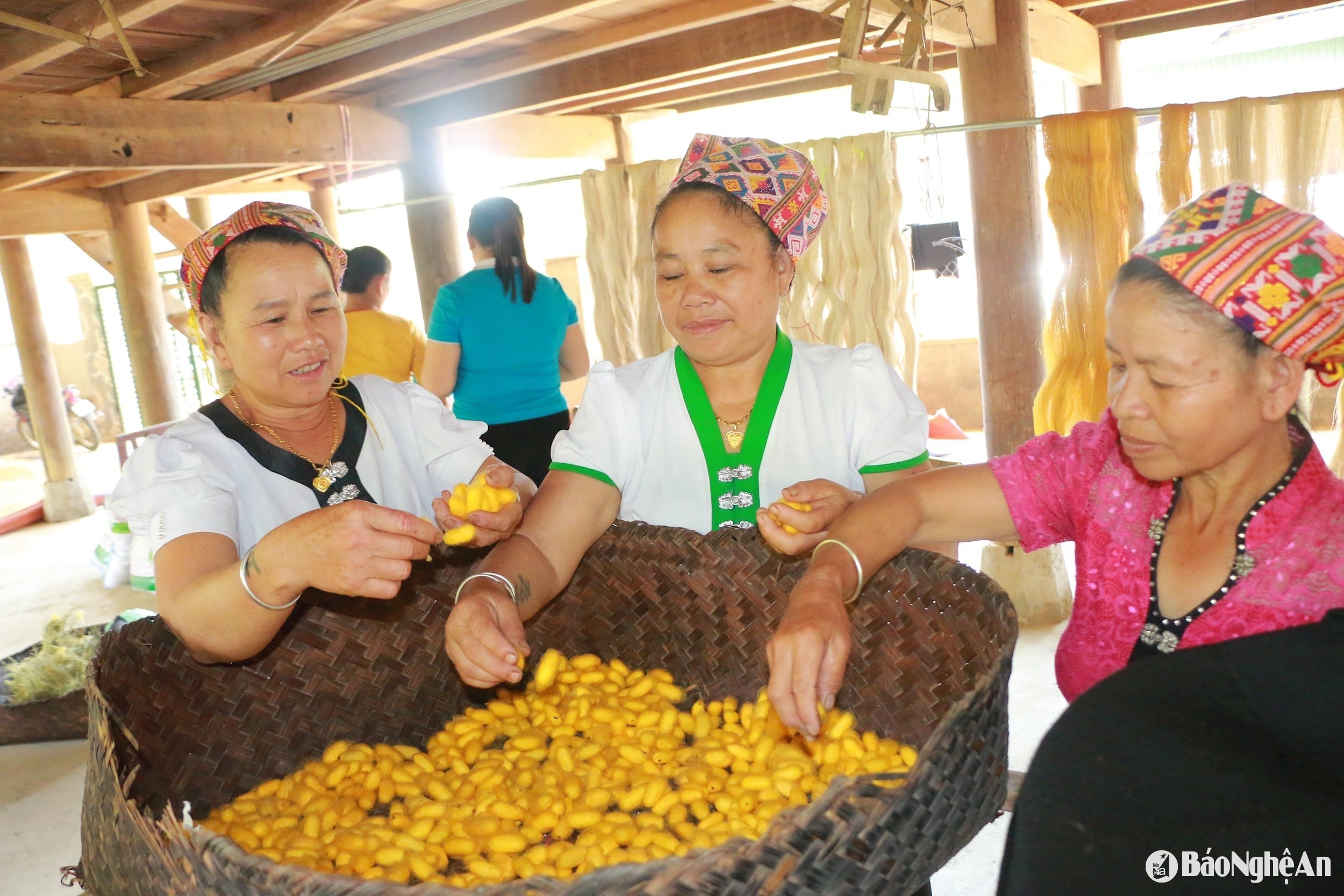
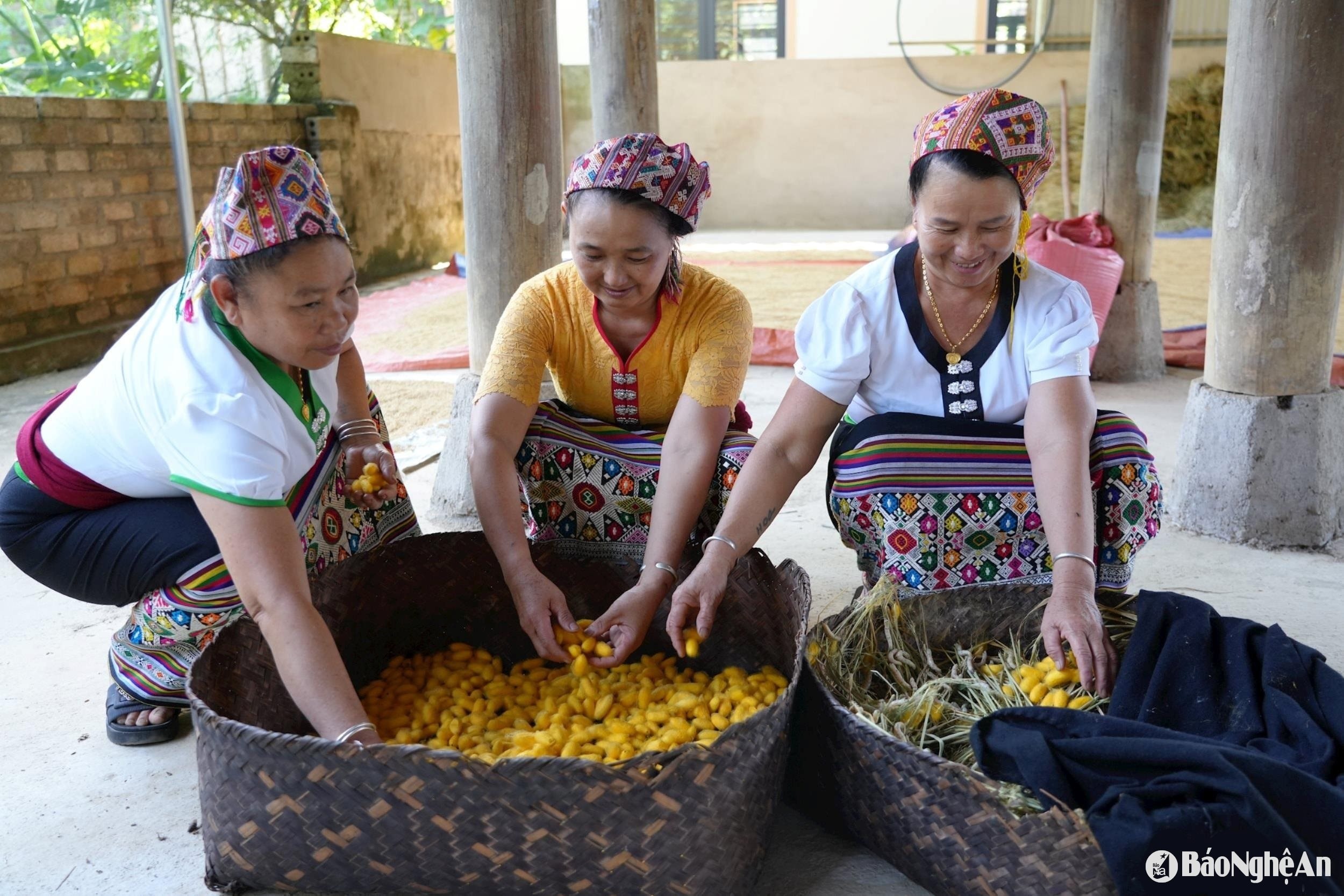
However, like many other traditional crafts, the mulberry cultivation, silkworm rearing, silk reeling, and silk weaving industry in Cam Muon commune is also facing the gradual decline.
Young people in the villages are reluctant to follow in their parents' footsteps because the handicraft work is arduous and the income is low. Therefore, only a few households engage in small-scale, fragmented production, lacking professionalism. As a result, productivity and quality are not high, and a brand has yet to be established due to a lack of long-term planning and development direction.
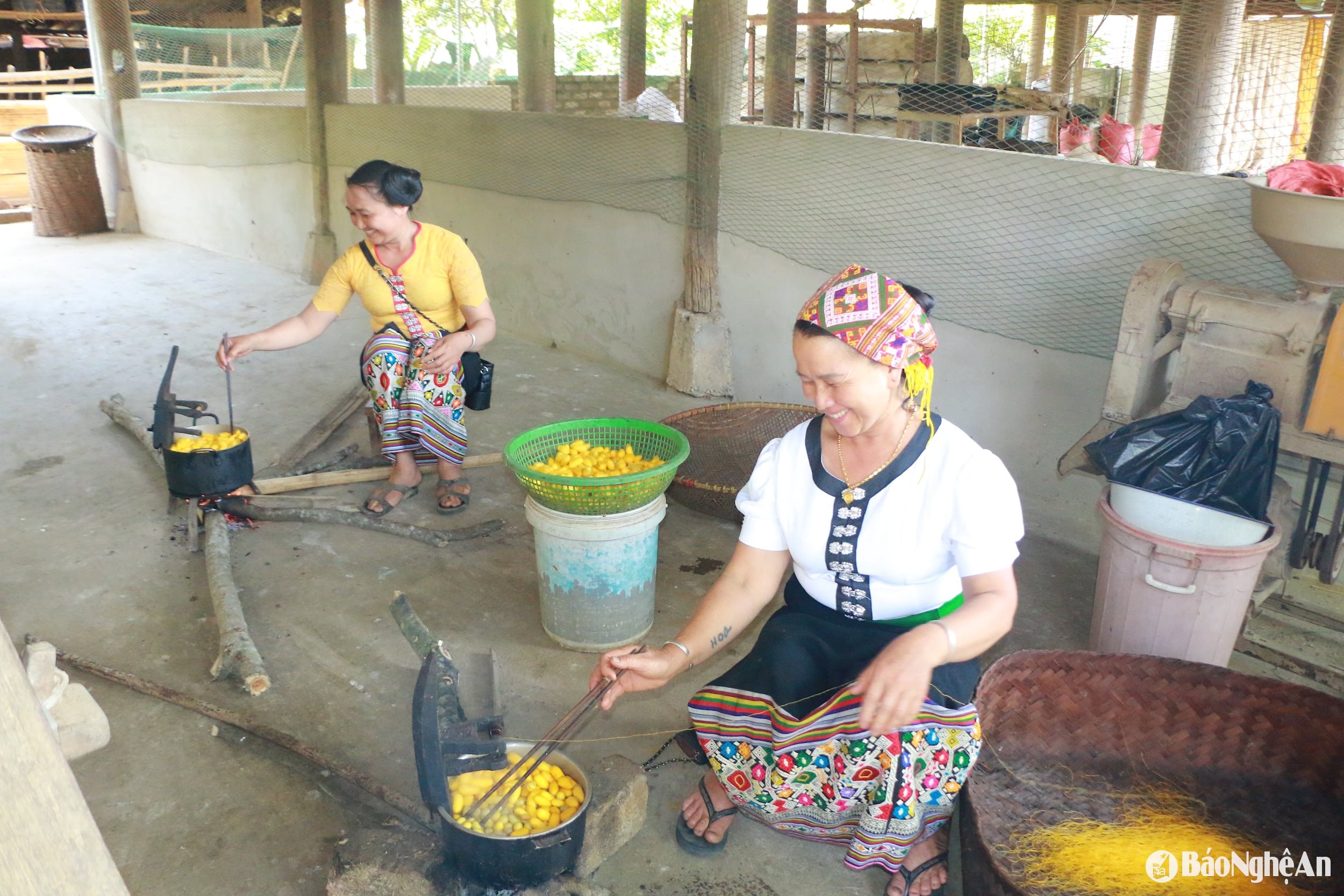

To preserve the traditional craft of their ancestors, maintain the cultural identity of the Thai ethnic group, and open up livelihood opportunities for the people, in 2023, with support from the Mass Mobilization Department (now the Propaganda and Mass Mobilization Department) of the Que Phong District Party Committee, the Cam Muon Commune Party Committee directed the People's Committee, departments, and local political and social organizations to develop the "Project for the Development of Mulberry and Silkworm Farming in Cam Muon Commune, giai đoạn 2023 - 2025 and orientation to 2030" as a model of "effective mass mobilization" to serve as a basis for the People's Council and People's Committee of the commune to issue policies on investment in the development of mulberry cultivation and silkworm farming in the commune in the coming period.
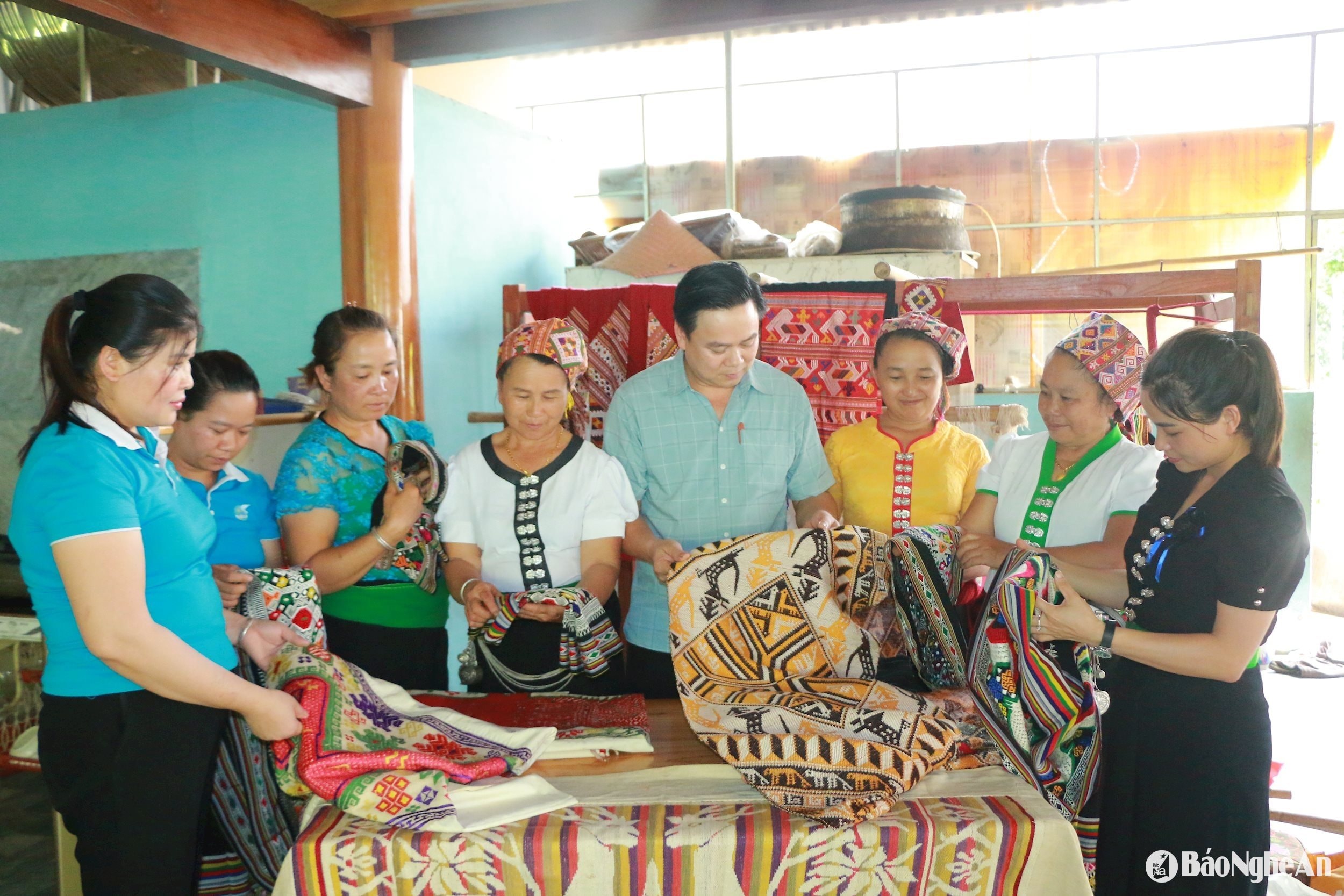
According to Mr. Lang Van Loan, Permanent Deputy Secretary of the Party Committee of Cam Muon commune: The commune's policy is to develop and expand the area for mulberry cultivation and silkworm rearing, shifting from self-sufficiency to commercial production, and assigning the Women's Association of the commune to implement this. To support people in investing in production, the People's Mobilization Committee of Que Phong District Party Committee has supported the model in two phases with a total amount of 35 million VND, and the commune has contributed 5 million VND.
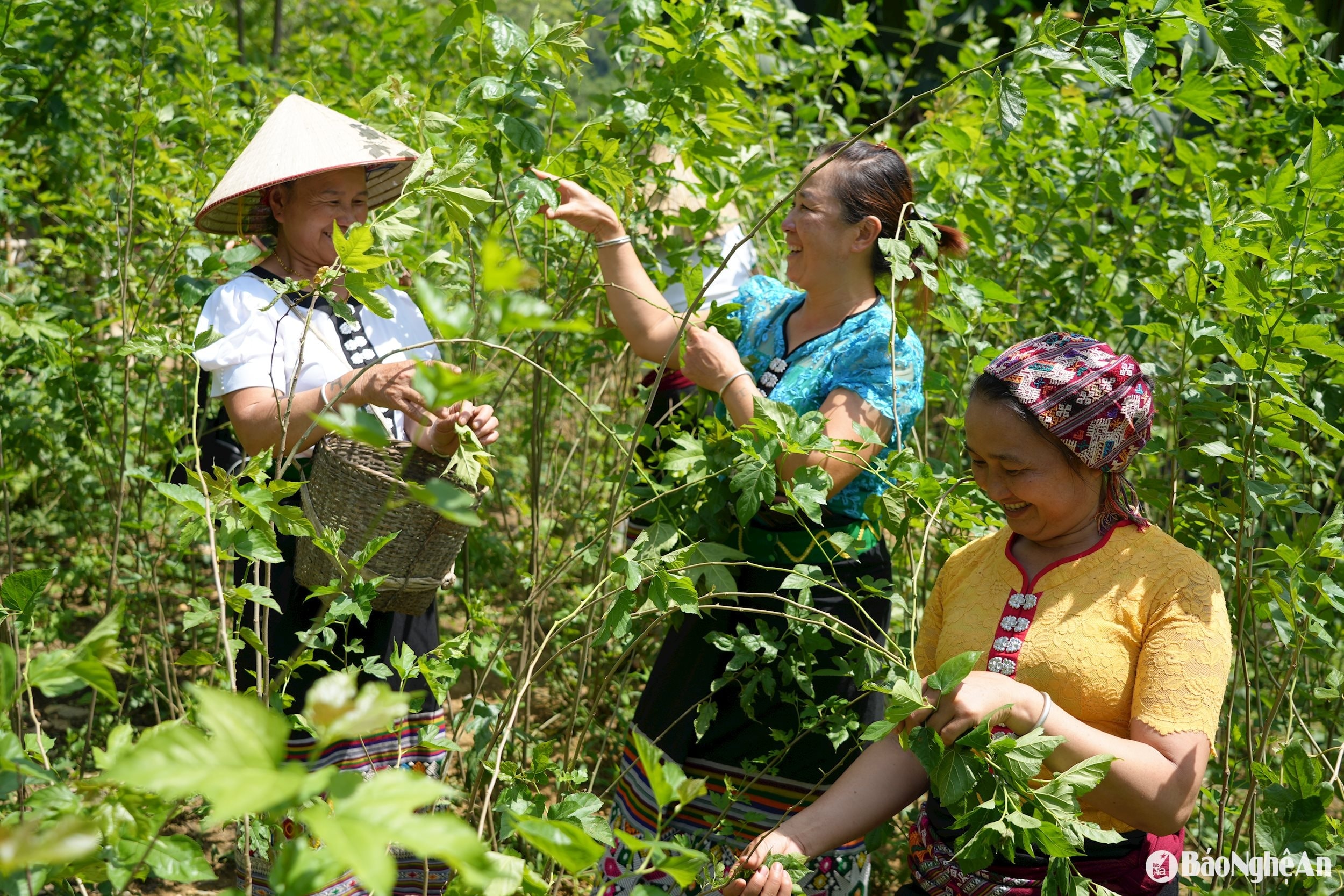
Initially, only 10 households participated, but by 2024, this had expanded to over 20 households, and now there are approximately 30 households. The mulberry plantations are developed on fertile alluvial land along rivers and streams, covering an area of about 0.6 hectares, with an average mulberry cultivation area of 0.3 hectares per household.
The mulberry varieties grown in the area are all high-yielding and high-quality varieties, with an average yield of 25-28 tons/ha. The people follow a closed production process consisting of four stages: mulberry cultivation, silkworm rearing, silk reeling, and weaving.
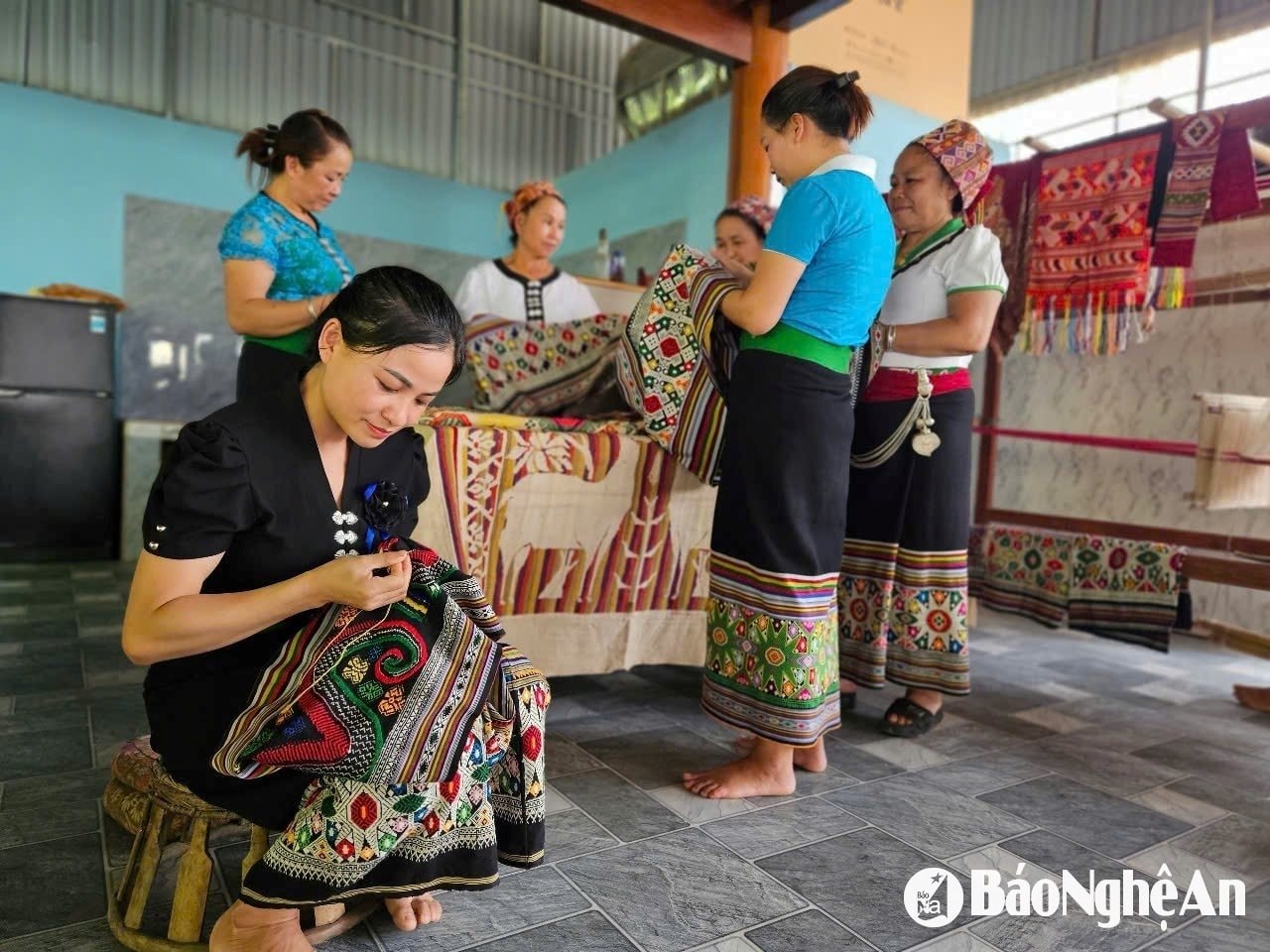
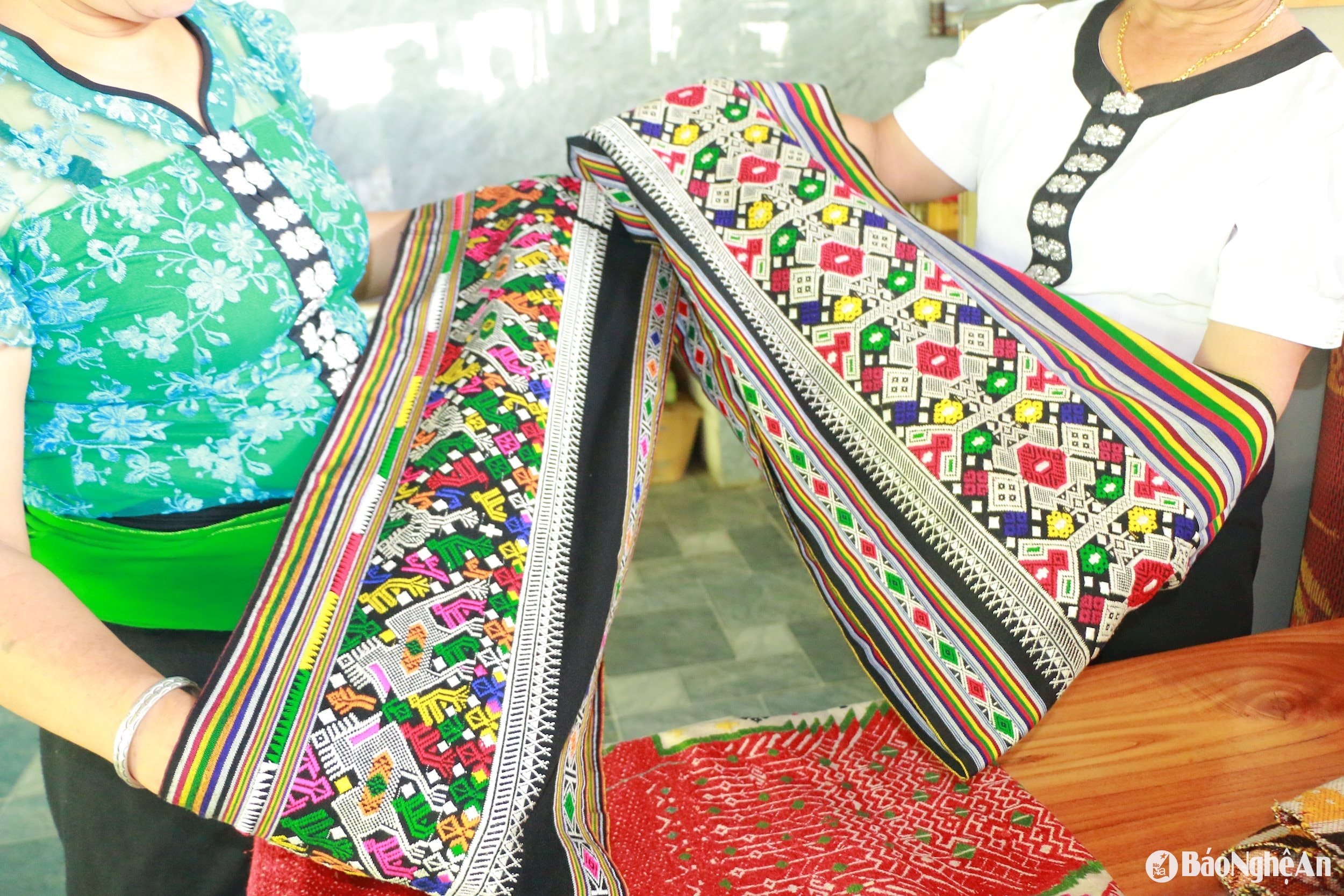
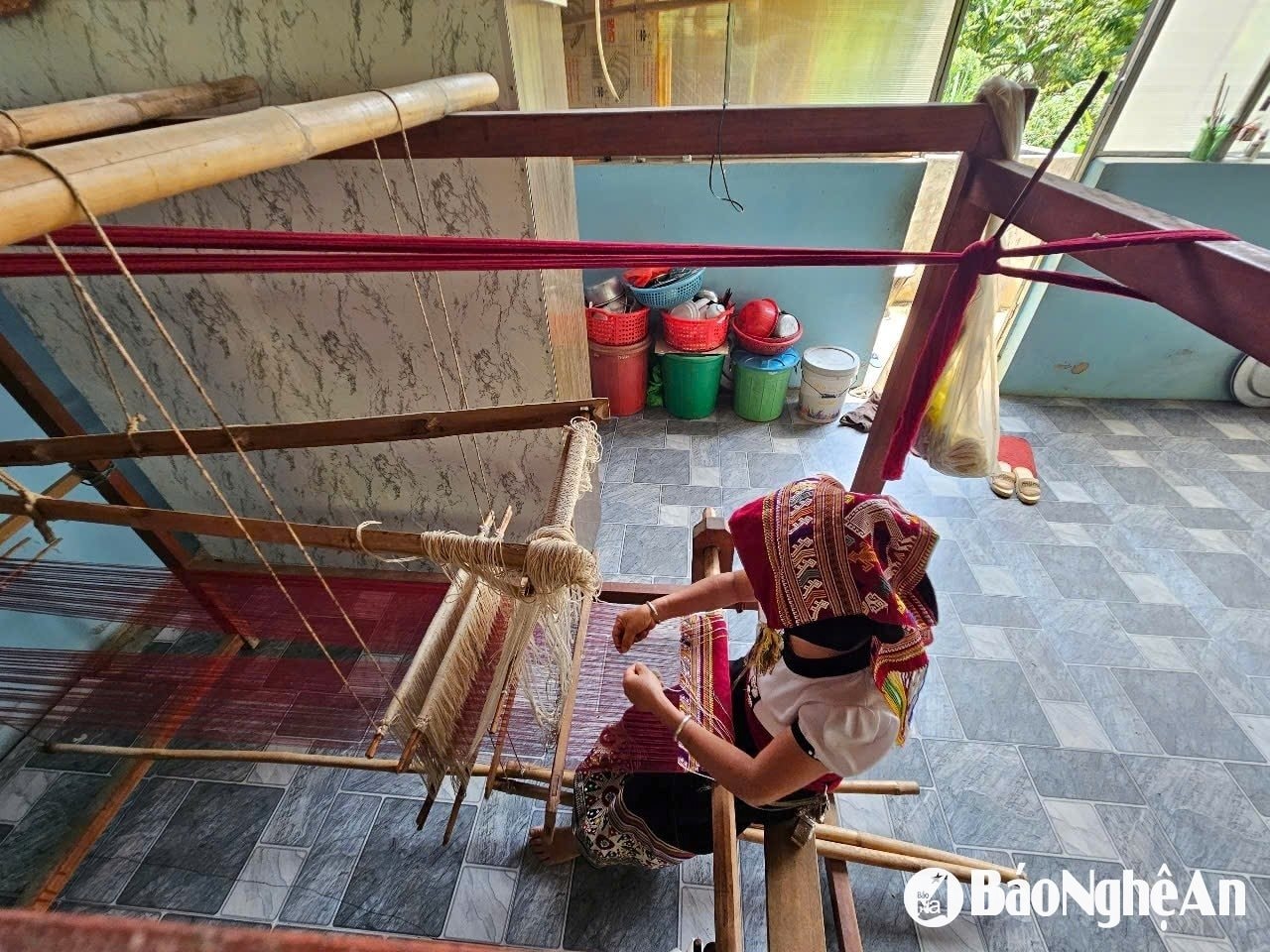
Households not only sell silk or weave brocade products into marketable goods, but can also sell silkworm breeding stock to other households. In 2024, the commune's silkworm cocoon production reached 6.0 tons, generating nearly 480 million VND in income; in 2025, the projected silkworm cocoon production is 6.5 tons, an increase of 0.5 tons compared to 2024, with an estimated income of nearly 520 million VND.
Currently, in Cam Muon commune, there are several private traders who purchase silkworm cocoons, silk threads, and brocade textile products from local people. Each kilogram of silk thread sells for 800,000 - 1,000,000 VND, and cocoons range from 100,000 - 120,000 VND/kg, which is an important source of income for the households.
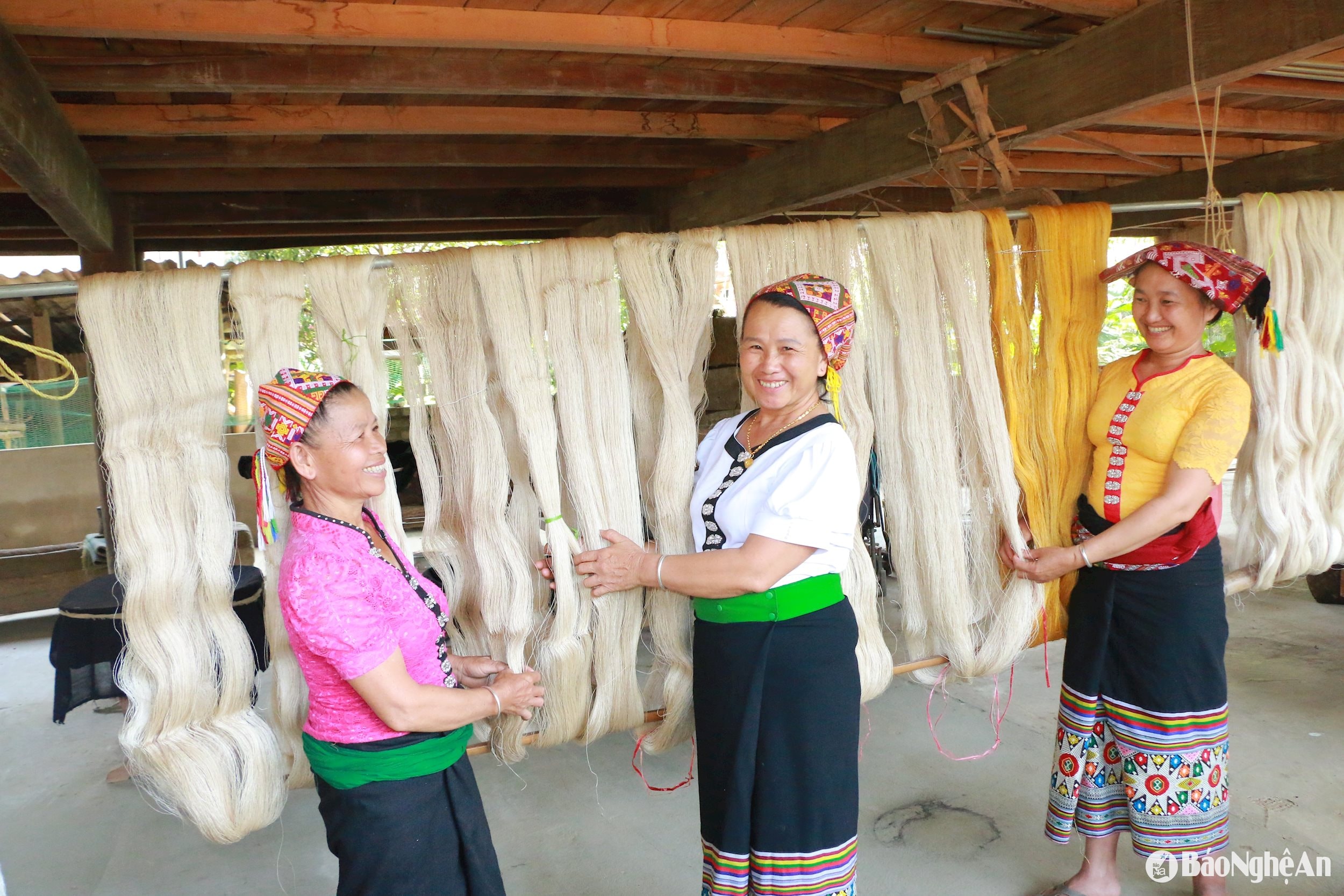
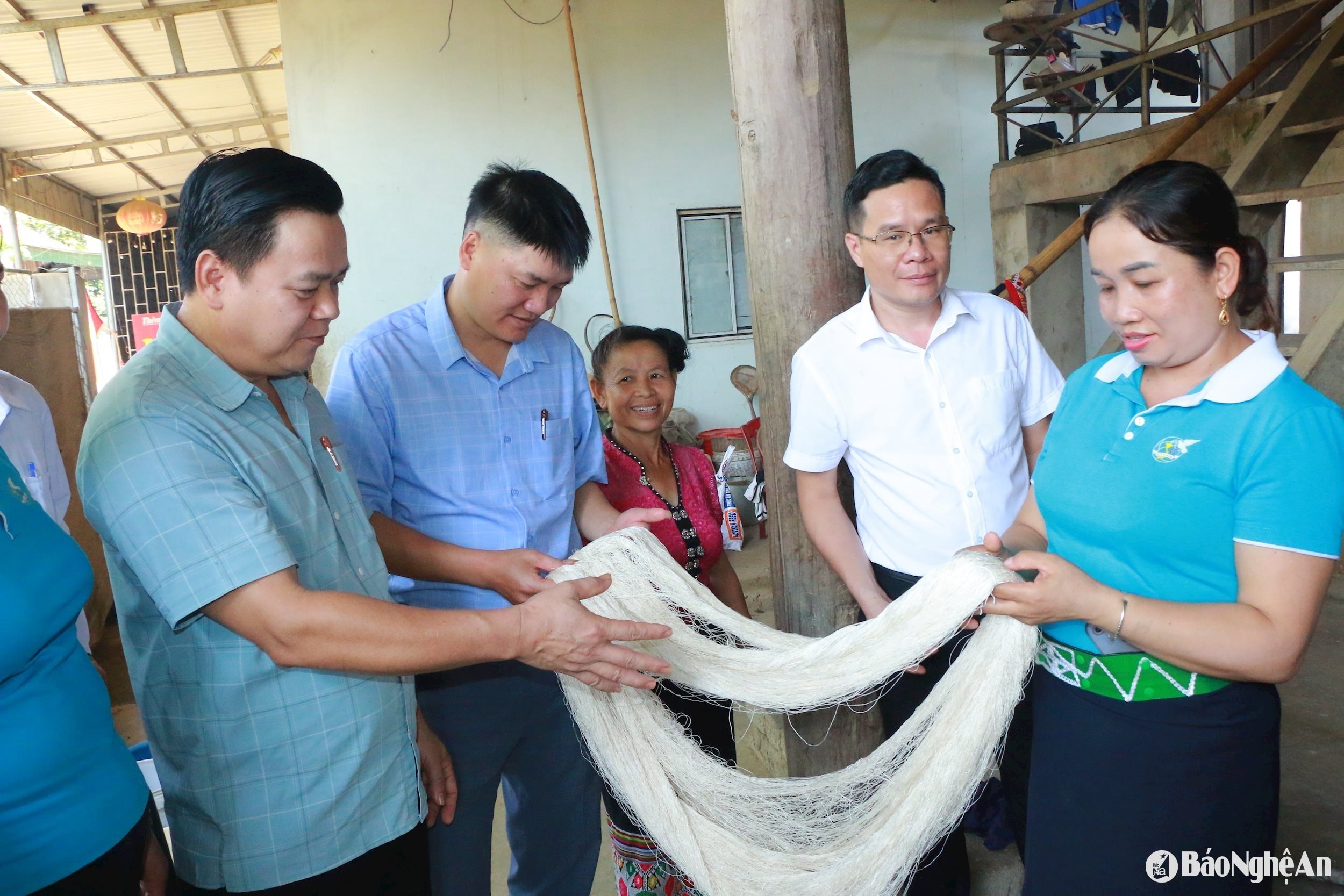
The current production linkage between private traders who purchase cocoons and silk threads and silkworm farmers creates a stable market and prices for the people. Hand-woven brocade products made from natural silk by the skilled hands of the people of Cam Muon are now popular with tourists, opening up potential for connection with ecotourism and community tourism.
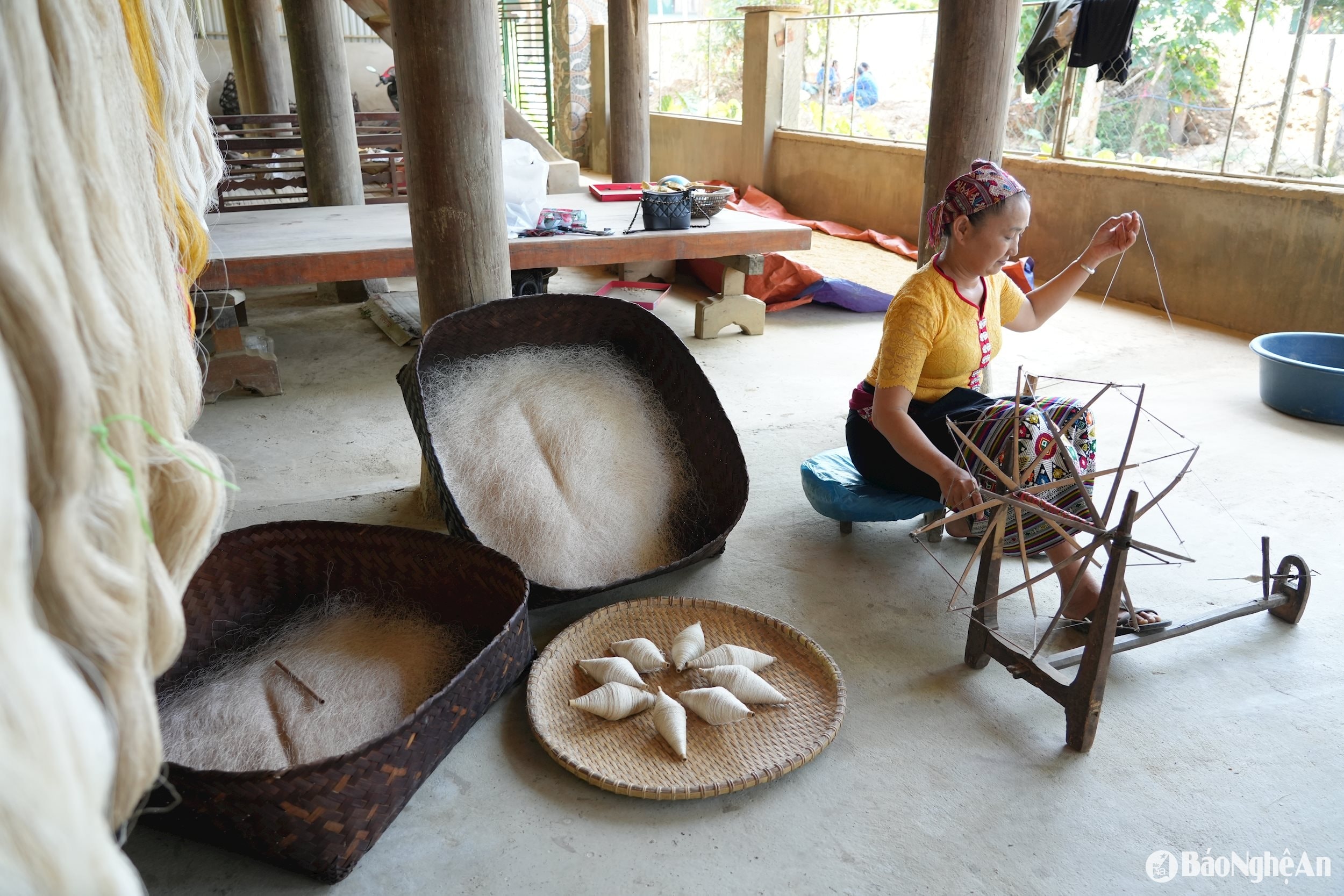
Leading us on a tour of the mulberry cultivation, silkworm rearing, and silk weaving models in Mong 1 and Mong 2 villages, Ms. Lang Thi Huong - President of the Women's Association of Cam Muon commune - said: The members of the weaving group also receive training from the Institute for Rural and Mountainous Economic and Social Development Consulting.(CISDOMA, in coordination with the Project Steering Committee of Que Phong district, facilitated a study tour to learn about sustainable mulberry and silkworm farming models based on linkages in Dien Chau, Do Luong, and Quy Chau districts. At these model farms, participants shared and learned about the operations of mulberry and silkworm cooperatives; techniques for raising silkworms for cocoons, silk reeling and spinning, purchasing and selling silkworm products; techniques for selecting, planting, caring for, and harvesting mulberry leaves for silkworms; and processing silkworms into food products (dried silkworms, silkworm wine, silkworm starch, etc.).
Some members experimented with raising silkworms (using silkworm varieties from the model) using the shared techniques and, in a short time, clearly saw the difference in productivity and identified techniques that could be suitable for local application. In addition, the CISDOMA Institute provided bio-fertilizers to support people in Mong 1 and Mong 2 villages in developing mulberry cultivation and silkworm rearing models and preserving the traditional brocade weaving craft.
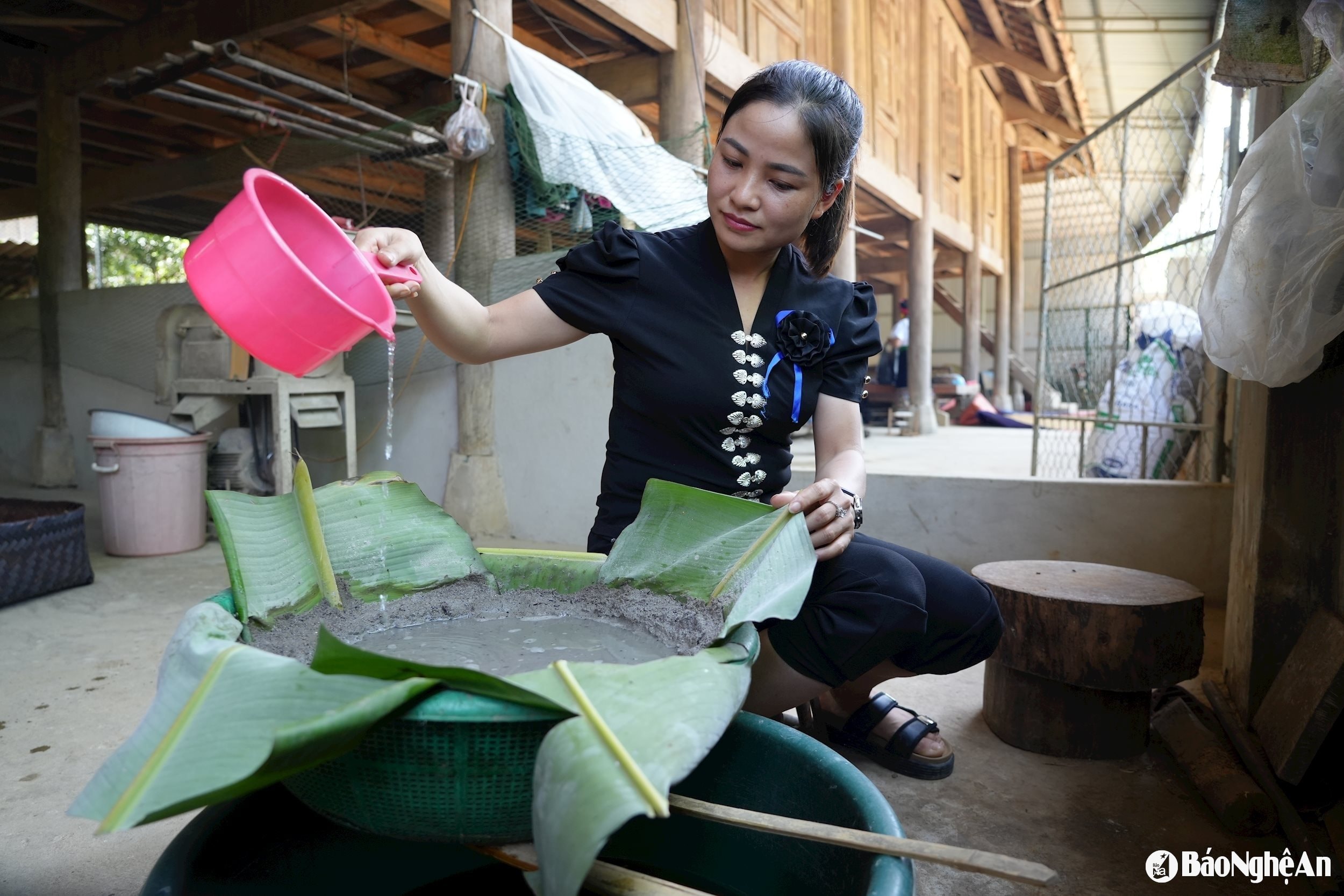
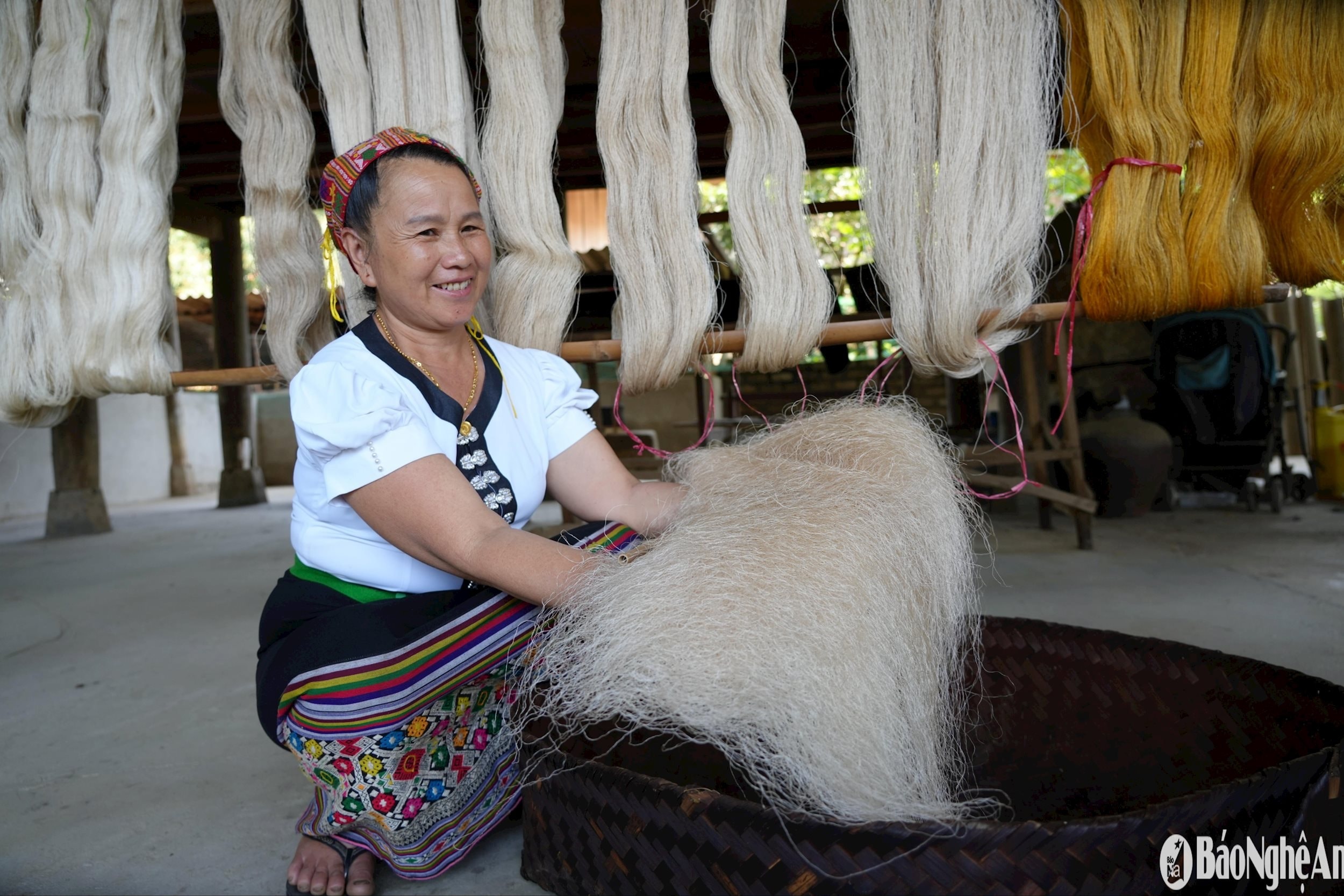
Ms. Vi Thi Huong, 59 years old, from Mong 2 village, who has been involved in mulberry cultivation and silkworm farming for decades, said: "Visiting and learning from successful models has helped me and other households gain much more new knowledge, especially techniques for caring for silkworms at different ages and stages of their life cycle, methods for preventing diseases, and how to select mulberry tree and silkworm varieties. This has improved the productivity and quality of mulberry trees and silkworms, thereby increasing livelihoods and developing the mulberry cultivation and silkworm farming industry in our commune."
Ms. Huong also said that currently, many households mainly sell silkworm breeds and silk, and if they weave brocade products, the price is higher (skirts cost 1 million - 1.2 million VND/skirt; scarves cost 800,000 - 900,000 VND/scarf).
Silk products from Cam Muon commune are popular with tourists thanks to their natural colors and handcrafted patterns. This is a promising direction linking traditional crafts with ecotourism and experiential tourism, opening up avenues for poverty alleviation and creating stable livelihoods for the people. From the initial 10 households, there are now 30 households participating in the model, with an annual income of 20-50 million VND per household from selling cocoons, silk yarn, and brocade products.
However, according to Ms. Lang Thi Huong, Chairwoman of the Women's Association of Cam Muon commune: Currently, silkworm farming facilities mainly utilize family-owned spaces, making them highly susceptible to temperature and humidity fluctuations, as well as environmental hygiene issues, which significantly impact production efficiency. Investment capital for expanding mulberry cultivation and silkworm farming is limited. Markets for the products have also not expanded, mainly being consumed in neighboring areas.
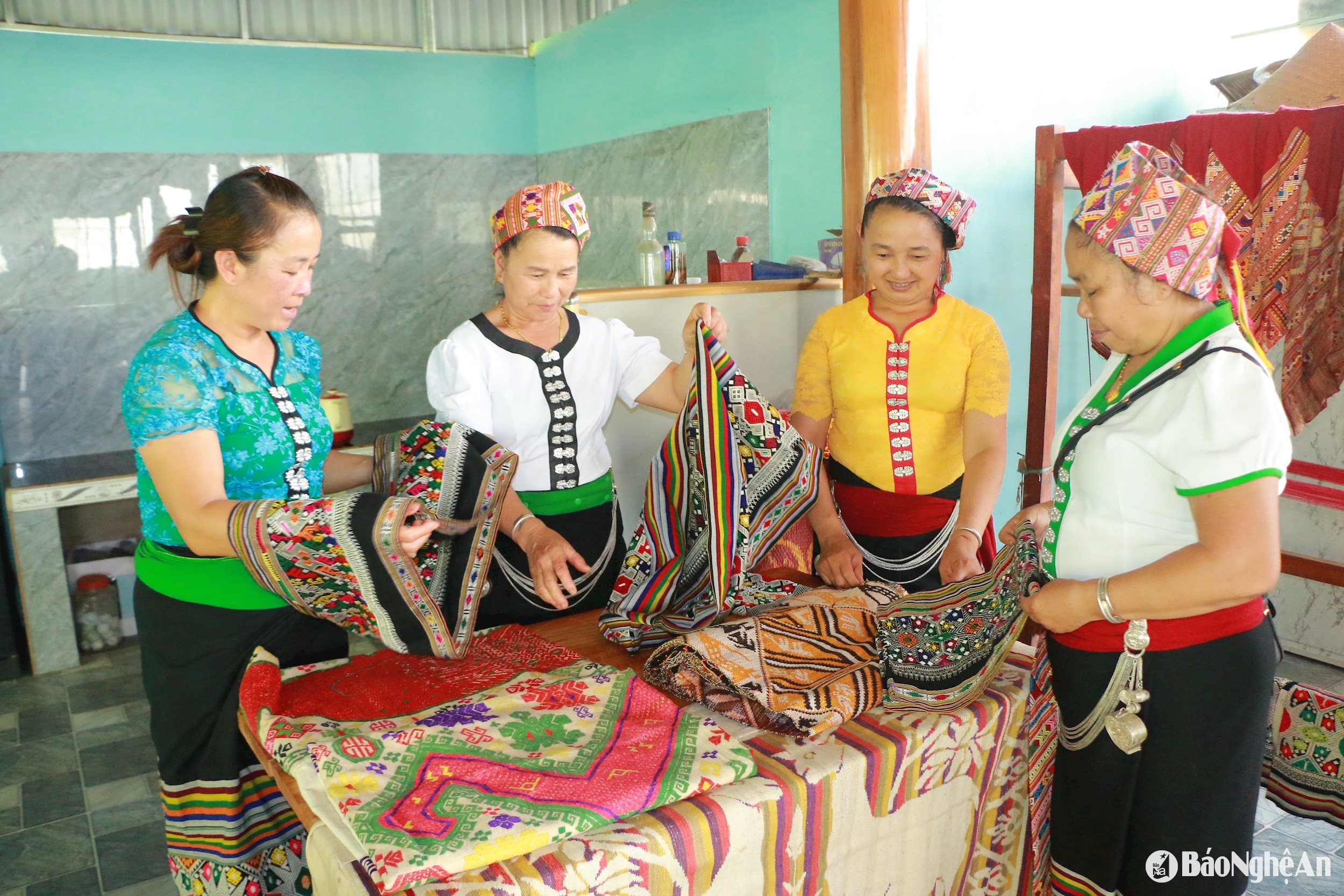
Looking ahead, the people of Cam Muon hope that all levels of government and relevant agencies will pay more attention and create favorable conditions for them to borrow capital to invest in expanding mulberry cultivation and silkworm farming; support investment in technological improvements; establish linkages and cooperation to find stable markets for their handicraft products; and create favorable conditions for planning and implementing crop restructuring to develop production, as there is still a considerable amount of fertile land along the Quang River and streams that can be converted to mulberry cultivation. In particular, they hope for support in building a showroom to display and introduce products from mulberry cultivation, silkworm farming, and silk weaving.
This is very significant for a particularly disadvantaged area like Cam Muon commune - where 1,200 households belonging to three ethnic groups, Thai, Kho Mu, and Kinh, live; because it will further motivate the people here to continue preserving, reviving, and developing this proud traditional craft.
Especially since the Ministry of Culture, Sports and Tourism recently announced the inclusion of the traditional brocade weaving craft of the Thai people in Nghe An province in the list of national intangible cultural heritage.