

With a large number of golden apple snails, farmers in Nghe An province cling to their fields to save their rice crops.
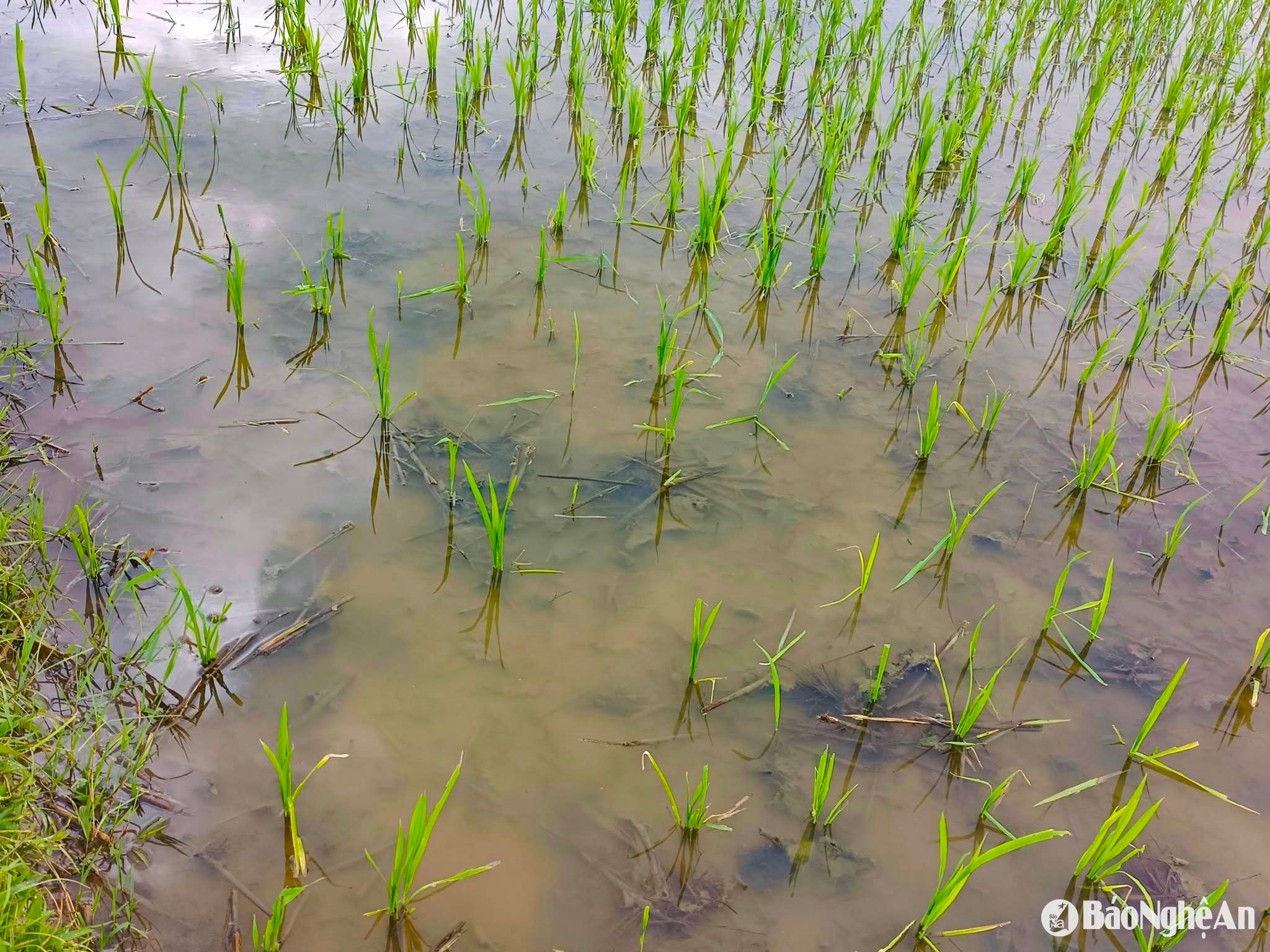
Golden apple snails are spreading rapidly in many areas of Nghe An province, causing serious damage to the newly planted summer-autumn rice crop. To save the young rice plants, many households have to wake up at 3-4 am, shining flashlights into the fields to catch snails.
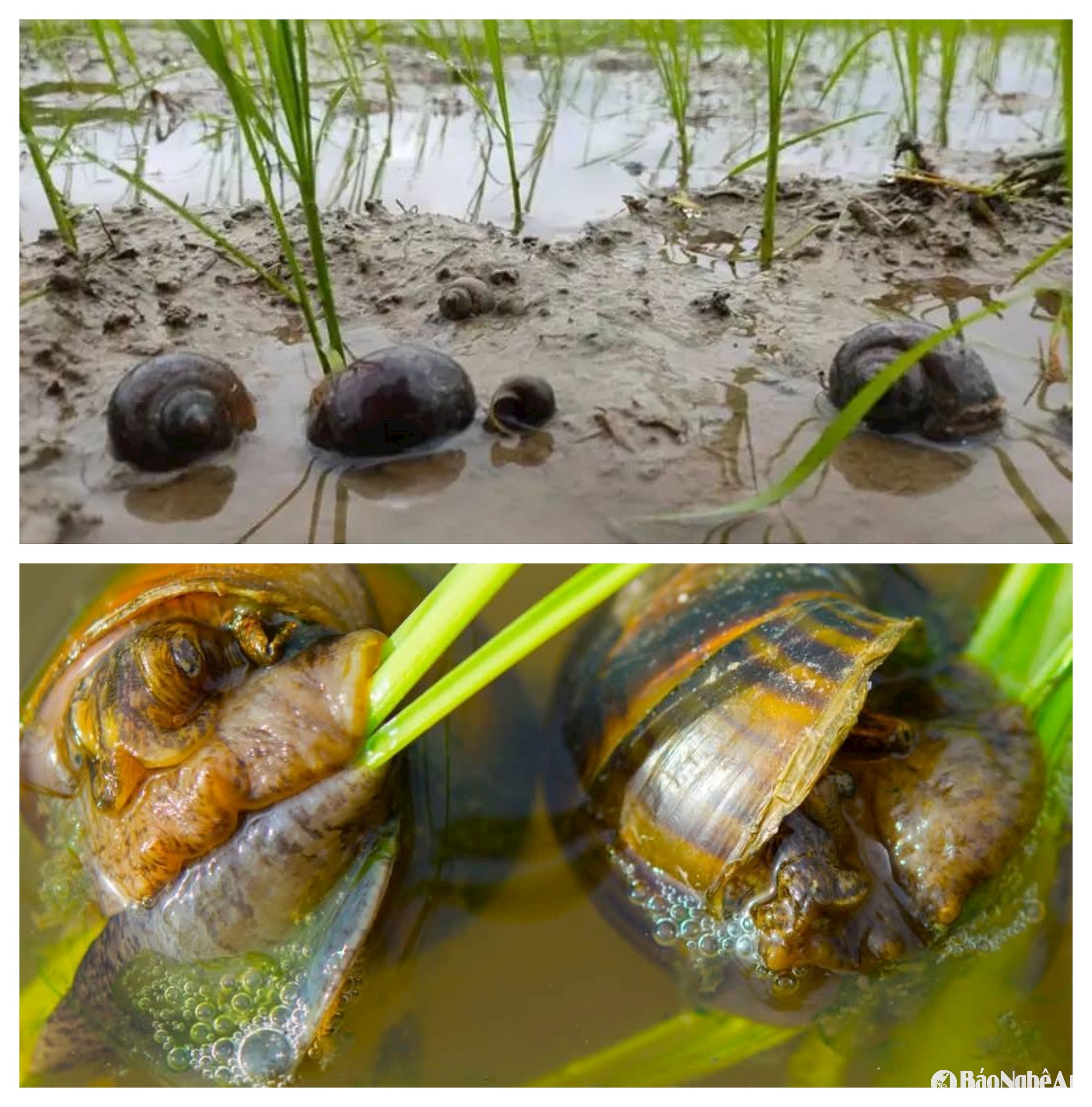
In recent days, in communes such as Kim Lien, Nam Giang, Xuan Hoa (Nam Dan); Dien Phu (Dien Chau); Bach Ngoc (Do Luong)... everywhere people have been flocking to the fields from early morning or in the middle of the night, bringing buckets, flashlights to catch golden apple snails.
“There are more snails than ever before. Just a few days' delay and the seedlings are devoured, the rice plants are stripped bare before they even have a chance to take root,” worried Mr. Phan Trung Tin (Kim Lien commune, Nam Dan district). He sowed 3 sao (approximately 0.3 hectares) of rice, but more than half of the area had to be replanted because it was completely destroyed by snails.
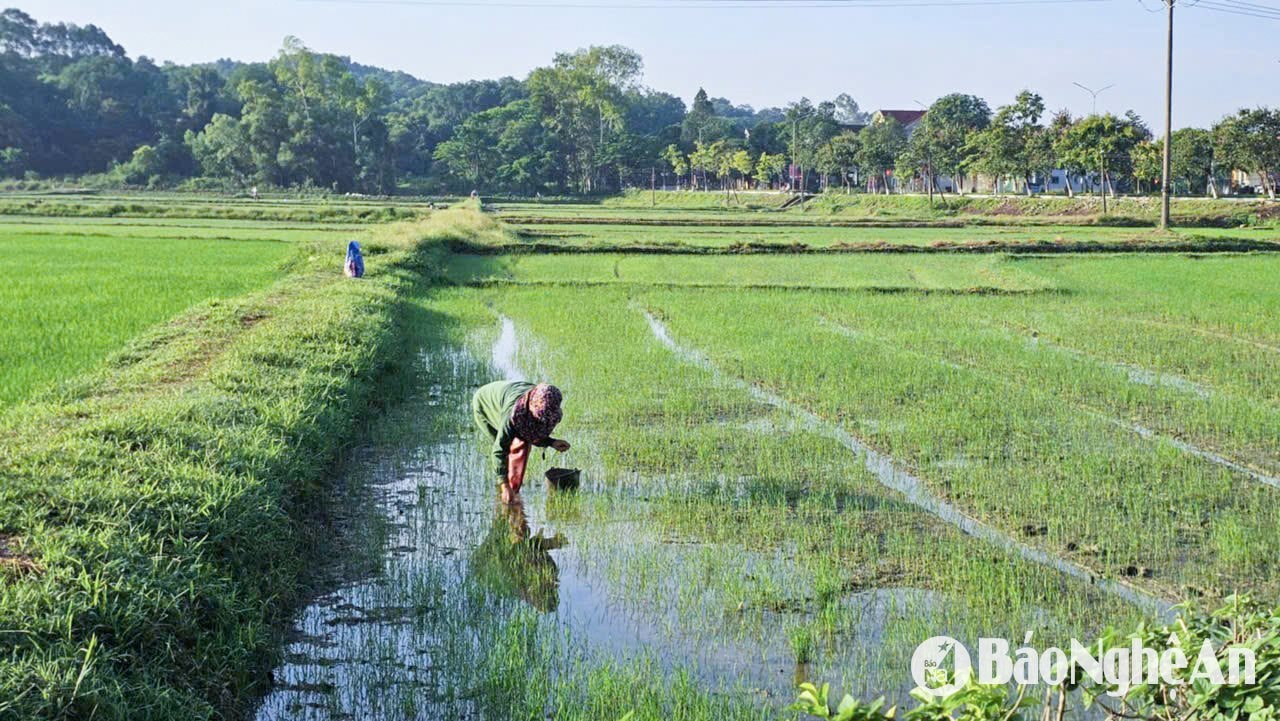
In Dien Phu commune (Dien Chau district), Ms. Nguyen Thi Thuy said: "A few days after transplanting, we noticed that the rice plants were missing clumps, and the young stems were being eaten away. We tried everything – luring them in, pulling them out, scattering sweet potato leaves… but nothing worked. We had to replant a second and third time."
Golden apple snails are most active in the early morning, dusk, and at night, so many families have to catch them throughout the night. In many localities, the sight of people using flashlights and wearing conical hats to go to the fields at midnight has become familiar. It's not just a few individual households, but entire hamlets and villages joining together to catch snails in the fields. "We go catching them every night. If we wait until morning, the fields will be completely eaten. One night I went to the field at 2 a.m. and caught snails until almost 5 a.m. before I got more than 30 kg," said Nguyen Van Phuc (Xuan Hoa commune, Nam Dan district).
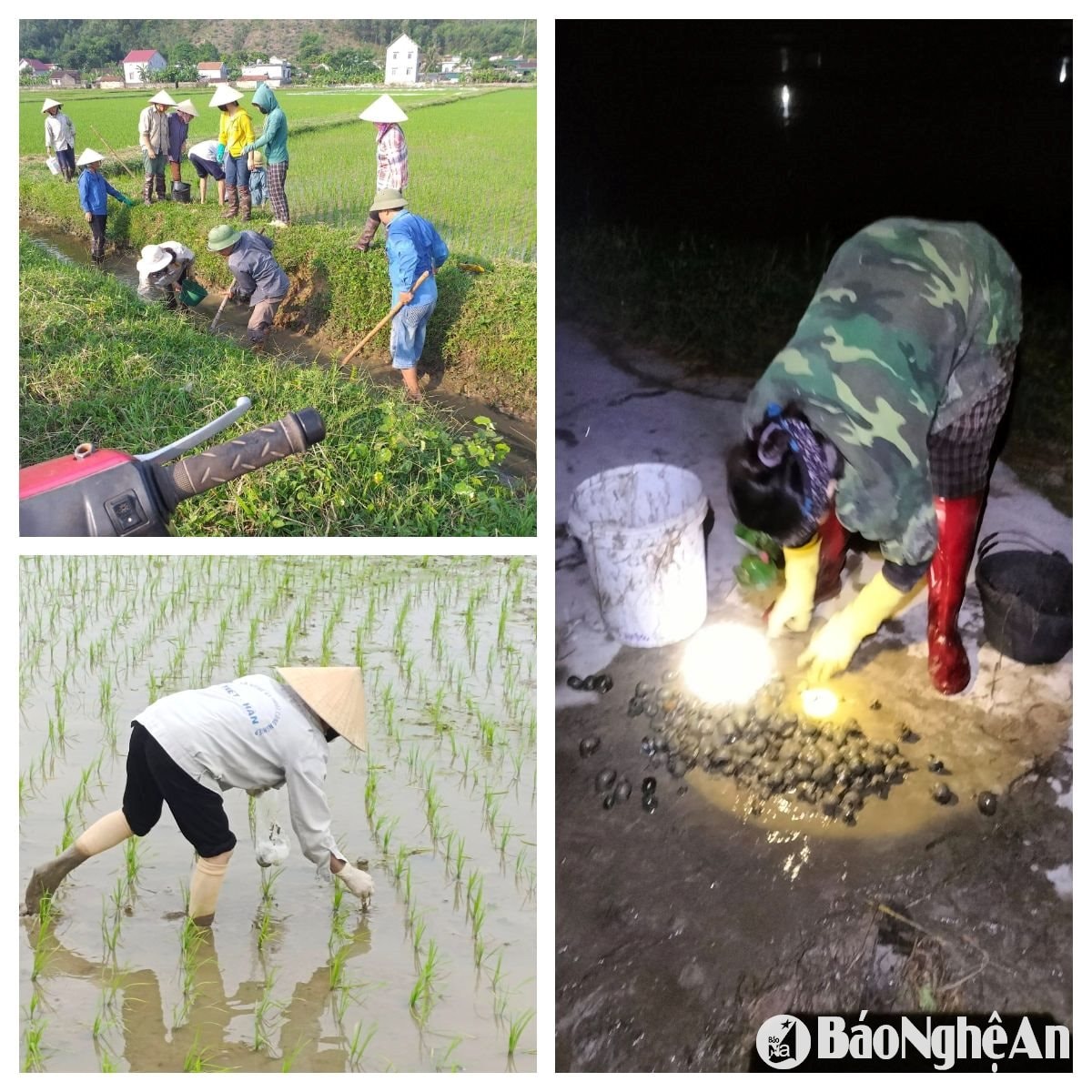
Meanwhile, in Ngoc Son commune (Do Luong district), many elderly women, undeterred by the hardship, carried headlamps and plastic buckets, wading through muddy rice fields to collect snails. Ms. Duong Van recounted: “My mother and I went to the fields at 4 a.m. and caught nearly 50 kg of snails in 4 hours. Leaving them for too long meant losing everything. We brought home what we caught to feed the ducks, and the rest we disposed of by crushing them, sprinkling lime on them, and burying them.”
According to experts, the golden apple snail population is booming due to favorable weather conditions: alternating rain and sunshine, and temperatures ranging from 28 to 35°C. Many rice fields, still wet after the spring harvest, create an ideal environment for the snails to multiply rapidly. In some low-lying areas, the snail density reaches 10-20 snails per square meter, seriously threatening young rice crops.
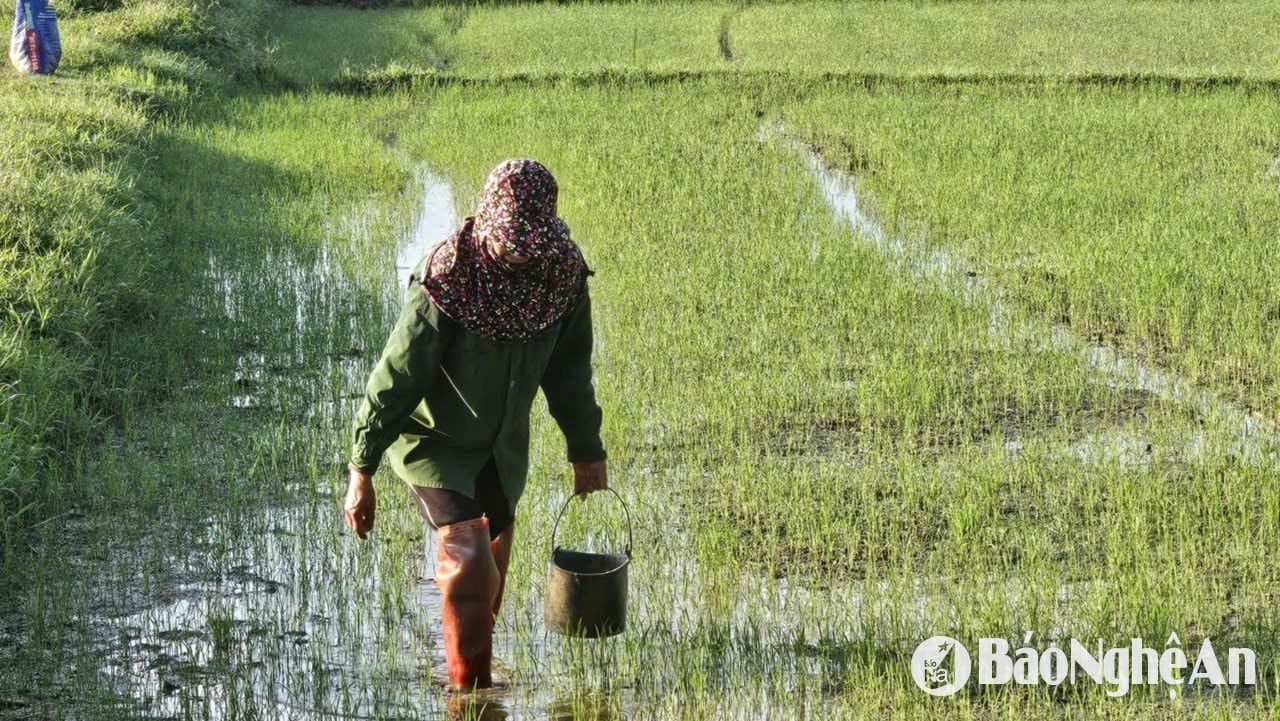
In response to this situation, many localities have launched a mass snail eradication campaign, encouraging people to use manual, environmentally friendly methods: catching adult snails, collecting snail eggs, luring them with sweet potato leaves and banana stems; and combining this with draining water and drying the soil. These traditional methods are proving effective in key rice-growing areas.
Notably, to support farmers and encourage effective snail control, many places have organized collection points for golden apple snails. For example, in Dien Truong commune (Dien Chau district), Ms. Ho Lich's collection facility receives 10-20 tons of snails daily, supplying them to distributors of aquaculture feed.
.jpg)
"The price of snails has increased to 3,000 - 3,200 VND/kg, and at times it has dropped sharply to 2,000 VND/kg, but people are still actively catching and collecting them because the main purpose is to save their rice fields," Ms. Lich said.
However, along with the snail-catching campaign, there are still places that misuse chemical pesticides to treat snails at high doses, not following recommendations. Agricultural engineer Chu Van Quan warned: "Using pesticides improperly not only pollutes water sources but also affects aquatic life in the fields such as crabs, fish, and shrimp. Killing snails in that way does more harm than good."
Farmers should only use pesticides when absolutely necessary, with safe active ingredients such as Metaldehyde, Niclosamide, etc.; adhering to dosage, timing, and environmental conditions. Ideally, a comprehensive approach combining biological, manual, and technical farming methods with proper water management is necessary for sustainable snail control without harming the environment.”
Given the unpredictable weather patterns and the continued potential for the spread of golden apple snails, proactive field inspections, sustained snail-catching campaigns, and increased community awareness are key solutions to protect the summer-autumn crop and maintain ecological balance.
.jpg)