

The Kremlin released details of the phone call between President Putin and Prime Minister Netanyahu.
The two leaders discussed the situation in Syria and the recent escalation between West Jerusalem and Tehran.
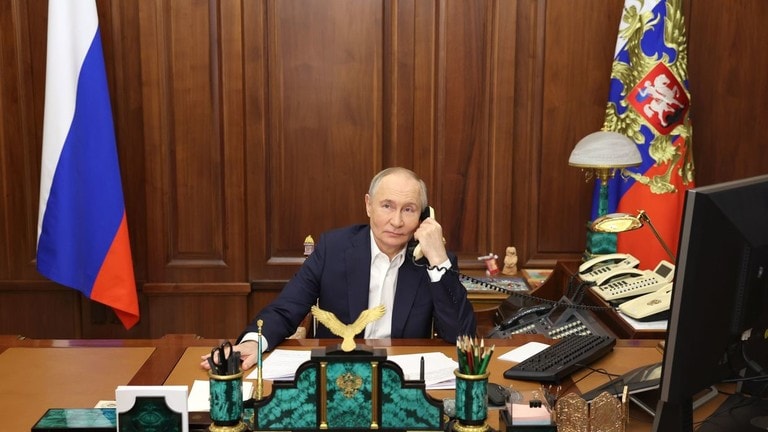
According to the Kremlin, Russian President Vladimir Putin had a telephone conversation with Israeli Prime Minister Benjamin Netanyahu on July 28, focusing on developments in the Middle East. The two leaders discussed the situation in Syria and the recent escalation of tensions between Israel and Iran.
The Kremlin said in a statement that Moscow reaffirmed its commitment to a peaceful solution to the conflicts in the region. President Putin stressed the importance of preserving the unity, sovereignty, and territorial integrity of Syria. He also offered Russia's support in establishing dialogue between Israel and Iran following the recent conflict between the two countries.
Moscow is ready to "contribute in every way possible to finding a negotiated solution" to the tensions surrounding Iran's nuclear program. The Kremlin added that Putin and Netanyahu also agreed to continue dialogue on pressing bilateral and international issues.
The phone call took place after the collapse of Bashar Assad's government late last year, and Israel expanded its presence in Syria beyond the Golan Heights, citing the need to prevent hostile forces from gaining a foothold near its borders.
Earlier this month, the Israel Defense Forces also carried out several airstrikes on the Syrian Ministry of Defense in Damascus, claiming the attacks were aimed at protecting the Druze minority community in southern Syria. Following this, Netanyahu and Syria's interim leader, Ahmad al-Sharaa, a former commander of the Hayat Tahrir al-Sham militant group, agreed to a ceasefire brokered by the United States.
In June, Israel carried out US-backed airstrikes on Iranian nuclear and military facilities, prompting retaliation from Tehran. The two countries engaged in attacks against each other for 12 days.
According to Putin, Russia was one of the few countries that contacted both Israel and Iran immediately after the initial attacks were launched in an attempt to de-escalate tensions. Russia also proposed several compromise frameworks for all parties.