

Over 3,000 Boeing workers went on strike simultaneously.
3,200 workers at Boeing plants in Missouri and Illinois began a strike after rejecting a proposed new contract, demanding clearer terms of employment.
Boeing workers went on strike after failing to reach an agreement on labor contracts.
Starting at midnight local time on Monday, more than 3,000 Boeing workers at three facilities in St. Louis, St. Charles (Missouri), and Mascotah (Illinois) officially went on strike after negotiations with the company over a new labor contract failed to reach a final agreement.
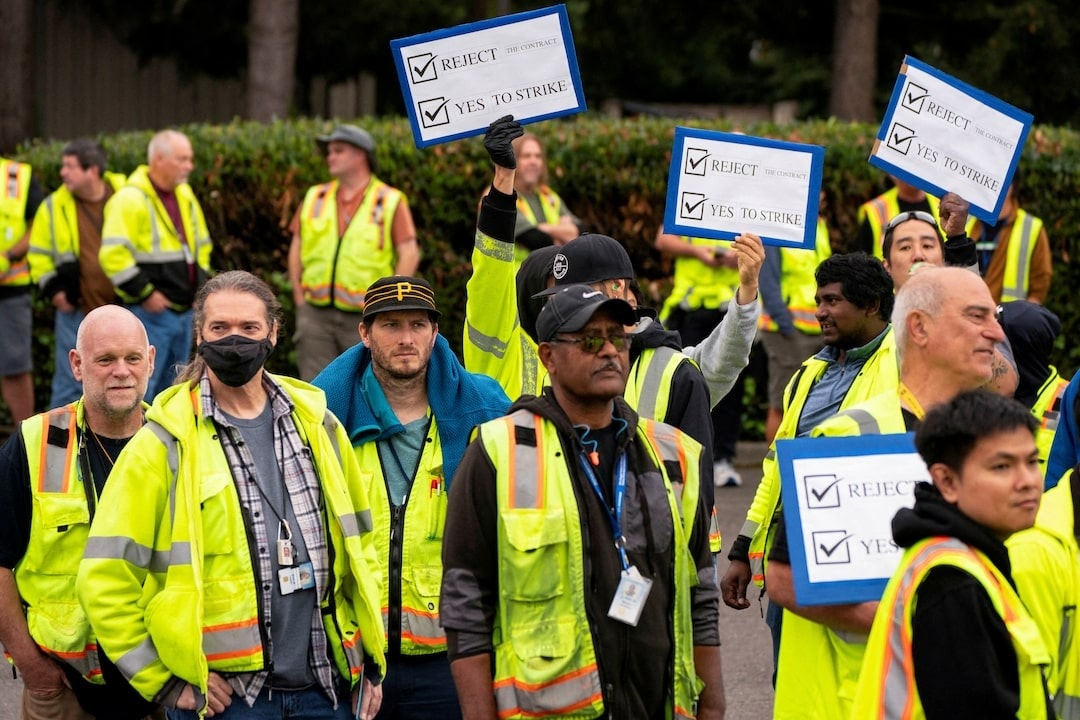
The strike was organized by the International Aerospace and Mechanical Workers Federation, District 837 (IAM District 837), representing engineers and mechanics directly involved in manufacturing fighter jets, defense systems, and missile technology at Boeing factories.
"This is a matter of respect, not empty promises."
In a statement posted on social media platform X, an IAM representative emphasized:
"The strike isn't simply about money, but about respect and professional dignity."
Earlier, in late July, union members voted overwhelmingly to reject Boeing's proposed revised contract, effectively expiring the old employment contract just before midnight on July 27.
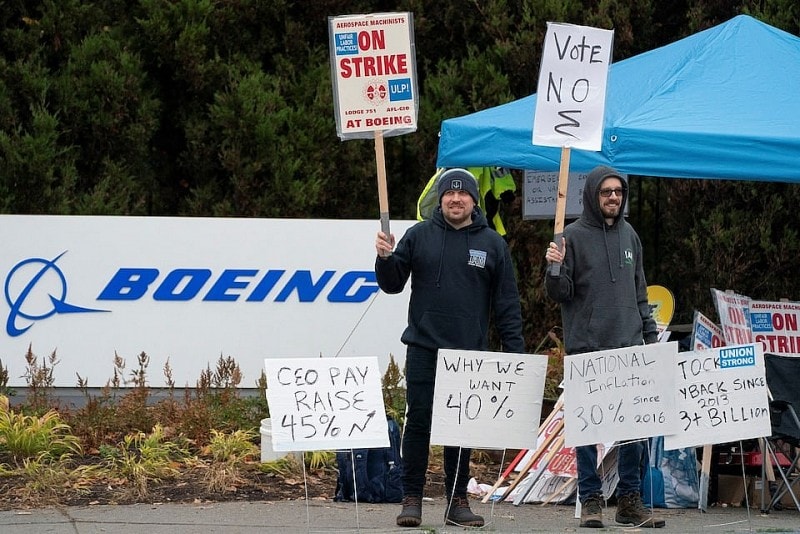
Boeing responded: "We have prepared alternative scenarios."
Dan Gillian, Vice President and General Manager of Boeing's Strategic Aerospace division, said in an email to NPR that the company was "very disappointed" that the proposed contract was rejected, even though it included:
Average salary increase of 40%
Adjusting the work shift structure to be more flexible.
However, Boeing also affirmed that it had a plan in place to respond to the strike, ensuring that operations at the factories would continue thanks to the non-striking workforce.
Affected aircraft and weapons
According to information from IAM, the striking workers are employed at three factories that assemble and maintain critical military equipment, including:
F-15 and F/A-18 fighter jets
Missile defense system
Defense technology serves the national security of the United States.
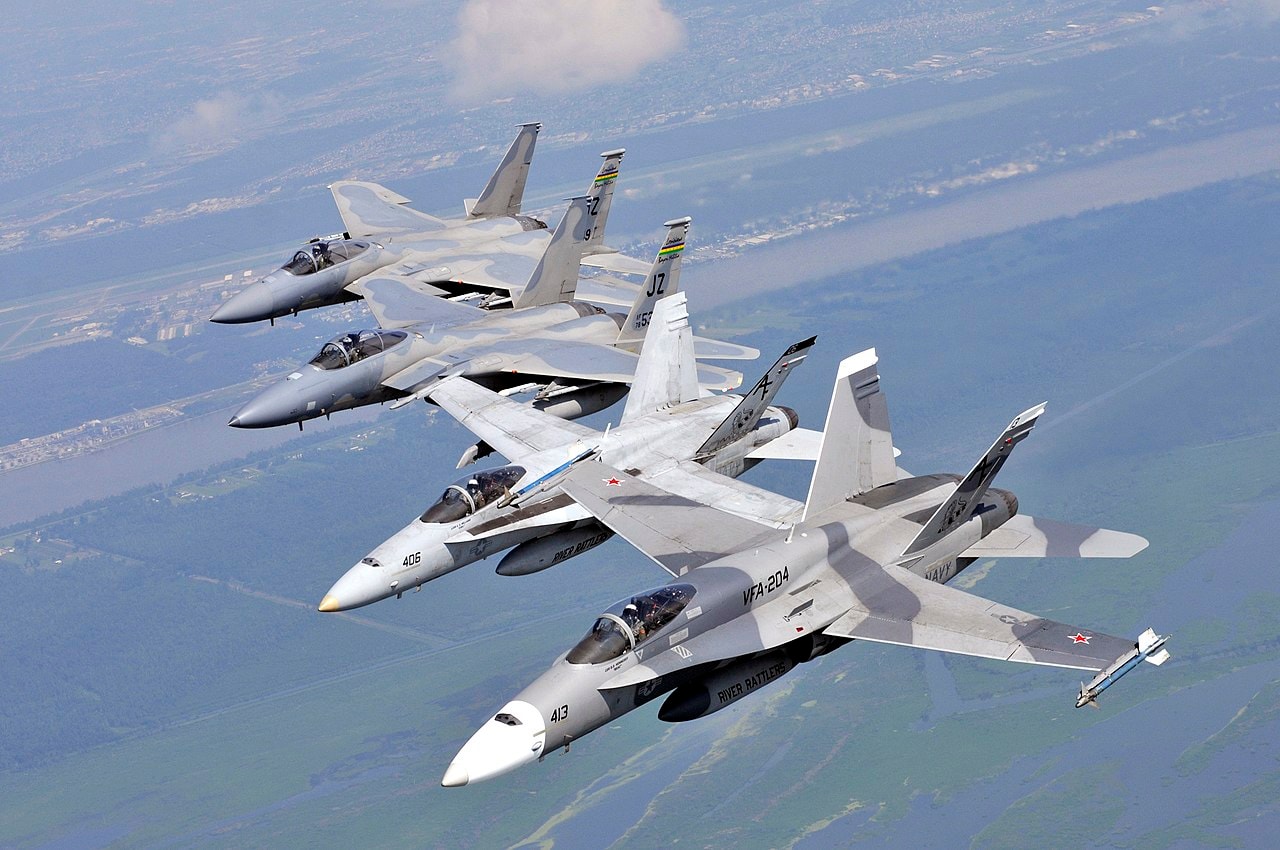
The strike is raising concerns about production schedules and supply chains in the defense sector, especially in the context of a volatile global security situation.
Labor tensions are escalating in the defense industry.
Sam Cicinelli, Vice President for the Midwest at IAM, argues that workers are playing a crucial role in ensuring national security and therefore deserve fair contracts that protect their families' futures and recognize their high level of expertise.
This strike is the latest example of the growing labor rights protests at large American corporations, where the gap between employee and management expectations is becoming increasingly pronounced.
Although Boeing had prepared for the possibility of strikes, this new development could still impact the production of weapons and fighter jets in the US. With more than 3,000 workers rejecting new contracts and demanding more than just wages, the confrontation between workers and the aerospace giant shows no signs of abating.