From the historic autumnto the aspiration to build the nation
Minh Quan•August 19, 2025 08:32
To commemorate the 80th anniversary of the August Revolution and National Day on September 2nd (1945 – 2025), Nghe An Newspaper and Radio & Television had an interview with Associate Professor Dr. Tran Vu Tai - Vice Rector of the Faculty of Education, Vinh University, regarding the historical values and lessons of this momentous event.
PV: Professor Tran Vu Tai, when you mention the "historic autumn" of 1945, how do you envision that moment? Surely, in the memory of a historian like you, many special images and emotions come to mind?
Assoc. Prof. Dr. Tran Vu Tai:The autumn of 1945 ushered in an era of national independence, with revolutionary fervor sweeping across all three regions like a surging tide and a cascading waterfall. In the streets of Hanoi, Hue, Saigon, and many other places, the red flag with a yellow star fluttered everywhere, symbolizing the aspiration for independence and national unity. The shouts of "Long live independent Vietnam!" and "Independence or death!" resonated, stirring the hearts of the people.
Ba Dinh Square on September 2, 1945, became a historic meeting point. In the brilliant golden autumn sunshine, millions of hearts turned towards President Ho Chi Minh. When he solemnly read the Declaration of Independence, giving birth to the Democratic Republic of Vietnam, the entire nation entered a new era – an era of independence and freedom.
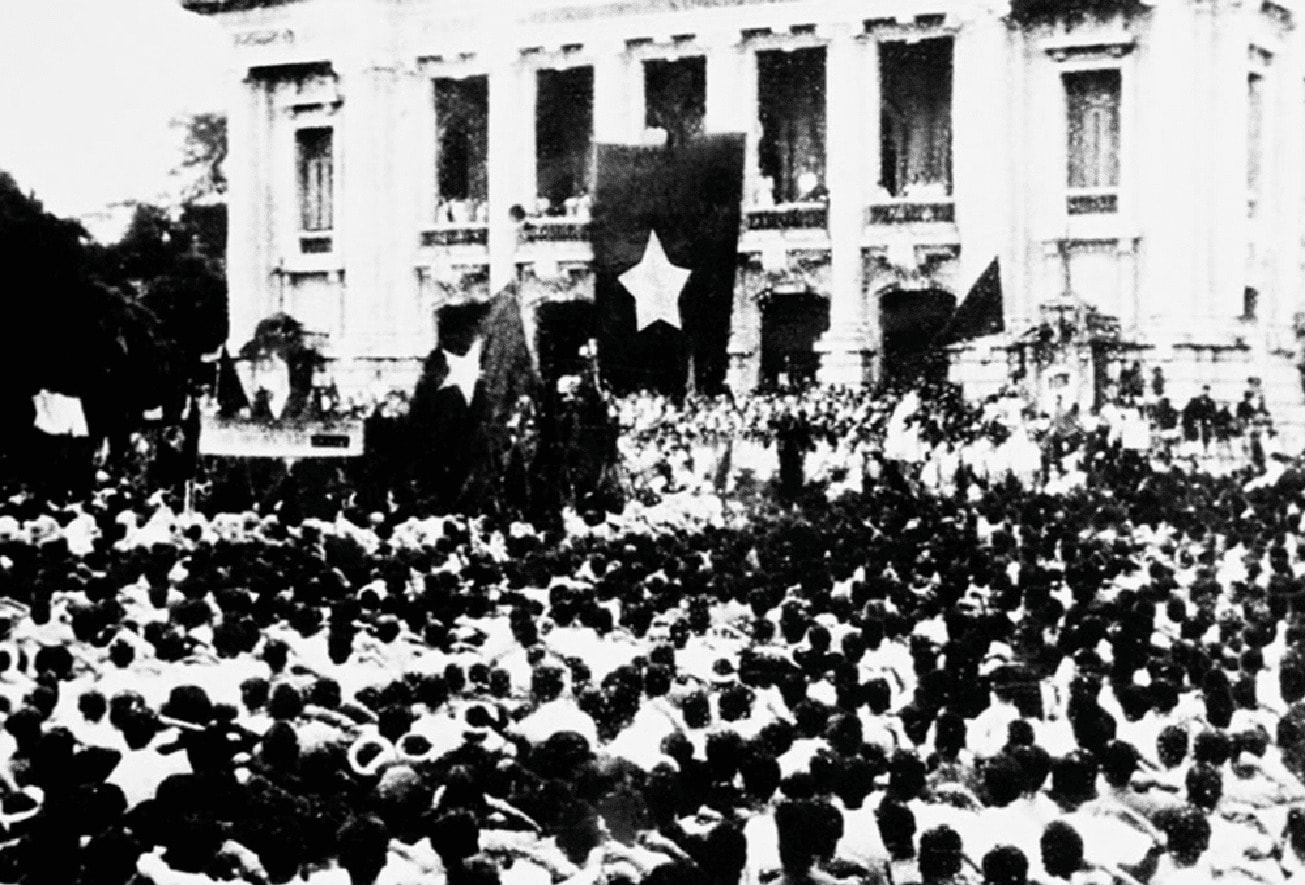
A rally at the Grand Theatre Square on August 19, 1945. (Archival photo)
The August Revolution was not only a great political event but also a heroic epic of the nation. It both reminds us to honor our glorious history and inspires action to build a strong and prosperous Vietnam.
PV: There's an opinion that the August Revolution succeeded because it knew how to "seize the golden opportunity." In your opinion, what factors contributed to the formation of that "golden opportunity"?
Assoc. Prof. Dr. Tran Vu Tai:Yes, the "golden opportunity" was extremely important. In my opinion, the victory in August was the result of the convergence of both objective and subjective factors.
Objectively speaking, the world situation changed dramatically in 1945. Nazi Germany was defeated, the Soviet Union declared war on Japan and quickly defeated the Kwantung Army. On August 15, 1945, Japan surrendered unconditionally, creating a "power vacuum" in Indochina: the Japanese army was in disarray, the French had not yet returned, and the puppet government was paralyzed. This opportunity lasted only a short 20 days, during which time Japan had surrendered but the Allied forces had not yet arrived.
In Vietnam, following the French coup (March 9, 1945), the old ruling apparatus collapsed, and the Tran Trong Kim government became powerless. The famine of 1945 caused millions of deaths, driving the masses to desperation, leaving them with no other option but to rise up and fight for their right to live.
Subjectively, since its founding (1930), the Communist Party of Vietnam has persistently built up revolutionary forces, meticulously preparing in terms of organization, personnel, base areas, and securing international support. When the opportunity arose, the entire nation, with its fervent patriotism, rose up like a storm.
The key point is that our Party correctly identified and seized the opportunity in a timely manner. Thanks to this, in just 15 days (August 14–28, 1945), power was transferred to the people throughout the country, from rural areas to cities, from North to South.
PV: During that journey, what special impressions did Nghe An leave that deeply impressed you during your research?
Assoc. Prof. Dr. Tran Vu Tai:Nghe An is a land rich in patriotic traditions and revolutionary struggles, once the center of the revolutionary movement of 1930-1931, culminating in the Nghe Tinh Soviet – a powerful testament to the strength of the worker-peasant alliance under the leadership of the Communist Party of Vietnam. President Ho Chi Minh affirmed: "The glorious tradition of the Nghe Tinh Soviet propelled the revolutionary movement throughout the country forward, leading to the brilliant success of the August Revolution."
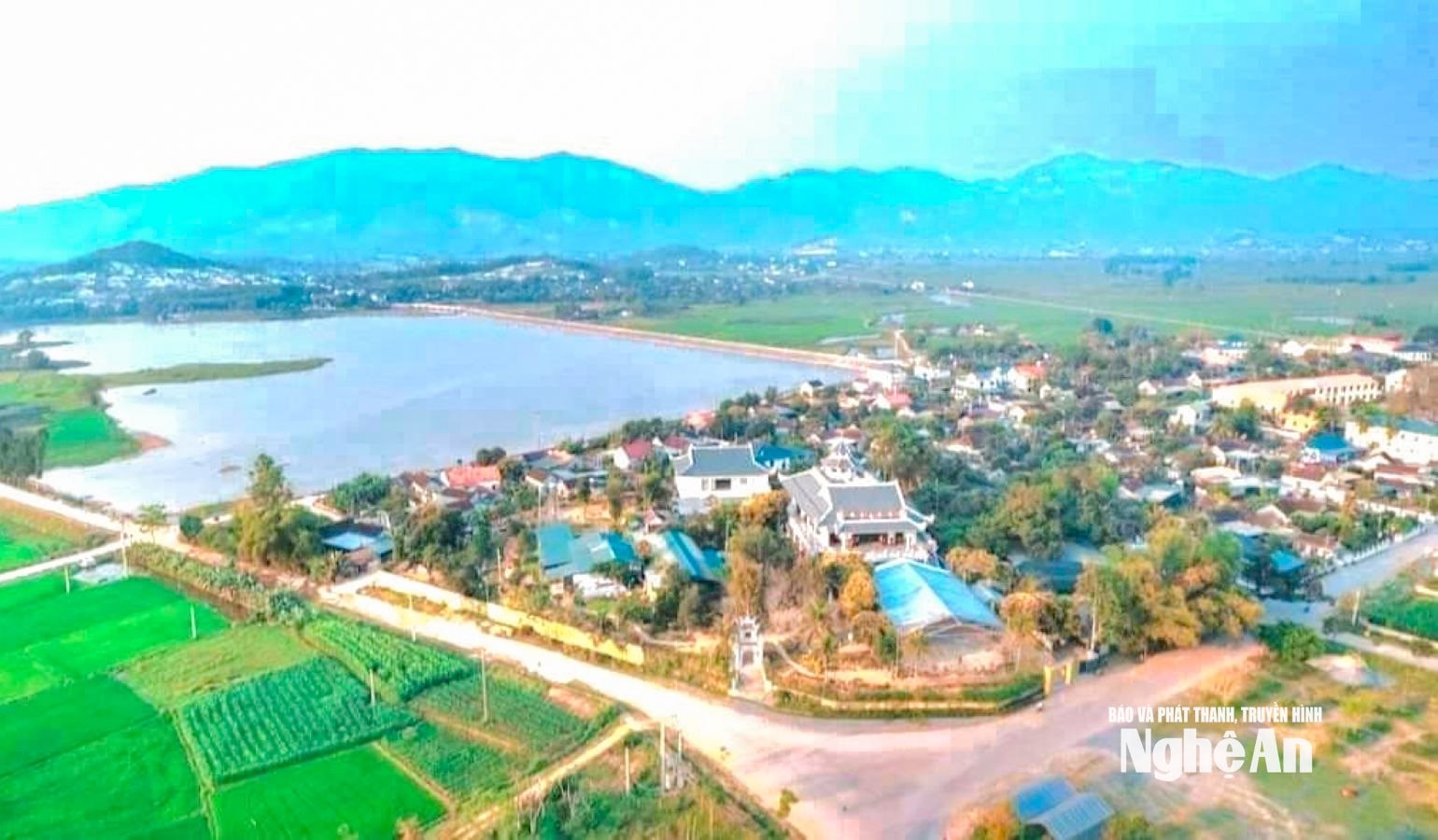
Immediately after the Japanese fascists declared their surrender, on August 15, 1945, the Viet Minh Inter-provincial Committee of Nghe Tinh held a meeting and instructed the districts and counties to proactively and flexibly launch an uprising to seize power. On August 16, 1945, under the leadership of the Viet Minh Front at the commune level...Thanh Thuy(Nam Dan), a large number of people rose up in unison and successfully seized power. Thanh Thuy became the first commune in Nghe An to gain control of its own government.
A view of Thanh Thuy commune, later Nam Thanh commune in the former Nam Dan district, now Nam Dan commune, Nghe An province. This was the first commune in Nghe An to gain control of the government during the August Revolution. (Photo courtesy of the Nam Dan Commune Party Committee)
Following Thanh Thuy, on August 18, 1945, the Quynh Luu Uprising Committee led armed demonstrations by the masses, surrounding the district headquarters, forcing the district chief to resign, establishing a "Provisional Revolutionary Government" for the district, and leading the people to seize power in the communes and villages. Quynh Luu became the first district in the province to seize power.
From these initial victories, the revolutionary spirit quickly spread throughout the province: on August 18th, the government was seized in Quynh Luu; on August 21st in Vinh City, Hung Nguyen and Dien Chau districts (August 21st was later considered the "day of seizing power throughout the province"); on August 22nd in Nghia Dan; on August 23rd in Nam Dan, Thanh Chuong, and Anh Son; on August 25th in Nghi Loc and Yen Thanh; and on August 26th in Tuong Duong and Quy Chau.
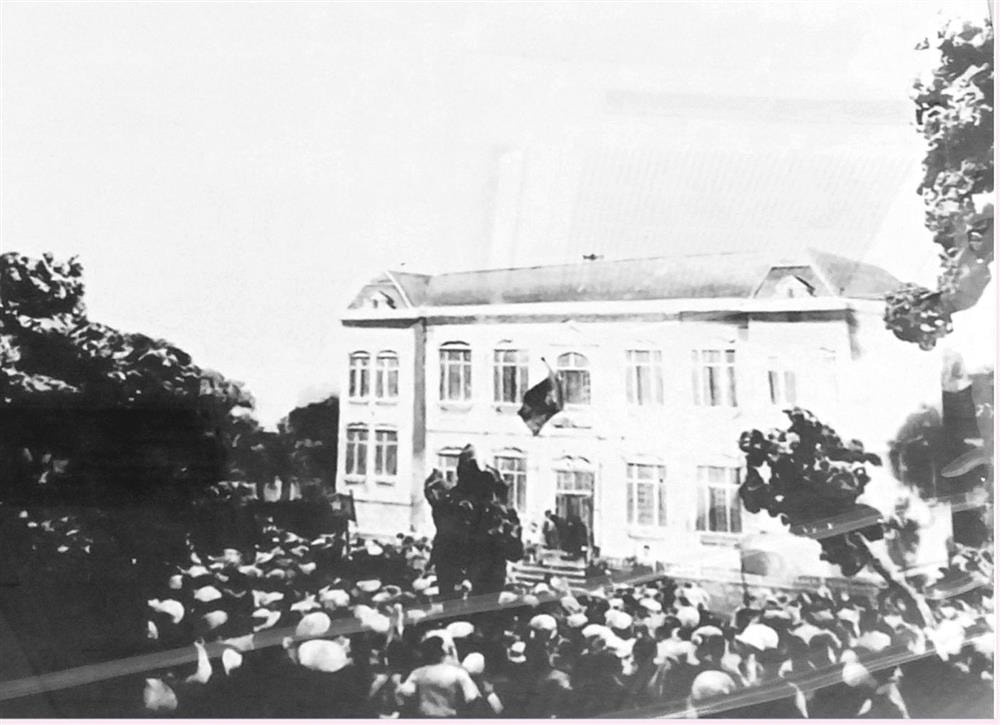
People participating in the uprising to seize power in Vinh City in August 1945. (Archival photo)
On August 24, 1945, the Provisional Revolutionary People's Committee of Nghe An province was established, with Comrade Le Viet Luong as its Chairman. Within just nine days (from August 18 to 26, 1945), the general uprising in Nghe An achieved complete victory.
Associate Professor Tran Vu Tai. Photo: Provided by the interviewee.
"
The victory of Nghe An – a strategic area – not only affirmed the indomitable fighting tradition of the province's people but also made a significant contribution to the overall victory of the entire country, creating a resounding success for the nation in the August Revolution.
Assoc. Prof. Dr. Tran Vu Tai - Vice Rector of the School of Education, Vinh University
PV: If you had to draw one or two of the biggest lessons from the August Revolution for today, what would they be?
Assoc. Prof. Dr. Tran Vu Tai:The victory of the August Revolution in 1945 left behind many valuable lessons, enriching the Vietnamese revolutionary tradition and contributing to the revolutionary theory of Marxism-Leninism, including two lessons that remain relevant to this day.
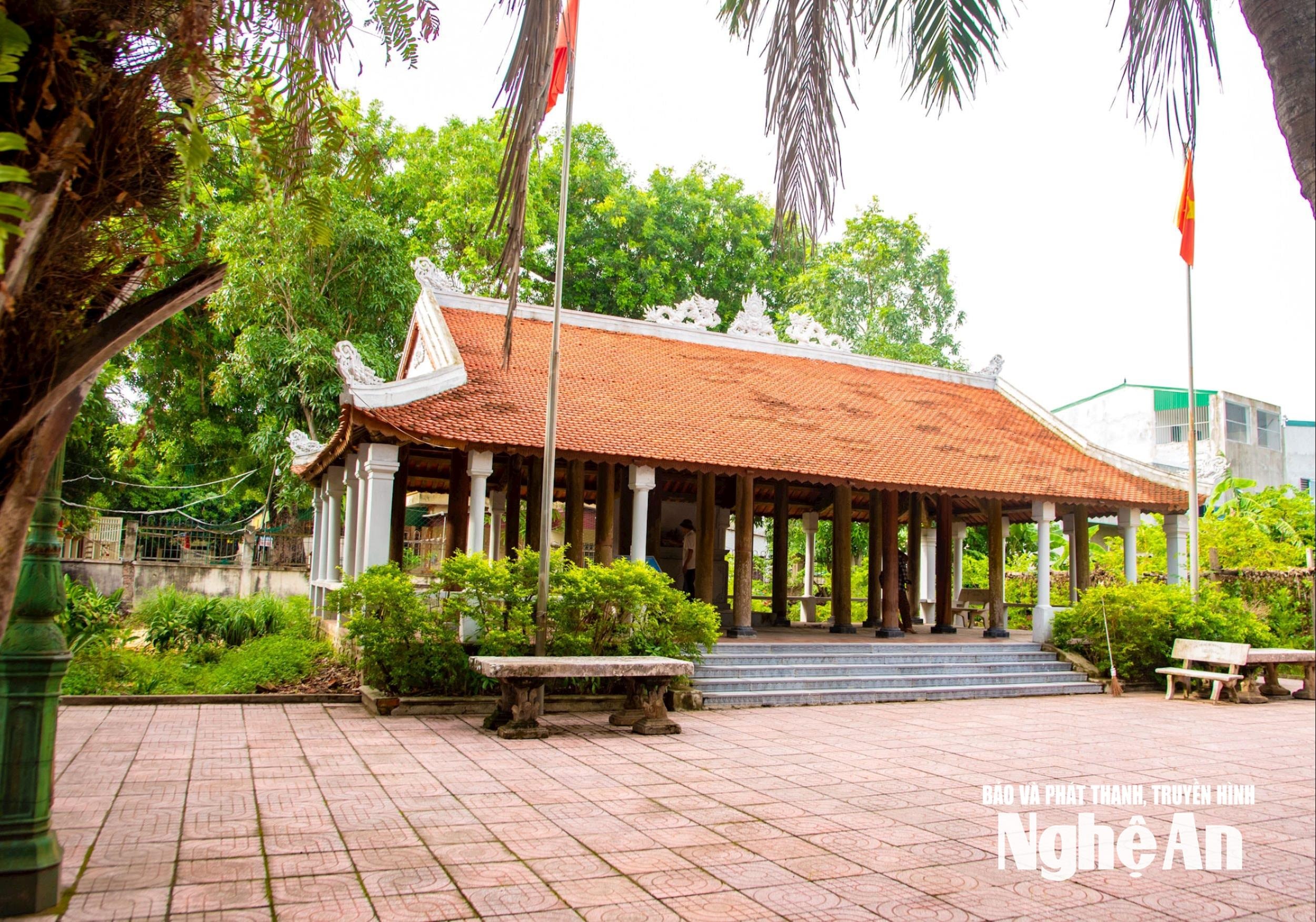
Trung Temple - a historical site belonging to the Lang Do National Historical Site complex in Truong Vinh ward. On August 17, 1945, after the people of Yen Dung village rose up to seize power, the Viet Minh chose this location as their revolutionary headquarters. Photo: Minh Quan
Firstly, it is essential to uphold the Party's leadership role and promote national unity: The August Revolution affirmed the decisive role of the Communist Party of Vietnam and the strength of national unity. That victory demonstrated that, to achieve and maintain national independence, it is necessary to steadfastly uphold the Party's wise leadership and persistently pursue the goal of "national independence linked with socialism." In the current cause of building and defending the Fatherland, this requires the Party to continuously strengthen its resolve, enhance its leadership capacity, and maintain a close, inseparable bond with the people.
Secondly, we must uphold the spirit of patriotism, independence, self-reliance, and seizing opportunities: The victory of 1945 is proof of the strength of the aspiration for independence and freedom, the spirit of patriotism, and the art of seizing revolutionary opportunities. Today, that spirit continues to illuminate the cause of building and defending the country: steadfastly pursuing the path of independence and self-reliance in the fields of politics, economics, national defense, and diplomacy; while at the same time knowing how to creatively seize opportunities in industrial and technological development and international integration to enhance the nation's position.
PV: In school, when teaching and interacting with students, how do you usually convey the spirit of that revolution so that they understand its relevance and vitality today?
Assoc. Prof. Dr. Tran Vu Tai:The August Revolution is a glorious milestone, affirming the strength of national unity and the will for self-reliance. With the mission of "nurturing" future generations, teacher training students must deeply internalize the lessons of patriotism, unity, and unwavering resilience.
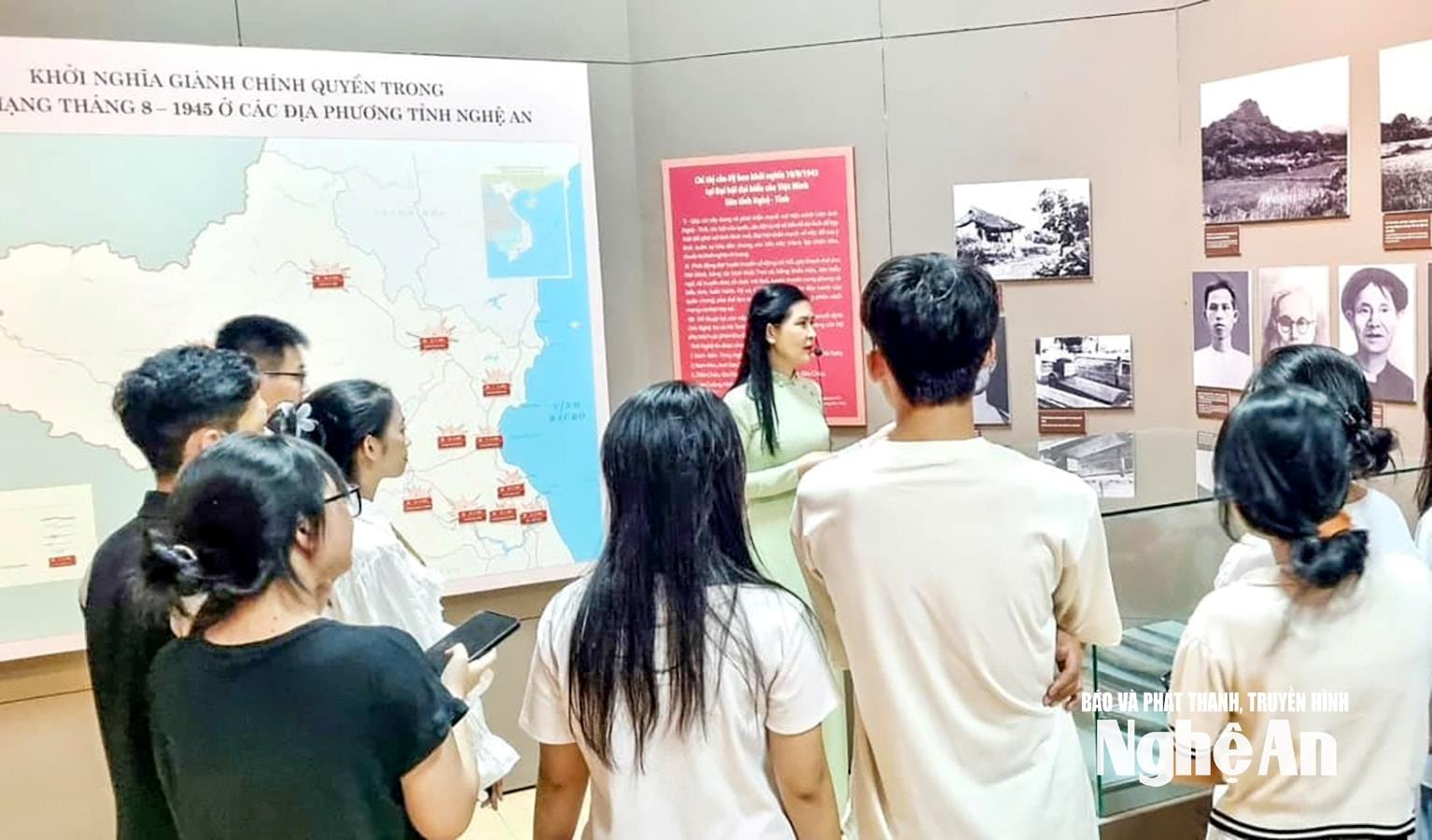
Students from Vinh University visit the Nghe An - Soviet Nghe Tinh Museum. Photo: Minh Quan
At our teacher training college, we always uphold the values of "the Party's will and the people's aspirations" along with the creative spirit of the teacher, as advised by President Ho Chi Minh. Therefore, educating students in revolutionary ideals becomes our top priority. Teachers not only impart knowledge but also inspire in their students the desire to build and serve the Fatherland. Today's teacher training students need to clearly understand that they will continue to write the "golden pages of history" of the nation with their intellect, courage, and responsibility.
PV: On the occasion of the 80th anniversary, what message would you like to convey to the younger generation today?
Assoc. Prof. Dr. Tran Vu Tai:The August Revolution is an enduring historical testament to the power of patriotism and the will for national independence. Today's young generation should not only be proud of this tradition but also transform that pride into motivation for learning and creativity, so that each step forward contributes to enriching and beautifying the nation.
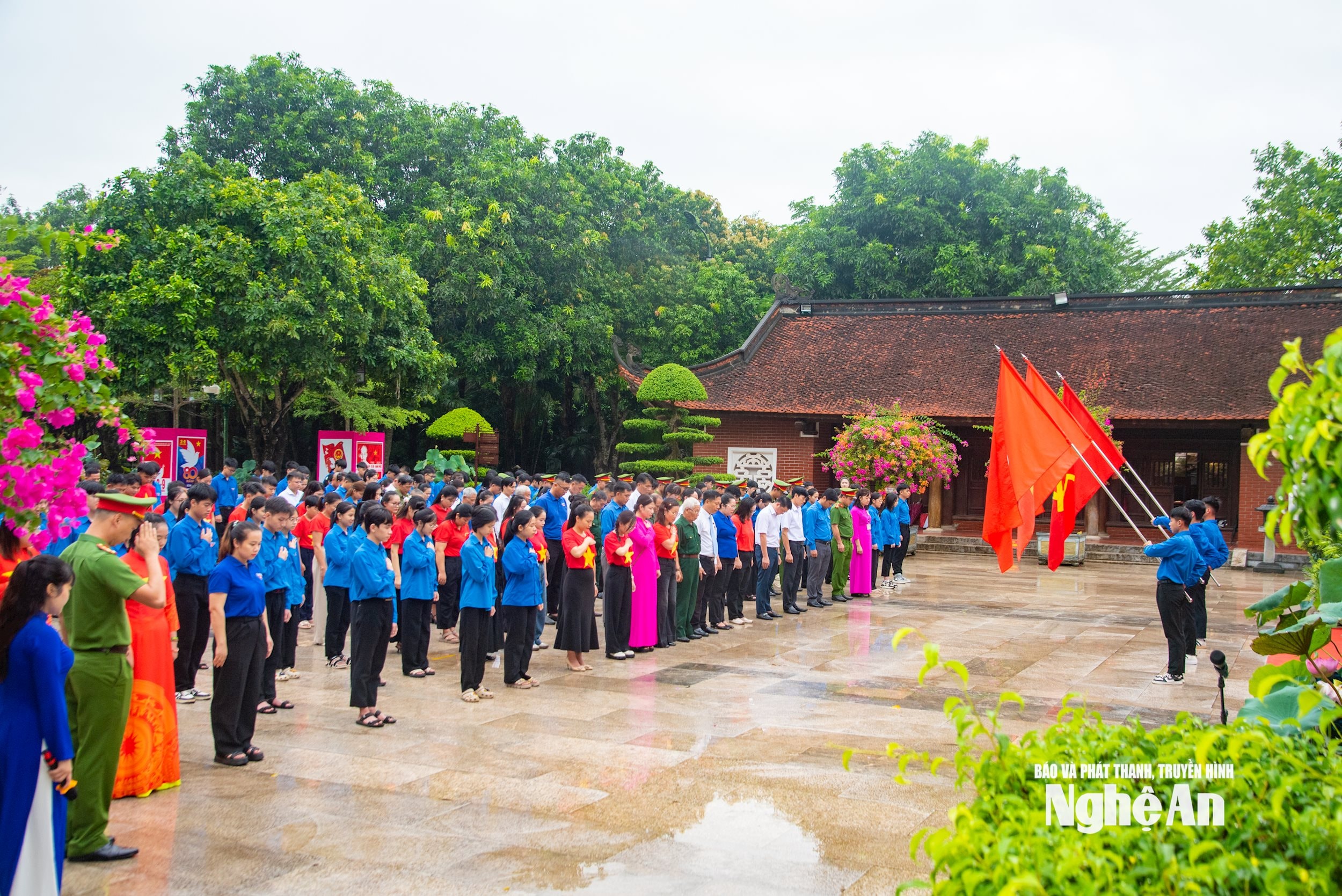
A flag-raising ceremony by the youth of Nghe An province to celebrate the 80th anniversary of the August Revolution and National Day on September 2nd at the Kim Lien National Special Historical Site. Photo: Minh Quan.
If in 1945, our entire nation united to rise up and seize power, then today, national unity is the key to integration, sustainable development, and maintaining sovereignty in a fiercely competitive international environment. Every young person needs to cultivate a spirit of sharing and cooperation, overcoming personal ego to work together for the benefit of the community and the nation.
At the same time, the younger generation must uphold the spirit of independence and self-reliance, while simultaneously expanding their global horizons, readily embracing innovation, and mastering science and technology to usher the country into a new era. Eighty years ago, our ancestors wrote the autumn of independence with blood, tears, and faith. Today, let the younger generation write the bright spring of the nation with intellect, aspirations, and creativity – so that the Vietnamese Fatherland may forever endure and thrive.