

Hundreds of worker dormitories in Nghe An are empty.
When factories were built in industrial zones, many households living nearby invested large sums of money to build rental housing for workers. However, although the companies were operational, the demand for rental housing was not high, and some companies even provided transportation for their workers, leaving the rental properties vacant.
Anticipating the factory
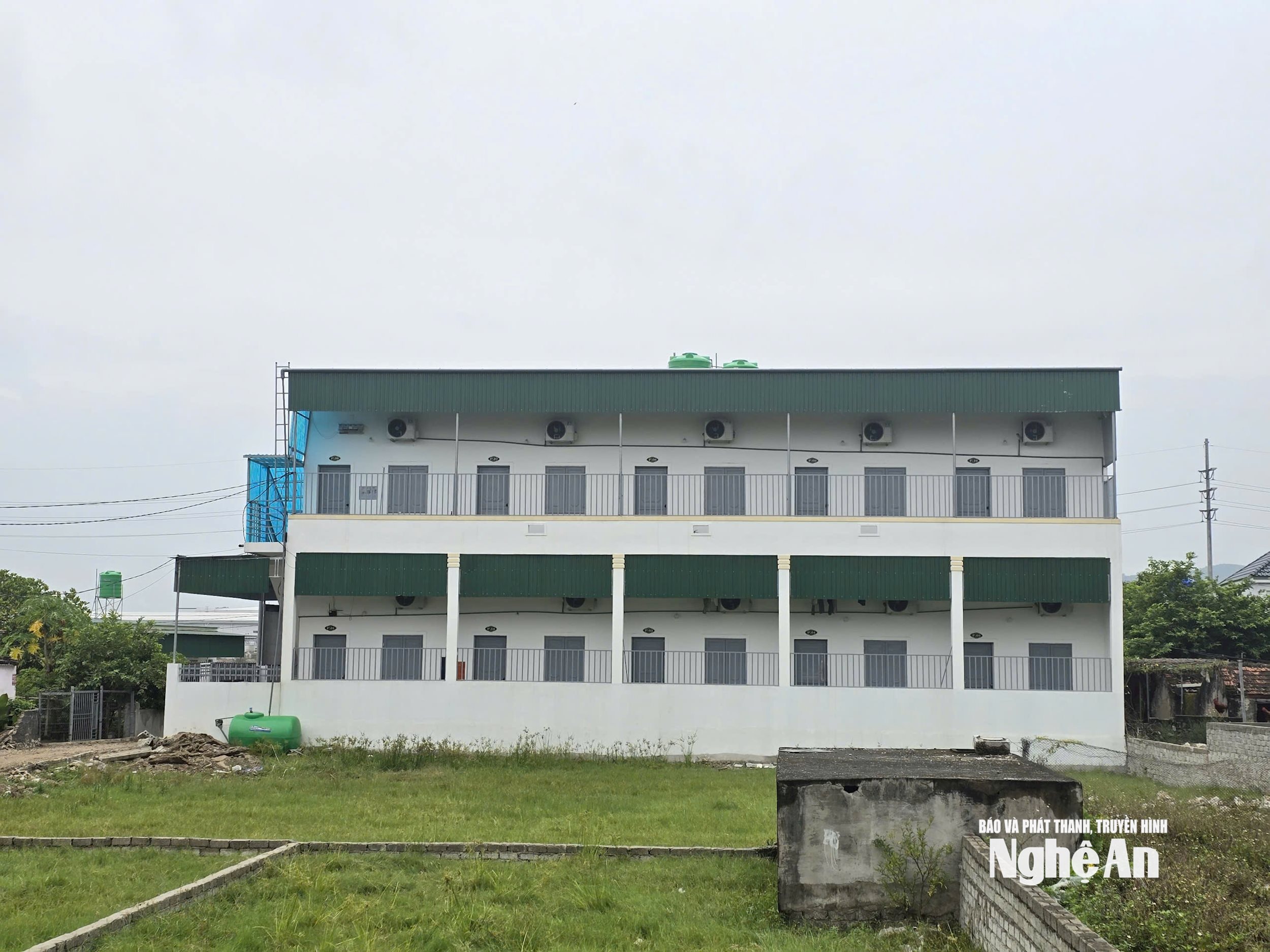
For nearly a year now, numerous worker dormitories in Block 9 (Tan Mai Ward, Nghe An Province) have been vacant, with no tenants. This block is located next to Hoang Mai 1 Industrial Park and was formerly part of the old Quynh Loc commune. After the implementation of the two-tiered administrative system, Quynh Loc, along with Quynh Di and Quynh Lap, were merged to become Tan Mai Ward.
"We've posted notices in front of the row of rental rooms all year round, and advertised extensively on social media, but we've been waiting since the beginning of the year and haven't seen anyone come to view the rooms to rent," said Ms. Hoang Thi Hue, the owner of a row of 7 rental rooms in Block 9.
In 2023, factories in Hoang Mai 1 Industrial Park were built one after another. At that time, thousands of workers and engineers involved in the construction of these factories flocked to the area, causing a surge in demand for rental accommodation.
“Back then, construction workers were bustling around the neighborhood, asking about rental accommodations. Seeing this, many households invested money to build rows of rental rooms, as well as restaurants and breakfast shops to serve the workers,” said Mr. Le Van Tinh, Head of Block 9, Tan Mai Ward.
Like many of his neighbors, Mr. Tinh also invested nearly 1 billion VND to build a row of 14 rental rooms. “We thought, if there are already so many workers coming to build the factory, then when the factory starts operating, there will surely be many more workers,” Mr. Tinh said. In a short time, dozens of rental rooms have sprung up in Block 9 alone, with about 400 rooms. Some investors have spent large sums of money building spacious two-story rental rooms.
Mr. Tinh said that each of his rental rooms is nearly 20 square meters.2The rooms were fully furnished by him, including air conditioning. Mr. Tinh rents each room for 1 million dong per month. "We thought we'd earn over 10 million dong a month and recoup our investment quickly," Mr. Tinh said with a sad smile.
But then, contrary to Mr. Tinh and other landlords' expectations, when the factories were completed and thousands of construction workers left, the streets in Block 9 became deserted. When the factories started operating, the companies also opened canteens, so workers didn't need to go out to eat. As a result, the surrounding shops and restaurants became deserted. Many that had only opened a few months earlier had to close. The workers' lodgings faced a similar situation, especially after a large factory ceased operations a year ago.
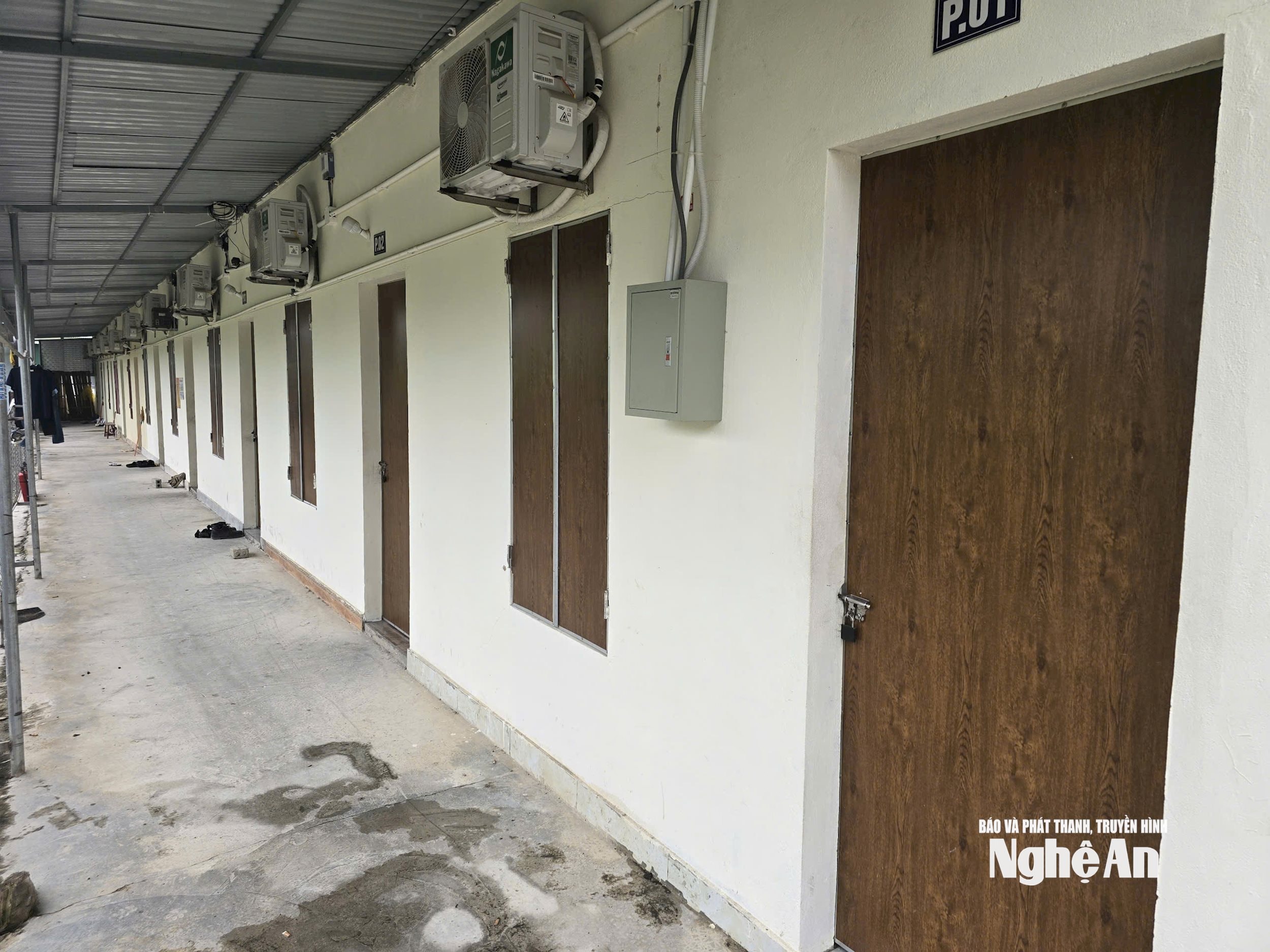
According to Mr. Tinh, there are already three companies operating in Hoang Mai 1 Industrial Park. “Actually, there are many workers there. The leather shoe company alone has about 7,000 workers. But the workers' wages are very low; they can't afford to rent accommodation. Most of the workers are children from the surrounding industrial park, commuting to and from work,” Mr. Tinh said, adding that landlords are therefore relying on two companies specializing in energy and electronic component manufacturing, as the workers there earn higher incomes.
However, in 2024, after the energy company with 3,000 workers had been operating for only a few months, it inexplicably ceased operations and has remained closed to this day. The workers were forced to vacate their rented rooms and return to their hometowns. Since then, the already sparsely populated worker housing areas have become even more deserted.
According to the block leader's statistics, currently less than 10% of the rental rooms in the block are occupied. Reporters' investigations reveal that not only Block 9 (Tan Mai Ward) but also many landlords in other blocks of Hoang Mai Ward are facing a similar situation.
The guesthouse was deserted.
In Trung Loc commune (Nghe An province), worker dormitories are even more deserted. Many well-built dormitories have been abandoned for years, never even rented out. "It's a shame to demolish them, but leaving them as they are is wasteful. We're very worried and feel sorry for the landlords who invested large sums of money without recovering their capital," said Mr. Le Van Hoa, Head of the Economic and Infrastructure Department of Trung Loc commune.
Mr. Hoa was formerly the Chairman of the People's Committee of Nghi Xa commune, where many factories are located within the Nam Cam Industrial Zone. "In just hamlets like hamlets 8, 9, and 11 of the old Nghi Xa commune, there have been hundreds of unoccupied rental properties for many years, which is a huge waste," Mr. Hoa added.
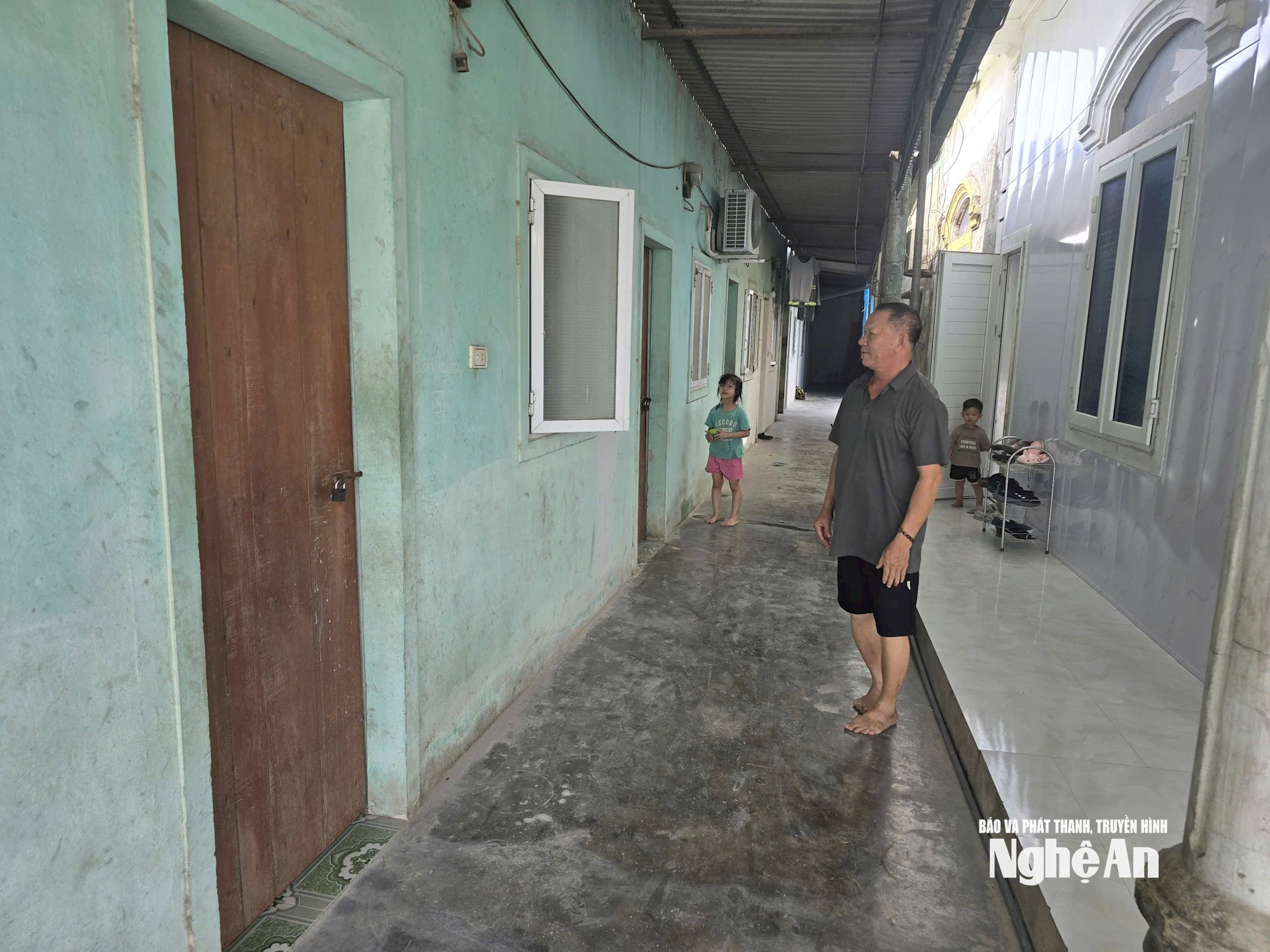
Among the landlords, Mr. Nguyen Dinh Duc (66 years old, Hamlet 9, former Nghi Xa commune, now Trung Loc commune) was the first to invest money in building a row of worker dormitories. Mr. Duc recounted that it was in 2014, when the first factory in the Nam Cam Industrial Park, located right behind his house, began operating. “At that time, workers from all over flocked in, mostly from Ha Tinh and the former Anh Son and Do Luong districts. They scoured the entire hamlet looking for rooms to rent, but no one had any. In one case, a father and son were searching everywhere for accommodation near midnight and couldn't find any, so they came to my house to ask for a place to sleep,” Mr. Duc said. Seeing that Mr. Duc's family provided free accommodation, many other workers also came. On some nights, dozens of workers would spread out mats and sleep, filling Mr. Duc's house to capacity.
Seeing the situation, Mr. Duc decided to invest money in building rental rooms for workers, despite objections from his children. The two rows of rental rooms, with an average size of 16 square meters, were completed.2The project cost Mr. Duc and his wife approximately 800 million VND. Each room was rented out for 500,000 VND per month. “As soon as the row of rooms was finished, workers flocked to rent them, cleaning them themselves. Every room was packed with people; some rooms even had six workers sharing,” Mr. Duc recounted. Soon after, a series of other rows of rooms in the former Nghi Xa commune were also built.
However, the landlords' joy was short-lived. This was when companies began buying vehicles to organize transportation for their workers. Because of the convenience, a large number of workers immediately vacated their rented rooms, opting instead to go to work at the factory in the morning and return home to their families in the evening.
“More than 10 years ago, when it was first built, we rented it out for 500,000 or even 600,000 VND per month. But now it's only 300,000 VND per month, and the landlord even covers the electricity and water bills. Even so, out of 13 rooms, only 3 are currently occupied; that's considered very lucky,” Mr. Nguyen Dinh Duc said with a smile, adding that after investing 800 million VND, his family has only earned about 100 million VND from rental income after more than 10 years.
Unlike Mr. Duc, Mrs. Nguyen Thi May (70 years old), who lives nearby, also owns a row of five rental rooms. However, the rental property has been closed for five years without any tenants. "It would be a shame to tear it down now, so I'll try to wait a while longer to see what happens," Mrs. May said.
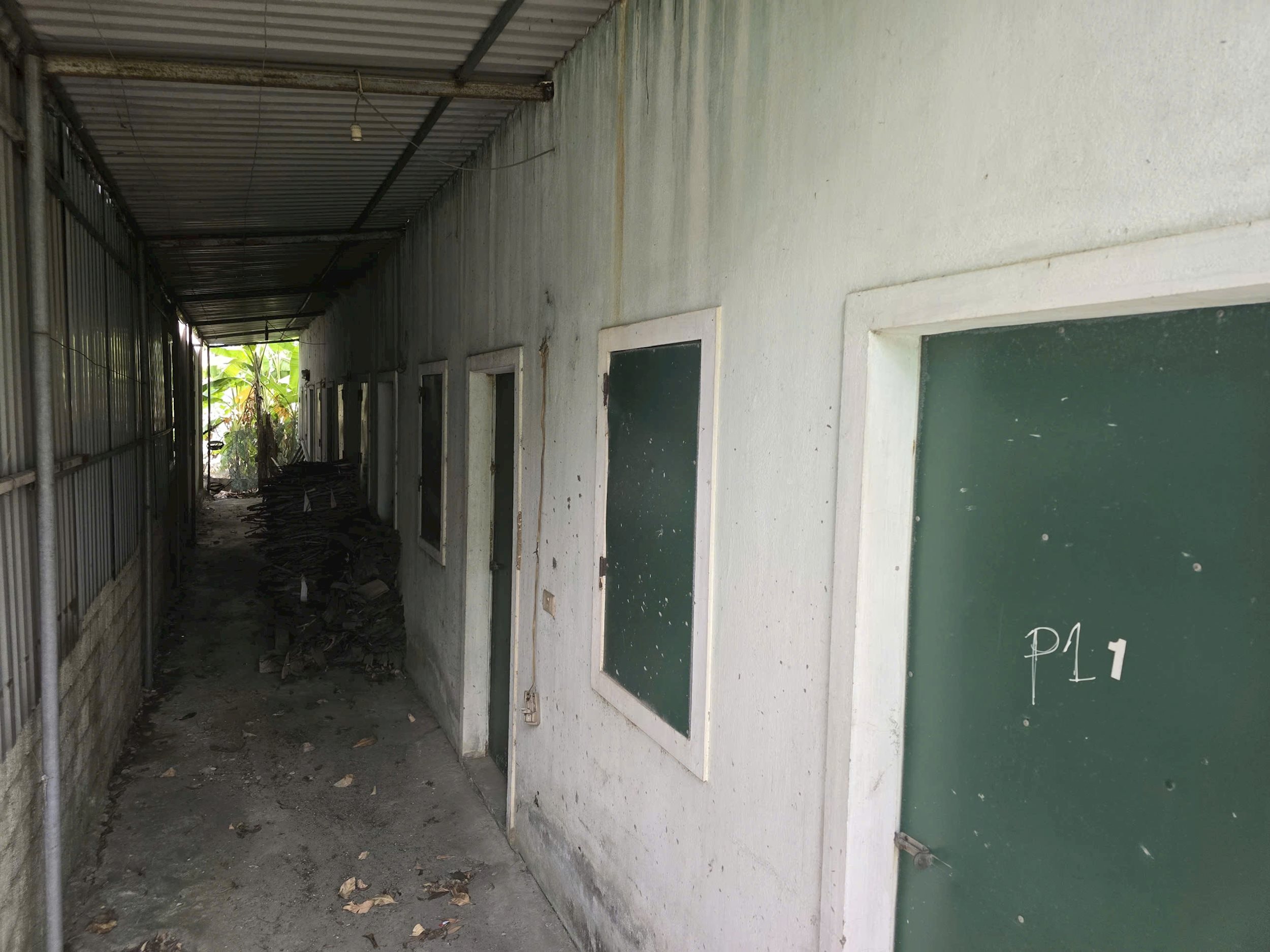
According to Mr. Nguyen Trung Thanh, head of Hamlet 9 (Trung Loc commune), this hamlet alone has nearly 1,000 worker rental rooms. This doesn't even include hamlets like Hamlet 8 and Hamlet 11, which have similar numbers. However, currently, less than 10% of these rooms are occupied.
Meanwhile, Mr. Le Van Hoa, Head of the Economic and Infrastructure Department of Trung Loc commune, said that this is a lesson for the locality. "Most of the rental rooms have been vacant for many years, but they are still left empty. The landlords still hope that the factories in the industrial park will expand and hire more workers. The reason for the low occupancy rate is that some factories in the industrial park employ very few workers due to mechanization; companies with many workers have transportation services," Mr. Hoa added.