
Coffee prices today, August 22, 2025: Triple-digit increase.
Coffee prices today, August 22nd, are at 122,600 - 123,200 VND/kg, a slight increase compared to yesterday. World coffee prices saw another triple-digit increase due to strong demand.
Domestic coffee prices today
Domestic coffee prices in the Central Highlands region today, August 22, 2025, continued to increase slightly compared to yesterday, fluctuating between 122,600 and 123,200 VND/kg.
Accordingly, traders in the former Dak Nong region are buying coffee at the highest price of 123,200 VND/kg, a slight increase of 1,300 VND/kg compared to yesterday.
Similarly, the price of coffee in Dak Lak province is 123,000 VND/kg, an increase of 1,300 VND/kg compared to yesterday.
Coffee prices in Gia Lai province increased by 1,200 VND/kg compared to yesterday and are trading at 122,700 VND/kg.
In Lam Dong province, the price of coffee increased by 1,600 VND/kg compared to yesterday, reaching 122,600 VND/kg.
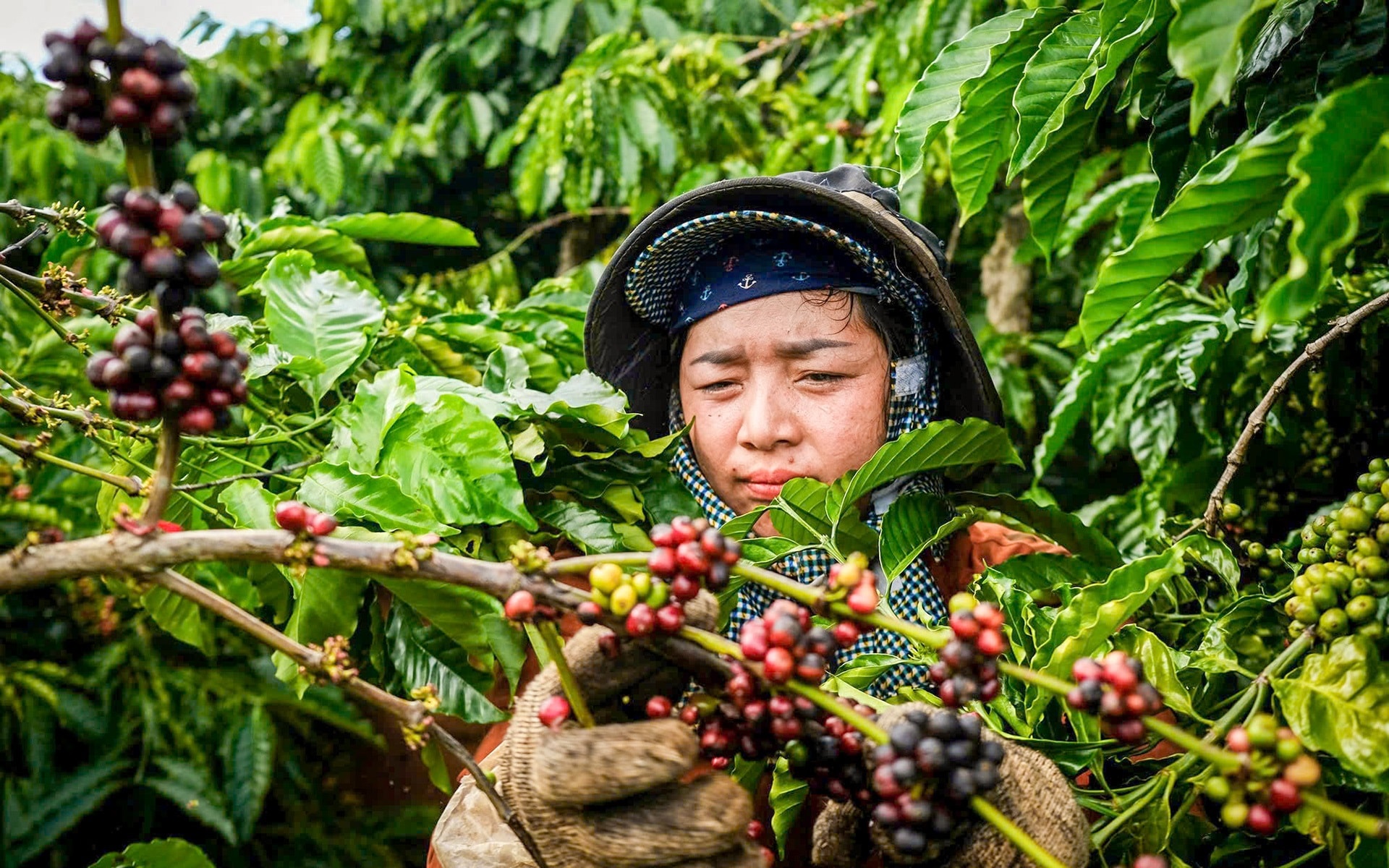
Domestic coffee prices remain higher than international futures prices because Vietnam is nearing the end of the harvest season, and farmers are not producing a large quantity of coffee. This scarcity of supply is keeping domestic prices at a high level.
Furthermore, export prices for businesses are also high due to many contracts already signed. Therefore, the difference between domestic coffee prices and futures prices on the two exchanges is not considered unusual, but accurately reflects the actual market situation.
On the international stage, Brazil is experiencing a decline in exports due to the impact of US tariffs. This inadvertently creates an opportunity for Vietnamese coffee to increase in price and maintain its competitive position in the global market.
On the demand side, besides the traditional Chinese market, India is consuming increasingly more coffee. Representatives from Continental Coffee Limited (CCL) predict that the Indian coffee market will double in the next 5 to 10 years, mainly due to the coffee-drinking habits of young people. It is clear that India will need to increase imports to meet domestic demand and for export processing.
World coffee prices today
On the London exchange, online robusta coffee futures contracts for September 2025 closed yesterday at $4754 per ton, up 2.32% ($108 per ton) from yesterday. The November 2025 contract rose 2.57% ($113 per ton), reaching $4514 per ton.
Meanwhile, on the New York Stock Exchange, the price of Arabica coffee for September 2025 delivery rose 4.09% (14.75 US cents/pound) compared to yesterday, reaching 375 US cents/pound. The December 2025 contract increased 3.03% (10.7 US cents/pound), reaching 364.15 US cents/pound.
Recently, world coffee prices have risen sharply, but the increase in domestic prices has been slower. According to experts and businesses, the reason is that domestic coffee prices were previously higher than world prices, so the market is adjusting to return to a state of equilibrium.
This price surge surprised even many seasoned industry professionals. Mr. Nguyen Nam Hai, Chairman of the Vietnam Coffee and Cocoa Association (VICOFA), analyzed that several factors simultaneously impacted coffee prices, including unfavorable weather in Brazil, the 50% reciprocal tax in Brazil, and the upcoming EU traceability and anti-deforestation regulations (EUDR). These events occurred at a time when global supply was lower than demand, creating a strong psychological impact and causing dramatic fluctuations in coffee prices.
Mr. Do Ha Nam, Chairman of Intimex Group, said: Although no one can accurately predict market developments, analysis shows that the sharp increase in coffee prices on the London exchange is due to a supply shortage. Importers are not buying enough goods from outside sources, so they have to increase trading on the exchange, causing prices to escalate.
Another reason is that the EU market is gradually shifting towards sourcing goods that meet EUDR standards, as this regulation officially comes into effect at the beginning of 2026. This further increases pressure on global supply and contributes to higher coffee prices.
Quoc Duan