

Pepper prices today, August 31, 2025: Turning around and slightly decreasing.
Today, August 31st, pepper prices are at 151,000 - 152,000 VND/kg, a slight decrease compared to yesterday. Vietnamese pepper maintains its competitive advantage thanks to low tax rates.
Domestic pepper prices
Today, pepper prices in key growing regions have slightly decreased by 500 to 1000 VND/kg compared to yesterday. As a result, the average domestic pepper price is between 151,000 VND/kg and 152,000 VND/kg.
In the Central Highlands region, today's pepper price in Dak Lak decreased by 1000 VND/kg compared to yesterday, currently standing at 152,000 VND/kg.
Today's pepper price in Gia Lai decreased by 500 VND/kg compared to yesterday, currently standing at 151,000 VND/kg.
Today's pepper price in Lam Dong (formerly Dak Nong) decreased by 1000 VND/kg compared to yesterday, currently standing at 152,000 VND/kg.
In the Southeast region, today's pepper price in Ho Chi Minh City (formerly Ba Ria - Vung Tau) is 151,000 VND/kg, down 1,000 VND/kg compared to yesterday. Dong Nai also saw a decrease of 1,000 VND/kg compared to yesterday, reaching 151,000 VND/kg.
Additionally, today's pepper price in Dong Nai (formerly Binh Phuoc) decreased by 1000 VND/kg compared to yesterday, currently standing at 151,000 VND/kg.
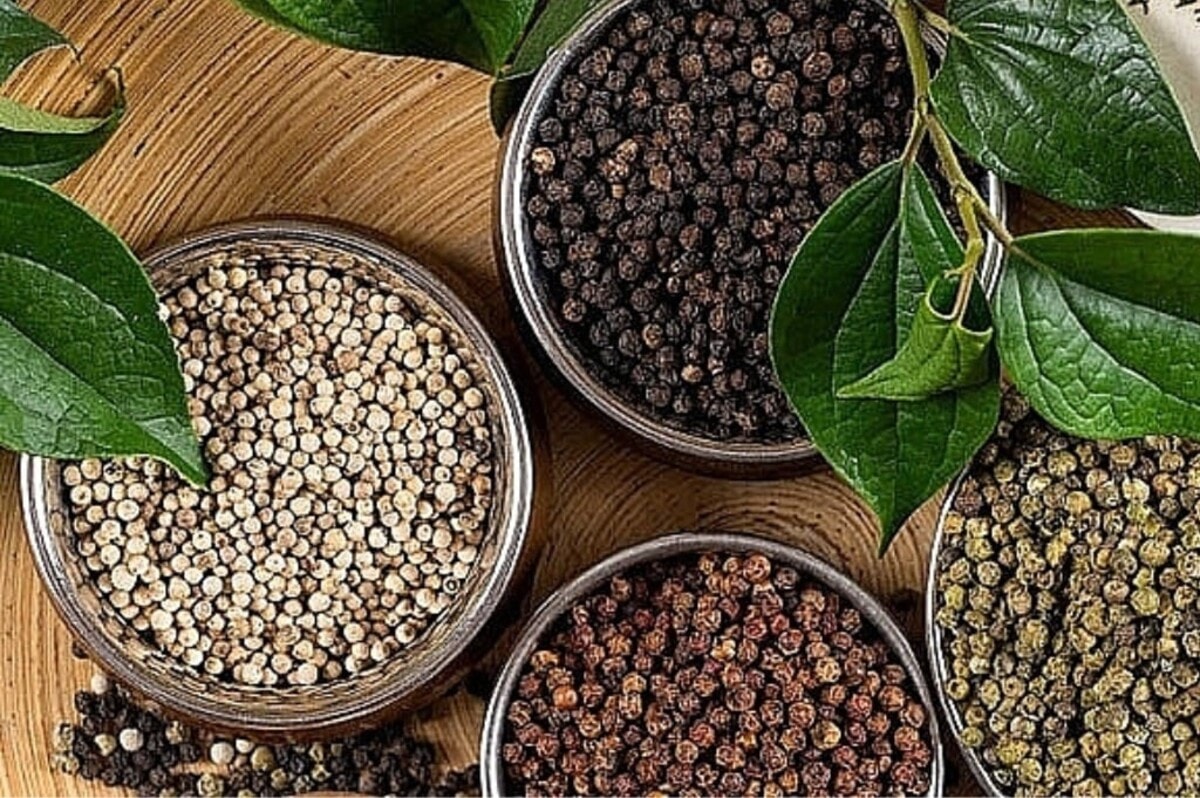
Today's pepper prices (August 31st) on the world market.
On the world market, based on quotations from exporting companies and export prices in various countries, the International Pepper Association (IPC) has updated the prices of various types of pepper traded on the international market on August 30th (local time) as follows:
Indonesian Lampung black pepper prices remained unchanged from yesterday at US$7,216/ton. Additionally, Muntok white pepper prices also remained unchanged from yesterday at US$10,028/ton.
Brazilian ASTA black pepper prices rose sharply compared to yesterday, reaching $6,700 per ton (up 1.04%).
Malaysian ASTA black pepper prices remained unchanged from yesterday at US$9,600/tonne. Similarly, ASTA white pepper prices also remained unchanged from yesterday at US$12,800/tonne.
Prices for all types of Vietnamese pepper remained unchanged compared to yesterday. Specifically, the price of Vietnamese black pepper (500 gr/l) reached US$6,240/ton; and the price of black pepper (550 gr/l) reached US$6,370/ton.
In addition, the price of Vietnamese white pepper remained unchanged from yesterday at $9,150 per ton.
World pepper prices ended August with many optimistic signs. Prices in all major producing countries did not decline. Specifically, India's domestic and export pepper prices remained stable for two consecutive weeks. Meanwhile, Indonesia recorded price increases in both markets.
A new report from Ptexim indicates that the market's upturn is driven by strong import demand from key markets such as China, the EU, the US, and the Middle East.
In Brazil, pepper production in 2024 is unlikely to meet initial expectations due to two main reasons: labor shortages and uneven ripening of the fruit.
Nevertheless, strong export activity and exchange rate fluctuations remain supportive factors for prices. Espírito Santo state, the largest pepper-growing region, has begun its second harvest. Notably, in just the first seven months of the year, Brazil has exported 61% of its projected annual production.
Brazilian pepper prices have continued to rise steadily over the past two to three weeks despite two factors: the ongoing harvest season and the US imposing a 50% retaliatory tariff. This is because farmers are not under pressure to sell quickly and the labor shortage is becoming increasingly severe.
In Indonesia, unstable weather is predicted to reduce yields by 5-10% in 2025. This would be the fourth consecutive year of yield decline. The persistent pest and disease pressure from 2021 has not been resolved, and the area under pepper cultivation is shrinking as farmers switch to coffee and durian farming.
Ptexim noted that global supply shortages and high prices will help maintain stability in Indonesian pepper exports, but the country needs to implement solutions to improve its agricultural sector soon.
Another important factor supporting pepper prices is the strong recovery in coffee prices. When coffee prices rise, farmers tend to switch to growing coffee instead of pepper. This further reduces the supply of pepper. Furthermore, labor and input costs for pepper cultivation are also increasing.
Given the complex developments in Brazil and Indonesia, along with changes in global monetary policy, pepper prices are likely to maintain an upward trend at least until the end of the fourth quarter of 2025.