

Prime Minister: Establish a forward command center in the provinces affected by Typhoon No. 10.
Prime Minister Pham Minh Chinh has just signed and issued Official Dispatch No. 174, requesting ministries, sectors, and localities to focus on responding to Typhoon No. 10 and heavy rains, landslides, flash floods, and mudslides.
Official dispatch sent to the secretaries and chairmen of the People's Committees of provinces and cities in the Northern and North Central regions (from Da Nang northward); ministers of ministries, ministerial-level agencies, and agencies under the Government; and the Office of the National Civil Defense Steering Committee.
The official dispatch stated: According to the forecast of the National Center for Meteorological and Hydrological Forecasting, the storm will make landfall during high tide, and the combination of storm surge and large waves could cause overflow, breach, and erosion of sea dikes, flooding low-lying coastal residential areas; the storm may cause heavy rain in the Northern and North Central regions (including in Laos). Especially in the area from Thanh Hoa to Ha Tinh, with total rainfall of about 200-400mm, and in some places over 600mm, there is a high risk of flash floods, landslides, flooding, and disruption of transportation in mountainous and low-lying areas.
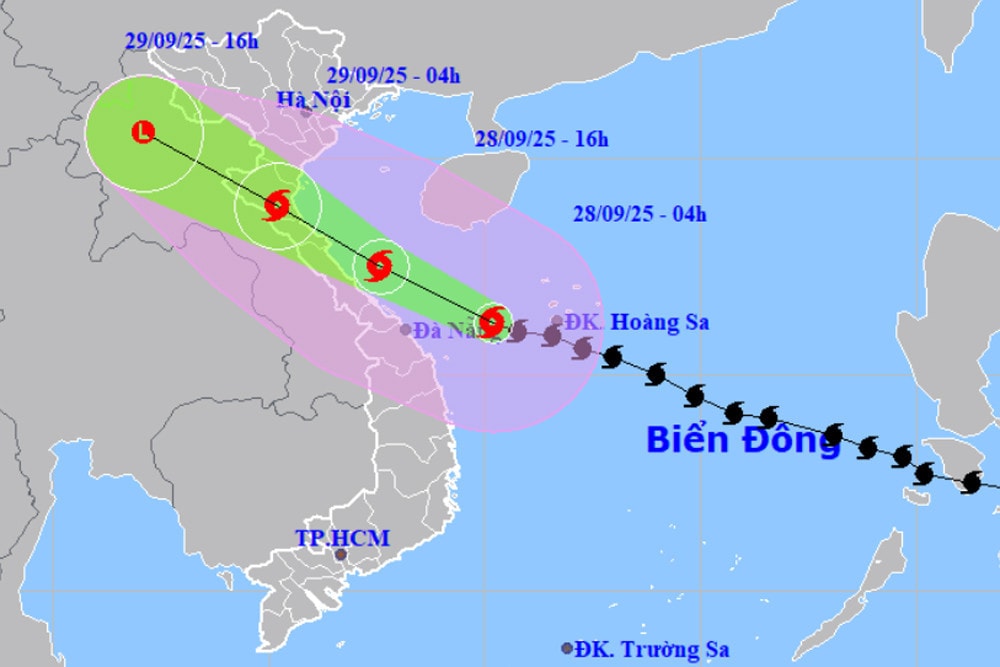
The Prime Minister requested ministries, sectors, and localities to continue focusing on seriously, decisively, and effectively implementing measures to prevent and mitigate the effects of Typhoon No. 10, concentrating on specific tasks such as reinforcing dikes and dams to ensure safety; securing houses; evacuating people in dangerous areas; and stockpiling food in areas at risk of being cut off...
Accordingly, the Party Secretaries and Chairmen of the People's Committees of provinces and cities in the Northern and North Central regions directed: To continue reviewing, urging, and guiding vessels still operating at sea to move out of dangerous areas or to safe shelters to ensure safety; and at the same time, to implement solutions to ensure the safety of people and vessels at anchorage and shelter areas.
Based on the specific situation in each locality, the Party Secretaries and Chairmen of the People's Committees of provinces and cities shall decide on restricting activities at sea and along the coast, prohibiting sea travel, controlling and restricting traffic, and suspending school classes to ensure safety during periods affected by storms and heavy rains and floods; immediately implement measures to protect and reinforce dikes and dams, especially sea dikes, river mouth dikes, and vulnerable dams; proactively operate and regulate water reservoirs appropriately to be ready to receive floods, ensuring the safety of dam structures and preventing the occurrence of successive floods.
The Prime Minister also requested the immediate implementation of measures to reinforce and protect houses, warehouses, offices, educational and medical facilities, and production, business, and service establishments to minimize damage to production. This is especially important for agricultural production and aquaculture in coastal and offshore areas, ensuring the timely restoration of production and business activities after the storm and floods. He also called for the organization of a review and proactive evacuation of households in dangerous areas to safe locations. Particular attention should be paid to areas experiencing land subsidence, areas at risk of flash floods, landslides, deep flooding, and areas around boats, rafts, and aquaculture watchtowers. Furthermore, he instructed the proactive deployment of security and patrol forces to maintain order at evacuation sites and prevent people from returning until safety is ensured.
The Party Secretary and Chairman of the People's Committee of the province/city shall direct the proactive arrangement of forces, means, and reserves of food, necessities, and essential supplies in vulnerable areas at risk of being cut off due to landslides and floods, to be ready to support the people, ensuring that no one lacks food, clothing, hunger, thirst, or cold, and to deploy rescue and relief work when adverse situations occur...; assign members of the Standing Committee, Executive Committee, and leaders of departments and agencies to key areas to directly inspect, supervise, and direct the implementation of response work to storms, heavy rains, floods, landslides, flash floods, and mudslides.
Deploy forces and resources to be ready to assist the people in responding to storms and floods.
Ministers of Ministries, ministerial-level agencies, and government agencies, according to their functions, duties, and authority, shall proactively direct and supervise the implementation of response measures to ensure the safety of forces, vehicles, equipment, and facilities under their management, paying particular attention to ensuring the safety of maritime and river transport activities, dikes, reservoirs, irrigation and hydroelectric dams, power systems, telecommunications, educational and medical facilities, production and business establishments, and service facilities.
The Ministers of National Defence and Public Security directed the military and police forces stationed in the area to review plans and proactively deploy forces and resources to be ready to support the people in responding to storms and floods, assisting in evacuation and relocation of residents, and conducting rescue operations when required.
The Minister of Agriculture and Environment directs and organizes close monitoring, forecasting, and timely dissemination of information on the developments of storms and floods; directs and urges the implementation of storm and flood response work within his/her authority; and advises the Prime Minister and the National Civil Defense Steering Committee on matters beyond his/her authority.
The Chief of the Office of the National Civil Defense Steering Committee closely monitors the situation, coordinates and mobilizes forces and resources to support localities in responding to storms and floods within their authority, paying particular attention to areas that have experienced heavy rainfall, subsidence, and unusual landslides.
| Establish forward command centers in provinces affected by the typhoon. Deputy Prime Minister Tran Hong Ha was tasked with establishing a forward command center in the provinces affected by the storm to focus on addressing and mitigating the consequences of storms, floods, and landslides; and continuing to direct ministries, sectors, and localities to promptly implement response measures to storms, floods, subsidence, and landslides. |