
The calm before the storm
French Prime Minister Sébastien Lecornu staged a spectacular comeback as his fledgling government survived two no-confidence votes in Parliament. However, this victory is only a temporary lull in the ongoing political storm engulfing France. The burden of passing the 2026 budget in a deeply divided parliament rests heavily on President Emmanuel Macron's shoulders, and the political future of the eurozone's second-largest economy remains uncertain.
Parliament in a tense atmosphere

October 16th has gone down in French political history as a day of breathtaking events. In the French Parliament, Prime Minister Sébastien Lecornu, who had been reappointed just days earlier, faced two life-or-death "tests": two no-confidence votes initiated by the far-left and far-right factions.
The drama reached its peak with the first motion submitted by the hardline, left-wing France Unbowed (LFI) party. The vote count showed that 271 lawmakers supported ousting the government. This was just 18 votes short of the absolute majority of 289/577 needed to succeed. This narrow margin highlighted the precariousness of the minority government backed by President Macron.
The second motion, put forward by Marine Le Pen's National Rally (RN) party, failed by an even larger margin, garnering only 144 votes in favor, due to a lack of support from other parties.
Lecornu's government has been temporarily saved. If it fails, President Macron will be left with only bad options: declaring the dissolution of Parliament and calling for early legislative elections – a risky gamble; trying to find a new prime minister – the fifth in just over a year; or even resigning himself, a possibility he has vehemently rejected.
However, the government's survival came at a very high price. To win the decisive support of the Socialist Party, Lecornu had to make a major concession: a commitment to temporarily postpone the implementation of President Macron's controversial pension reform. This was one of the most important policy legacies of Macron's term, aiming to raise the retirement age from 62 to 64. In 2023, this law sparked large-scale protests and strikes that paralyzed France, and the government then had to invoke Article 49.3 of the Constitution – a special instrument allowing laws to be passed without a vote – to impose the reform, further deepening public outrage.
However, the government's survival came at a very high price. To win the decisive support of the Socialist party, Lecornu had to make a major concession...
According to experts, the postponement of reforms is both a major blow to Macron's legacy and reveals the government's weakness. It paves the way for opposition parties, particularly the Socialist Party, to continue making further demands in upcoming negotiations, turning the government into a "hostage" of political maneuvering.
The next battle awaits.
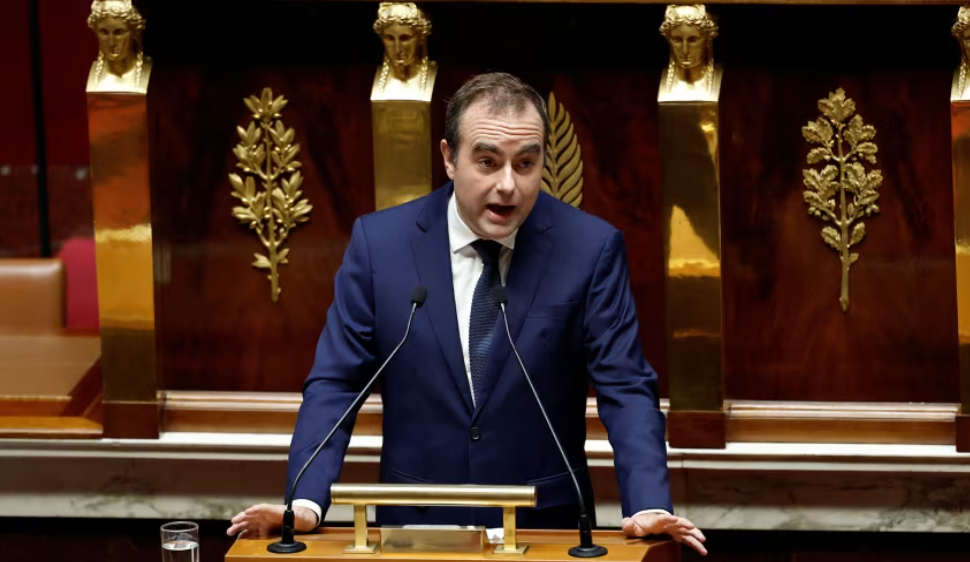
Many also believe that the current crisis is the inevitable consequence of a misguided political decision. In June 2024, President Macron made a bold move by dissolving Parliament and calling early elections. He hoped to consolidate power and regain his lost majority. However, the result was completely counterproductive. The elections created an unprecedentedly fragmented Parliament, with three almost irreconcilable political blocs: Macron's centrist bloc, Le Pen's far-right bloc, and the left-wing NUPES alliance. None of the blocs secured an absolute majority. Since then, Macron's minority governments have repeatedly struggled to garner support for each bill and have collapsed one after another.
This deadlock directly conflicts with the architecture of the French Fifth Republic, founded by Charles de Gaulle in 1958. This system was designed for a strong president and a stable majority in Parliament, not for coalition bargaining or a "hung" parliament. The French political machine appears to be operating contrary to its design, turning each crucial vote into a nail-biting spectacle and raising existential questions about the country's governance. For voters and international observers, the image of France, once a model of European stability, now continuously sinking from one crisis to another is becoming alarming.
Surviving the no-confidence vote only gives the government a little breathing room. The real and more arduous battle lies ahead: the 2026 national budget draft. Debates will begin on October 24th and must be passed before the end of the year.
Prime Minister Lecornu has pledged not to use Article 49.3 as a "weapon" to force the budget through. This means the government will have to navigate a much more arduous path: negotiating and securing support for each provision. With the President's coalition holding fewer than 200 seats, they need the opposition's backing to achieve a 289-vote majority. All eyes are on two potentially key blocs: the Socialist Party (69 seats) and the right-wing Republican Party (50 seats). While both showed some restraint in the recent no-confidence vote, their support for the budget is uncertain. The Socialist Party, having secured concessions on pension reform, is continuing to pressure for the inclusion of a new tax targeting billionaires and extremely large assets to ensure "social and fiscal equity."
Surviving the no-confidence vote only gives the government a little breathing room. The real, more arduous battle lies ahead...
The situation is further complicated by France's serious economic challenges. Public debt has reached 114% of GDP, the third highest in the EU after Greece and Italy. The budget deficit is projected at 5.4% of GDP this year. The government's plan is to cut spending to bring this down to 4.7% next year, which requires unpopular measures such as freezing some benefits, increasing health insurance deductions, and requiring local authorities to tighten their belts. Each concession to appease one faction could cost the government support from the other, creating a political dilemma with almost no solution.
Time is running out, and the French government must simultaneously find a way to finance the delayed pension reform (estimated short-term costs of €400 million for next year and €1.8 billion for 2027) while negotiating taxes and spending with both socialists and conservatives. For President Macron, this is a last-ditch gamble to salvage his second term. Success in passing a credible budget without resorting to drastic measures would demonstrate that France is still manageable. It would send a signal of stability to financial markets and European allies. Conversely, if negotiations break down, the risk of Lecornu's government collapsing will return. France could find itself in a complete deadlock, facing a deeper constitutional and political crisis. The lull following the no-confidence vote may only be the calm before a bigger storm.
Hoang Bach