

Egypt and the EU: Shaping a Shared Future
The first Egypt-European Union (EU) summit marked a new stage in relations between the two sides, moving from a traditional cooperation framework to a comprehensive strategic partnership. The event not only demonstrated Egypt's growing importance in the EU's Mediterranean and African policy, but also reflected a shared effort to shape a future based on stability, sustainable development, and common prosperity.
Double benefits
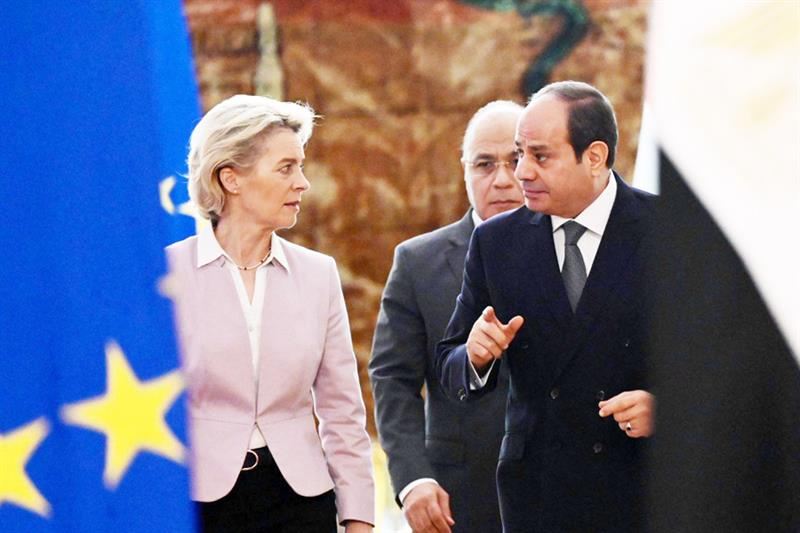
The first Egypt-EU Summit, held on October 22nd in Brussels, is seen as a significant milestone in strengthening bilateral relations between the two sides, which have seen over two decades of extensive cooperation across various fields. Against the backdrop of complex political, security, and economic changes in the Mediterranean and Middle East-North Africa (MENA) region, Cairo and Brussels' official upgrading of their partnership to a comprehensive strategic level clearly demonstrates the need for integration of interests and reflects a shared understanding of Egypt's increasingly important role in the regional stability structure.
Since 2020, the EU has proactively reshaped its foreign policy in the southern region, viewing Egypt as a pillar of Mediterranean security and a bridge between Europe and the Arab and African worlds. The global economic and political context also makes strengthening Egypt-EU relations particularly strategically significant. The ongoing conflict in Ukraine continues to strongly impact Europe's energy security and supply chains, prompting the EU to seek reliable partners in the neighboring region. For Egypt, this summit takes place at a crucial time, as the country strives to maintain socio-economic stability amidst increasing inflationary pressures, public debt, and job creation needs. The Egyptian government has launched its “National Economic Development Report,” a five-year policy framework aimed at boosting the private sector, attracting foreign investment, expanding industrial production, and enhancing competitiveness. Deeper cooperation with the EU, through a €7.4 billion support package for the period 2024-2027, represents not only financial significance but also a political commitment from Europe to Egypt's reform and sustainable development.
The Egypt-EU relationship was already shaped by the Association Agreement signed in 2004, laying the foundation for a free trade area and regular political dialogue. However, nearly two decades later, as the world enters a new era of geoeconomic competition, both sides recognize the need for a more flexible and inclusive framework to address cross-border challenges such as climate change, food security, energy crises, and migration. The signing of the “Comprehensive and Strategic Partnership” in March 2024, now concretized through the first summit, is a natural step in that process.
Symbolically, this conference affirms Egypt's increasingly active role in the North-South relationship structure, while also demonstrating the EU's pursuit of more sustainable links with non-EU partners, based on shared interests rather than one-sided aid. Both sides have clear interests: Egypt needs access to European capital, technology, and markets; and the EU needs a stable, reliable partner capable of coordinating on regional issues.
On a broader scale, the Egypt-EU summit is also seen as a test of Europe's ability to shape a "stable neighborhood" around the Mediterranean, while demonstrating Brussels' pragmatic approach to foreign policy, simultaneously upholding values and prioritizing strategic interests. Meanwhile, for Cairo, it is an opportunity to assert its central position in regional cooperation structures, expand its diplomatic space, and strengthen its role as a bridge between Africa, the Arab world, and Europe.
A pillar for regional stability
The cooperation between the EU and Egypt is not only bilateral but also has far-reaching implications for the stability structure of the Mediterranean and the Middle East-North Africa region. In the context of hotspots like Gaza, Libya, and the Sahel region creating complex security challenges, enhanced coordination between the two sides is seen as a strategic step to maintain peace and control the spread of instability northward.
During the recent Gaza crisis, Egypt was one of the few countries to maintain effective channels of contact with all parties involved, while also ensuring the delivery of humanitarian aid through the Rafah crossing. The EU, the largest donor to the Palestinian Authority (PA), recognizes that any peace process cannot be advanced without Cairo's role. Therefore, strengthening political and humanitarian cooperation with Egypt is a necessary choice in Europe's regional strategy.
The impact of this relationship is also evident at the Mediterranean regional level. As illegal migration flows increase due to conflict and economic crises in Africa and the Middle East, Egypt has become a key partner in the EU's efforts to control and manage migration. Brussels not only provides financial support through aid and community development programs but also works with Cairo to build legal mechanisms to prevent human trafficking and create livelihoods for people in vulnerable areas. The shift in focus from "border control" to "sustainable development" in the common migration policy reflects a new EU approach: cooperation based on shared interests, rather than unilateral imposition.
Beyond security and humanitarian issues, EU-Egypt cooperation is also contributing to reshaping the regional economic and energy order. Egypt is emerging as an energy hub in the Eastern Mediterranean, capable of exporting liquefied natural gas (LNG) to Europe and developing large-scale renewable energy projects. As the EU seeks to reduce its dependence on Russian energy supplies, strengthening relations with Egypt has a dual strategic significance: ensuring energy security and promoting a green transition. Projects such as the "Green Power Corridor" connecting Egypt with Greece and Italy, or cooperation in green hydrogen production, are seen as symbols of a shared vision towards a sustainable and connected Mediterranean region.
Thus, the partnership between the EU and Egypt is transcending traditional diplomacy, becoming a cornerstone of regional stability. From the Gaza issue to migration management, from energy security to sustainable development, this cooperation is contributing to shaping an “arc of stability” around the Mediterranean, where the strategic interests of both sides intersect and are aligned towards a long-term goal: peace, development, and shared security.