

Man United win at Anfield: Amorim and the Sesko dilemma
Manchester United won at Anfield without a center forward, thanks to Bryan Mbeumo's second-minute goal. Ruben Amorim now has to decide: stick with this formula or give the starting spot to Benjamin Sesko, worth £66.4 million.
Anfield was no longer a place where Manchester United could be easily intimidated for another night. In just two minutes, Bryan Mbeumo punished an opponent's mistake after a delicate assist from Amad, opening the way for a convincing victory at Liverpool's ground. But as soon as that initial excitement subsided, Ruben Amorim faced a paradox: his no-striker formula had just proven effective, while Benjamin Sesko – the £66.4 million signing – was knocking on the door of the starting lineup.
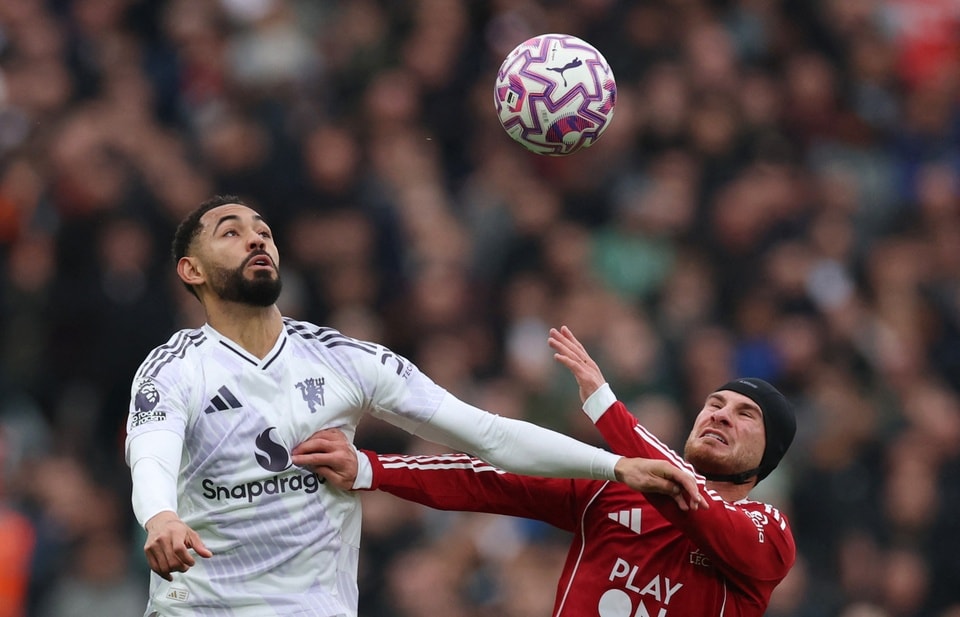
Match summary: A goal in the 2nd minute and attacking fluidity.
Without a central striker, Manchester United displayed their most dynamic football since Amorim took over. The trio of Bryan Mbeumo, Mason Mount, and Matheus Cunha constantly swapped positions, stretching Liverpool's defensive structure and pressing high with speed and intensity. This relentless pressing forced the home side into an early error, allowing Amad to seize the opportunity with a through pass and Mbeumo to coolly finish in the 2nd minute.
From the moment they took the lead, United maintained a tight defensive formation, building up quick, efficient attacks; one-touch passing in both halves of the midfield made it difficult for Liverpool to keep up. Even without nine "targets" to act as a target man, United's attacking rhythm remained fluid thanks to the mobility of their attacking trio and the supporting midfield behind them.
Tactical analysis: The central attacking system and its limitations.
Amorim's bold choice – dropping Sesko in favor of a non-centre-forward structure – allowed United to create breakthroughs in pressing, while also increasing the link-up play across all three lines. Without being tied to a single fixed point in the penalty area, Mbeumo, Mount, and Cunha constantly swapped roles: one dropping back to act as a link-up, another cutting inside to occupy space between the centre-back and full-back, and another making diagonal runs behind the defensive line.
However, Amorim understood the limitations of this system: in the long term, a team aiming for a top-four finish needs a lethal striker – an expert at converting chances into easy goals. Sesko possesses exactly that skill set. The Slovenian striker has just scored in two consecutive matches against Brentford and Sunderland, demonstrating his instinctive positioning and refined finishing – qualities that Mbeumo, Mount, or Cunha, despite their strengths in pressing and movement, have yet to consistently replace.
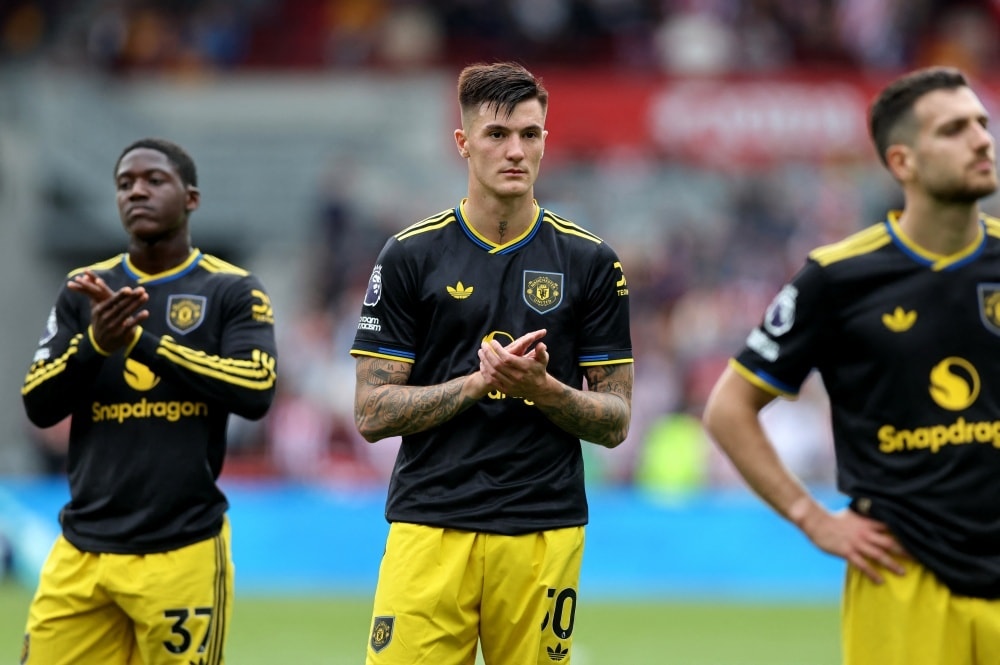
Roles of each link in the chain: Mbeumo, Mount, Cunha
- Bryan Mbeumo: His speed and ability to break through on the right wing allow him to both stretch the opponent's defense horizontally and be ready to cut inside and shoot. The opening goal in the 2nd minute is proof of his sharpness when in a favorable position.
- Mason Mount: Intense pressing in the midfield, often proactively blocking passes into the opponent's "channel 6". In transitions, Mount acts as a link for United to build up play with a second touch.
- Matheus Cunha: After a period on the bench, the Brazilian forward showed his ability to control the ball and dictate the tempo of the attack. When needed, Cunha dropped deep to provide an additional passing link in the midfield area.
Key statistics and facts
| Index | Detail |
|---|---|
| The opening goal | Bryan Mbeumo, 2nd minute (assist: Amad) |
| Attack structure | Airborne system, three players switching positions |
| Penalty box striker | Benjamin Sesko – finishing instinct, positioning. |
| Sesko's form | 2 goals in the last 2 matches (Brentford, Sunderland) |
| Transfer price | £66.4 million |
| Historical context | Manchester United have been consistently outplayed at Anfield for almost a decade. |
| Next match | Meet Brighton |
Amorim's difficult reaction and decision
"A winning lineup shouldn't change" is an easy adage to cite, but Amorim understood the deeper issue: if they maintained a strikerless structure, United preserved their flexibility and intensity; if they brought Sesko back, they had a weapon every big team craved – a high probability of scoring within the penalty area. The question was, who should make way?
Mbeumo is almost certain to start thanks to his form and explosive ability on the right wing. The choice is likely between Mount and Cunha: Mount brings pressing energy down the central axis, while Cunha provides tempo and ball control in transitions. Amorim is facing a situation where neither player is truly losing – it's just a matter of who is better suited to the demands of each match.

Impact: A test for top 4 ambitions
The victory at Anfield not only broke the psychological jinx but also confirmed that United now have the tactical foundation to play in various ways. But for the long term to go smoothly, they need a consistent source of goals. That's why the £66.4 million investment in Sesko can't just sit on the bench.
The upcoming match against Brighton will be a two-pronged test: current form and Amorim's philosophy. Will he continue to prioritize a high-pressure, high-speed rotation system, or will he reinstate a central striker in the penalty box? Whatever the choice, Manchester United is now different: from a stagnant team reliant on quick moments, they now possess an attacking depth that leaves their manager with an abundance of options.