

Indonesia has set a two-week timeframe for announcing its head coach.
PSSI will announce the head coach of the Indonesian national team in the next two weeks, not inviting back Shin Tae-yong and Patrick Kluivert, prioritizing a modern mindset and understanding of Asian football.
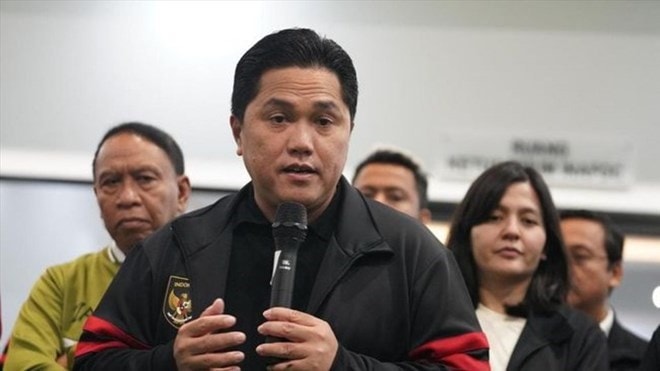
Within the next two weeks, the Indonesian Football Federation (PSSI) will announce the identity of the new head coach of the national team. PSSI leaders describe this as a "real turning point" for Indonesian football, a choice of sufficient caliber to restore fan confidence and bring the team closer to their World Cup dream.
The 2-week deadline and application screening process.
PSSI Technical Director Alexander Zwiers affirmed that the federation is looking for “a coach who not only has international experience but also the ability to help Indonesia get closer to the World Cup.” According to sources from Jakarta, PSSI has received more than 10 international candidate applications and is carefully selecting before finalizing the name in two weeks.
The criteria emphasized are: modern football thinking, understanding of Asian football, and the ability to build a long-term plan, rather than focusing solely on short-term achievements in Southeast Asia. This competency framework shows that PSSI wants to prioritize strategic sustainability, rather than changing based on short-term results from individual competitions.
A clear message about personnel.
PSSI President Erick Thohir ruled out the possibility of inviting back former coaches Shin Tae-yong and Patrick Kluivert, stating that "both are in the past." He emphasized that the new coach must "inherit their strengths but at the same time address existing weaknesses." This message clearly defines the criteria: innovation without negating the existing foundation of discipline and structure, while also requiring an upgrade in the quality of competition organization and personnel development.
Tactical analysis: What Indonesia needs from a "modern" coach
Based on the criteria outlined by PSSI, the tactical requirements can be seen as follows:
- The team's formation is flexible and adaptable to Asian opponents: the ability to play selective pressing, quick transitions, and maintain stable team spacing.
- A well-structured attacking strategy: exploiting half-space, using triangular passing combinations on the flanks, and optimizing set pieces (corner kicks, free kicks) to increase effectiveness against opponents with low defensive lines.
- Human resource management: long-term planning for key players and a roadmap for developing the next generation, in line with the demanding schedule of club and national team competitions.
- Adapting to Asian characteristics: understanding the pace, physicality, and differences in playing style of the region to adjust strategies for each match (home/away).
This strategy aims to create a stable competitive foundation, helping the Indonesian national team approach the standards of continental competition, rather than just experiencing short-term bursts of success.
Public reaction and expectations
Domestic observers believe that public opinion may be divided in the initial stages, but the results and the team's organizational capabilities will be the crucial test. Recent lessons show that if a new coach establishes a clear system and improves the quality of play, support will gradually increase.
Statistics and milestones
| Category | Information |
|---|---|
| Release date | Over the next two weeks |
| Number of files | Over 10 international candidate profiles |
| Main criteria | International experience; modern thinking; understanding of Asia; long-term strategy. |
| Exclusion | Shin Tae-yong and Patrick Kluivert were not invited back. |
| Vision | Personnel stability, aiming for the 2027 Asian Cup and the World Cup dream. |
Impact and prospects
This appointment serves as a foundation for PSSI to finalize the team's personnel structure and develop a medium-term plan. With the criteria already announced, the new head coach is expected to define a clear playing style, thereby optimizing current resources and preparing for the 2027 Asian Cup.
Over the next two weeks, key indicators to watch include: the candidate's understanding of Asian football, their organizational philosophy, their player development plan, and their commitment to building a long-term competition system. These will be the signs that indicate whether this decision will become a "real turning point" as PSSI hopes.