Final installment: The enduring journey of creation
Reporters' Team•November 1, 2025 18:43
Plastic fragments, thin plastic bags, and disposable products may seem insignificant, but they accumulate over time, spreading everywhere and leaving severe consequences for the land, rivers, seas, and human health. Reducing plastic waste is not solely the responsibility of the environmental sector, but a shared responsibility of the government, businesses, and every citizen. This battle has no immediate destination; it's a long journey requiring sharp policies, appropriate technology, and new consumer habits.
Author: PV Team - Publication Date: November 1, 2025
Plastic fragments, thin plastic bags, and disposable products may seem insignificant, but they accumulate over time, spreading everywhere and leaving severe consequences for the land, rivers, seas, and human health. Reducing plastic waste is not solely the responsibility of the environmental sector, but a shared responsibility of the government, businesses, and every citizen. This battle has no immediate destination; it's a long journey requiring sharp policies, appropriate technology, and new consumer habits.
In Nghe An province, the fight against plastic waste is being implemented comprehensively, from small actions within each agency and unit to strategic policy decisions. Beyond mere slogans, the province has translated words into concrete actions: signing commitments to reduce plastic waste in agencies; incorporating the issue into village regulations; mobilizing the community; and implementing various models for sorting waste at source to fundamentally change people's waste disposal habits.
In 2024, the country generated an average of over 69,400 tons of household waste per day, of which approximately 63% was still processed by landfilling, with the majority being unsanitary landfills. Effective from January 1, 2025, the policy of waste sorting at source is considered a fundamental solution but faces many shortcomings. Before the merger of provinces, only 34 out of 63 localities implemented waste sorting at source on a small scale; 33 localities had not issued regulations on sorting solid household waste; 59 localities had not issued economic and technical norms; and 58 localities had not established service prices for the collection, transportation, and treatment of household waste.
Pilot projects in Nam Dan, Quynh Luu districts and the former Vinh City have shown that when people are guided and the community participates, the amount of plastic waste mixed in with household waste can be significantly reduced. Supermarkets, shopping malls, and chain stores are gradually paying more attention to replacing plastic bags with environmentally friendly packaging; some businesses are boldly investing in alternative products such as paper bags, sugarcane pulp boxes, bamboo cups, wooden spoons, etc.; universities and colleges are also abandoning the habit of using disposable plastic cups and items in their canteens.
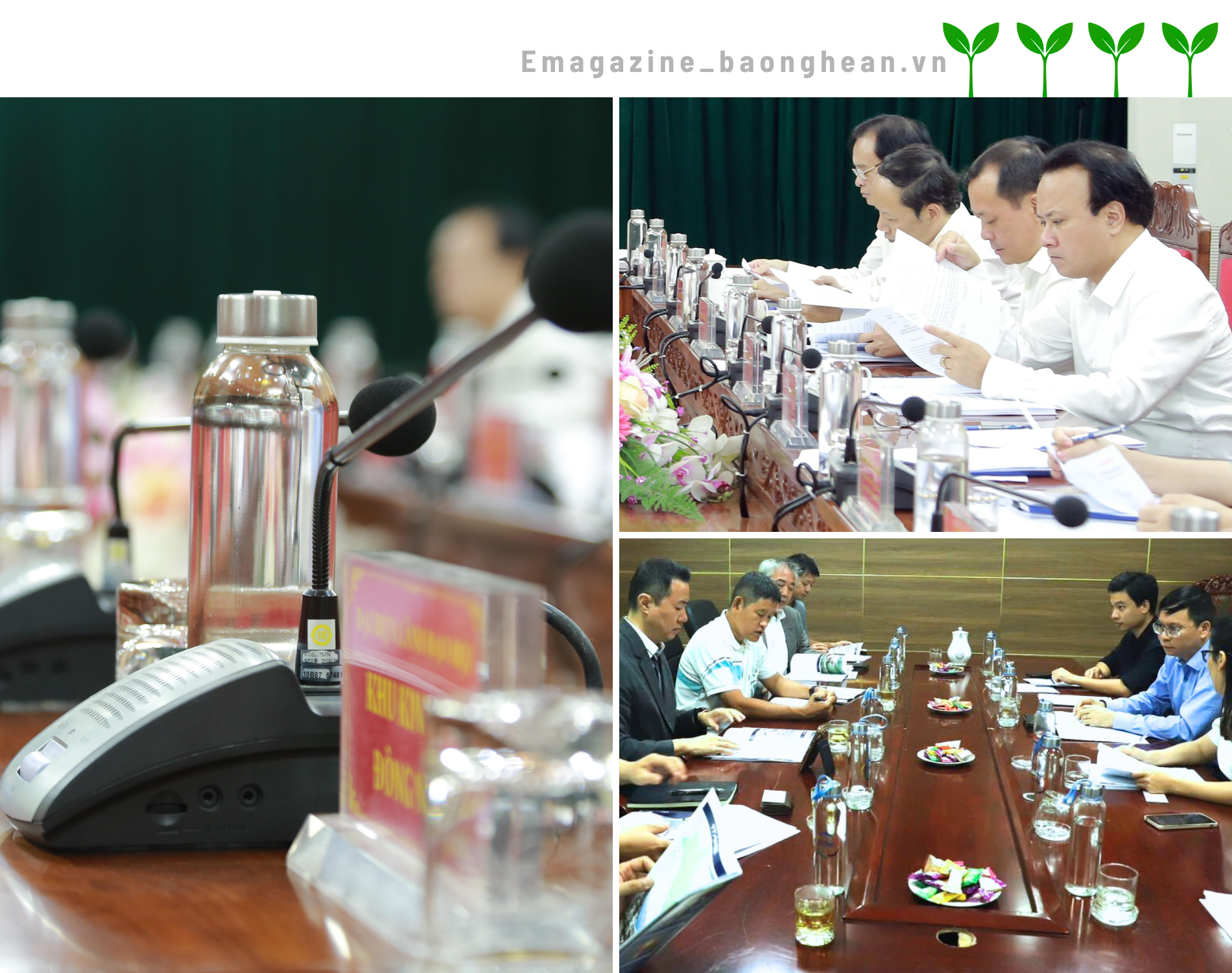
For many years now, in the meeting rooms of agencies in Nghe An province, plastic water bottles have been replaced with glass bottles. Photo: Reporters' team.
Regarding guiding documents, numerous legal documents have been issued from the central to local levels, demonstrating political determination: Resolution No. 08-NQ/TU dated March 2, 2022, of the Provincial Party Committee on strengthening leadership in environmental protection work for the period 2022-2030; Plan No. 751/KH-UBND of 2023 to implement Directive 33/CT-TTg of the Prime Minister on strengthening the management, reuse, recycling, treatment, and reduction of plastic waste; and Decision No. 1746/QĐ-TTg dated December 4, 2019, on the national action plan for managing marine plastic waste until 2030… These documents are not only administrative lists but also a framework for implementing, controlling, and evaluating the effectiveness of waste management.
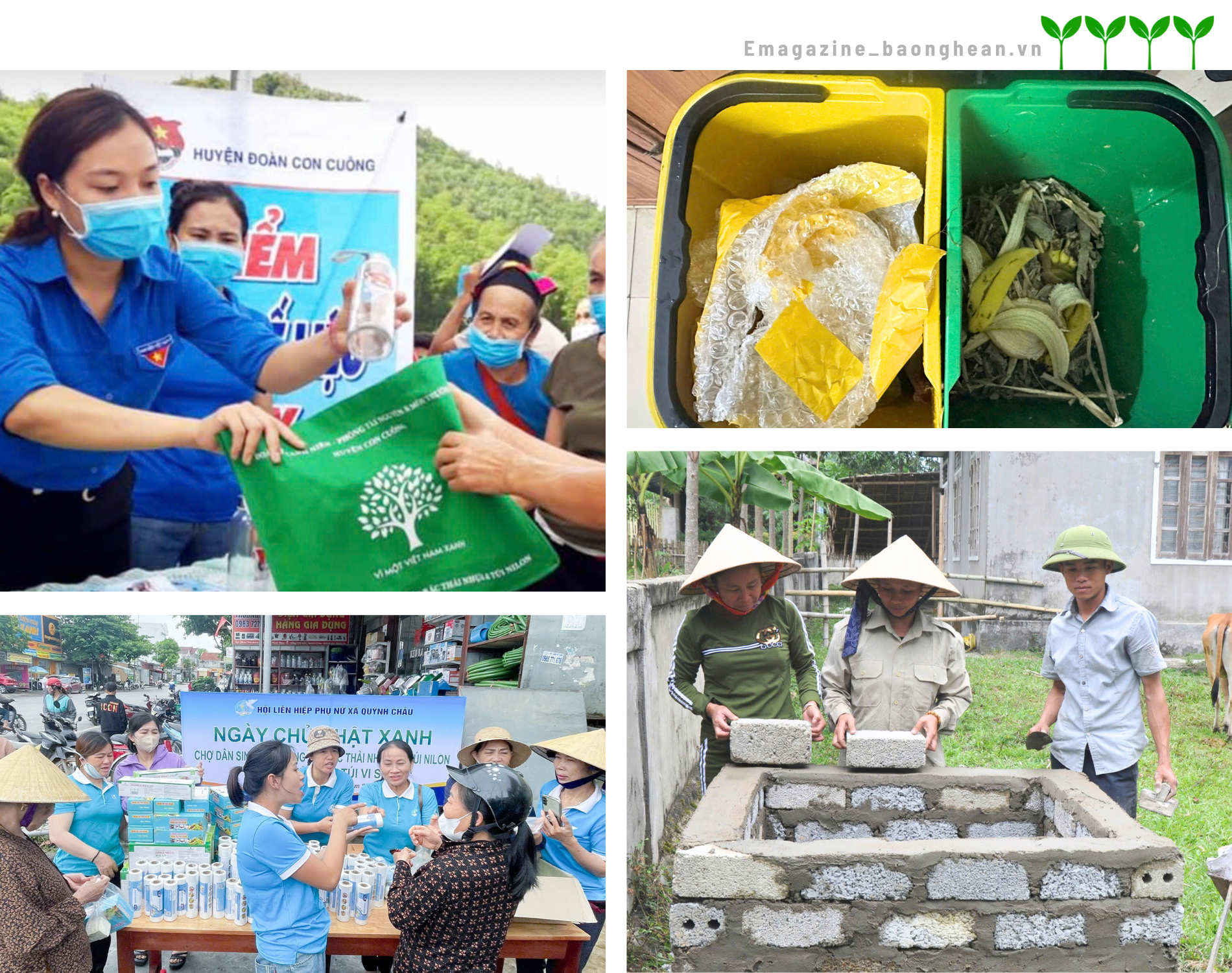
These changes are also evident in practice: Many agencies are using alternatives to plastic cups and containers such as stainless steel, glass, and ceramic cups and bottles in conferences and seminars; banners and slogans are gradually being replaced by electronic scrolling displays; and activities to disseminate the 2020 Environmental Protection Law and its guiding documents are being organized for civil servants, officials, organizations, and relevant individuals. Campaigns like "Say No to Plastic Waste" and the "Women's Self-Management of the Environment" program are spreading throughout the community, laying the foundation for behavioral change.
Many good, creative, and effective methods have been implemented synchronously by the people and organizations to achieve the goal of protecting the environment and minimizing waste. Photo: Hoai Thu - Hoa Mai
However, efforts have not been commensurate with the challenges. The rate of household waste sorting at source, as stipulated by new regulations, is only about 2%, a figure that highlights the gap between policy and reality. According to Ms. Nguyen Thi Tien, Deputy Head of the Environmental Protection Department of Nghe An province: Awareness and responsibility among some government officials, businesses, and citizens remain limited; resources mobilized for waste management in general, and plastic waste management in particular, are insufficient; collection fees from households are too low compared to actual costs; and there are many obstacles in mobilizing capital from non-state enterprises to invest in treatment systems. The varying fees and costs of treatment between localities make businesses hesitant to invest in modern technology.
"The Department of Agriculture and Environment is currently advising the Provincial People's Committee to issue regulations on economic and technical norms for the collection, transportation, and treatment of solid household waste. Once this pricing framework is approved, polluters will have to pay according to the amount of waste generated, creating a stable source of funding to maintain the treatment system," Ms. Tien added.
"
On October 28th, during the discussion of the Report of the Monitoring Delegation and the draft Resolution of the National Assembly on the results of the thematic monitoring of "the implementation of policies and laws on environmental protection since the Law on Environmental Protection 2020 came into effect," Representative Tran Nhat Minh (National Assembly representative from Nghe An province) pointed out fundamental solutions to bring the policy of waste sorting at source into practice. He emphasized the need to ensure the synchronization of the collection and processing system, avoiding the situation where sorted waste is still collected together. The decisive factor is the application of the "Polluter Pays" (PAYT) principle through the collection of fees based on the volume of waste, creating economic incentives for people to change their habits. At the same time, it is necessary to strengthen penalties and build an implementation roadmap suitable to the infrastructure and economic conditions of each locality, ensuring that the Law on Environmental Protection 2020 is truly effective.
If community movements are the source of change, then economic tools and legal mechanisms are key to making that change sustainable. Nghe An is moving towards a holistic model where preferential policies, producer responsibility, communication, and business initiatives connect to create a foundation for a circular economy.
To ensure the sustainable effectiveness of the fight against plastic waste, community movements need to be enhanced with economic tools and synchronized policy mechanisms. This means that, alongside encouraging people to change their habits, the government must apply higher environmental taxes on non-biodegradable plastic products and adjust collection and processing fees to accurately reflect actual costs. At the same time, businesses producing alternative materials need to be supported with preferential loans, tax reductions, or land assistance to expand their scale and lower the cost of environmentally friendly products.
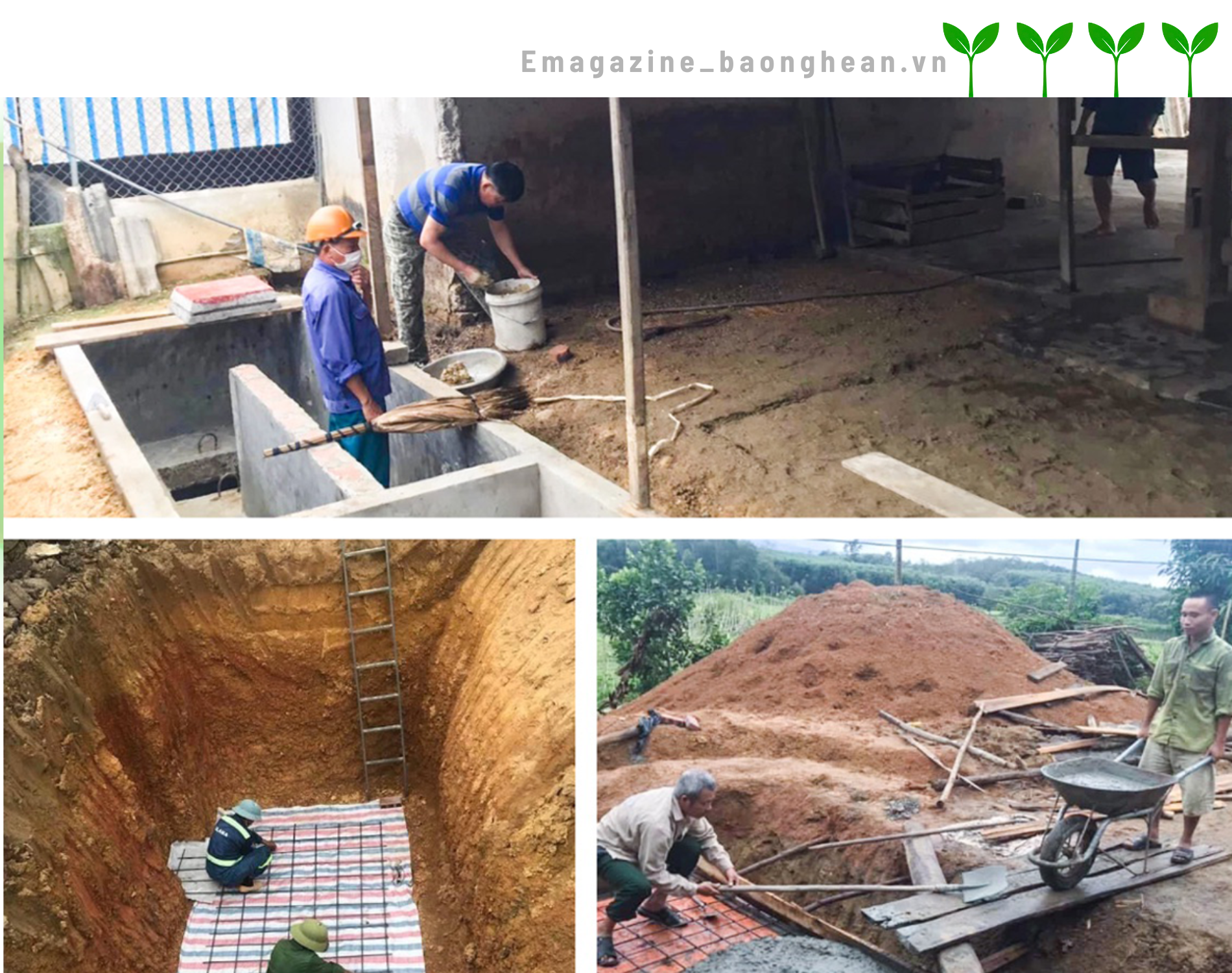
The biogas model has been replicated in many localities. Photo: Thanh Phuc
Beyond just management, Nghe An aims for a more ambitious goal: developing a circular economy. Sharing his plans for the future, Vice Chairman of the Provincial People's Committee Phung Thanh Vinh emphasized that Nghe An will focus on implementing fundamental solutions. First, the province will issue and implement a plan for sorting household solid waste at source, based on the 2020 Environmental Protection Law and guidelines from the Ministry of Natural Resources and Environment. This is considered a "key point" in reducing plastic waste, because only when waste is sorted from the beginning will recycling be effective and secondary resources be fully utilized.
Simultaneously, the province will develop and implement a Circular Economy Plan by 2035, in accordance with Decision No. 222/QD-TTg dated January 23, 2025, of the Prime Minister. This will be accompanied by investment in and upgrading of infrastructure for the collection, transportation, and treatment of solid waste, in line with source-based sorting. In fact, the model of the Hoang Gia Quan Waste Treatment Plant in Tan Ky, which has installed a production line for recycled plastic pellets from plastic waste, is clear evidence of this direction.
After nearly four years of implementing the Law on Environmental Protection, environmental protection efforts have shown significant progress in all three aspects: institutional framework, awareness, and implementation, making an important contribution to enhancing Vietnam's position on the global sustainable development map. Vietnam's ranking has improved considerably, reaching 54th out of 166 countries and territories, an increase of 34 places compared to 2016, and ranking second in the ASEAN region.
The Women's Union of Hoang Mai district and the communes of Nghi Loc and Do Luong have launched models for using reusable plastic baskets instead of plastic bags when shopping. Photo: Mai Hoa
Along with infrastructure development, the province will also strengthen propaganda, mobilization, and coordinated communication to spread a green lifestyle, gradually forming sustainable consumption habits, reducing and eventually completely replacing single-use plastic products. Businesses are encouraged to participate strongly in the circular supply chain, promoting the production and consumption of recycled, environmentally friendly products, in line with modern development trends.
To effectively address the plastic waste problem, in addition to the leadership role of management agencies, the synchronized participation of the people and the business community is needed. In that spirit, several key solutions will be implemented. First, the province will finalize incentive and preferential mechanisms, including tax, land, and credit support policies, to encourage businesses to invest in plastic recycling and reuse technologies. Currently, the Provincial People's Committee has assigned the Department of Agriculture and Environment to lead the drafting of regulations on economic and technical standards for the collection, transportation, and treatment of solid household waste. This will ensure adequate and sufficient funding, and the principle of "the polluter pays for the waste generated" will be enforced.
Products made from eco-friendly materials such as bamboo and pineapple are highly valued for both their design and quality. Photo: Thanh Phuc - Diep Thanh
Next, it is crucial to strictly implement Extended Producer Responsibility (EPR). Accordingly, businesses that manufacture or import plastic products and packaging must participate in the recovery and recycling process in accordance with the law, contributing to reducing the burden on the final processing stage.
In addition, the province will build a widespread social movement, launching practical and relevant campaigns such as "Say No to Plastic Waste," "Green Saturday," and "Exchange Waste for Gifts." These activities not only create a ripple effect in the community but also help form green consumption habits, gradually limiting and eliminating single-use plastics.
"
We believe that, with the joint efforts of the government, businesses, and all the people, the reduction, recycling, and treatment of plastic waste will achieve significant results, contributing to building a green, clean, and beautiful Nghe An, and promoting sustainable development.
Vice Chairman of the Provincial People's Committee Phung Thanh Vinh
“Ultimately, Nghe An will stand alongside the community and businesses in green innovation. The province encourages initiatives and startup models that transform plastic waste into useful building materials and household items; at the same time, it creates conditions for businesses to develop recycled, environmentally friendly products in line with the circular economy,” affirmed Vice Chairman of the Provincial People's Committee Phung Thanh Vinh.
The fight against plastic waste is not a one-day or one-month story, but a long-term journey spanning generations. And with resolute government action, pioneering businesses, and the cooperation of the people, the "plastic threat" will gradually recede, giving way to a greener, cleaner, and more sustainable future—a future that each of us has a responsibility to create and enjoy.
"
Vietnam's policies and mechanisms are similar to those of many developed countries, but their implementation remains limited. The majority of the population still lacks environmental awareness, requiring a long time to change, perhaps even several generations; penalties for violations are not strong enough, and management is lax. These two factors can only be thoroughly addressed if the government takes decisive action. In the near future, many more environmental pollution cases may be exposed. Hopefully, the media will do a good job of warning people, helping them understand the terrible harm of pollution, including plastic pollution, so they can act promptly before it's too late.
Dr. Phan Cong Ngoc - Institute of Biochemical Technology - Environment, Vinh University




.jpg)