

A consensus was reached on the personnel nominated to participate in the Politburo and the Secretariat of the 14th Party Congress.
After two days of work, the Central Committee made several important decisions, including agreeing on the number of personnel for the Politburo and the Secretariat of the 14th Party Congress; agreeing on the personnel to be nominated for the Politburo and the Secretariat of the 14th Party Congress, and some issues related to high-level personnel of the Party and State; and agreeing on the content of issues related to the preparation for the 14th Party Congress.
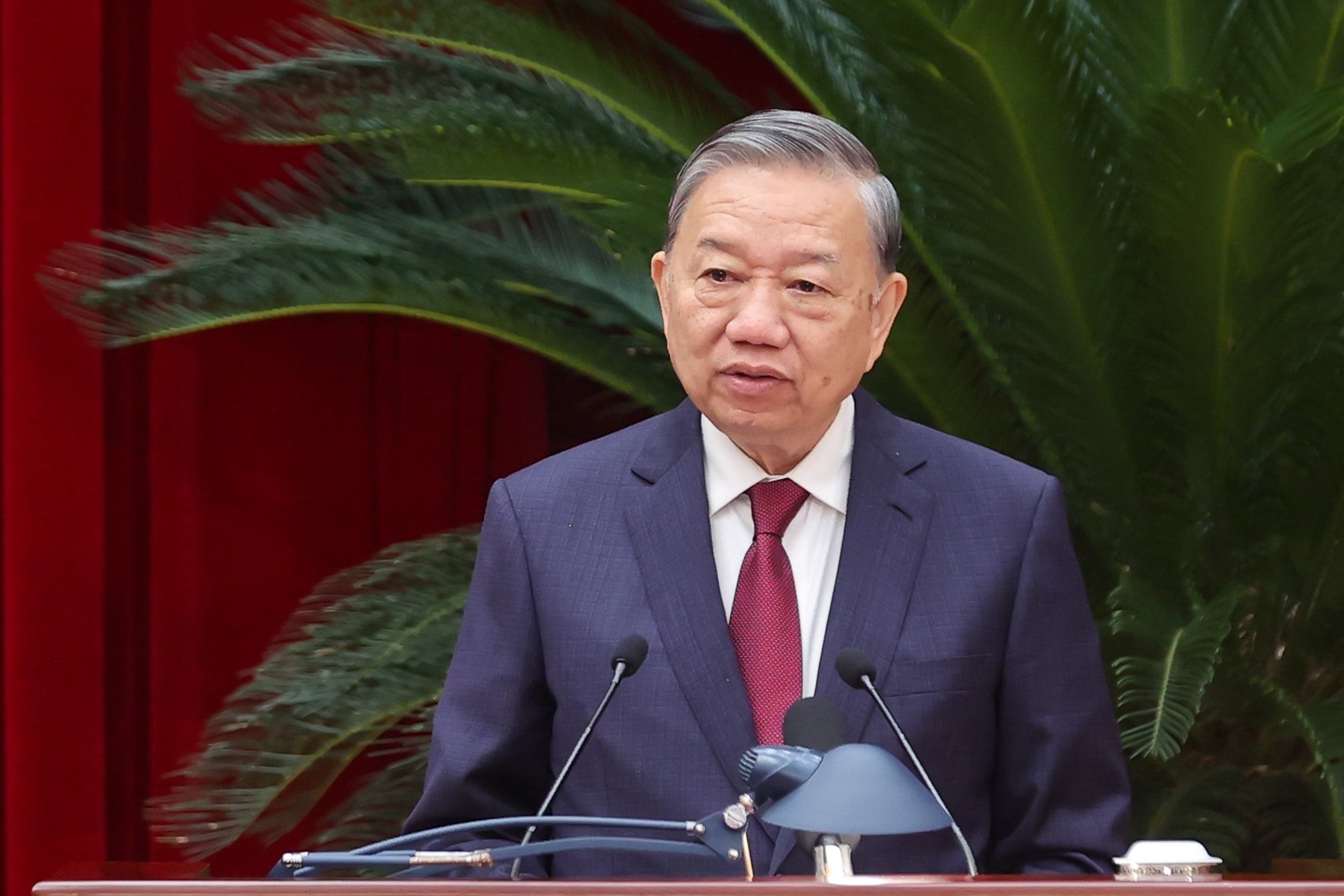
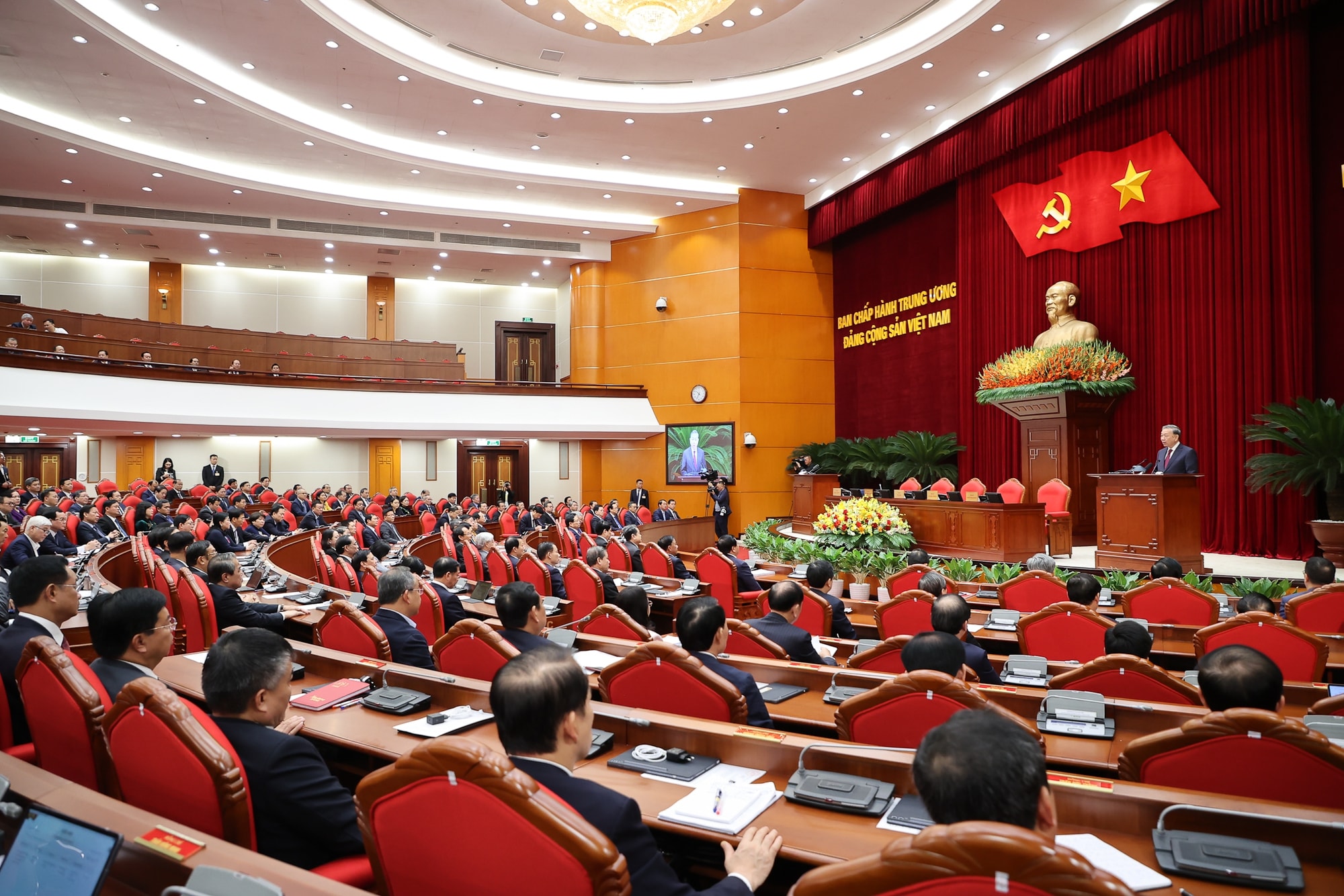
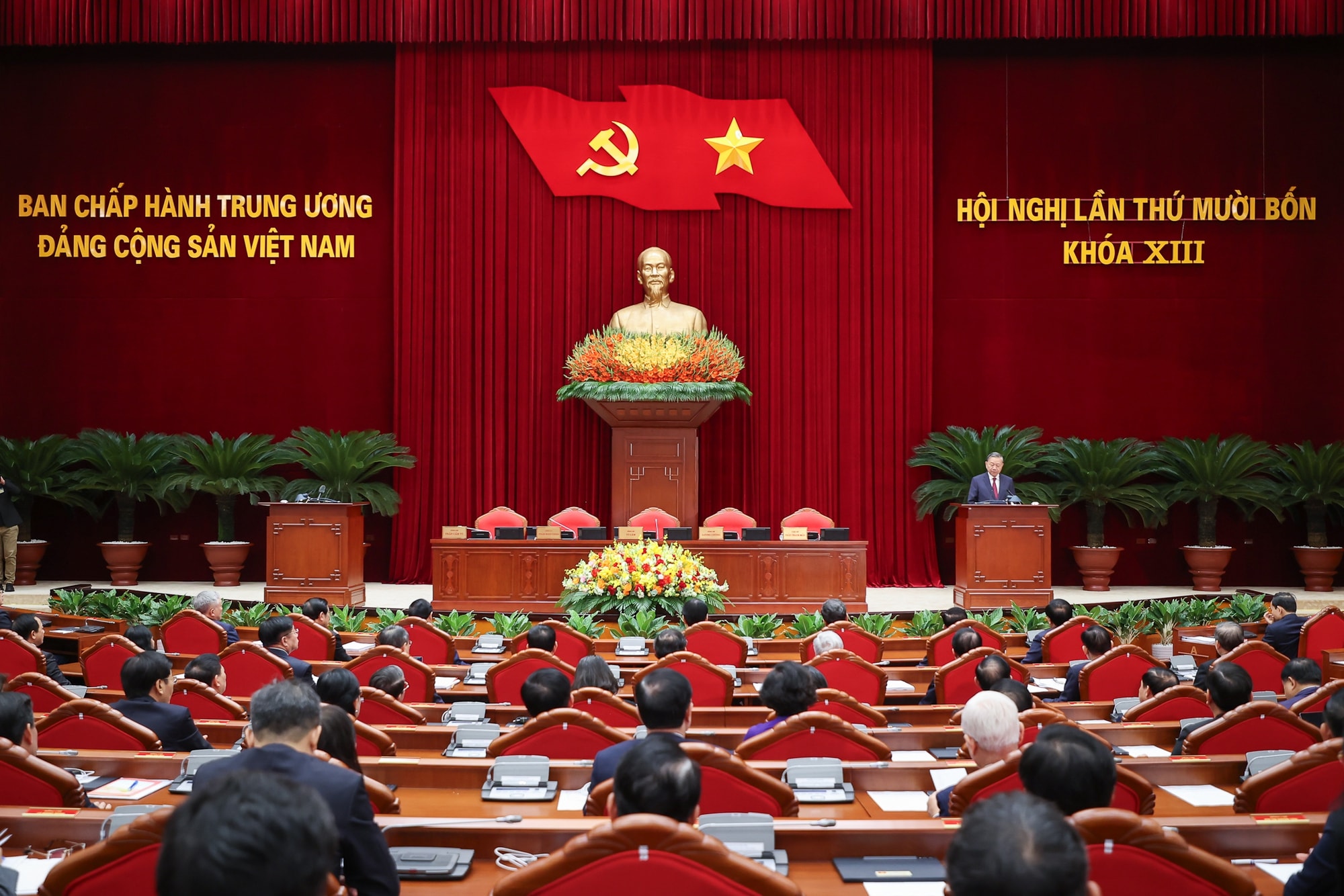
The 14th Conference of the Central Committee of the 13th Party Congress has completed all the planned agenda items and adjourned this morning (November 6).
In his closing remarks at the conference, on behalf of the Politburo and the Secretariat, General Secretary To Lam expressed gratitude to the Central Committee members for their dedicated, enthusiastic, frank, and honest work, carried out with a revolutionary spirit of engagement and the high responsibility expected of Central Committee members.
At the same time, the General Secretary summarized the main results and the work that needs to be done from now until the 15th Central Committee Meeting and the 14th National Congress of the Party.
Continue reviewing and refining the personnel plans.
Accordingly, firstly, the Central Committee held democratic and thorough discussions with high consensus on the personnel nominated to participate in the Politburo and the Secretariat of the 14th Party Congress. The Central Committee assigned the Politburo and the Personnel Subcommittee of the 14th Party Congress to continue reviewing, supplementing, and perfecting the personnel plans in accordance with the guidelines for personnel work of the 14th Party Central Committee and the established personnel work procedures, in order to report to the Central Committee for consideration and decision at the upcoming 15th Central Committee meeting.
The Central Committee unanimously agreed with the proposed agenda for the Congress, the working regulations, the election regulations at the Congress, and the report on the preparations for the 14th Congress. The Central Committee assigned the Politburo to incorporate the Central Committee's opinions and further refine the drafts for submission to the 14th Congress for consideration and decision.
Secondly, the Central Committee reviewed and commented on the report on the leadership and direction of the 13th Central Committee; the report on the implementation of the Working Regulations of the 13th Central Committee, the Politburo, and the Secretariat; the report summarizing the implementation of the Working Regulations of the 13th Central Inspection Committee; and the report on important tasks resolved by the Politburo since the 13th Central Committee meeting to the 14th Central Committee meeting.
The Central Committee assigned the Politburo to study and incorporate the Central Committee's opinions, further refine the summary reports, and hand them over to the 14th Central Committee and the Central Inspection Commission for consideration and decision on amending and supplementing the working regulations for the next term.
Thirdly, the Central Committee assigned the Politburo to direct the Document Drafting Subcommittee and relevant agencies to incorporate the feedback from political organizations and the people to further refine the draft documents. They are to promptly and seriously synthesize, incorporate, and explain the feedback to finalize the draft documents for submission to the 15th Central Committee Conference for consideration and completion before presenting them to the 14th Party Congress.
They are truly a united, exemplary, courageous, and intelligent team.
Fourth, the 14th Central Committee Conference unanimously agreed with the review of the leadership and guidance of the 13th Central Committee, Politburo, and Secretariat, and also agreed on the following assessment: In the context of many difficulties and challenges, the domestic and international situation is rapidly and complexly evolving, with many issues exceeding expectations; natural disasters and epidemics are occurring in many places... but the Central Committee, Politburo, Secretariat, and key leaders have truly been a united, exemplary, courageous, and intelligent collective, steadfast in their views and policies of the Party, promptly making correct and appropriate decisions, resolving many important issues concerning socio-economic development, national defense, security, foreign affairs, Party building, and the political system; The comprehensive and synchronized promotion of the reform process, leveraging the strength of national unity, and the successful implementation of the Resolution of the 13th National Congress have yielded many significant, comprehensive, and groundbreaking achievements, leaving many outstanding marks and creating a foundation for development in subsequent terms.
The Central Committee, the Politburo, and the Secretariat have led and directed the vigorous implementation of Central Committee resolutions, especially Resolution 18 on restructuring and streamlining the organizational apparatus of the political system, completing it five years ahead of schedule. This has created a "boost" and a "turning point" in the implementation and organization of the Party's resolutions in the new situation.
Continue to remove institutional obstacles and difficulties, improve policies and legal frameworks, and effectively address long-standing problems, limitations, and weaknesses. Maintain macroeconomic stability, control inflation and keep it at a low level; increase foreign direct investment; improve the investment and business environment and trade balance; and shift the growth model in a positive direction.
Continuing to effectively implement the three strategic breakthroughs, the people's lives have improved significantly. Maintaining the independence, sovereignty, and territorial integrity of the Fatherland, as well as national and ethnic interests; creating a peaceful and stable environment for national development; making positive and responsible contributions to peace, stability, and development in the region and the world. The prestige and position of the Party and the country are increasingly enhanced internationally, earning the trust and high regard of cadres, Party members, and the people.
The Politburo has issued seven strategic resolutions: Resolutions 57, 59, 66, 68, 70, 71, and 72. These are particularly important political and legal foundations and prerequisites for us to achieve the country's development goals in the new phase, to achieve double-digit economic growth for many years to come, and to successfully achieve the two centenary goals.
However, the leadership and guidance of the Central Committee, the Politburo, and the Secretariat during the 13th National Congress term still had some limitations: The institutionalization and concretization of some Party resolutions were slow; leadership and guidance in state management of socio-economic affairs, ensuring political security, social order and safety, and protecting resources and the environment still had some limitations and shortcomings.
The implementation of some key projects and the disbursement of public investment capital have not met expectations; the lives of a segment of the population remain difficult; at times and in some places, the organization and implementation of guidelines, policies, laws, and public duties have not been complete; discipline and order have sometimes and in some places not been strictly enforced.
General Secretary To Lam stated that the aforementioned shortcomings and weaknesses have both objective and subjective causes, but are primarily due to subjective factors. The leadership methods and approaches of some Party committees and Central Committee members in certain areas are still limited; they lack focus, decisiveness, and timeliness; and they have not strongly promoted the role, responsibility, dynamism, creativity, and willingness to think, act, and take responsibility in the leadership, direction, and management of the heads of organizations.
Creating space, potential, and opportunities for national development in the new era.
Fifth, according to General Secretary To Lam, the brightest and most groundbreaking aspect in the implementation of Resolution 18 is the organization of the two-tiered local government model and the reorganization of administrative boundaries at the provincial and commune levels, creating space, potential, and opportunities for national development in the new era.
The three-tiered government model has been in operation for four months, with promising initial results, increasing the effectiveness and efficiency of serving the people and promoting socio-economic development; the public supports and trusts it, and citizens and businesses are beginning to see opportunities, rights, and civic responsibilities becoming more tangible; social life is more vibrant and joyful.
To promote these positive factors, General Secretary To Lam suggested that Party committees and local governments at all levels, especially Central Committee members, should pay more attention to supporting and creating conditions for the three-tiered government model, particularly focusing on the two tiers of local government, to operate effectively and efficiently, achieving the goals set by the Party, including three key objectives: maintaining a peaceful and stable environment; achieving rapid and sustainable development; and continuously improving the material and spiritual lives of the people.
At the same time, focus should be placed on the following key areas: The entire political system should continue to nurture and build an effective and efficient two-tiered local government model. Clearly define the interconnected authority between the three levels for each sector, eliminating overlaps and ensuring no responsibilities are left unchecked. Decentralization should be accompanied by control; a strong shift towards post-auditing is necessary; and internal auditing should be organized at the provincial and commune levels. Public finances should be allocated based on results and the specific characteristics of each locality. Job positions and product-based contracts should be established early; mandatory training in professional skills, expertise, and data management should be provided. A digital, interconnected one-stop service should be implemented; the "request-and-grant" mechanism should be eliminated, and the accountability of leaders should be increased. A shared data system should be developed, connecting population, land, social security, and businesses; and real-time data updates should be provided from the grassroots to the central level.
The overarching principles are "local authorities decide, local authorities act, local authorities take responsibility" and "clear responsibilities - clear tasks - clear deadlines - clear resources - clear accountability", "The central government sets an example, local authorities respond", "Serving the people", and "The results and products of the work are the highest measure of the competence and quality of cadres".
The sixth point emphasized by General Secretary To Lam is that with 2025 almost over, there isn't much time left until the 14th National Congress, while we have a lot of work to do and many targets to achieve in the last month of the year, and while storms, floods, and natural disasters are occurring in almost all localities.
Therefore, General Secretary To Lam urged Central Committee members to further uphold their sense of responsibility to the country and the people, focusing on leading and directing the effective implementation of tasks in their respective units and localities, ensuring the fulfillment of targets set forth in the Party's 13th National Congress Resolution and resolutions of Party committees at all levels; and to promptly organize the implementation of the conclusions of the 14th Central Committee Conference to contribute to the success of the 14th National Congress of the Party.
"The situation regarding natural disasters, storms, floods, and landslides in recent times has been very complex, seriously affecting the lives of the people and the goals of socio-economic development. Typhoon No. 13 is likely to make landfall in the Central and Central Highlands regions today, therefore the 14th Central Committee Conference concluded earlier than expected so that comrades could return to their localities to focus on directing flood and storm prevention work in the spirit of 'Protecting the lives and property of the people is paramount, first and foremost, all for the people'; implementing the 'four on-the-spot' plan to work with the people to respond to and overcome the consequences of the typhoon; the Ministries of National Defense, Public Security, Finance, etc., should proactively support localities in the areas affected by natural disasters," General Secretary To Lam emphasized.