

7 common signs to help identify fake videos created by AI.
Artificial intelligence (AI) video creation technology is rapidly developing, blurring the lines between real and fake. Below are 7 signs to help you identify deepfake videos.
The online world is witnessing an unprecedented surge in AI-generated video. The emergence of powerful tools like OpenAI's Sora 2 (ChatGPT) and Google Gemini's Veo 3 has opened up the possibility of creating incredibly realistic video and audio. But along with that comes a worrying reality: it's becoming increasingly difficult to distinguish between real video and AI-generated content.
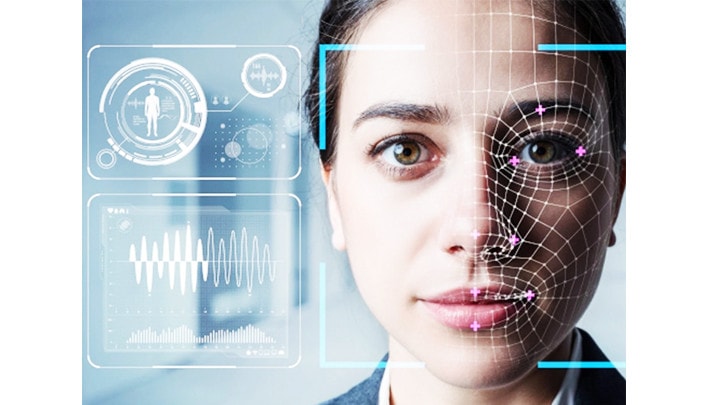
While no AI-powered method guarantees 100% accuracy in identifying fake videos, understanding the basic warning signs can help internet users protect themselves from being deceived, manipulated, or spreading fake news. Below are seven of the most common signs to help you detect deepfake videos.
1. Check for watermarks: The easiest sign to overlook.
Watermarks are the simplest way to identify AI-generated videos. For example, videos from Sora often have a watermark in the bottom left corner. If you see Sora's signature logo or watermark, it's almost certainly an AI product, unless someone has intentionally edited it to deceive viewers.
However, not all AI videos have watermarks. Google's Veo 3, for example, can create videos without showing any trace of them. Google currently uses SynthID technology – a form of hidden "digital watermark" that only machines can detect. While this is a significant step forward, many tools and software now have the ability to remove or blur this digital trace.
Therefore, the appearance (or disappearance) of a watermark can be the first sign that makes you doubt the authenticity of a video.
2. The source of the video cannot be traced.
One fundamental principle is that all authentic content has a source.
If you come across a viral video but can't find the original or a reliable source, be wary. Checking is simple: just take a still image (screenshot) and search for it on Google Lens or other reverse image search tools.
If the results show original articles, videos, or official news reports, it's highly likely to be a genuine video. But if no results match, the video could be a product of AI.
This is especially true for animated videos, short clips, or "highly emotional" images (for example, scenes of natural disasters, war, or celebrities making shocking statements), genres that fake news often exploits.
3. The sound is unnatural or out of sync.
One of the biggest challenges with AI video technology is the authenticity of the sound. AI-generated voices often have a robotic tone, lacking emotion or natural fluctuation. You can sense "something's not right," although it's difficult to pinpoint exactly what it is.
Furthermore, audio synchronization issues are also a strong indicator. If footsteps, water sounds, or speech don't perfectly match the video, it's highly likely the video was created or edited using AI. While this error can also occur in real videos, when combined with lifeless audio, it's a suspicious sign.
4. The text appears incorrect or distorted.
Text remains an inherent weakness of AI-powered video creation models. When watching a video, pay attention to the writing on signs, name tags, book covers, or whiteboards. The characters are often distorted, blurry, or misspelled, especially when the camera switches scenes or changes angles. These small details are the clearest evidence that the video was created using AI.
Additionally, an unusual lack of text in a video can also be a warning sign, especially if the content should ideally have text (such as signs, subtitles, nameplates, or product labels).
5. Unusually short video duration
AI-powered video creation tools are often limited in length. For example, Sora creates videos up to 10-15 seconds long, while ChatGPT Pro can go up to 25 seconds.
If a viral video has a length that precisely matches these benchmarks, it's highly likely it was created by AI. Additionally, splicing multiple AI segments into a longer video often results in transition errors or inconsistent quality, making it easy for discerning viewers to spot the anomaly.
6. Inconsistent image quality
By 2025, even mid-range smartphones will be able to shoot 4K video. Therefore, a viral video with low resolution (720p or blurry) is suspicious, especially if the uploader claims to have filmed it with a modern device.
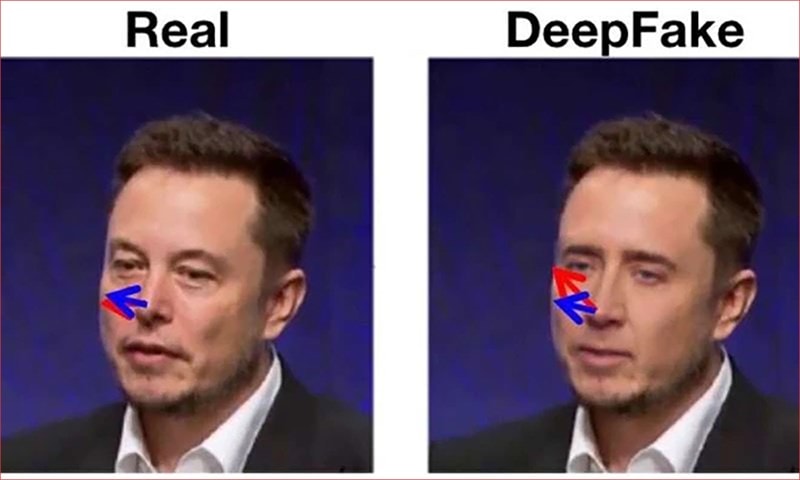
Conversely, ultra-high-quality deepfake videos (4K/60fps, HDR) are still very rare and require significant resources to create. If a video has superior quality but lacks authenticity (such as a politician saying something strange, or a disaster never reported in the press), this could also be a sign of a sophisticated deepfake.
7. Try using an AI detection tool.
The development of deepfakes has also led to the emergence of AI-generated video detection tools, such as CloudSEK's Deepfake Analyser.
This tool analyzes videos, evaluates framing, voice, movement, and estimates the likelihood that the content is real or fake.
However, detection tools are not perfect. A video might "pass the test" even though it's actually a deepfake, and vice versa. Therefore, the results should only be considered supporting data, not absolute proof.
Vigilance is the first line of defense.
Deepfakes and AI videos are completely changing how people perceive the truth. While technology is developing at a breakneck pace, users' ability to perceive and verify information is not keeping up.
No one can avoid encountering AI-generated videos, but understanding the warning signs will help you avoid being manipulated by fake content.
Before believing, sharing, or commenting, ask yourself: “If this is true, why haven’t any official sources reported it?”
Stay alert, verify information, and remain vigilant because in the age of AI, your eyes are no longer sufficient to see the truth.