

Malaysia takes a gamble at CAS, risking missing the 2027 Asian Cup.
FAM's appeal was rejected by FIFA, and they are pursuing the case at CAS amidst the Malaysian national team's perfect record of four wins in the 2027 Asian Cup qualifiers. The risk of a 0-3 forfeit loss, or even a multi-year ban from competition, is high.
Just as the Malaysian national team won all four matches in the 2027 Asian Cup qualifiers and were close to securing an early ticket, the Football Association of Malaysia (FAM) faced its biggest risk in years: its appeal was rejected by FIFA, forcing FAM to pursue the case at the Court of Arbitration for Sport (CAS). In the worst-case scenario, Malaysian football faces a 0-3 forfeit loss in the matches involved, losing its 2027 Asian Cup qualification spot and even the risk of being banned from continental competitions for many years.
The legal gamble at CAS and a warning from an insider.
The crisis stemmed from the scandal involving the falsification of documents for seven naturalized players. After FIFA rejected their appeal, FAM decided to take the case to the CAS. However, seasoned voices within the Malaysian football system argued that this was a risky and costly gamble. Former FAM Secretary-General Datuk Seri Azzuddin Ahmad and former player Safee Sali both warned that the evidence FAM possessed was too weak to make a breakthrough at a higher refereeing level. They argued that instead of pouring millions of ringgit into the legal battle, resources should be redirected to community football – a foundation that has been neglected for too long.

Paradoxes on the pitch and a challenge for the AFC.
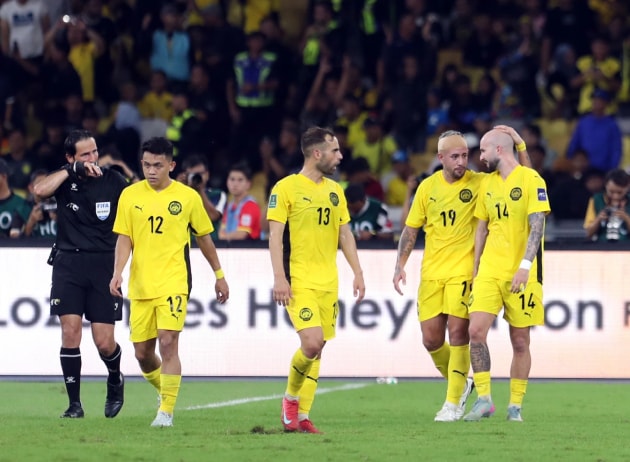
Ironically, while the legal process was shrouded in uncertainty, Malaysia was cruising on the pitch with four consecutive wins in the qualifiers. The prospect of securing qualification in November put the Asian Football Confederation (AFC) in a difficult position: if they recognized the current achievement and the CAS ruled against them a few months later, the AFC would be forced to revoke the qualification – a complicated precedent that would diminish the value of the tournament.
Vietnam, Laos, and the pace of the race.
From a group perspective, the Vietnamese team under coach Kim Sang-sik could slow down the pace of the competition. A victory against Laos would not only keep Vietnam's hopes alive but also prevent the group from being decided prematurely, creating a buffer period for the legal process to reach a final conclusion.
Worst-case scenario: a 0-3 forfeit loss, resulting in a ban until 2029.
Expert Christopher Raj, a former member of the FAM Executive Committee, fears a dire scenario if the gamble at CAS fails. Malaysia could face 0-3 forfeit losses against Vietnam and Nepal, thus ending their dream of participating in the 2027 Asian Cup. More seriously, a ban could keep the national team out of continental competitions until 2029.
The ripple effect will be quick and profound: a drop in FIFA rankings leads to a decrease in opportunities to compete against strong opponents, as top teams tend to avoid friendly matches against lower-ranked teams. When quality matches are lost, the gap with the top teams widens, isolating Malaysian football in a negative vicious cycle.
Systemic lesson: dependence on naturalization and gaps in youth development.
The current crisis exposes a structural weakness: a reliance on mass naturalization policies to bridge the gap, while youth development and community development are neglected. Regardless of the outcome at CAS, the case serves as a costly wake-up call. Instead of pursuing a costly and fragile legal battle, Malaysian football needs the courage to acknowledge its mistakes, accept the need to start over, and build a solid foundation.
Between the spotlight of four victories and the legal shadow of the naturalization process, FAM's choice will shape the trajectory of Malaysian football not only for the upcoming Asian Cup but for many years to come.