
Kh-38ML: Mach 2.2 air-to-ground missile, range 40 km.
The Russian Air Force used Kh-38ML missiles launched from Su-34s to strike targets in the Kharkiv region; they have a speed of 2,700 km/h, a range of approximately 40 km, a 250 kg warhead, and are used in conjunction with laser-guided UAVs.
The Kh-38ML air-to-ground missile is used by the Russian Air Force to target Kyiv's armed forces, according to the Telegram channel Fighterbomber. This weapon reaches a maximum speed of 2,700 km/h (Mach 2.2), has a range of approximately 40 km, and carries a high-explosive warhead of about 250 kg. Guidance is based on a laser beam projected from a UAV, increasing accuracy when striking a specific target.
Event Overview
According to the source, the Kh-38ML was launched from a Su-34 frontline bomber, striking the roof of a two-story building in the Kharkiv area, penetrating and exploding from the inside. The explosion created a column of smoke and dust tens of meters high, indicating significant damage to a stationary target.
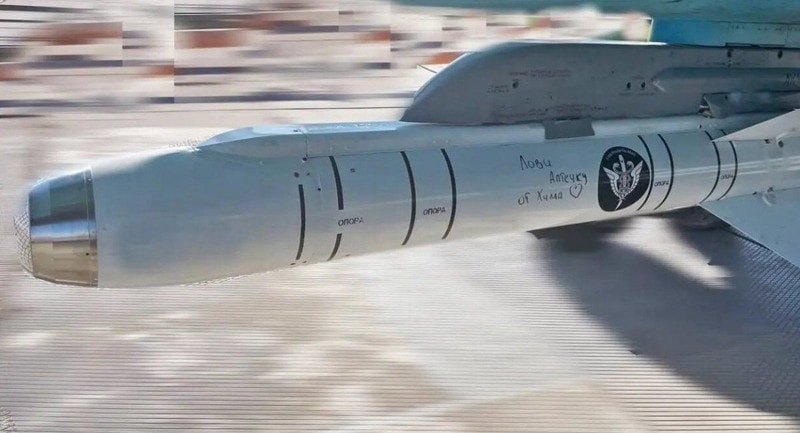
The specifications are stated in the source.
| Parameter | Value |
|---|---|
| Maximum speed | 2,700 km/h (Mach 2.2) |
| Shooting range | about 40 km |
| Total weight | 520 kg |
| Warhead | approximately 250 kg, exploded violently. |
| Guidance method | Laser beam targeting by UAV |
| Launch platform | Su-34 |
Technical analysis
With a total weight of 520 kg and a warhead of approximately 250 kg, the Kh-38ML is designed for high lethality against point targets. Its speed of up to Mach 2.2 significantly shortens flight time over a distance of 40 km, limiting the opportunity for close-range enemy air defenses to react. The UAV's laser targeting mechanism allows for sustained target tracking in the final phase, making it suitable for fixed or semi-fixed targets with unstable coordinates.
The published case study shows an attack from a high angle, penetrating the roof of the building and exploding inside, exploiting the explosive effect in a confined space to maximize damage to the structure and equipment inside.
Deployment tactics
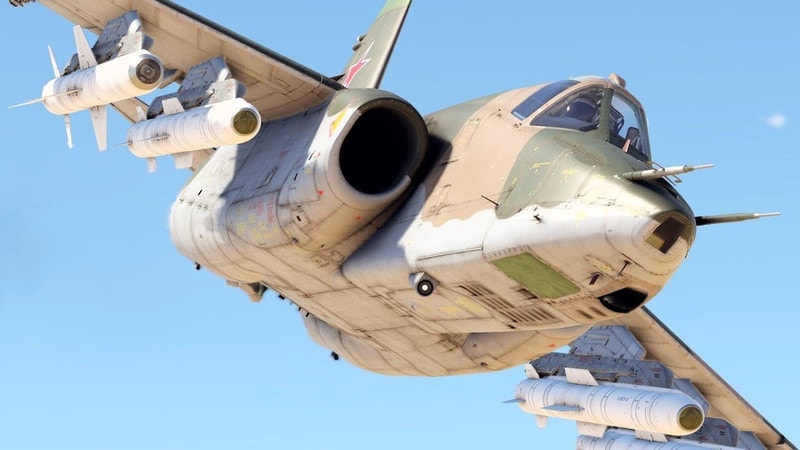
The Kh-38ML requires coordination between the launch aircraft and the reconnaissance/illumination UAV. The UAV approaches the target to illuminate it with a laser beam, while the launch aircraft deploys it outside the target area. With a range of approximately 40 km, the launch aircraft must operate close enough to enemy airspace, requiring risk management against medium- and short-range air defenses.
- Main advantages: high speed, laser guidance for point accuracy.
- Main limitations: short range, requiring close coordination between fighter jets and UAVs.
Impact on air defense
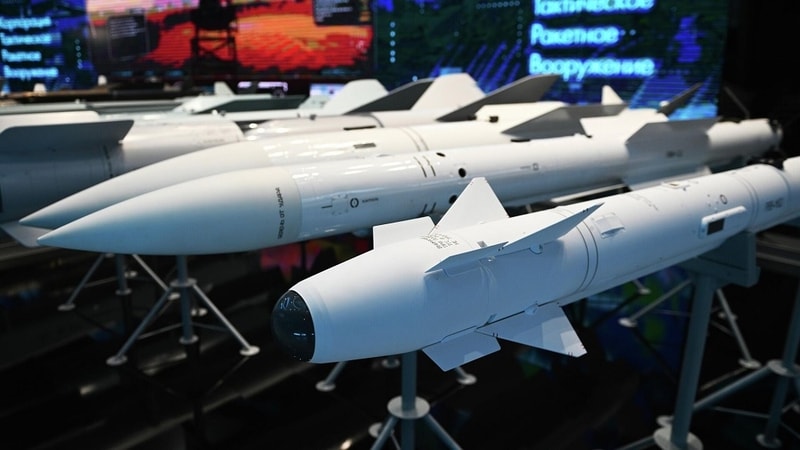
The Mach 2.2 speed during the dive shortens the time frame for detecting, tracking, and intercepting the target at close range. However, the 40 km range forces the attacker to deal with the outermost air defenses around the target area or choose a safe approach corridor before activating the laser irradiation sequence and launching the missile.
Related variants
Based on the Kh-38, the Russian Federation developed the Grom-E1, a hybrid "missile bomb." According to sources, this weapon is currently being used in limited quantities by the Russian Aerospace Forces. The article does not provide further specifications, so a detailed comparison with the Kh-38ML is not possible.
Conclude
The Kh-38ML demonstrates a target-attack model based on high speed, a heavy warhead, and laser guidance in conjunction with UAVs. Its accuracy was highlighted in the launch from a Su-34 in the Kharkiv region. The biggest limitation is its range of approximately 40 km, requiring close coordinated combat operations to minimize risks when approaching the target area.
CTVX