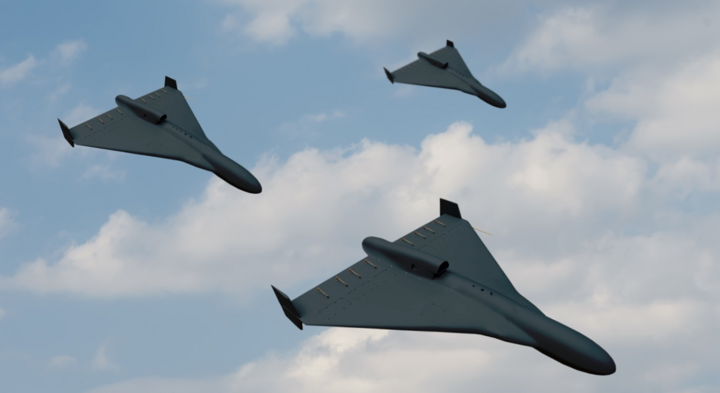
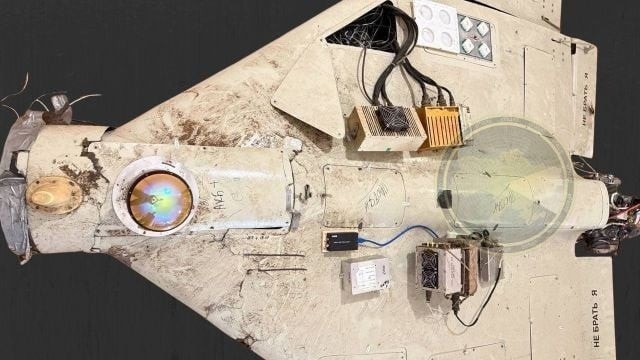
Geran-2 is equipped with a rear-view camera to evade Ukrainian interceptor UAVs.
Business Insider quoted Lieutenant General Yuriy Mironenko and Sergeant Riley Hiner as saying that some Geran-2s are equipped with rear-facing digital cameras and thermal imaging sensors, which help detect interceptor UAVs from the 6 o'clock position so they can avoid them.
According to Business Insider, some of Russia's Geran-2 suicide attack drones have been fitted with rear-facing digital cameras, allowing operators to observe approaching interceptor vehicles from behind and perform evasive maneuvers. Additionally, the rear is equipped with thermal imaging sensors to detect approaching targets from the 6 o'clock position.
Source and confirmation
Lieutenant General Yuriy Mironenko, Deputy Minister of Defense of Ukraine in charge of Innovation, told Business Insider that Russia is constantly testing new weapons, including improved versions of the Geran-2. He stated, "Some of Russia's Geran-2s have been equipped with rear-view cameras to detect and respond to our interceptor aircraft."
U.S. Army Sergeant Riley Hiner told Business Insider that Russia has installed thermal imaging sensors on the rear of the Geran-2, which help detect approaching interceptor drones from the 6 o'clock position. According to Hiner, the target's movement complicates the work of the interceptor drone operator, forcing them to constantly adjust speed and flight path.
Technical analysis
Rear-facing camera and thermal imaging sensor
The addition of a rear-facing digital camera enables direct monitoring of blind spots behind the UAV's flight path, areas where interceptor vehicles typically approach to reduce their detectability. A rear thermal imaging sensor increases the probability of target identification in low-light or obscured conditions, allowing for the identification of the thermal hotspot of the interceptor UAV.
The combination of a photoelectric camera and a rear-facing thermal imaging sensor provides operators with additional real-time data to help them decide on changes in direction or speed. This upgrade focuses on rear situational awareness to counter tail-following tactics approaching from the 6 o'clock position.
6 o'clock direction and intercept geometry
Approaching from the 6 o'clock position (rear) allows the interceptor UAV to maintain a short distance and limit the target's detection capabilities. When the target has rear-view sensors, the operator can detect it early, altering the intersection geometry. This forces the interceptor to reposition, meaning increased control workload and increased maneuvering energy consumption.
Tactical implications
- Enhanced situational awareness: Data from the rear camera and thermal sensors helps determine the approach direction of the interceptor UAV, particularly at the 6 o'clock position.
- Evasion assistance: The operator has the capability to adjust direction, speed, or trajectory to disrupt the opponent's control scheme.
- Interfering with the enemy's targeting process: The target's changing flight parameters force the interceptor UAV operator to constantly make adjustments, increasing the risk of missing the optimal engagement opportunity.
The "action-reaction" context
Business Insider argues that Russia's deployment of UAV interceptors and subsequent installation of rear-facing cameras on the Geran-2 is a prime example of the "action-response cycle" in Ukraine: one side upgrades its capabilities, the other develops countermeasures. The addition of rear-facing sensors reflects the rapid adaptation of unmanned systems in a highly hostile environment.
Information limitations
- Source: Business Insider, citing Lieutenant General Yuriy Mironenko and Sergeant Riley Hiner.
- There is no publicly available data on the camera types, sensor spectrum, detection range, warning algorithms, or specific control procedures.
- The information above reflects the opinions of the personnel named in the article and the overall conclusions of Business Insider.