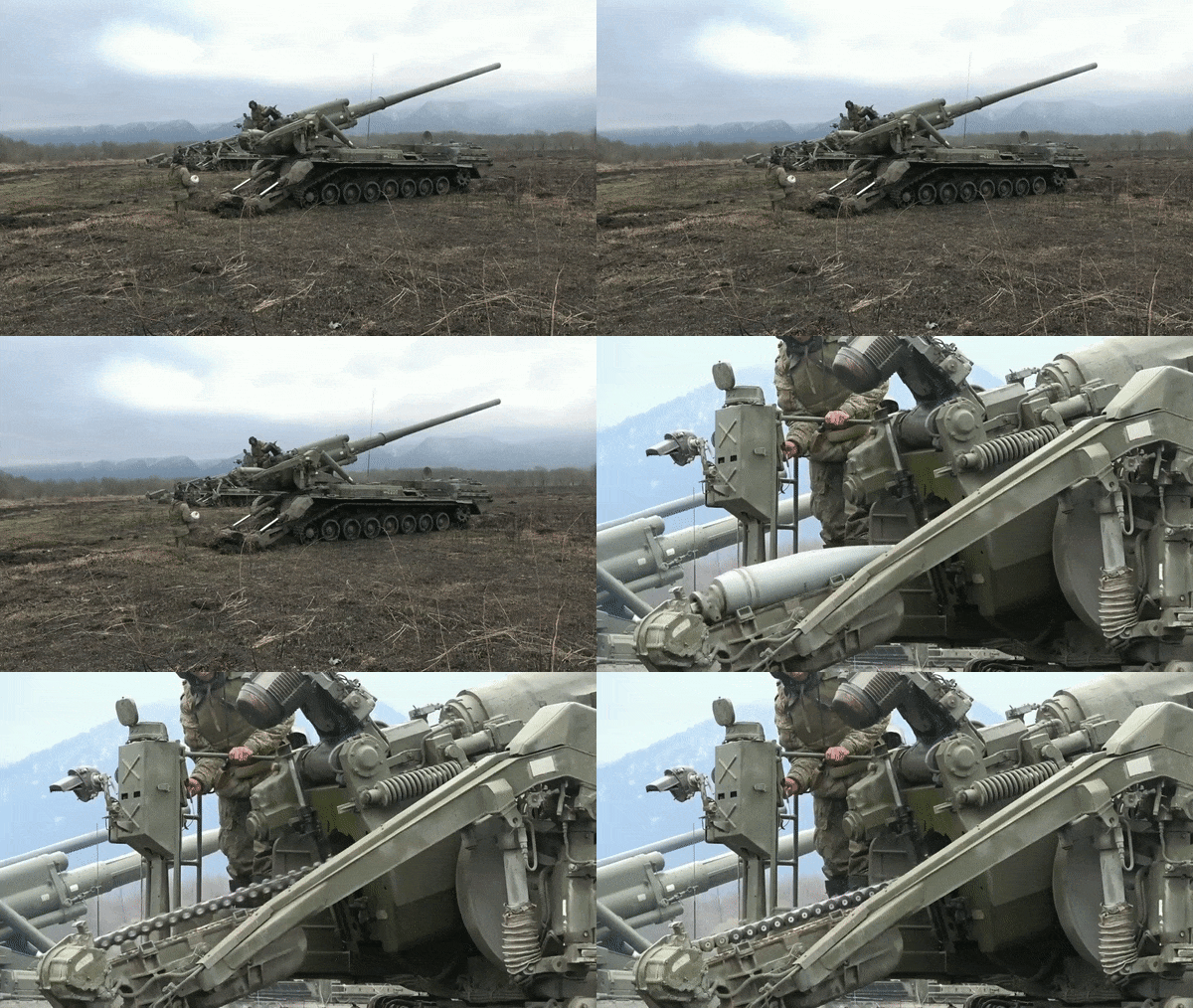
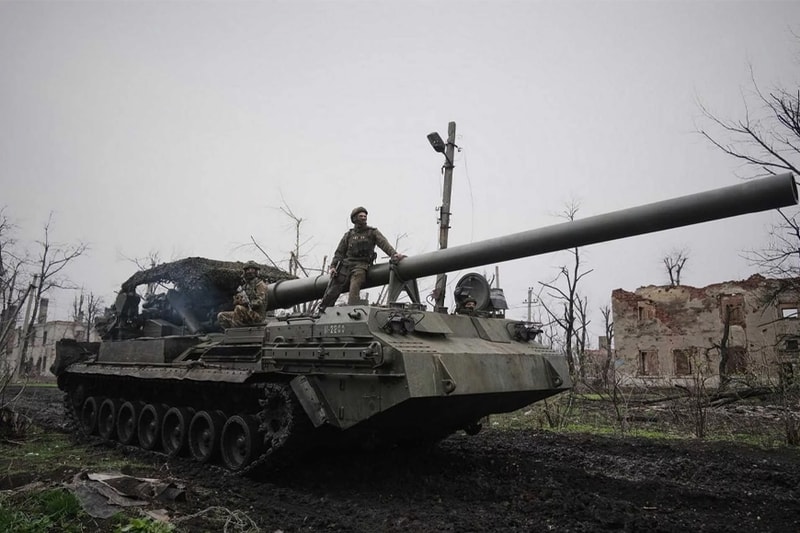
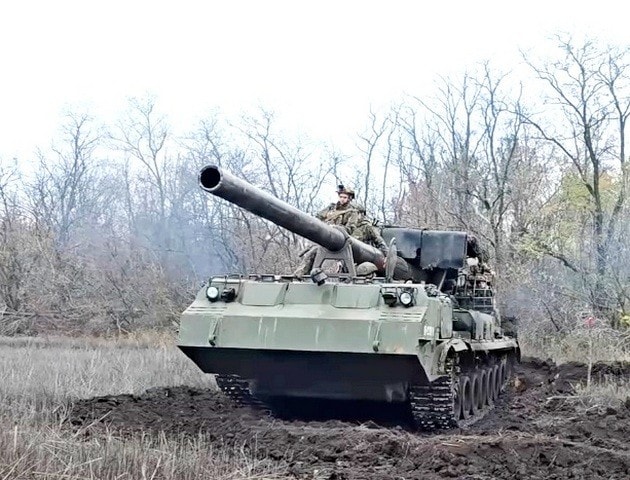
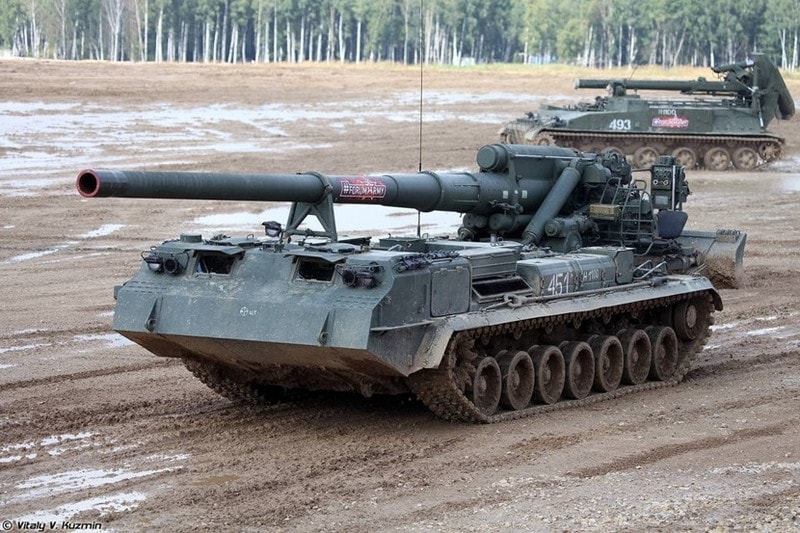
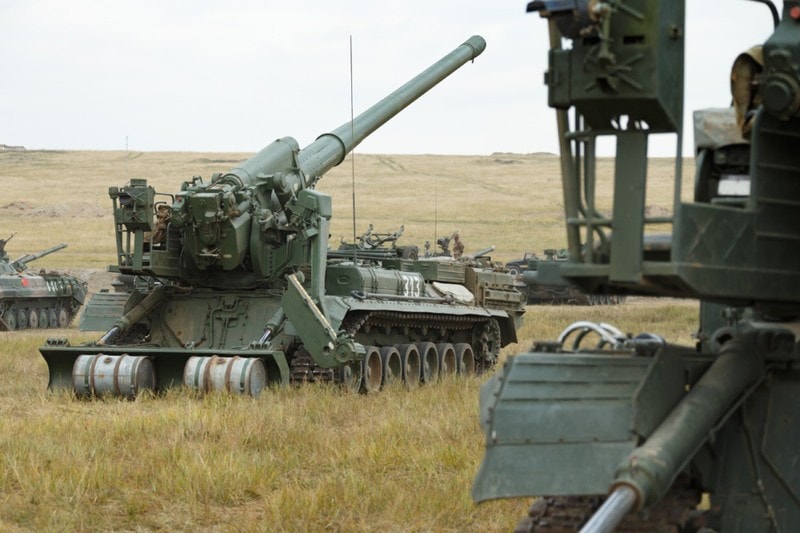
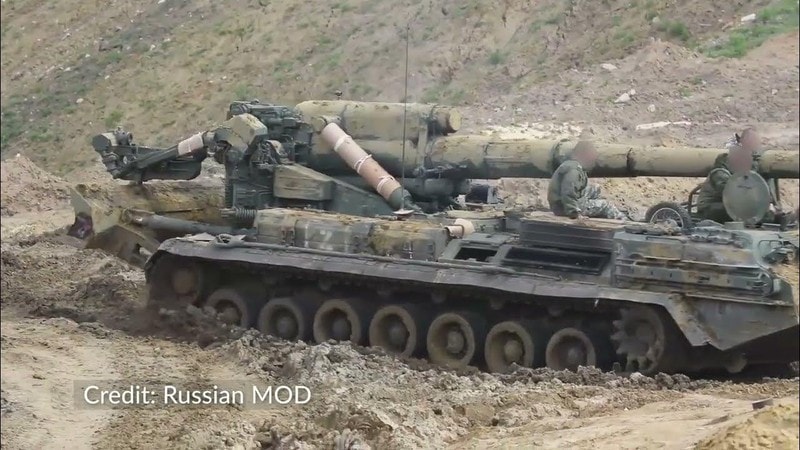
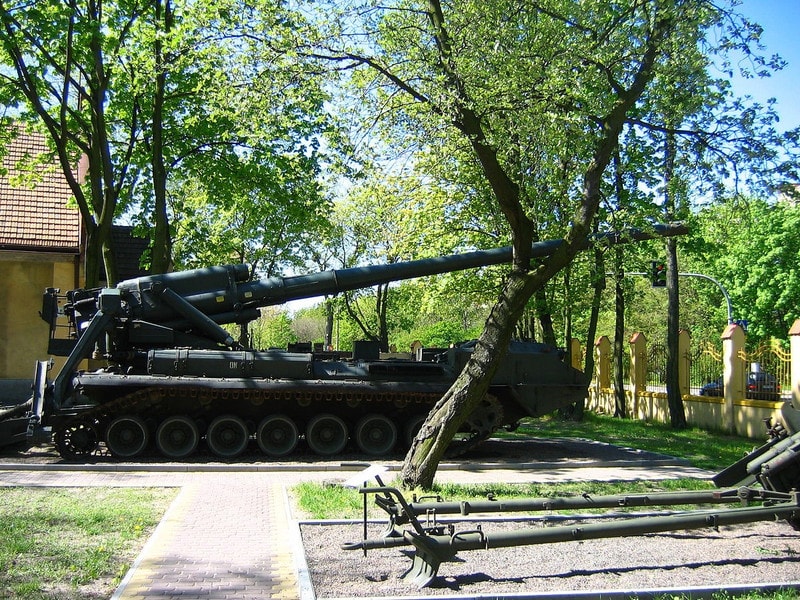
The 2S7M Malka hits targets 30 km away with 110 kg projectiles.
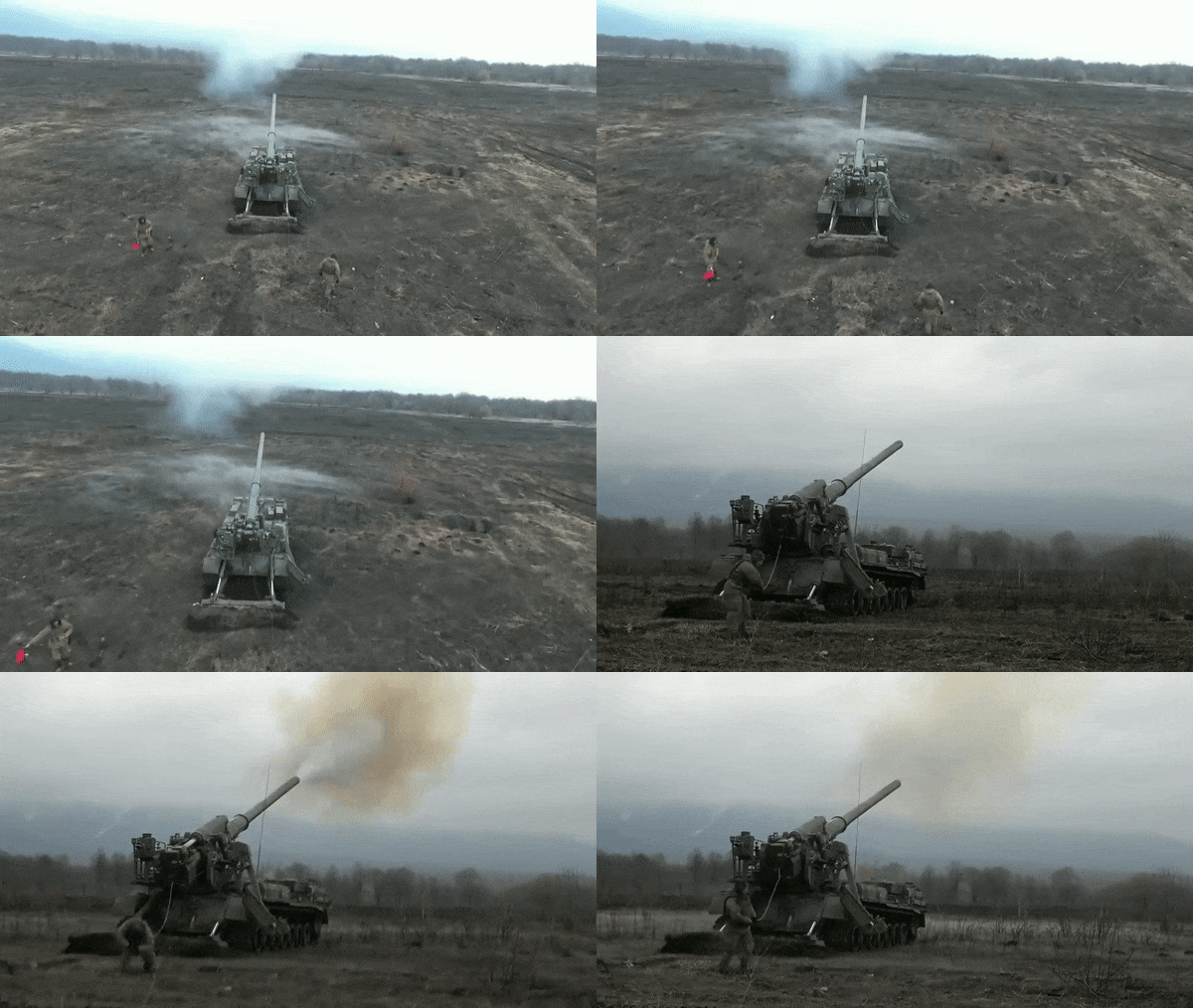
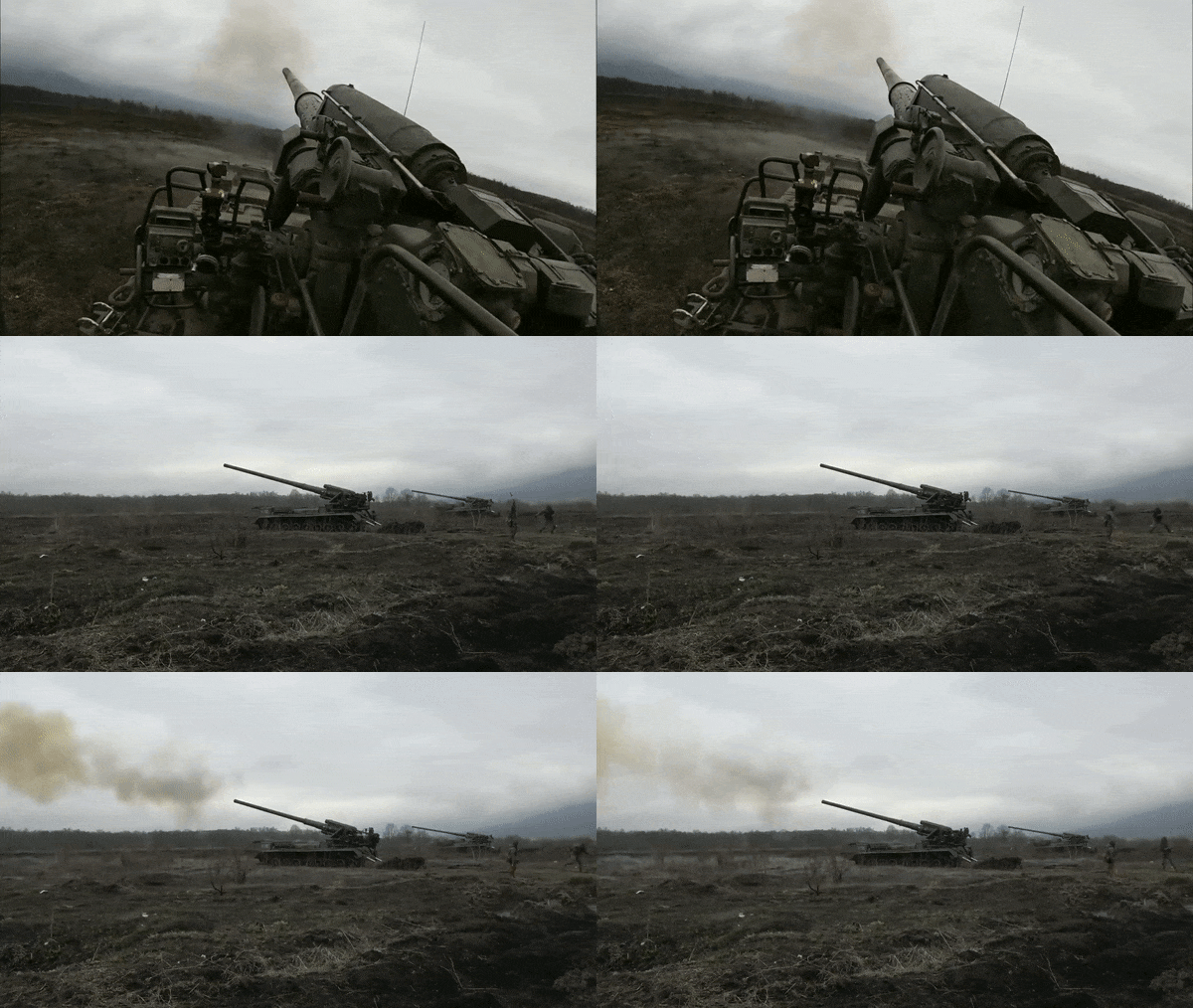
The 2S7M Malka crew of the 120th Guards Artillery Brigade used a UAV for real-time guidance and firing, setting off 203 mm fragmentation rounds weighing 110 kg to destroy fortifications in the direction of Krasnoarmeysk from over 30 km away.
The Russian Ministry of Defense reported that the crew of a 203 mm 2S7M Malka self-propelled artillery piece from the 120th Guards Artillery Brigade, part of the Central Task Force, carried out a targeted artillery attack, completely destroying fortified positions and units of the Ukrainian Armed Forces in the Krasnoarmeysk direction. The battle utilized reconnaissance and target designation by drones, adjusting firepower in real time, firing 110 kg 203 mm fragmentation rounds from a distance of over 30 km. After completing their mission, the crew moved to a different position to reduce the risk of enemy drone retaliation.
Event overview and sources
According to the Information and Mass Communications Department of the Russian Ministry of Defense, a joint reconnaissance unit discovered an underground building identified as a drone control center, firing position, and troop concentration area of Ukraine. The target coordinates were transmitted by the UAV operators to organize the fire. From a pre-prepared position, the 2S7M Malka artillery crew surveyed the terrain, prepared propellant charges, and fired a salvo of 203 mm fragmentation rounds. Data from the UAV was used to adjust the firing elements in real time, ensuring the destruction of the identified target.
Combat sequence: Detection – indication – fire
- Target detection: Reconnaissance discovered a building with an underground structure, identifying its function as a UAV command and control center and firing points, and troop concentration areas.
- Target designation: Coordinates are transmitted instantaneously via the UAV control channel to the artillery unit.
- Preparation for firing: The 2S7M Malka crew moves into the prepared firing position, surveys the terrain, and prepares the appropriate propellant charge.
- Opening fire: Firing a volley of 203 mm fragmentation rounds, each weighing 110 kg, at the designated target.
- Adjustment: Firepower correction based on real-time data from UAVs.
- Post-fire maneuvering: Quickly change position to reduce the risk of enemy retaliation with UAVs.
Technical analysis: 2S7M Malka and its 203 mm firepower.
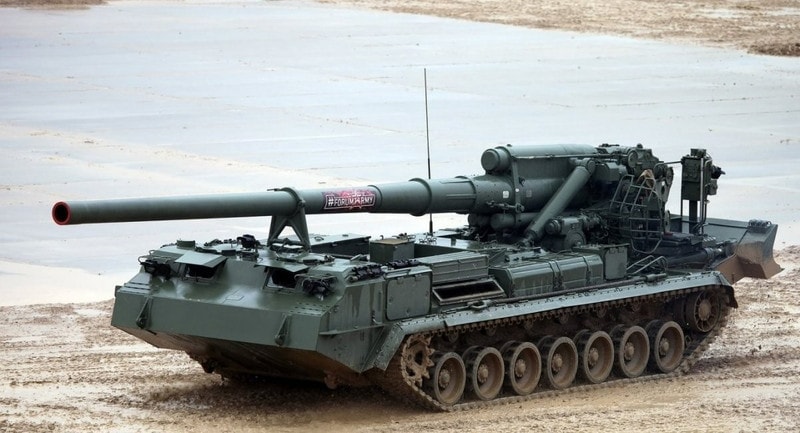
The 2S7M Malka is a 203 mm heavy-caliber self-propelled howitzer, using 110 kg fragmentation rounds. In the scenario described, the firepower was organized from a distance of over 30 km, allowing the gun crew to attack fortified targets and underground structures while maintaining a safe distance. The pre-prepared propellant charge sequence, the pre-arranged firing position, and the ability to adjust based on live data from UAVs were key factors in enhancing accuracy and lethality against fortified targets.
Results released by the Russian Ministry of Defense show that the underground structures and the garrison inside were completely destroyed. This is consistent with the firepower characteristics of 203 mm large-caliber fragmentation rounds when striking fortified targets, and confirms the role of heavy firepower in suppressing and destroying defensive structures.
Tactical aspect: Coordination between UAVs and artillery
Source information indicates the use of UAVs in both roles: target designation and providing real-time correction data. This method forms a continuous detection-designation-destruction chain, shortening the time from detection to hit, thereby increasing the probability of target destruction and reducing ammunition waste. The ability to maneuver and change positions immediately after firing minimizes the risk of enemy retaliation with drones.
According to the Central Operations Group, the artillery forces have repeatedly performed excellently in providing fire support to attacking units, demonstrating that despite its age, the 2S7M Malka is still effective in today's combat environment when integrated with reconnaissance and target designation using UAVs.
Specifications were confirmed at the event.
| Category | Value/Information |
|---|---|
| Type of artillery | 2S7M Malka Self-Propelled Artillery |
| caliber | 203 mm |
| Type of ammunition | Fragmentation shells |
| The mass of each projectile | 110 kg |
| Firing range in the battle | Over 30 km |
| Instructions/Corrections | Real-time data from UAVs |
| Implementation unit | 120th Guards Artillery Brigade, Central Combat Group |
Image from source