

Russia uses Thermite FPV, Baykar tests Kalkan, EA-18G upgraded.
Videos show Russia using FPVs to drop thermite to burn Ukrainian anti-drone netting; Baykar testing Kalkan VTOL launching FPVs; EA-18G carrying AN/ALQ-99 and AN/ALQ-249.
Main news: Russian forces test-launch FPV drones to drop thermite to burn the mesh roofs of Ukrainian "anti-drone tunnels"; Baykar conducts mid-air test launching FPV drones from Bayraktar Kalkan VTOL UAVs; US Navy releases images of EA-18G Growler carrying AN/ALQ-99 and AN/ALQ-249 jamming systems on the USS Abraham Lincoln aircraft carrier.
- Key technical aspects: thermite generates temperatures > 2,000°C; Kalkan VTOL carries ~3kg, flies for nearly 8 hours, ceiling > 4,200m; EA-18G transitions to next-generation jamming technology.
- Tactical aspects: attacking mechanized net shields; an "airborne mothership" model for launching FPVs; a hybrid jamming configuration to maintain wide range and increase accuracy.
Russia tests FPV drone to drop thermite onto the mesh roof of an "anti-drone tunnel".
A video circulating online shows a Russian FPV drone approaching closely behind the trellises on roads constructed by Ukraine and dropping thermite (thermite) via a specialized mounting system. In 2024, Ukraine was the first to use thermite on FPV drones to burn vegetation, after which Russia developed its own variant and is now targeting these protective trellises.
The “anti-drone tunnel” system uses nets made of plastic, polymer, fabric, or lightweight compounds to shield vehicles from UAV observation. Thermite can generate temperatures exceeding 2,000°C, enough to burn through the thin nets within seconds of contact. However, the video does not capture the aftermath after the drones left the area, so the actual extent of the damage cannot be confirmed; multiple attacks may be necessary to significantly damage a section of the net.
Technical analysis
- Mechanism: Thermite is dropped from an FPV drone using a specialized mounting system, optimized for targeting thin mesh surfaces.
- Expected impact: burning through or damaging the contact point, causing a decrease in shielding capability and requiring repair/replacement.
Tactics and countermeasures
- Prioritize attacking the trellis roof – a point that is difficult to maintain quickly in wartime conditions.
- Defenses could shift to metal mesh (wire mesh, steel mesh) to reduce the adhesion effectiveness of thermite; however, this would increase costs and structural requirements, making widespread deployment difficult.
- The video posted on X doesn't show the consequences, so assessing the actual effectiveness requires more evidence from the scene.
Türkiye upgrades its UAVs: Bayraktar Kalkan VTOL launches FPV from the air.
Baykar stated that the Bayraktar Kalkan VTOL UAV successfully completed a test flight in November 2025, launching a small FPV drone while in flight. The Kalkan VTOL model, developed from the DİHA tactical mini-UAV series, uses four electric motors for vertical lift and a gasoline engine for cruise flight, allowing it to operate from a small 20 × 20m flight deck.
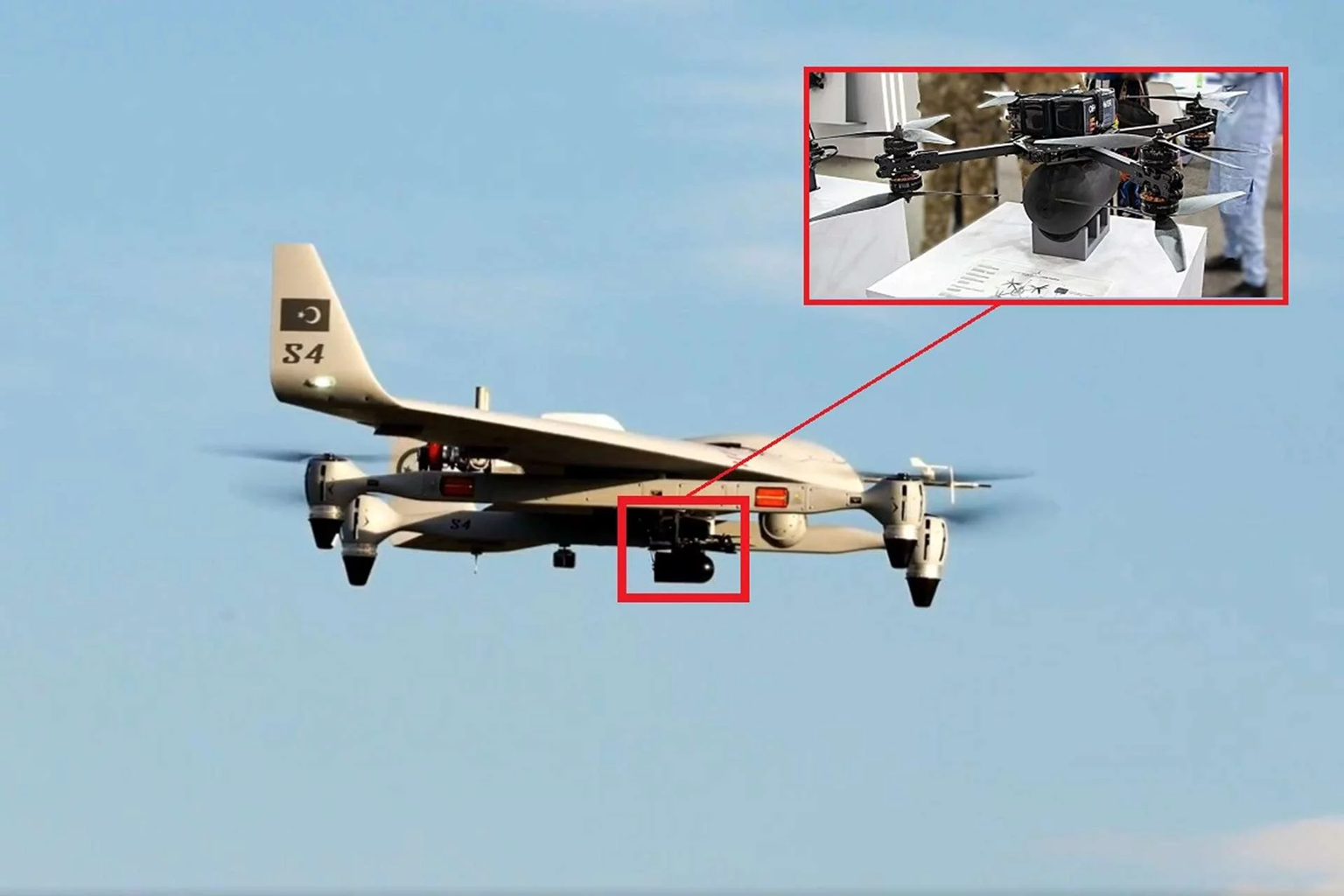
In its current configuration, the Kalkan has a wingspan of 5m, a fuselage length of approximately 1.5m, a takeoff weight of 30-50kg, and a payload of about 3kg. The aircraft is equipped with optical-infrared sensors and a laser targeting system, has a maximum flight time of nearly 8 hours, and a ceiling exceeding 4,200m.
In the test, Kalkan carried the Skydagger 7 kamikaze drone and performed two launch methods: a stable release to allow the FPV to separate from the mother UAV and land safely; and a direct launch at a ground target along an attack trajectory. This method demonstrates that Kalkan can act as an "airborne mothership," deploying FPVs from outside the frontline air defense fire zone.
Kalkan VTOL technical specifications (as currently published)
| Category | Value |
|---|---|
| Type of takeoff/landing | VTOL (4 electric lifting motors + gasoline engine for travel) |
| Wingspan | 5m |
| Body length | ~1.5m |
| Takeoff weight | 30 - 50kg |
| Load | ~3kg |
| Flight time | Around 8 o'clock |
| Flying ceiling | > 4,200m |
Combat capability
- Approaching the target from a high altitude shortens the FPV's descent distance before diving down to the target.
- Reduce the risk of interference when FPV only needs to establish a link in the final stage.
- This opens up a new, unpredictable attack capability, aligning with the trend towards multi-layered drone warfare.
The EA-18G Growler aboard the USS Abraham Lincoln carries AN/ALQ-99 and AN/ALQ-249 missiles.
The U.S. Navy released a series of images on November 24th from the aircraft carrier USS Abraham Lincoln as the strike group operated in the 3rd Fleet area. EA-18G Growler aircraft from Squadron VAQ-133 simultaneously carried the AN/ALQ-99 and AN/ALQ-249 jammers (next-generation medium-range jammers), reflecting a transitional phase in the modernization of electronic warfare.
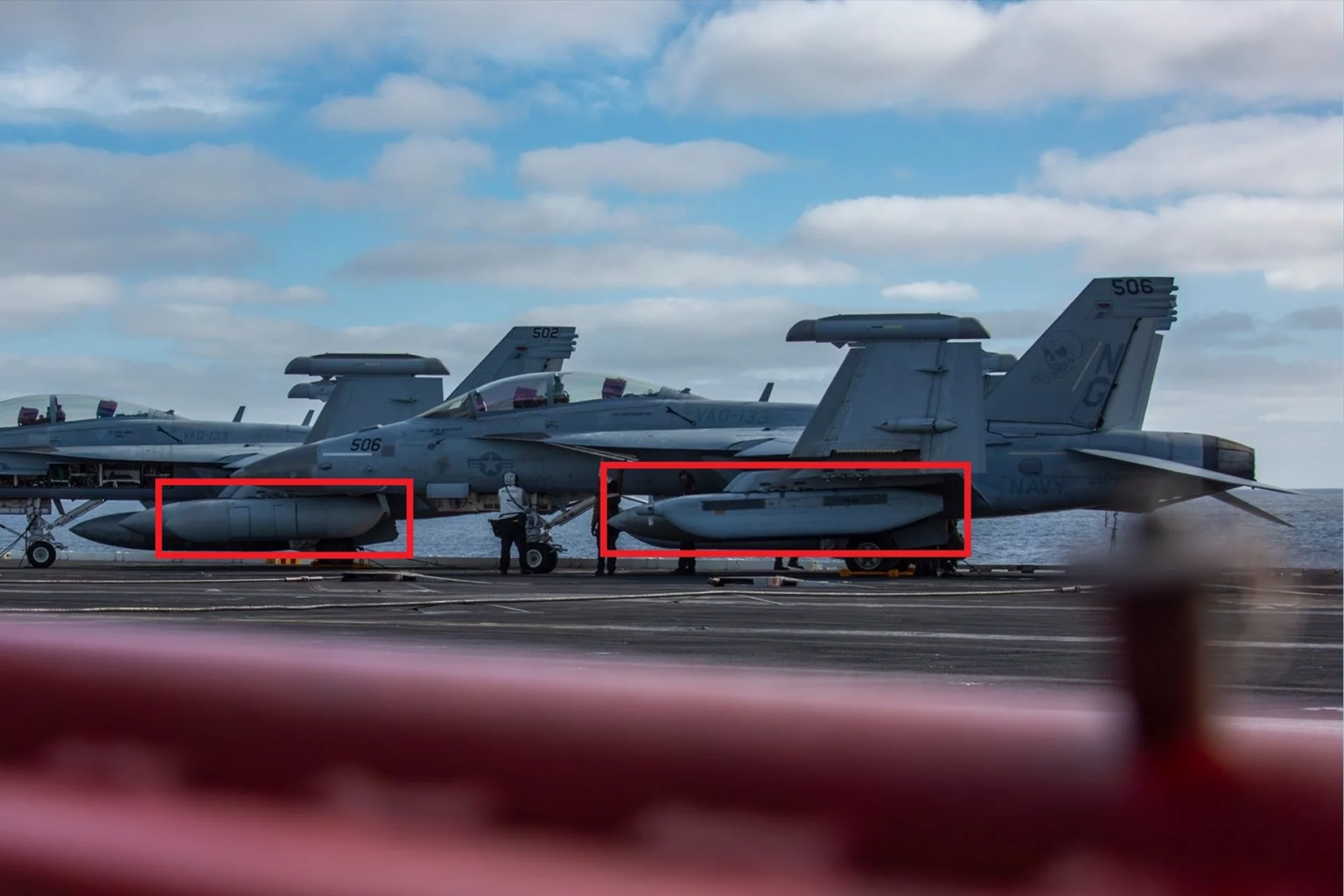
The AN/ALQ-99 continues to handle jamming across a wide frequency range, while the AN/ALQ-249 provides more powerful digital jamming, focusing on the frequency ranges commonly used by modern radars, with electronic antenna technology allowing for multiple directional beamforming and higher power output. The AN/ALQ-249 system achieved initial operational capability by the end of 2024 after a testing phase that began in 2020. According to publicly available sources, the VAQ-133 used this equipment in a previous deployment protecting cargo ships from missile and UAV threats in the Red Sea; the Australian Air Force has been involved in the program from the beginning.
Operational significance
- The hybrid configuration helps maintain a wide jamming range while increasing the accuracy of modern radar and communications.
- This allows for the collection of real-world data to refine tactics and gradually phase out the old system.