

North Korea displays IRIS-T-type missiles on MiG-29s.
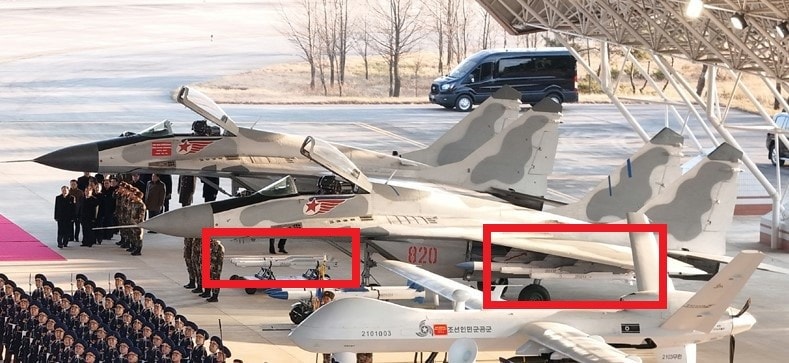
KCNA released photos of a new air-to-air missile with infrared guidance, similar in size to the IRIS-T/Type 04, displayed on MiG-29s and Su-25s. Estimated range: 15–25 km.
KCNA released a series of photos showing North Korea displaying a new infrared-guided air-to-air missile, similar in shape and size to modern models such as the IRIS-T (Germany), Type 04 (Japan), and PL-10E (China). The missile was mounted on a MiG-29 and placed next to a Su-25 during an Air Force anniversary celebration. North Korea did not disclose its name or specifications, but geometric comparisons suggest a range of approximately 15–25 km, a weight of approximately 90 kg, and a length of about 3 m.
Overview
Images released by KCNA show the new missile integrated into the hardpoints of MiG-29s and displayed alongside Su-25s. As is customary, North Korea's defense industry does not release its designation and technical data. Its shape suggests it is a short-range/sub-medium-range missile using an infrared guidance system.
Technical analysis
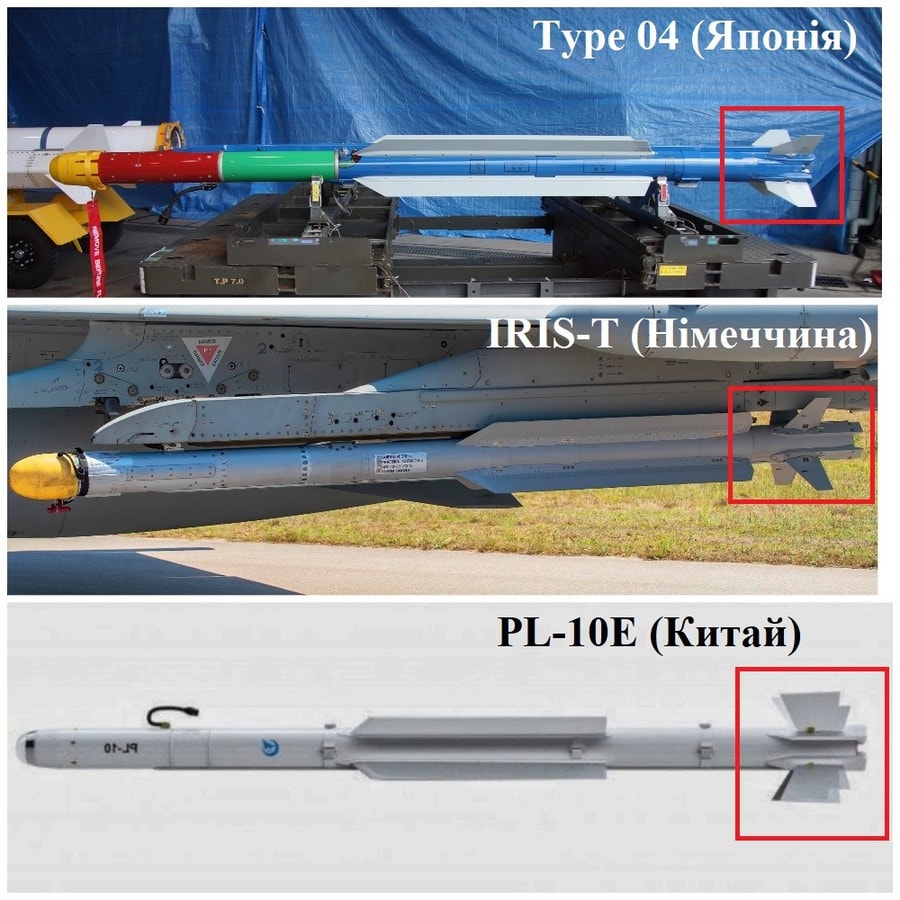
In terms of aerodynamics, the new model shares many similarities with modern close-range missiles:
- Type 04 (Japan): equipped with a tail-mounted control surface and thrust vector control system; weight 95 kg; maximum range 30–35 km; length 3.105 m; diameter 130 mm.
- IRIS-T (Germany): similar configuration, lighter at 87 kg; 2.94 m long; 127 mm in diameter.
- PL-10E (China): 3 m long; weighs 89 kg; reportedly has a maximum range of 20 km; has a tail control surface similar to the North Korean model.
From visual comparisons, the North Korean missile likely belongs to a group of similar sizes, with an infrared guidance head mounted on the nose and large control surfaces on the tail.
| System | Length | Diameter | Mass | Shooting range | Note |
|---|---|---|---|---|---|
| Type 04 (Japan) | 3,105 m | 130 mm | 95 kg | 30–35 km | TV commercial; tail control |
| IRIS-T (Germany) | 2.94 m | 127 mm | 87 kg | But | Similar aerodynamic configuration |
| PL-10E (China) | 3.0 m | But | 89 kg | maximum 20 km (alleged) | Analog tail control surface |
| New missile (North Korea, estimated) | ≈ 3.0 m | But | ≈ 90 kg | ≈ 15–25 km | Infrared guidance head |
Integration and deployment platform
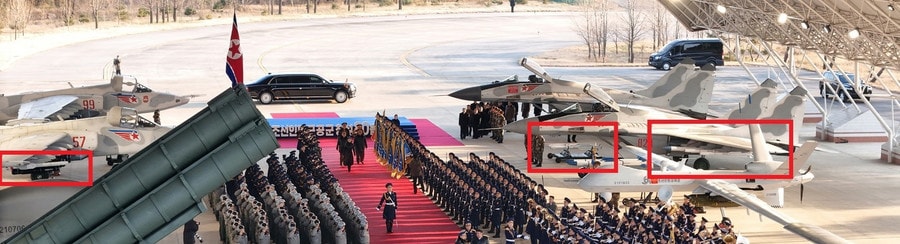
The new infrared missile was photographed on a MiG-29 and also appeared on the pylons of a Su-25. Its integration on the MiG-29 suggests a primary armament for air combat missions; its placement on the Su-25 indicates a possible self-defense capability, although details of the integration configuration have not been released.
Radar-guided missile: testing scheduled for May 2025.
In May 2025, the North Korean Air Force conducted a test firing of a domestically produced air-to-air missile under the supervision of Chairman Kim Jong-un. The missile was launched from a MiG-29 (9.13) with tail number “576”, and MiG-23 fighters participated in the exercise. The launch from the MiG-29 destroyed a target UAV. The missile's size is described as equivalent to the American AIM-120 or the Chinese PL-12; the aerodynamic control fins at the front have pointed tips, characteristic of the AIM-120 (A/B version) and PL-12. This indicates that it is a radar-guided missile, supplementing the aforementioned infrared missile system.
Development context and significance
Amidst increasing military-technical cooperation between North Korea and Russia and China, Pyongyang has introduced several new systems, including air-to-air missiles. If North Korea can mass-produce the new infrared missiles, along with the radar-guided missiles recently demonstrated, the North Korean Air Force could possess a relatively complete set of modern air combat equipment.
Source reliability and information limitations
The data in this article is based on images released by KCNA and a comparison of dimensions and aerodynamic layout with Type 04, IRIS-T, and PL-10E. All parameters of the North Korean model are preliminary estimates; the foreign systems listed in the table retain their data as provided in the article. There was no official announcement regarding the name and technical and tactical characteristics of the North Korean missile at the time of reporting.