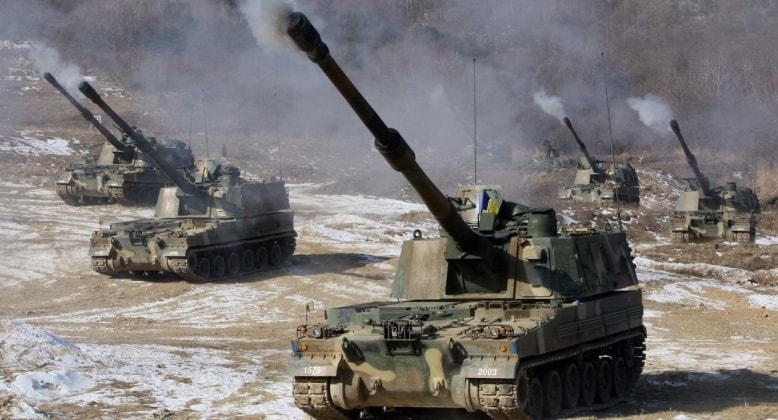
K9 Thunder enters Estonia and puts pressure on Russian defenses.
Estonia received 155mm K9 self-propelled howitzers from South Korea; the K9A1 uses INS/GPS, has a firing rate of 6 rounds per minute, and a range of up to 54 km. Russia deployed the 2S35 with a range of 70 km in limited numbers.
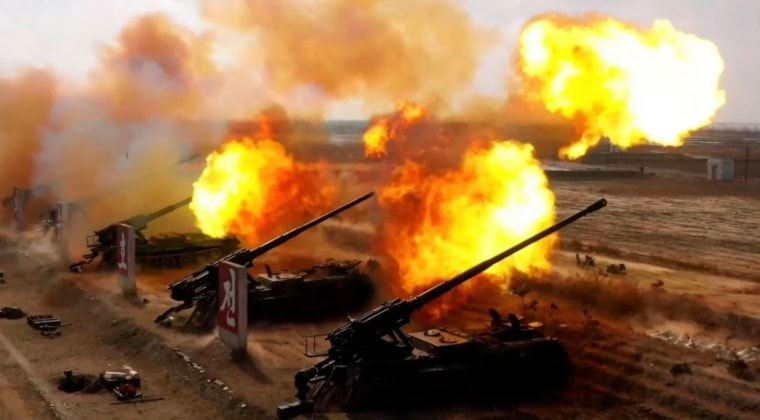
The Estonian army has just received a batch of 155mm K9 Thunder self-propelled howitzers from South Korea, as part of a plan to expand its long-range firepower. Along with many NATO members putting the K9 into service, this trend is seen as increasing pressure on Russia's defense systems. Conversely, Russia has deployed the 2S35 Koalitsiya-SV, but in limited numbers; ammunition logistics are supplemented by batches of 122mm, 152mm, and 170mm ammunition from North Korea.
Overview
The Estonian Ministry of Defence stated: “The K9 'Thunder' artillery systems that have just arrived reflect our long-term commitment to combat readiness, resilience and defense cooperation.” The K9 Thunder is rapidly expanding its presence within NATO: Finland, Norway, Poland and Türkiye are already operating it; Romania is expected to begin receiving it before the end of the decade.
The deployment of large numbers of K9s and other advanced equipment from South Korea by NATO members is putting additional pressure on Russia's defenses, as Moscow seeks to bolster its artillery forces after their size has shrunk to less than 5% of their Soviet-era size.
Technical analysis: K9 Thunder
The K9 Thunder was developed starting in 1989 by the Korea Defense Development Agency and Samsung Techwin (now Hanwha Aerospace) to replace the K55 systems, which were developed from the M109. The system uses a 155mm L/52 cannon conforming to NATO standards, compatible with standard 155mm ammunition.
A notable feature is its automatic loading and disposal mechanism, allowing for a firing rate of 6 rounds per minute and firing on various trajectories in a short time. The K9 is highly regarded for its combination of firepower, accuracy, and maneuverability.
K9A1: Fire control, targeting, and range
The K9A1 variant features an upgraded fire control system and computer operating system, allowing firing without starting the main engine, thereby reducing fuel consumption and maintenance requirements. The system uses a combination of INS and GPS to increase accuracy. With extended-range ammunition, the effective range reaches up to 54 km.
Russian side: 2S35 Koalitsiya-SV
In 2023, Russia put into service the new generation 2S35 Koalitsiya-SV self-propelled artillery system. This system has significantly higher accuracy than its predecessors thanks to its laser guidance system. The 152mm cannon of the 2S35 has a range of 70 km and, according to reports, can fire up to 20 rounds per minute; however, the sustained rate of fire will be lower.
Mass production of the 2S35 began in 2021, so the number currently deployed is limited. Future production capacity is considered unlikely to match the scale of K9 deployment within NATO.
Ammunition logistics and the North Korean factor
Russia's artillery capabilities are supported by large-scale shipments of 122mm, 152mm, and 170mm ammunition supplied by North Korea. In addition, the acquisition of 170mm self-propelled artillery systems from North Korea is also noteworthy. According to senior Ukrainian officers, the capabilities of these artillery pieces pose a significant challenge to their forces on the front lines.
Key specifications comparison table
| System | caliber | Maximum range | Rate of fire | Control/Positioning |
|---|---|---|---|---|
| K9/K9A1 | 155mm L/52 (NATO standard) | Up to 54 km (extended range ammunition) | 6 shots/minute | Upgraded fire control system; INS + GPS; capable of firing even when the main engine is not running. |
| 2S35 Koalitsiya-SV | 152mm | 70 km | Maximum 20 tablets/minute (as reported) | Higher accuracy thanks to the laser guidance system. |
Military impact
The increasing presence of the K9 in NATO strengthens the density of long-range firepower on the eastern flank. Meanwhile, Russia prioritizes upgrading the 2S35, but the existing number is limited; the short-term deciding factor lies in the availability of ammunition and the actual deployment speed of the existing systems.