

The Leonardo RH1-155/52 HITFIRE artillery system has a range of 70 km.
Leonardo's 155 mm RH1-155/52 HITFIRE system achieves a range of 70 km with Vulcano rounds, an optimal range of 42 km with base-bleed rounds; target firing rate of 10 rounds/minute, MRSI 5–6 rounds; expected readiness 2026–2027.
Leonardo introduced the RH1-155/52 HITFIRE 155 mm artillery system, focusing on increasing range, accuracy, and mobility in modern conflict. The system achieves a range of up to 70 km using Vulcano rounds and is optimized for 42 km with base-bleed rounds, carrying 30 standard NATO rounds. The manufacturer anticipates full combat readiness by the end of 2026 or early 2027.
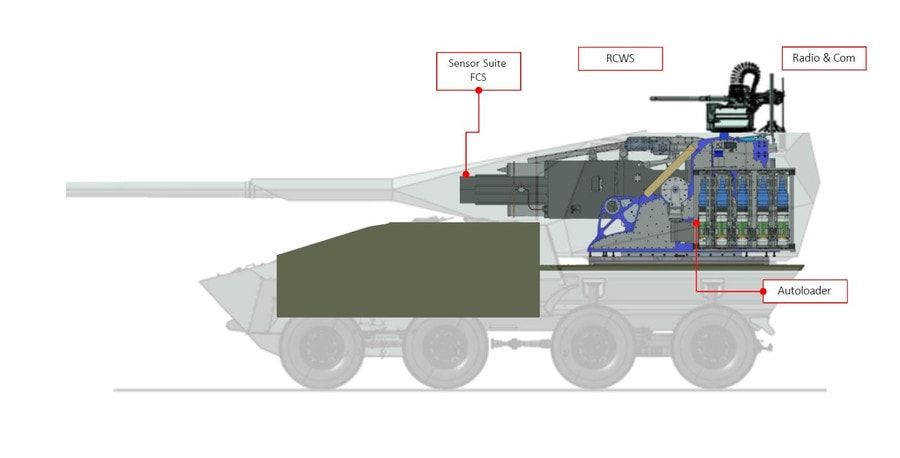
System Overview
HITFIRE was developed to enhance the range, increase mobility, and improve the accuracy of artillery fire. The system's core is a new-generation 155 mm caliber gun, integrated into a turret weighing under 13 tons (approximately 13,000 kg). The design aims for stable and accurate operation at long range, while maintaining high mobility on the battlefield.
Technical analysis
- Artillery and ammunition:155 mm/52 caliber; carries 30 rounds of ammunition and propellant; firing through the barrel meets NATO standards.
- Range:Optimal range up to 42 km with base-bleed ammunition; reaches up to 70 km when using Vulcano ammunition.
- Protection and self-defense:Modular composite armor; laser warning sensors; smoke-generating devices; HITROLE remote-controlled weapon stations for defense, including countering UAVs.
- Automation:The goal is to increase automation, improve reliability, and reduce the workload for the flight crew.
Firing capability and firepower missions
Leonardo aims for the next version to achieve a firing rate of 10 rounds per minute. The system is designed to support multi-round simultaneous impact firing, with the ability to bring 5–6 rounds together at the same time, serving for suppression and target engagement exercises within a short period of time.
Mobility and deployment
HITFIRE is planned to be mounted on 8x8 wheeled armored vehicles to increase firepower and mobility for medium brigades. Engineers are surveying balance, maneuverability, and performance ahead of testing. Leonardo estimates the system will achieve full combat readiness by the end of 2026 or early 2027.
Main specifications table (according to the manufacturer)
| Category | Parameter |
|---|---|
| caliber | 155 mm, 52 caliber |
| Turret weight | Under 13 tons (approximately 13,000 kg) |
| Ammunition carried | 30 rounds (NATO standard) |
| Base-bleed | Optimized for up to 42 km |
| Range (Vulcano) | Reached 70 km |
| Target firing rate | 10 shots/minute (target for the next version) |
| MRRI capability | 5–6 bullets hit the target simultaneously. |
| Protection/Self-defense | Modular composite armor, laser warning, smoke spray, HITROLE station |
| Foundation | 8x8 wheeled armored vehicle (planned) |
| Timeline | Ready for combat: late 2026 or early 2027 (estimated) |
Operational perspective
According to its development plan, HITFIRE aims to meet the long-range and high-mobility requirements of the modern battlefield, while increasing accuracy. Integration onto an 8x8 chassis is expected to increase firepower and flexibility for medium-sized brigades. The 5–6 round MRSI capability expands the options for concentrated fire in short periods, suitable for fire support missions.