

China tests Loong M9 suicide drone; US fires Stinger from M-SHORAD.
The Loong M9 has a range of 1,620 km and a payload of 50 kg; the US Army fired the Stinger from an M-SHORAD for the first time during NTC training; Russia tested mounting the R-60 missile on the Geran-2 UAV.
Top weapons news: China tests Loong M9 suicide drone in Shahed style, the US Army fires a real Stinger from the M-SHORAD system for the first time during training, while Ukraine reports Russia attaches R-60 air-to-air missiles to Geran-2 drones.
China tests Loong M9 suicide drone: specifications and intended use.
According to OSINTWarfare (2.12), China is testing the Loong M9, a suicide UAV with a design philosophy similar to Iran's Shahed-136. The M9 expands the list of Shahed-style UAVs researched by China, such as ASN-301, DFX-50, DFX-100, Feilong-300D, PD2900, and Sunflower-200.
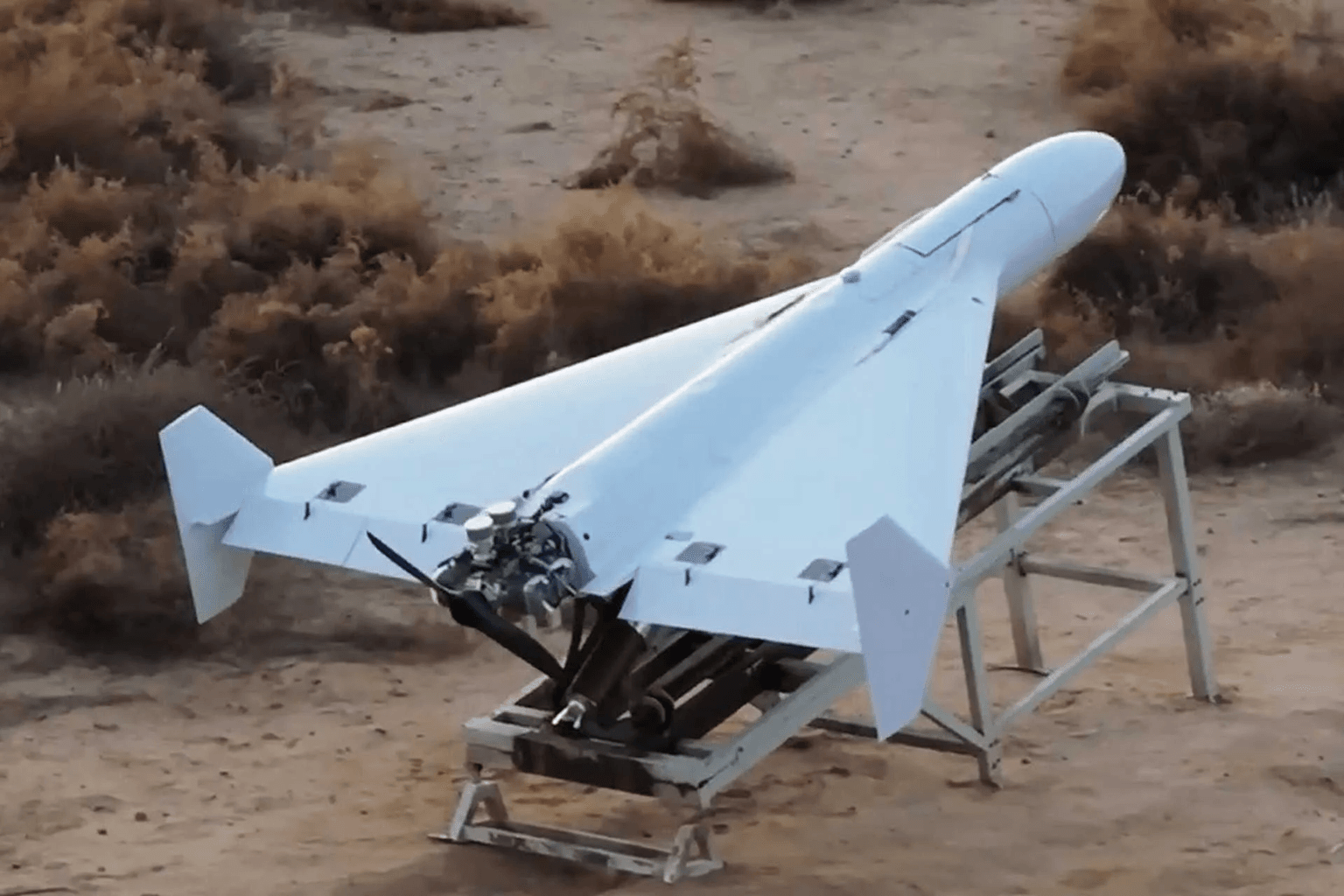
The Loong M9, introduced by Loong UAV, is a heavy-duty, gasoline-powered, delta-wing UAV capable of reconnaissance, attack, tactical support, or as a target drone. It features a launch platform with missile support; a carbon fiber frame for reduced weight; an internal payload of up to 50 kg suitable for warheads/sensors; and a 108-liter fuel tank for a maximum range of 1,620 km. Its guidance system includes optical sensors, camera-based target tracking, and the ability to maintain operation in jamming conditions.
- Dimensions/Weight: Wingspan 2.5 m; Length 3.5 m; Empty weight 62.5 kg; Maximum takeoff weight 200 kg.
- Performance: cruising speed ~190 km/h; maximum speed 220 km/h; flight time 8–9 hours; service ceiling ~4,500 m.
- Operating conditions: withstands wind force 7; temperature -25°C to 60°C.
In terms of philosophy, the Loong M9 is considered similar to the Shahed-136: simple design, low cost, long range, suitable for large-scale deployment to penetrate and wear down enemy air defenses. The popularity of the Shahed model prompted many countries, including China, to develop similar models for combat and air defense training.
US test-fires Stinger from M-SHORAD: implications for close-range air defense.
The U.S. Army recently conducted its first live Stinger missile launch from the Stryker M-SHORAD mobile air defense system at the National Center for Tactical Missile Defense (NTC) in Fort Irwin, California. The event, announced on November 28th, marks a step toward integrating the M-SHORAD into regular operational procedures, in October 2025.
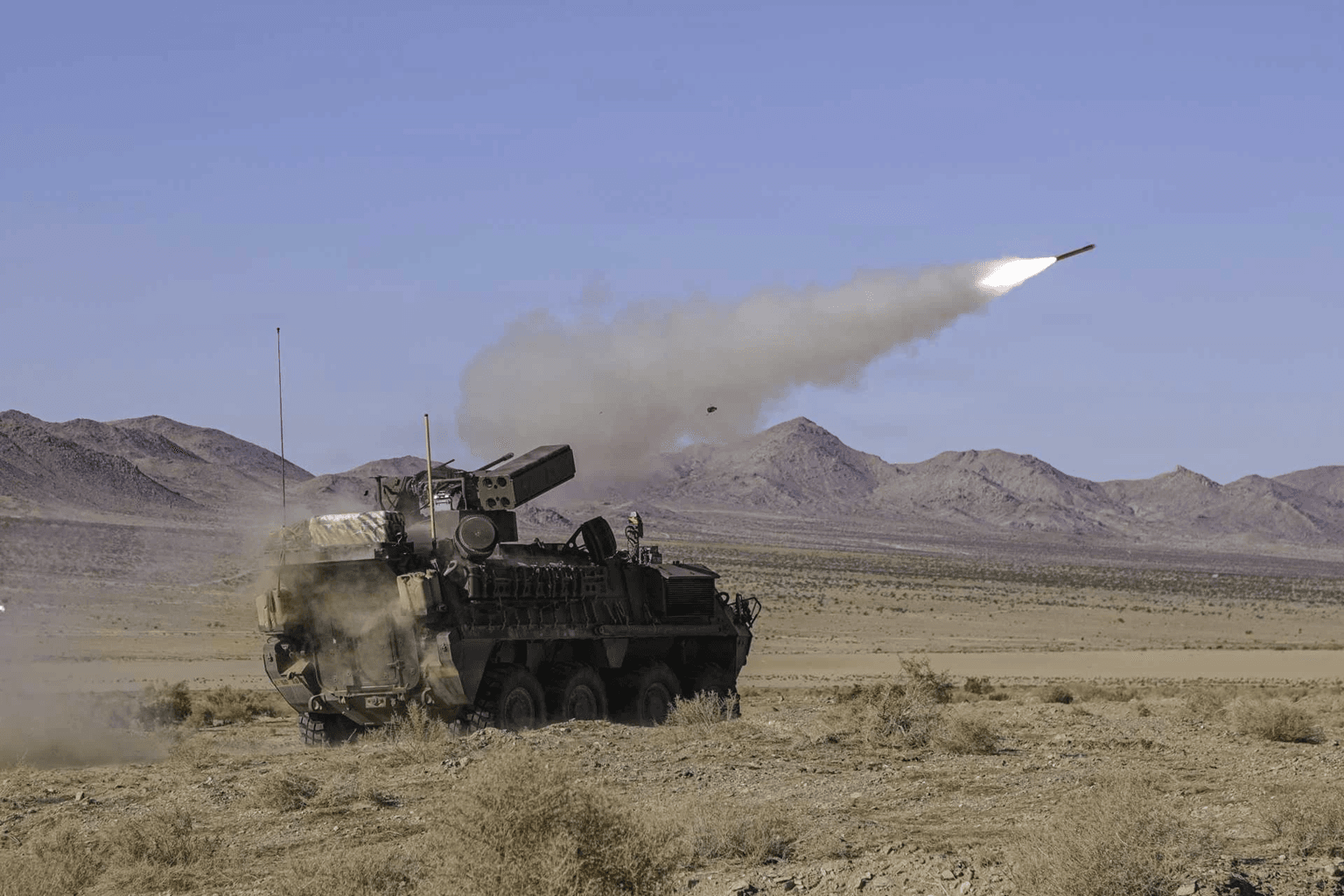
During the firing exercise, the crew of the 4th Battalion, 60th Air Defense Regiment, launched a FIM-92 Stinger missile to destroy a simulated Outlaw UAV flying in a figure-eight pattern. The combat crew detected, tracked, and fired according to procedure, confirming their ability to quickly switch from surveillance to attack under realistic training conditions. M-SHORAD units successfully intercepted UAVs and low-flying targets multiple times during the exercise, affirming their role in close-range air defense at the brigade level.
M-SHORAD (Maneuver Short Range Air Defense) uses the Stryker A1 chassis and is equipped with:
- 30 mm XM914 cannon; 7.62 mm machine gun.
- Multi-tasking radar; optical-infrared sensor.
- Two Stinger missile clusters (8 missiles in total). Hellfire missiles were previously integrated but removed due to vibrations during transit.
Upgrade roadmap:
- Increment 2 (DE M-SHORAD): integrates a 50 kW laser, aiming to increase the effectiveness of intercepting UAVs/missiles at a low cost per shot.
- Increment 3: Adds the new generation NGSRI interceptor and non-contact explosive rounds to the 30 mm cannon to engage small, mobile targets.
- Increment 4: a lighter, more strategically maneuverable version that can be transported by C-130 or air-dropped.
The Stinger is a man-portable air defense system using an infrared seeker, with a maximum range of approximately 8 km and a speed of Mach 2.2 (2,695 km/h). It entered service in 1981. The US extended the Stinger's lifespan while developing its replacement, the NGSRI.
Russia mounts R-60 missile on Geran-2 UAV: testing phase and risks.
Sources from Ukraine indicate that Russia is testing a new configuration for the Geran-2 UAV (a Russian-made version based on the Shahed-136), equipped with R-60 short-range air-to-air missiles. If successful, this configuration could directly threaten Ukrainian aircraft and helicopters tasked with intercepting UAVs.
On December 1st, the Sternenko community fund released a video showing a Geran-2 UAV carrying a launch platform and an R-60 missile on its back. Electronic warfare expert Serhiy Beskrestnov posted additional images of Geran-2 debris, with the R-60 missile still on the launch platform and seemingly not yet activated.
The R-60 is a short-range air-to-air missile using an infrared seeker, developed by the Soviet Union in the 1970s. Each missile is over 2 meters long, weighs 44 kg, has a range of approximately 8 km, and carries a 3 kg fragmentation warhead. The R-60M variant (1982) allows for target locking at angles of up to 20 degrees, expanding its attack capabilities compared to the original version.
It is currently unclear how Russia will integrate target detection sensors and firing mechanisms into the Geran-2. Some experts from Ukraine and the West predict that the UAV may receive data from the controller via radio link, using a relay station or supplementing it with 4G connectivity; target data may also come from ground radar, external sensors, or an integrated observation system. According to TWZ, this configuration could allow the Geran-2 to perform temporary air defense or repel Ukrainian aircraft, operating alone or in formations on the front lines to protect attacking UAV groups.
Ukrainian Deputy Defense Minister Yury Myronenko stated that Russia uses several Geran-2 missiles controlled in real time via a network of antennas in the control area and in Belarus, allowing the crews to react flexibly, even proactively approaching Ukrainian aircraft. The actual effectiveness of the Geran-2 equipped with the R-60 missile has not yet been confirmed.
Operational impact
- The Loong M9 demonstrates a trend toward replicating the model of long-range, low-cost kamikaze UAVs, increasing pressure on enemy air defenses through sheer numbers.
- The Stinger firing results from the M-SHORAD reinforce the role of mobile close-range air defense in brigade formations, while also paving the way for the integration of new lasers and interceptors.
- The Geran-2, carrying the R-60, could, if proven capable, pose an additional challenge to Ukraine's interceptor platforms. However, the method of integration and its effectiveness remain questionable.