

The US is establishing a unit of inexpensive Lucas drones to counter Iran.
CENTCOM established TFSS to operate the LUCAS drone, priced at $35,000 per unit, a reverse-engineered design of the Shahed-136, capable of multi-platform launch and swarm deployment; deployed in the Middle East.
The U.S. Central Command (CENTCOM) confirmed on December 3rd the activation of Task Force Scorpion Strike (TFSS), a unit specializing in operating LUCAS unidirectional attack drones, a low-cost drone developed based on Iran's Shahed-136 design. According to a U.S. official, the goal is to "reverse the tide" against Tehran amid the escalating drone warfare in the Middle East. The system, announced to cost approximately $35,000 per unit, supports multi-platform launch and swarm-based combat operations.
Overview: America's first kamikaze drone unit
The TFSS operates under the Central Special Operations Command (SOCCENT), overseeing U.S. special operations missions in the Middle East. The Combined Joint Rapid Deployment Task Force (REJTF), established in September, is involved in accelerating the deployment of assets. According to a U.S. official, the TFSS comprises approximately two dozen elite soldiers; the amount of equipment delivered is described as “large enough to provide a significant level of capability.”
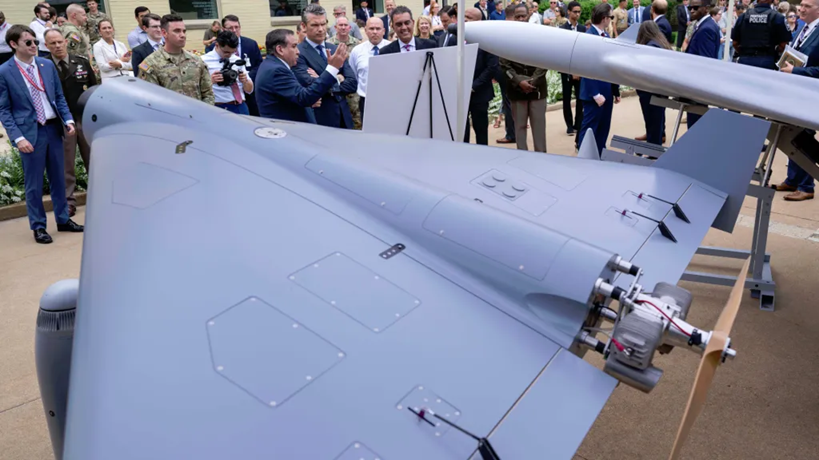
Technical analysis: Lucas samples from Shahed-136, optimal for cost and scale.
LUCAS (Low-Cost Uncrewed Combat Attack System) has a delta wing configuration, is approximately 3 meters long, and has a wingspan of 2.4 meters. A US official admitted that the military "reverse-engineered" the captured Shahed-136 model, creating a platform that closely follows the Shahed's design. The difference lies in the technology package that allows for "autonomous coordination," suitable for swarm attack tactics and networked command-control operations.
According to Navy Captain Tim Hawkins, LUCAS costs approximately $35,000 per unit, aiming for scalability at a fraction of the cost of traditional long-range systems. In terms of deployment, LUCAS can be launched from catapults, missile launch and takeoff systems (RATO), mobile land-based platforms, vehicles, and warships.
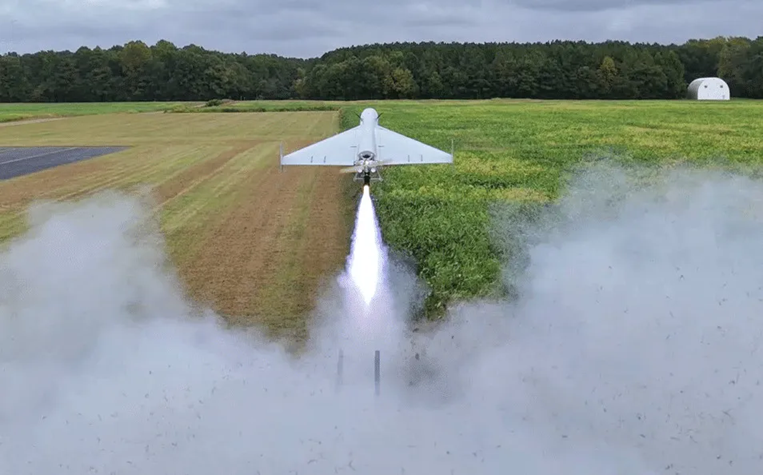
LUCAS utilizes a dual 12V/28V power system and an integrated payload control network, allowing for flexible control of the equipment during flight. The system can connect to MUSIC (Multi-UAV System Information Coordination) to coordinate formations, share tactical data, or act as a communication bridge between the unit and command.
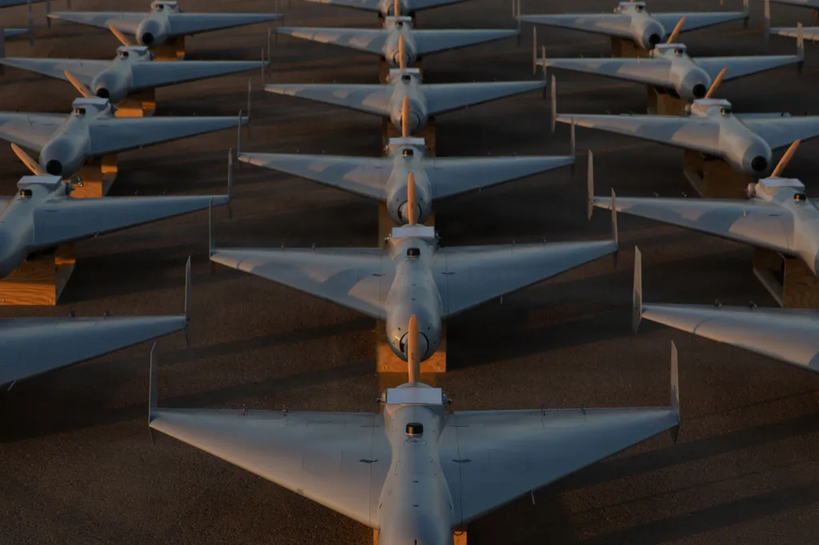
Technical comparison: Shahed-136 and related FLM 136 design
To put LUCAS into context, data from the US military's ODIN portal indicates that the Shahed-136 is equipped with a 50-horsepower internal combustion engine, has a top speed of approximately 185 km/h, a range of up to 2,000 km, and a 40 kg warhead; it primarily targets stationary targets along a pre-programmed trajectory. An infographic from the US Defense Intelligence Agency (DIA) provides further details on the Shahed-136 and its variants.
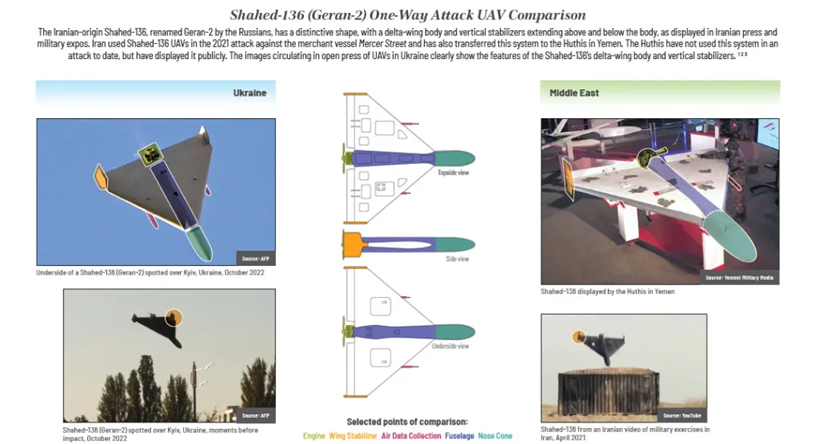
On the SpektreWorks website, the design of the FLM 136 target drone is published, boasting a maximum range of approximately 715 km and a flight time of 6 hours. The full operational specifications of the militarized LUCAS are not yet available in the source material.
| System | Key specifications | Source |
|---|---|---|
| Shahed-136 | 50 horsepower engine; 185 km/h; range up to 2,000 km; 40 kg warhead. | ODIN/DIA |
| FLM 136 (related to Lucas) | Distance: approximately 715 km; flight time: 6 hours | SpektreWorks |
| LUCAS | Dimensions: 3 m/2.4 m; Cost: ~35,000 USD; Launching method: catapult/RATO/mobile platform/warship; Coordination via MUSIC | CENTCOM/US officials |
Tactics and objectives of use
LUCAS aims to offset the cost disadvantage in air defense against saturation attacks. According to US officials, the US is "taking a page from the book" of its adversary to deter using the very attack methods Iran has used. Inexpensive UAVs can deplete expensive anti-aircraft missiles, paving the way for subsequent strikes.
The flexibility in launch methods allows for deployment near the front lines, increasing the density and surprise of firepower. The ability to coordinate in swarms and share data enables adjustments to formations based on enemy air defense responses, suitable for saturation and network-centric tactics.
Deployment status and scope
The TFSS has not yet used LUCAS in combat but has conducted test launches in the region, according to US officials. Despite the ongoing ceasefire, Houthi forces in Yemen are considered as potential options if necessary. The benefits of LUCAS also align with the broader US military objective: expanding the scale and range of long-range firepower with low-cost, easily manufactured systems.
Technical outlook
According to TWZ's previous analysis, LUCAS's open architecture facilitates upgrades: modern positioning technology to enhance electronic warfare resistance; integration of artificial intelligence for autonomous navigation independent of GPS; and dynamic targeting capabilities. These are predictive assessments; specific parameters have not been released in the current source.
Overall, CENTCOM's establishment of TFSS with the LUCAS platform reflects a cost-effective approach: increasing numbers, leveraging multi-platform launches, and network coordination to counter low-cost UAV threats in the Middle East.