

The beauty of authenticity and romance in the novel "Before Dawn"
Upon receiving the Vietnamese novel "Before Dawn" by writer Tran Thi Hao, I read it in one sitting. It had a strange allure.
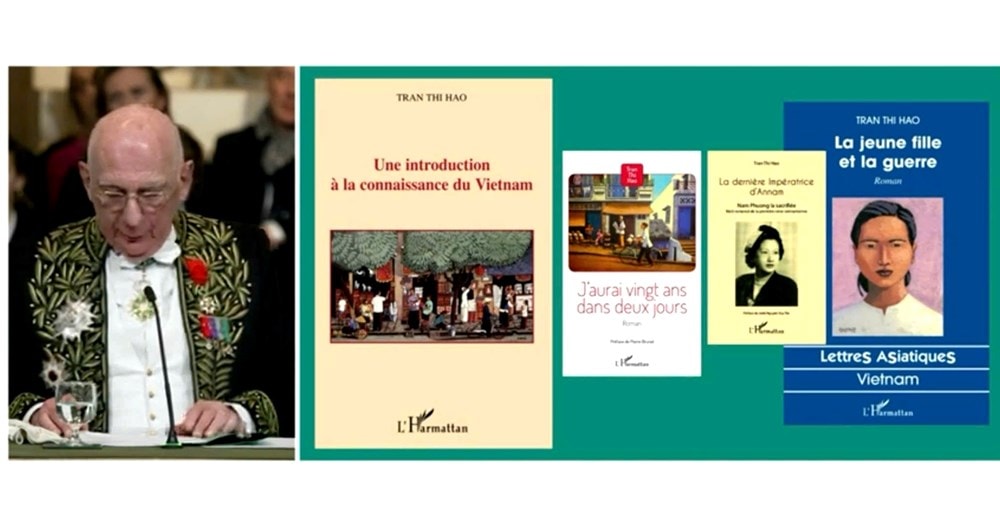
Formerly a lecturer in French and French literature at the Hanoi University of Foreign Languages (now Hanoi University), a researcher in French literature at the Sorbonne University - Paris IV, and a lecturer in modern and contemporary Vietnamese literature, writer Tran Thi Hao has written dozens of books and novels in both Vietnamese and French.
As someone who received specialized training in French language and literature at the University of Bucharest, I understand that mastering French—a language that is very subtle and grammatically very precise—requires not only diligence but also exceptional ability.
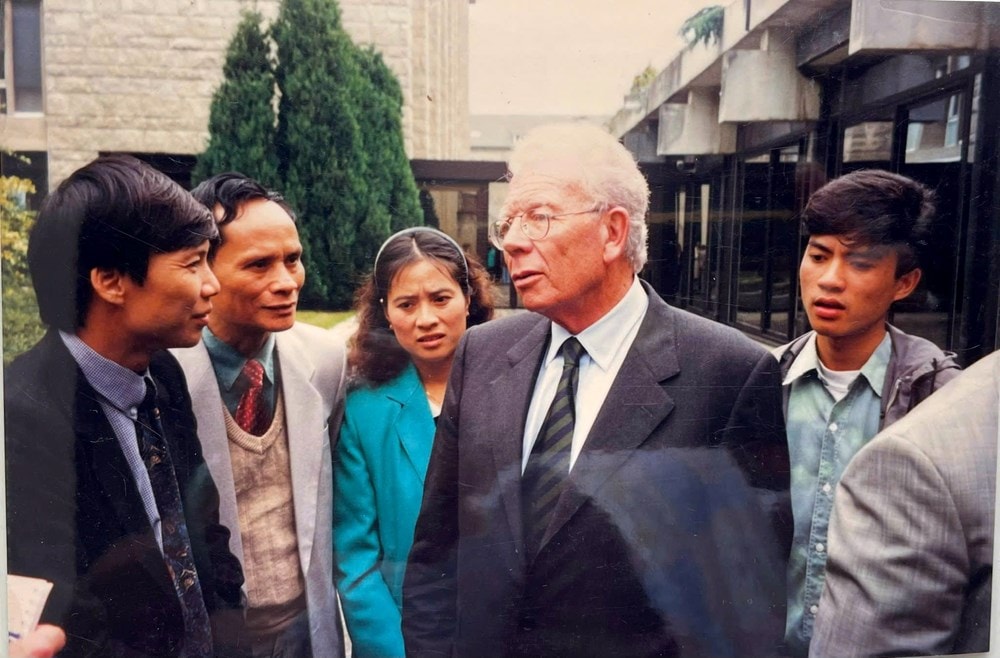
I had the opportunity to meet Tran Thi Hao during a trip by a delegation of Vietnamese journalists invited by the French government in 1997. Our group included journalist Ho Xuan Son, Editor-in-Chief of the newspaper.New HanoiProfessor Dao Nguyen Cat, Editor-in-ChiefVietnam Economic Times; journalist Le Xuan Thanh of VNA and I, a reporter from the newspaperPeople's ArmyHe was assigned to visit the Côtes d'Armor-Bretagne province.
Tran Thi Hao was then an interpreter invited by the French side for the Vietnamese journalists' delegation. Initially, I was very impressed by Tran Thi Hao's excellent French speaking ability and her superb French-Vietnamese and Vietnamese-French translation skills.
Later, when I learned more about writer Tran Thi Hao's contributions to the bilateral relationship between Vietnam and France, especially her dedication to connecting the Côtes d'Armor province with the two Vietnamese provinces of Nghe An and Ha Tinh, I was even more impressed by her community spirit and work ethic.
After that trip, we went our separate ways, returning to our work and lives. But the affection and concern of our French friends (mostly senators, members of parliament, governors, deputy governors, etc.) remained and kept us connected despite our limited opportunities to meet.
For many years, in addition to her teaching work, Tran Thi Hao has been involved in various social activities, supporting numerous charitable organizations that help Vietnam, such as: the Union of Vietnamese in France (UGVF), the Eurasian Brotherhood (FAA), the Franco-Vietnamese Friendship Association (AAFV), the Franco-Vietnamese Friendship Association Choisy Val-de-Marne (AAFV Choisy), the Côtes d'Armor - Vietnam Association, the Water Spinach Association (Le Liseron), the Rice Flower Association (Fleurs des Rizières), the Amitiés Vietnam - Loire Atlantique Association (AVLA), the 19.5 Hanoi Shelter for the Needy, and orphanages…
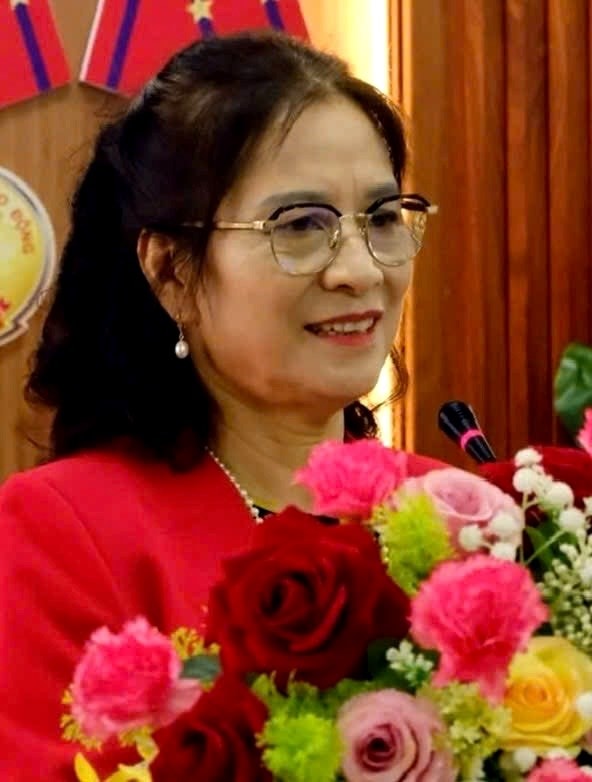
She also helped write articles for several magazines and newspapers in both Vietnamese and French, such as magazines.Carnets du Vietnam, Perspectives, Solidarityor NewspaperVietnamese womenNam...
And admirably, since 2000, Tran Thi Hao has produced a series of literary works in both Vietnamese and French. With her rich life experience, enhanced by her masterful language skills, sensitive soul, and passionate love for her homeland, Tran Thi Hao's works have resonated within the community and academic circles of both countries.
In Vietnamese, Tran Thi Hao presents to her compatriots images of the colorful life, culture, and society of France, the French people, French people of Vietnamese origin, and Vietnamese people working, studying, and living in France, through short stories, novels, and fiction.
Among the works written in Vietnamese, this bookThe illusion of studying abroad.and bookYellow apricot blossoms in the windIt was selected to be read by the former Dong Thap Radio and Television Station in their program.Reading literary stories late at night..
The novelThe love story of Empress Nam PhuongShe was approached by two Vietnamese directors who asked for permission to use her as inspiration for a feature film about Vietnam's last empress, scheduled for release in 2026.
Through the novels and essays of Tran Thi Hao, written in French, the French came to know Vietnam and the Vietnamese people from many different perspectives.
Since the 2016-2017 school year, the novel has been titled...The Girl and the WarPublished by Harmattan-Paris in 2007, this book has been incorporated into online French grammar courses for students from grade 12 to university in France and other French-speaking countries (including prestigious universities - Grandes écoles).
Emmanuel Labrande, former Cultural Attaché of the French Embassy in Hanoi and former Director of the French Cultural Center in Hanoi, said during Tran Thi Hao's talk with readers at Espace (French Cultural Center) in June 2019: "Writer Tran Thi Hao is a bridge between Vietnam and France in terms of culture, literature, and language."
“She is one of the writers capable of writing in both Vietnamese and French. I appreciate that writer Tran Thi Hao has written many books in French to introduce Vietnam and vice versa. She has also written books in Vietnamese about France so that Vietnamese readers can access French culture. Tran Thi Hao is not only a writer but also a cultural ambassador,” Mr. Emmanuel emphasized.
Dr. Michèle Tillard, a Doctor of French Literature, lecturer in Prépas classes (preparatory classes for university entrance exams) at Montesquieu High School (Mans province) and author of several books on French language and grammar, wrote: “While developing the MOOC/FLOT online French language training program, we explored a literature that is still understudied in university curricula. During this research, we came across Vietnamese literature expressed in French and discovered Tran Thi Hao.”
According to Michèle, Trần Thị Hảo chose France and the French language to tell her own stories, and those of others she knew well, perhaps because the message the writer wanted to convey to readers had universal value.
We brought the bookThe Girl and the War"We joined the program to try to offer a comprehensive view of world literature, and this is also where writer Tran Thi Hao has her place. And that's also a way to pay tribute to her," said Michèle.
For her contributions to the literature and culture of both Vietnam and France, in 2018, writer Tran Thi Hao was awarded the Knight of Arts and Letters Order by the French Government.
In 2023, writer Tran Thi Hao was awarded the Grand Prize by the French Academy for "Illuminating the French Language and French Literature" for all her works written in French. Tran Thi Hao is the first Vietnamese person to receive this prestigious award, which has been awarded since 1960.
The appeal ofBefore dawnNot through sensational or dramatic details, but through a gentle, intimate storytelling voice. These are stories of everyday life during the war in a rural area of Central Vietnam and the arduous post-war years. Everyday stories that are moving because of their authenticity. That is the distinctive characteristic of Tran Thi Hao's writing. It's like the story of my own hometown, the story of my family, the story of myself.
This is both "a true story and a novel." That's what Tran Thi Hao herself said, and the book is clearly labeled as a "novel." So what?
Perhaps the strength of this story lies in this blend of genres? First and foremost, whether it's true or fictional is irrelevant, but it's told as if it were real, with timelines, historical milestones, and events that give the story its significance.
It all begins in Ha Tinh, in the North Central region of Vietnam, following the fierce war against the Americans, and then the difficult post-war period of twenty years since 1975. The French, and France itself, also make a brief appearance. Regardless, history is an indispensable element in the story told here.
Placing the story within the historical context of the country, along with depicting daily life, as well as the teachings of Confucius, the fate of those left behind in the war... clearly reflects society, thinking, and the perspective of the people.
Tran Thi Hao's story, recounting the entire period mentioned above through the eyes of a child, then a young woman, recalling the events, places, evacuations, bombings, living conditions, especially survival, and most importantly, the colors of nature and the smells of the seasons… reflects a truly authentic and unmistakable Vietnamese life experience.
Through this story, we realize once again that such a heroic nation is sure to win a war in which the enemy does not hesitate to use, and even experiment with, all kinds of weapons against their invincible strength and culture.
Readers will follow this family's story through turbulent times with immense empathy. They tremble at the danger, grieve over the trials and the pain of loss, rejoice in the characters' joys and successes; they share the hopes and struggles of the various characters, and they live alongside the love between Ha An and Xavier.
I was also particularly moved by the beauty of some of the landscapes described by the author, with nature vividly present throughout the pages. These writings truly reveal Tran Thi Hao's literary talent and her romantic soul.
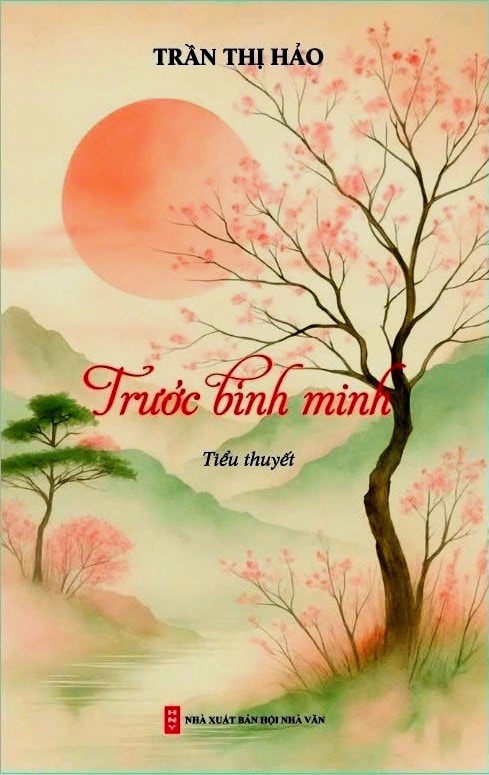
Readers are also impressed by the richness of the work, especially the way poetry blends seamlessly and naturally into prose. This poetic quality is vibrant in the love letters between the two young people and flourishes through quotations from Vietnamese poets, such as this poem.To my friend Chileby poet Tran Dang Khoa, poemEmily, my dear!by the poet Tố Hữu, or a few French songs…
Through her writing, Tran Thi Hao has brought to life a Vietnam that always stands strong, with incomparable colors and flavors, and undeniable brotherhood: the boundless generosity of the rural people welcoming and embracing refugees from the city…
The author clearly shows the incredible resilience of the entire Vietnamese nation during many years of fierce war, and the humble courage of ordinary people: After the enemy planes disappeared from view, they picked up the books and notebooks that had fallen to the ground, swept up the rubble, and continued their work and studies.
The scenes of war and devastating bombings described in this book, written by Tran Thi Hao, are deeply etched in my mind:My aunt gasped, "I couldn't help but cry when I saw the children completely burned: a nine-year-old boy, his whole body burned black, his face like a skinned rabbit's head, his eyes big and black like lychee seeds, but still alive, full of fear and panic; and another child, about four or five years old, his chest burned up to his chin, like a giant bloodstained bib, his face frozen..."(page 86).
This is also a novel, where the work creates life, bringing to life everyday scenes, emotions, thoughts, and the perspectives of each character, shifting from one point of view to the female protagonist's from childhood, through adolescence, to adulthood; sometimes to her father, aunt, lover, or even the head professor… A world of diverse colors.
The true story, written with utmost honesty, serves only as the framework; the novel is what wraps it in flesh and blood, breathing life into it.
With such richness, one can only hope that this novel—a genre encompassing both a true story and a wealth of creativity—will find worthy readers, those who still demand literature that is both truthful and imaginative.
Fold the last page of the novel.Before dawn,I admire even more what Tran Thi Hao has contributed to life.
Her literary works, written in both Vietnamese and French, have contributed to enriching the spiritual life of society, enhancing the emotions of those who always strive for light and goodness, and deepening the cultural and spiritual connection between the Vietnamese and French peoples.