

F-35A integrates METEOR missile: about to enter flight testing.
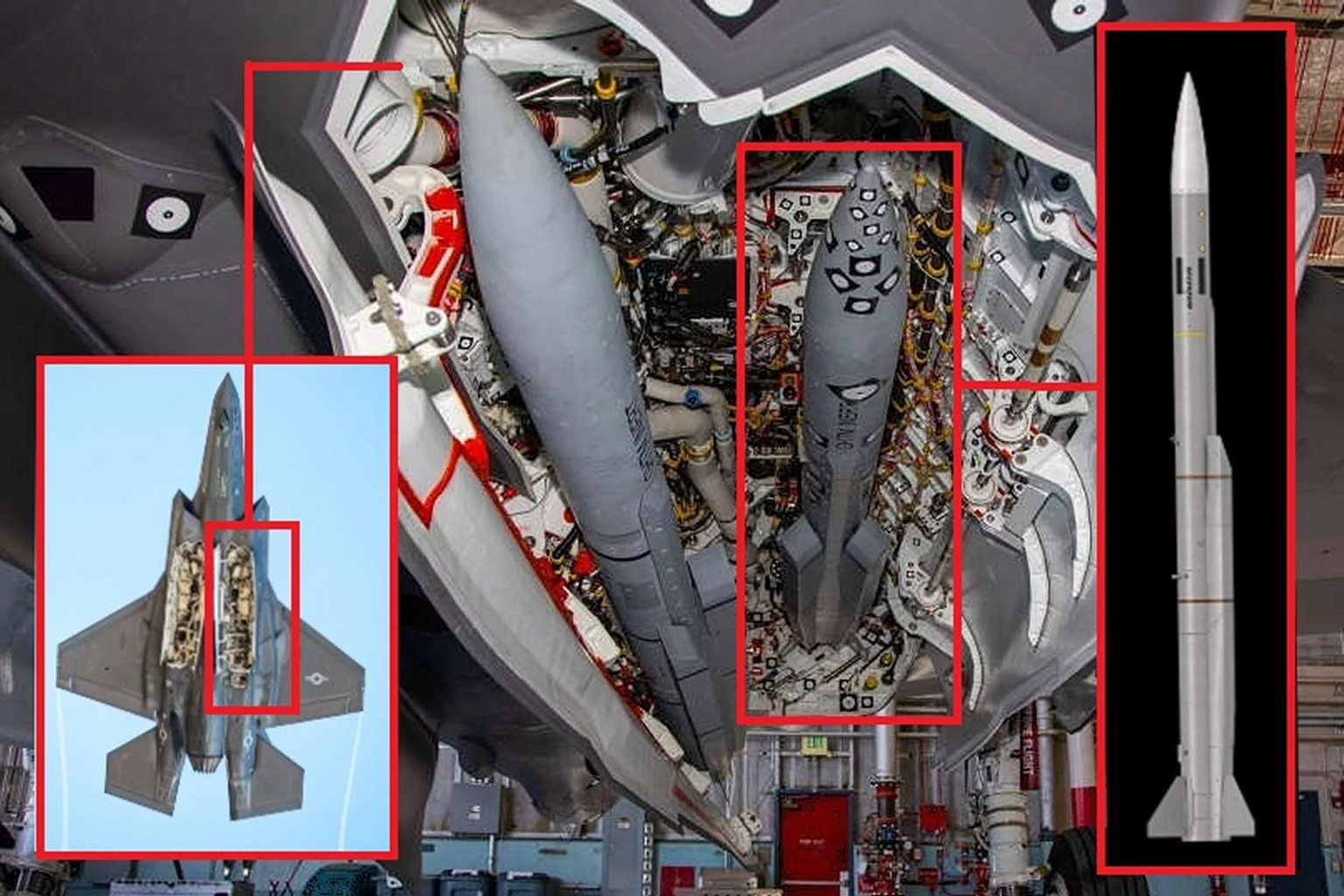
MBDA, Lockheed Martin, and the F-35 Program Office have completed ground testing at Edwards for METEOR on the F-35A, confirming that it retains stealth capabilities even when carried in the internal bay; ready for flight testing.
According to Army Recognition, the program to integrate the METEOR air-to-air missile onto the F-35A stealth fighter has passed a series of key ground tests, with only one final test remaining before moving to the flight testing phase. Initial results confirm that the F-35A can carry METEOR in its internal weapons bay while maintaining its stealth capabilities.
Overview: Edwards Trials and Phase Transition
Tests conducted at Edwards Air Force Base (California, USA) focused on evaluating the installation and deployment of METEOR in the F-35A's internal weapons bay. The engineering team tested vibration, structural responsiveness, mount compatibility, and its impact on radar cross-section. Positive results indicated the missile could be safely carried and deployed without compromising stealth capabilities – a core element of the F-35A.
MBDA, Lockheed Martin, and the F-35 Program Office have confirmed that only one final ground test remains before moving to the air-launching phase, aimed at confirming the ability to launch, track, and maintain stable flight.
Technical analysis: METEOR's "trump card" and ramjet technology
METEOR is a long-range air-to-air missile jointly developed by six European countries (UK, France, Germany, Italy, Spain, and Sweden). The missile has been integrated into the Eurofighter Typhoon, Dassault Rafale, and Saab Gripen; this year, the British Air Force also tested launching METEOR from an F-35B fighter jet.
The key feature of the METEOR is its variable thrust solid-fuel ramjet engine, which allows it to maintain supersonic speeds above Mach 4 (4,900 km/h) for most of its flight. Thanks to this continuous thrust, the METEOR retains energy well in the final phase, increasing the probability of destroying high-speed or highly maneuverable targets. Its range can reach over 100 km or more depending on combat conditions.
In terms of guidance, METEOR uses a combination of inertial guidance, GPS, bidirectional data link, and active electronically scanned array (AESA) radar in the terminal phase. Its in-flight target update capability and "lock-after-launch" (LOAL) feature allow for long-range launches without the aircraft needing to maintain continuous target illumination.
Compared to missiles that accelerate sharply at the beginning of their trajectory and then "glide," METEOR maintains thrust until close to the target. This mechanism expands the "no-escape zone," significantly reducing the target's chances of escaping by accelerating or maneuvering sharply. The missile is equipped with a directional fragmentation warhead with a contact and proximity fuse, increasing its effectiveness in jamming environments or against highly maneuverable targets.
Integration with F-35A: Maintains stealth, increases interception range.
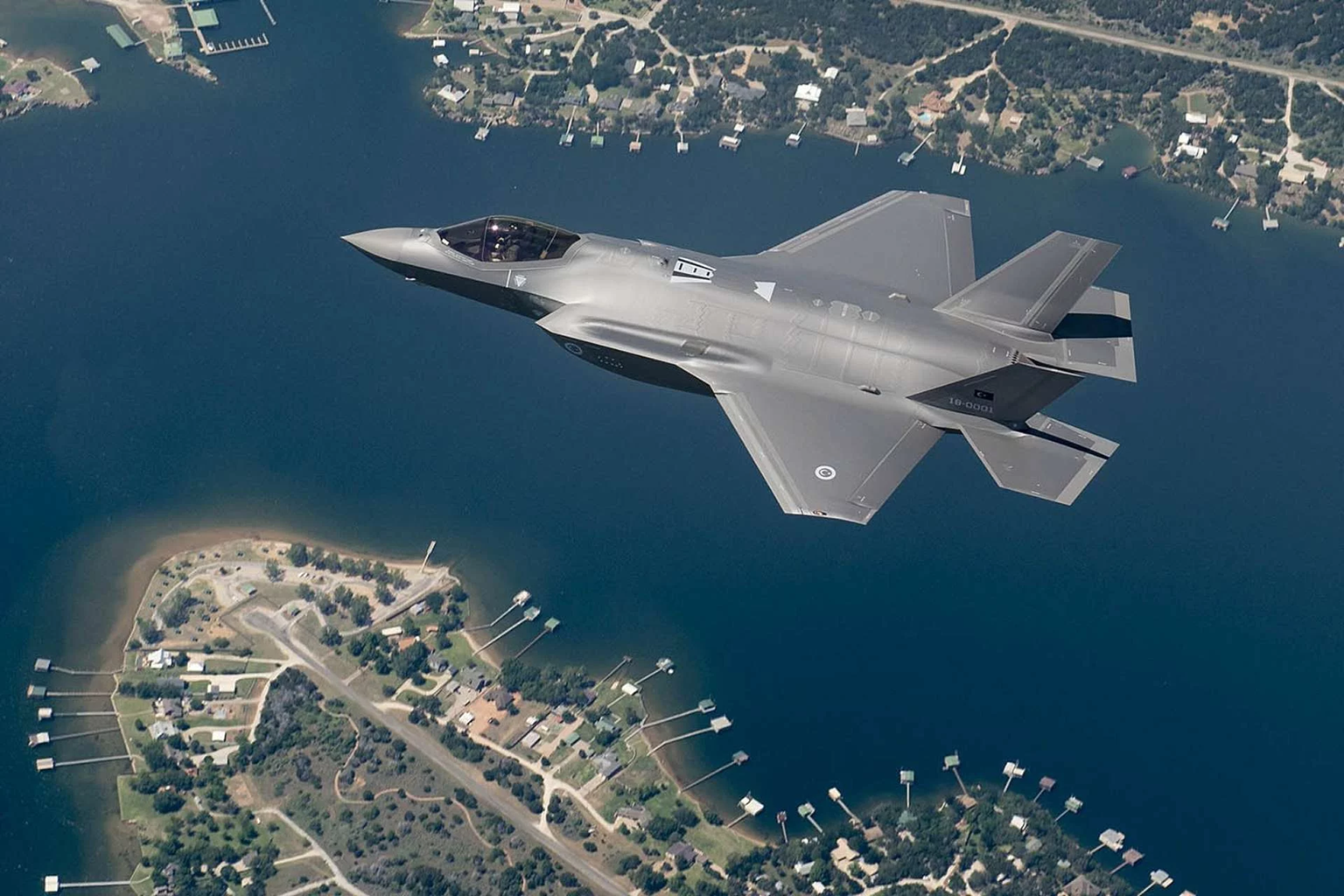
The combination of the F-35A and METEOR is not just about weapon complementarity, but creates a long-range combat configuration based on stealth capabilities. The F-35A has an integrated sensor system (AESA radar, electro-optics, electronic warning), enabling it to detect and track targets remotely. When METEOR is mounted internally, the aircraft maintains its stealth shape, avoiding an increase in radar cross-section due to carrying external weapons.
Thanks to METEOR's two-way data link, the F-35A can launch missiles based on target data from other F-35s, satellites, or ground-based radar, even without activating active radar. This networked operation enhances the safety of the carrier aircraft and expands beyond-visual-range interception options.
Industrial impact and cooperation
The METEOR program on the F-35A is taking place against the backdrop of many NATO air forces accelerating modernization in the face of a complex security environment in Europe and the Indo-Pacific. The program reflects defense industry cooperation between allies: the UK is leading the integration on the F-35B, while Italy is sponsoring the integration process on the F-35A.
Once fully certified, the METEOR system on the F-35A could significantly enhance long-range air combat capabilities, supporting Baltic patrols, carrier strike group protection, and combat operations in sensitive areas, while reinforcing NATO's air superiority.
Next steps
According to MBDA, after the final ground test, the program will move on to flight testing to confirm the launch procedure, target acquisition capabilities, and flight stability. If all goes well, the F-35A will soon be capable of carrying METEOR in the coming years.
With METEOR having already demonstrated its capabilities on the Typhoon, Rafale, and Gripen, the progress at Edwards marks a milestone in integrating the European ramjet missile into the F-35's combat ecosystem – moving towards a long-range strike model, maintaining stealth, and exploiting network warfare advantages.