

Germany receives the $4.4 billion Arrow3 missile system, the first in Europe.
Arrow-3 was delivered at Holzdorf base, about 120 km from Berlin. The $4.4 billion contract is the largest Israeli export in history; a key piece of ESSI's European strategy.
Germany has received its first Arrow-3 missile systems from Israel at Holzdorf Air Base, about 120 km from Berlin. The $4.4 billion contract is the largest arms export in Israeli history and marks the first time Arrow-3s have been deployed outside of Israel and the United States. Berlin plans to put the system into active service after integration, before expanding its deployment to form an interception corridor from the Polish border to the Ruhr region as part of the European Sky Shield (ESSI) project.
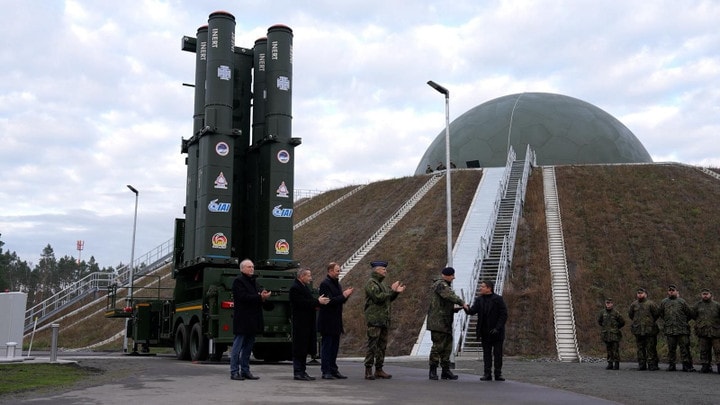
Overview of deployment and role in ESSI
Arrow-3 is a crucial component of the ESSI initiative launched by Germany following the Ukraine conflict, aiming towards a multinational defense network. According to the German Ministry of Defence, the first batteries will be operational as soon as integration is complete, and then deployed to various locations to create a long-range interception layer.
The Israeli side affirmed that the handover ceremony marked the beginning of a deeper phase of cooperation between the two countries in the fields of space, air defense, and strategic exchange. The Israeli representative emphasized that Germany is a key partner in Europe in efforts to protect the continent from the threat of ballistic missiles.
Arrow-3 Technical Analysis
The Arrow-3, developed by Israel Aerospace Industries (IAI) in collaboration with Boeing, is a successor to the Arrow-2. Unlike the Arrow-2, which intercepts targets in the upper atmosphere, the Arrow-3 engages targets outside the atmosphere (exo-atmospheric). This two-stage, solid-fuel missile uses a hit-to-kill mechanism at very high speeds, neutralizing the warhead and minimizing the release of dangerous debris to the ground.
| Category | According to the source |
|---|---|
| Developer | IAI collaborates with Boeing |
| Missile architecture | Two-stage propulsion, solid fuel |
| Interceptor space | Exo-atmospheric |
| Method of destruction | Head-on collision (hit-to-kill) |
| Target type | ICBMs, IRBMs, maneuverable warheads |
| Control distance | Thousands of kilometers |
| Recent field results | The success rate is over 90% in intercepting threats from Iran and intercontinental attacks from Yemen. |
Thanks to its extra-atmospheric interception and hit-to-kill mechanism, Arrow-3 aims to intercept ballistic missiles from a distance, even during their mid-course phase, thereby creating a strategic layer of protection for the deployment area.
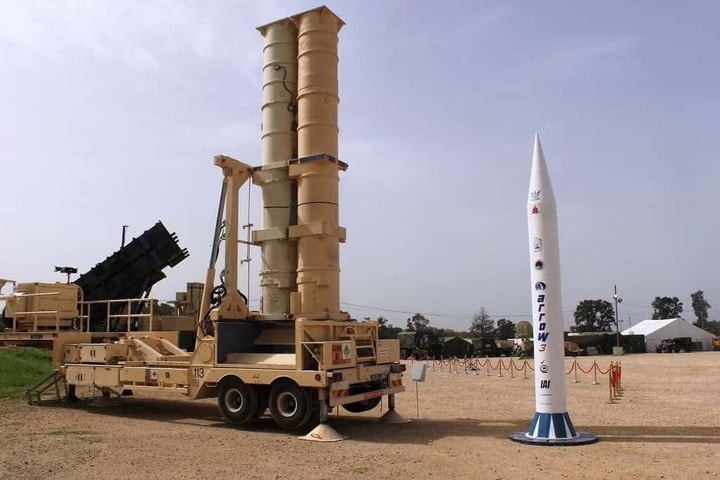
Deployment tactic: long-range interception layer
Germany chose Arrow-3 after assessing that existing systems like Patriot primarily handle medium-range targets and do not cover the threat from deep within Russian territory. Its ability to intercept targets outside the atmosphere allows Arrow-3 to destroy targets far from German territory, reducing the risk to populated areas and infrastructure, and creating a strategic defense layer that Europe previously lacked.
The plan to establish an interception corridor from the Polish border to the Ruhr region shows a linear deployment orientation, aiming to optimize the early warning window and kill range, thereby increasing the probability of destroying targets before they approach critical airspace.
Comparison and reasons for choosing
According to sources, Arrow-3 is considered by many European countries as a reliable option against modern missile threats, while some existing systems are limited in dealing with hypersonic targets. Germany's deployment of Arrow-3 meets the requirements for long-range interception from outside the atmosphere and expanded protection for a large part of its strategic airspace.
Context and security implications
The conflict in Ukraine has exposed the extent of Europe's dependence on the US for missile defense. Several statements from policymakers in Washington have led Berlin to reconsider the sustainability of its long-term security commitment. Arrow-3 has therefore been chosen by Germany as a pillar toward strategic autonomy.
Simultaneously, Russia's increased missile capabilities, including the deployment of Iskander-M missiles in Kaliningrad and the retesting of medium-range variants previously banned under the old INF Treaty, forced Berlin to invest in a long-range, fast, and sufficiently powerful solution. The presence of Arrow-3 missiles at Holzdorf therefore has both military and political significance: Germany is proactively upgrading Europe's long-range defense instead of relying entirely on the United States.