

World Cup 2026: Japan, South Korea, and Asia's Opportunity
Eight Asian representatives will participate in the 2026 World Cup: Japan has a strong chance, South Korea is in a manageable group, and newcomers like Uzbekistan and Jordan will face European and South American powerhouses.
Eight Asian representatives will participate in the 2026 World Cup: Japan, South Korea, Australia, Iran, Uzbekistan, Jordan, Saudi Arabia, and Qatar. The current group stage draw presents a mixed picture: Japan has a stable foundation to compete for qualification, South Korea is in a manageable group, while many of the remaining teams face significant challenges against traditional rivals from Europe and South America.
Japan: a foundation of discipline, an open group.
Japan was the first Asian team to qualify for the 2026 World Cup and continues to assert its dominance with a disciplined, well-organized, fast-paced, and physically strong playing style. Experienced players from Europe (Wataru Endo, Takefusa Kubo, etc.) help the "Samurai Blue" flexibly switch between defensive counter-attacks and control of the game when needed.
They are in Group F with their biggest rival being the Netherlands, along with another European representative from the play-off group including Sweden, Poland, Albania, Ukraine, and Tunisia from Africa. With Japan having defeated Brazil, Ghana, and Bolivia in friendly matches in October and November, this team is not intimidated by the Netherlands and is considered slightly stronger than the remaining European opponent as well as Tunisia.
South Korea: wing speed, high pressing, and a balanced Group A.
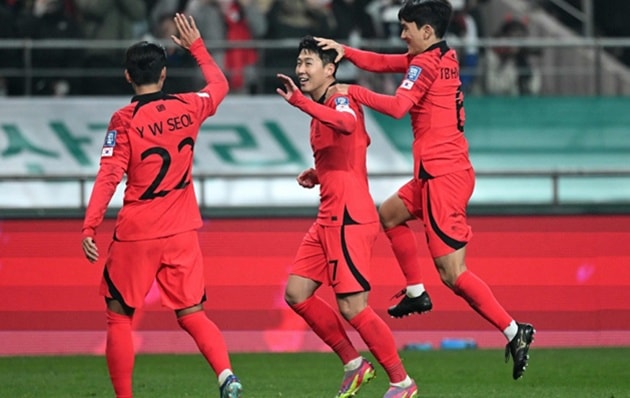
South Korea possesses a strong physical foundation, wing speed, and powerful pressing ability for attacking transitions. Son Heung-min, Lee Kang-in, and Hwang Hee-chan are key players in attack, while Kim Min-jae continues to be a solid anchor in defense.
Compared to Japan, South Korea is in Group A, which is considered a more manageable group alongside host nation Mexico, South Africa, and a team from the European play-offs (Denmark, North Macedonia, Czech Republic, Republic of Ireland). If they maintain their pressing intensity and accuracy in counter-attacks, the chance of advancing from the group stage is very real.
Australia: pragmatic, intense competition, and a scenario with a chance of success.
Australia prioritizes pragmatism, physical fitness, and defensive discipline. While their current squad lacks star players, under coach Tony Popovic, Australia has consistently demonstrated resilience in crucial matches. Important victories against Japan and Saudi Arabia laid the foundation for their qualification.
In Group D, alongside hosts USA, Paraguay, and a representative from the European play-offs (Kosovo, Romania, Slovakia, Türkiye), Australia could build their plan to advance by focusing on a tight defensive block, quick transitions, and exploiting set pieces.
Iran: technical prowess, aiming for second place in the group.
Iran has extensive World Cup experience, with a playing style that emphasizes technique, speed, and tackling ability. Mehdi Taremi is a notable name in their attack.
In Group G, Iran will face Belgium, New Zealand, and Egypt. The most likely scenario is a battle for second place, with New Zealand considered a more manageable opponent, while Egypt will be a tough test of their intensity and effectiveness in crucial moments.
Saudi Arabia: plenty of experience, but Group H is too steep.
Saudi Arabia returned to the 2026 World Cup after a tense Asian qualifying round, where they faced the risk of having to play in an intercontinental play-off before escaping that fate thanks to a better goal difference in the matches in Jeddah.
They were drawn into Group H, facing Spain and Uruguay. Their chances of progressing are therefore quite slim. Meanwhile, Capo Verde – the top team in the African qualifying group despite being in the same group as Cameroon – is a notable dark horse.
Qatar: prioritize low blocks, rely on set pieces.
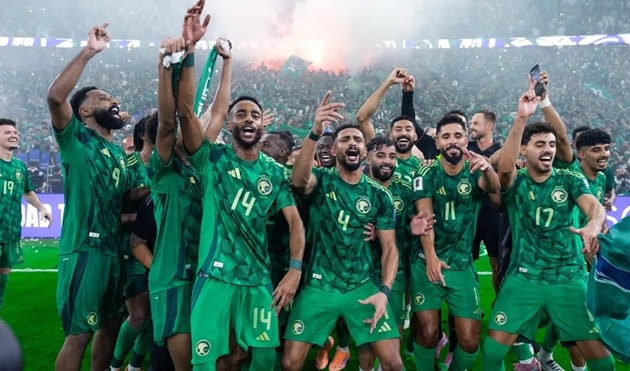
Qatar still retains some of the experience from the 2022 World Cup, but overall, their level is still far behind the top teams in Europe and South America. The sensible option is a low defensive block, a transitional attack, and reliance on set pieces.
In Group B, the presence of two European representatives – including a potential appearance by Italy – along with Canada and Switzerland significantly narrows Qatar's chances of advancing.
Uzbekistan and Jordan: Ambitious newcomers face off against the "giants".
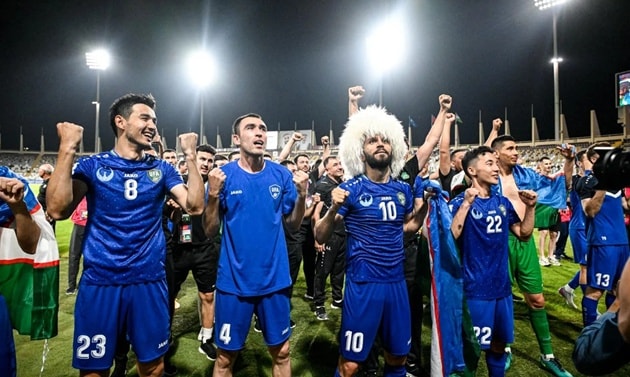
Uzbekistan and Jordan are making their first World Cup appearance. Their spirit, energy, and desire are their greatest assets, but the gap in experience and intensity compared to teams with a rich tradition is a clear challenge.
Uzbekistan is in Group K with Portugal and Colombia; Jordan is in Group J facing Lionel Messi's Argentina, along with Algeria and a rising Austrian team. The realistic goal is to organize tightly, control the tempo of the game, and wait for opportunities to counter-attack and make an impact.
Iraq: even if they make it through the Intercontinental Play-offs, Group I will still be a steep climb.
If Iraq makes it through the Intercontinental Play-offs, they will face Group I, which includes Kylian Mbappe's France, Erling Haaland's Norway, and Sadio Mane's Senegal. With such evenly matched and strong opponents, finishing last is a real possibility unless Iraq pulls off an upset.
Overall impact: Japan shines, South Korea has a chance; the rest need to be perfected.
Based on the current situation, Japan possesses a playing style and experience suited to the World Cup environment to aim for the knockout round. South Korea faces a balanced group and has tactical space to exploit. The rest – Australia, Iran, Saudi Arabia, Qatar, along with the two newcomers Uzbekistan and Jordan – and Iraq if they participate – will likely have to rely on discipline, focus, and maximum efficiency in every moment to dream of advancing.