

Hundreds of hectares of pineapples in Quynh Thang, the "pineapple capital," are rotting at the tips.
For over a month now, the pineapple growing area of Quynh Thang has been experiencing widespread yellowing leaves, root rot, and wilting of pineapple plants. Nearly 200 farming households have been affected, with over 400 hectares of pineapples damaged, and many orchards considered to be completely lost. Local authorities and relevant agencies are urgently investigating, determining the cause, and developing response measures.
Hundreds of households lost their entire pineapple crop.
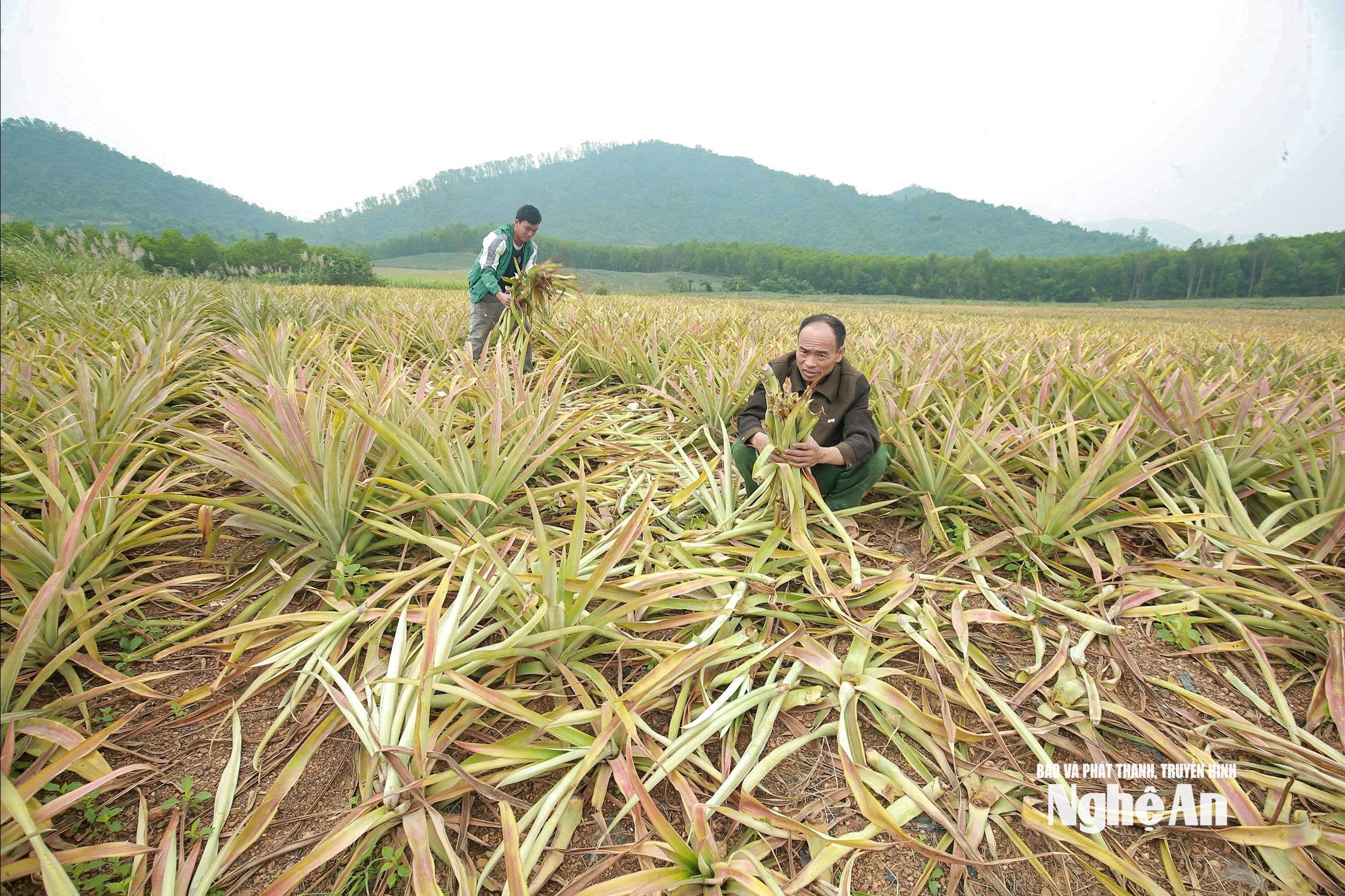
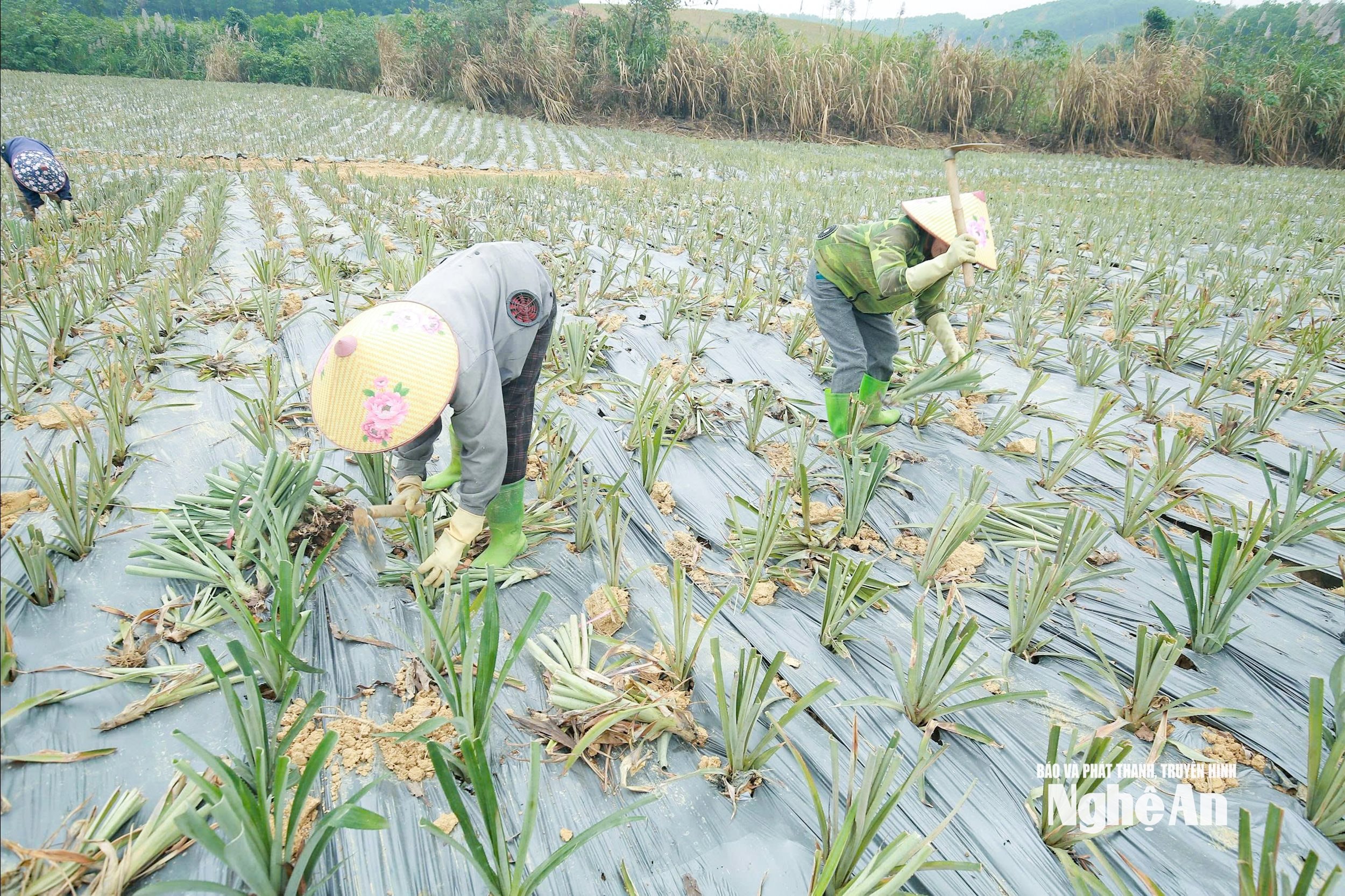
In early December, from the hillsides to the plastic-covered fields in Quynh Thang commune, the sight of wilting, yellowing pineapple plants became increasingly common. Pineapple farmers reported that over the past month, following prolonged rains, yellowing leaves and root rot disease spread rapidly, causing mass die-offs, with a severity far exceeding that of previous years.
In Bac Thang hamlet, Mr. Ho Huu Yen took us to his pineapple plantation of over 1.5 hectares, which his family had planted in December 2024. With only a few months left until the flowering and fruiting season, most of the plants have withered and died. He said that the investment cost was nearly 100 million VND per hectare, totaling about 200 million VND for 2 hectares, but he has already suffered losses of over 150 million VND. “It’s unclear whether it was due to heavy rain or frost, but after only a few days, the plants turned yellow, their roots rotted, and they collapsed. Almost a year of care has been completely wasted,” Mr. Yen said.
Sharing the same plight, Mr. Nguyen Tu Truong's family, also in Bac Thang village, has over 5 hectares of pineapples, of which 1.5 hectares have completely died. A month ago, upon discovering the yellowing leaves, the family intensified care and treatment according to the instructions of agricultural officials, but the situation did not improve. The damage has now exceeded 100 million VND.
These two households are not alone; Mr. Dau Phi Canh's family (Hamlet 1/5) also lost 1 hectare of pineapple due to yellow leaf disease, root rot, and waterlogging. Locals say that in previous years, the disease was mainly leaf fungus and easy to treat. However, this year's prolonged rain has caused the disease to spread rapidly and become difficult to control.
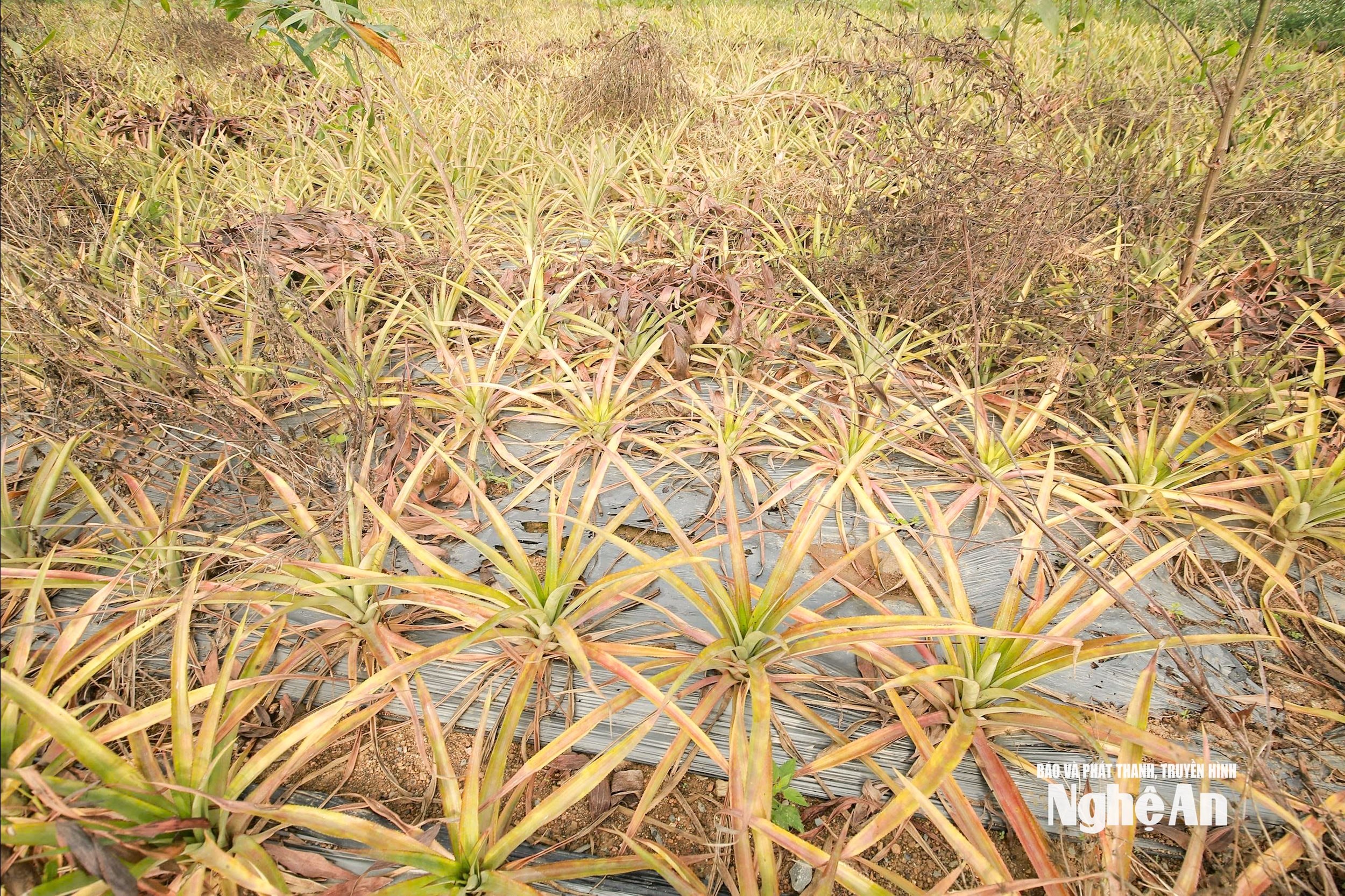
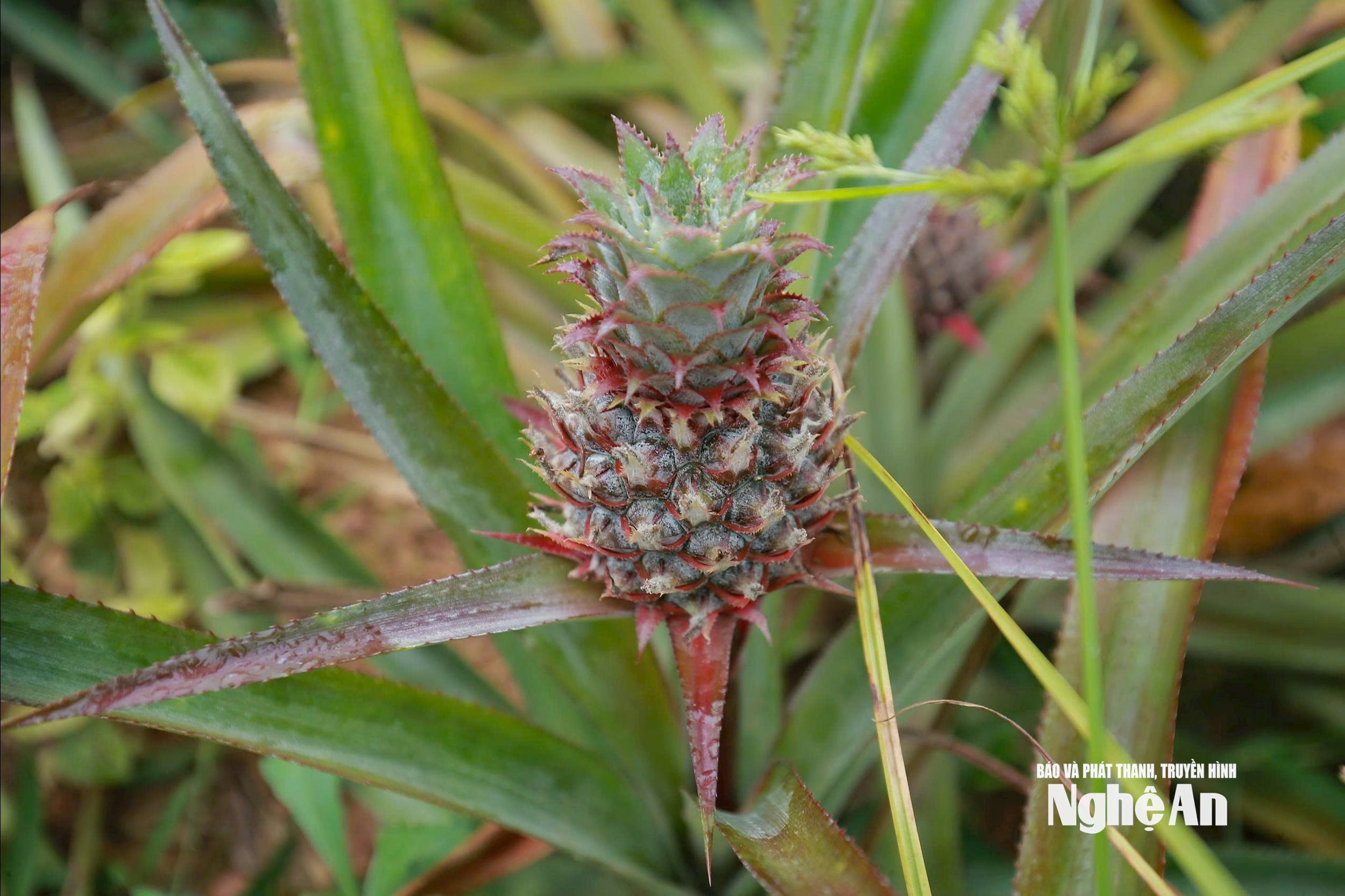
In addition to the area affected by crop failure, many pineapple fields are also experiencing a lack of flowering and fruiting. According to pineapple farmers, the expected yield in 2025 is projected to decrease by about 30%. "In previous years, each hectare yielded about 50 tons, but this year, with the same care conditions, we estimate only 30 tons," one farmer said.
Mr. Nguyen Quoc Khanh, Vice Chairman of the People's Committee of Quynh Thang commune, said: “The entire commune has nearly 2,000 hectares of pineapple, mainly Queen and MD2 varieties. This is the main crop, applying a cultivation process using plastic mulch, planting in staggered seasons throughout the year, and following organic farming practices, without using herbicides. Currently, nearly 200 households in the commune have suffered losses with about 450 hectares of pineapple damaged due to yellowing leaves, root rot, and fruit damage. Some households have only a few sao (approximately 1000 square meters), while others have nearly 2 hectares. The damage is very significant. The government is coordinating with the provincial agricultural department to inspect, demarcate affected areas, and guide farmers on how to handle the situation.”
Strengthen measures to prevent the spread of the disease.
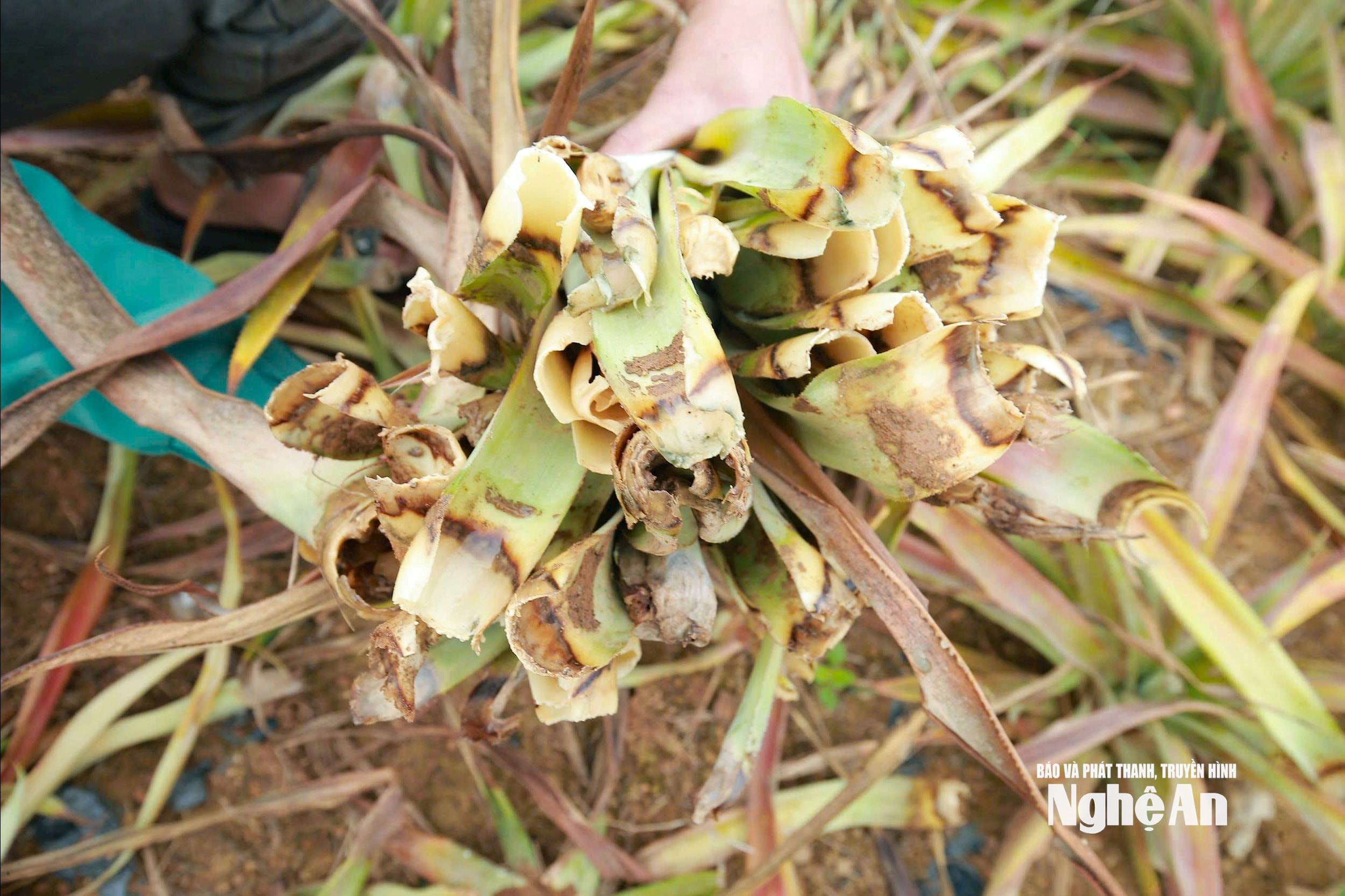
Observations show that pineapples in many areas clearly exhibit symptoms of bud rot: Young leaves lose their turgor, curl up, and gradually dry out; the base of the leaves rots, becoming slimy and foul-smelling; when gently pulled, the bud detaches from the stem. The disease mainly affects the Queen variety, and is particularly prevalent in conditions of heavy rainfall and prolonged high humidity. According to pineapple growers, for many years now, households have been planting year-round, not seasonally as before. While staggered planting helps to distribute harvest times, it also makes pest and disease management more complex, especially in extreme weather conditions.
On the morning of December 10th, the Provincial Department of Crop Production and Plant Protection conducted a field inspection of pineapple growing areas, noting the appearance of bud rot disease on the Queen variety to varying degrees. They also issued a document providing detailed guidance on technical measures for local authorities and farmers to implement promptly.
Mr. Trinh Thach Lam, Head of the Plant Protection Department of the Provincial Crop Production and Plant Protection Sub-Department, said: “This is not a new disease; it has appeared in previous years. The cause of pineapple bud rot is a combination of bacteria and fungi, along with prolonged periods of heavy rain and high humidity, which causes the disease to spread rapidly and cause severe damage. We have issued a document guiding farmers to classify pineapple crops according to their growth stages, care for them according to the correct procedures, apply balanced fertilizers, and keep the fields well-ventilated to increase resistance. The guidance document also clearly outlines the steps for identification, the time to intervene, and appropriate control measures to minimize damage.”
Pineapple bud rot disease not only causes direct damage but also significantly impacts the agricultural production value of the locality. Pineapple is the main source of income for thousands of households in Quynh Thang commune and surrounding areas. The decrease in yield and the widespread death of pineapple plants affect the supply chain, consumption, and processing throughout the district.
Severe damage to over 400 hectares of pineapple crops not only affects hundreds of households but also impacts the supply of raw materials for pineapple processing businesses in the area. Therefore, it is necessary to establish sustainable growing areas, apply pest and disease forecasting systems, and consider adjusting planting seasons to better suit the rapidly changing climate conditions.
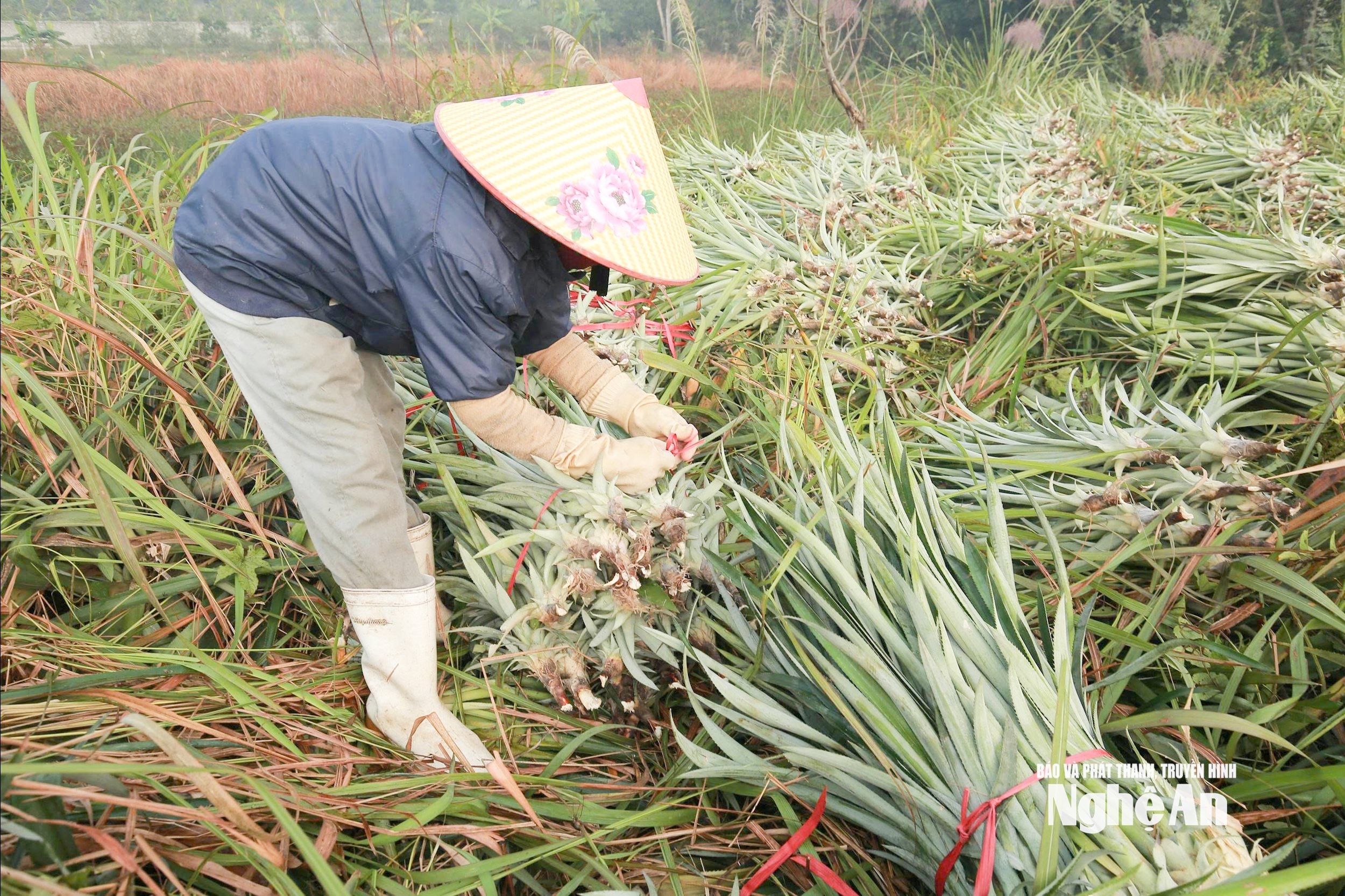
Furthermore, local authorities proposed supporting farmers in accessing healthier, more resistant seedlings; encouraging linkages between pineapple growers and businesses to ensure market access and prevent sharp declines in production leading to price fluctuations. Strengthening training and improving skills in disease identification and plant care during adverse weather conditions is also considered a key solution to reduce risks for the next planting season.
Recommendations for safe farming practices to limit pineapple diseases.
- Prepare the soil thoroughly and treat it before planting; use treated organic fertilizer.
- Select healthy, disease-free seeds; maintain field hygiene, and destroy crop residues after harvest.
- Crop rotation with peanuts and beans helps improve soil quality and reduce pathogens.
- When the disease first appears, it is necessary to spray active ingredients such as Ningnanmycin, Cytosinpeptidemycin, Eugenol, etc., according to the instructions.
- In areas with severe infestation, the affected plants must be uprooted and destroyed to prevent further spread.