

Su-34 and FAB-500 glide bombs in Russian tactics.
According to the Ukrainian General Staff, on October 17, Russia carried out 109 bombing raids, along with more than 6,000 UAVs and nearly 5,000 artillery shellings. Su-34 aircraft and FAB-500 glide bombs with a range of over 70 km were central to the tactics used to pressure air defenses.
According to the General Staff of the Ukrainian Armed Forces, the Russian Aerospace Forces (VKS) have conducted what is described as the largest air campaign since the conflict erupted in February 2022. On October 17 alone, Russia carried out 109 bombing raids across Ukrainian territory, while also deploying more than 6,000 suicide drones and nearly 5,000 artillery shelling attacks on enemy military positions and infrastructure.
Sources indicate that the majority of bombs dropped in these bombing raids were from Su-34 fighter-bombers, aircraft described as the "backbone" of Russia's air strike forces for over three years. A notable point in reports from the front lines is the frequency of use of FAB-500 glide bombs, a weapon believed to be expanding the "safe zone" for bomber aircraft operating in front of enemy air defenses.
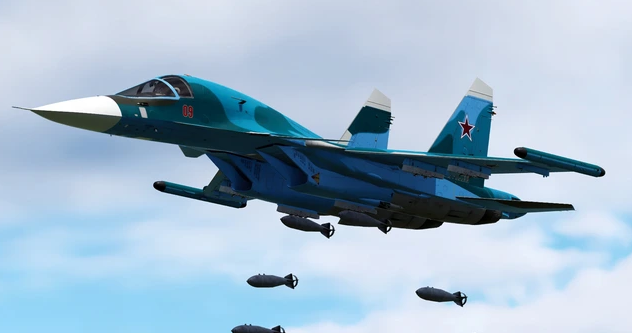
Bomb-carrying platform: Su-34 and its technical highlights.
The Su-34 is described as a ground attack variant of the Su-27 series, but with approximately 50% greater weight, reaching over 45 tons when fully loaded. Sources also suggest it is the fighter-bomber with the longest flight range and largest weapons carrying capacity among current combat aircraft, surpassing even the American F-15E.
In terms of range, the Su-34 is said to be able to operate for up to 4,000 km without refueling, thanks to its extended fuel tank and AL-31F-M1 engine. In air combat scenarios, this long range gives the aircraft more options regarding departure airports, flight paths, and on-station time, thereby increasing the rate of sorties during prolonged operations.
Another technical point highlighted is the survivability-oriented configuration: the airframe is optimized to reduce radar cross-section, while the integrated Khibiny electronic warfare system can jam enemy radars and missiles. Sources describe the combination of high payload capacity and electronic warfare capabilities as allowing the Su-34 to operate closer to the front lines with better controlled risk compared to platforms without integrated jamming support.
FAB-500 glide bomb: Range extension mechanism and tactical implications
Reports from the Ukrainian front described Su-34 attacks with FAB-500 glide bombs as a "nightmare without warning." According to the source, the FAB-500, equipped with control wings and an inertial guidance system, can glide over 70 km to its target with high accuracy.
Regarding target impact, each bomb is described as containing up to half a ton of explosives, enough to destroy underground fortifications and fortified structures. Combining a range of over 70 km with a large explosive payload, the Su-34 and FAB-500 duo create a remarkable attack model: the bomber aircraft can drop weapons from a greater distance, while the warhead retains its high destructive power at the point of impact.
A Ukrainian soldier, quoted by The Telegraph, used the analogy: “When the Su-34s appeared, the ground shook as if hell had opened up. Bombs fell in pairs, in waves, up to eight times an hour; there was nowhere to take safe cover.” This quote reflects the perceived intensity and pace of the attack, rather than a detailed description of the combat procedure; however, it shows that the “rapid repetition” factor may have been a crucial part of battlefield pressure.
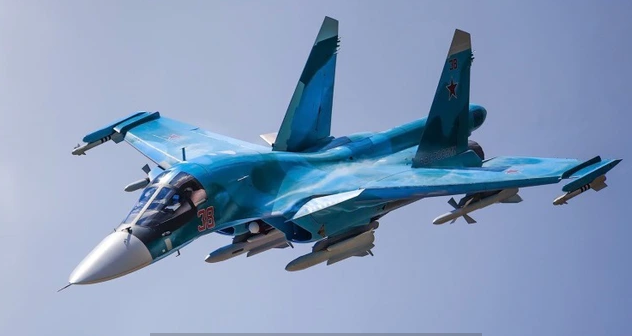
Ukrainian air defense and the issue of interception beyond range.
Sources suggest that Ukraine's air defense network is under considerable pressure, given its heavy reliance on Western systems such as Patriot, NASAMS, and IRIS-T. With bomber aircraft capable of dropping weapons from long distances, the challenge of shifting from "bomb interception" to "threatening the bomber aircraft" becomes more difficult, as the target (Su-34) may be outside certain optimal interception zones.
Colonel Yuri Ignat, spokesman for the Ukrainian Air Force, was quoted as saying: “We have no means of stopping glide bombs. Air defenses can only try to shoot down the aircraft carrying them, but that is very difficult when the Su-34 drops the bombs from a distance beyond interception range.” From a combat perspective, this statement highlights a structural limitation: if it is impossible to interfere with the approach phase of the glide bomb, air defenses are forced to shift their task to the preceding phase of deterring/destroying the launch platform.
Yuri Ignat also compared the Russian glide bomb to the American JDAM, a model equipped with wings and guidance systems to transform free-falling weapons into precision munitions. According to the source: “The Russians have done something similar with the FAB-500. Now each bomb can be guided, and they fly up to 70 km.”
Firepower combination: glide bombs, suicide drones, and missiles.
The source stated that the "bombing storm" tactic is helping Russia conserve its expensive cruise missile arsenal while maintaining a high intensity of attack. On October 17, the bombing operation was accompanied by more than 6,000 suicide drones and nearly 5,000 artillery bombardments; in addition, it was combined with tactical ballistic missiles as described in the article.
From a technical-tactical perspective, the combination of multiple layers of firepower can create "overload problems" for defense: the target must allocate radar, interceptor missiles, and anti-aircraft fire to multiple types of threats, while maintaining a high rate of attack. Quantitative data on interception effectiveness or specific damage are not provided in the source, so it is impossible to conclude the level of success of each weapon layer.
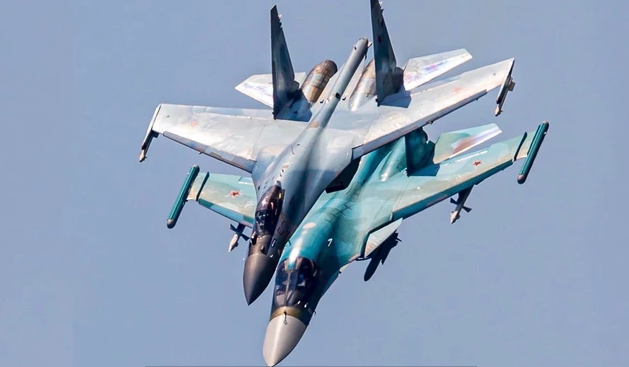
Campaign sustainability capabilities and industrial factors
A key part of the article is production capacity. Sources indicate that since the beginning of 2022, Su-34 production capacity has doubled, estimated at around 30 aircraft per year. The article also notes that this is the most mass-produced fighter jet of the post-Soviet generation, surpassing both the Su-30SM and Su-35.
Regarding upgrades, newer versions like the Su-34M are described as having an improved Sh141 radar, a digital cockpit, and the ability to carry long-range guided weapons. If these capabilities are deployed in conjunction, they could support the combat cycle from detection – target identification – weapon release at long distances, while reducing reliance on costly cruise missile attack options.
The summary table of parameters and characteristics is given in the source.
| Category | Information by source | Operational significance (description) |
|---|---|---|
| Role | Fighter-bomber; ground attack variant of the Su-27 | Focus on ground attack missions, maintain the pace of sorties. |
| Weight when fully loaded | Over 45 tons | Allows for carrying large weapon payloads, suitable for high-intensity bombing missions. |
| Operating range without refueling | Up to 4,000 km | Expanding flight route and base options increases deployment flexibility. |
| Engine | AL-31F-M1 | Supports long-range operation and heavy payloads. |
| Electronic warfare | Khibiny integrated | Jamming enemy radar and missiles increases survivability. |
| Surf bombs used | The FAB-500 has rudders and an inertial control system. | Increased range from long distances reduces the risk to bomber aircraft. |
| bomb range | Over 70 km | This allows bombs to be dropped from a greater distance compared to free-falling bombs. |
| Su-34 production | Doubled since the beginning of 2022; estimated at around 30 units per year. | Impact on the ability to sustain forces and the intensity of long-term operations. |
Conclusion based on available data.
Information from the source indicates that Su-34s and FAB-500 glide bombs played a prominent role in the air attacks reported by Ukraine on October 17th, alongside suicide drones and artillery fire. The technical focus lies in their ability to drop bombs from long distances (over 70 km), along with survivability features such as the Khibiny electronic warfare system.
However, the article does not provide independent data on damage levels, interception rates, or combat performance against specific targets. Therefore, the assessment here can only go as far as describing the weapon configuration, the parameters mentioned, and the direct tactical consequences: increased attack pace, pressure on air defenses, and reduced reliance on cruise missiles in some missions.