

Solid-state electric vehicles of the 2027 generation: Expectations and challenges.
Solid-state batteries are expected to improve range and safety for electric vehicles, but much of production is still in the experimental stage, costs are high, and validation standards remain a bottleneck.
Winter significantly reduces the range of electric vehicles, while electric vehicle fires continue to be reported in the news, causing many consumers to hesitate. In this context, solid-state batteries are being considered by many manufacturers and suppliers as a potential solution to the two biggest weaknesses of electric vehicles: range and safety.
However, according to experts and business leaders quoted in the source, "solid-state batteries" are still mostly in the small-scale production testing phase, far from mass commercialization. The picture is therefore divided: the technological ambitions are enormous, but industrialization barriers and costs still determine the speed of their adoption in vehicles.
Solid-state batteries are emerging from the lab, but the immediate delivery isn't yet complete.
In late November, according to CCTV, GAC Group completed the first large-scale solid-state battery production line in China and is currently in the small-scale production trial phase. At the same time, Qingdao Energy Technology Co., Ltd.'s solid-state battery project, with a total investment of 5.2 billion yuan, is being rapidly constructed and is expected to reach a capacity of 10 GWh per year next year.
The main motivation stems from the expectation that solid-state batteries will overcome the limitations of traditional lithium-ion (liquid electrolyte) batteries, which are sensitive to temperature and impact. Professor Pham Tuan Linh from Zhejiang University likened traditional lithium batteries to "boating across a river," while switching to solid-state batteries makes the energy transfer process similar to "running on land."
The most impressive specifications lie in three areas: mileage, temperature range, and safety.
According to Mr. Ma Jiannan, General Manager of Qingdao Energy Technology Co., Ltd., solid-state batteries (depending on the type of electrolyte) can be divided into semi-solid-state and fully solid-state batteries. He believes this technology represents an advance in energy density, safety, and cycle life compared to traditional lithium batteries.
The figures cited in the source reflect very high expectations, but need to be put into context: these are the advantages described by the company regarding their developed solution, not confirmation of widespread adoption in commercial vehicles.
| Category | Information by source | Usage notes |
|---|---|---|
| Actual distance traveled | Over 1000 km | According to Mr. Ma Jiannan's description of the battery developed by the company. |
| Operating temperature range | -40°C to 120°C | Emphasize the ability to operate in harsh conditions. |
| Safety in extreme situations | It does not explode or catch fire when punctured or compressed. | Information from businesses requires a verification/standardization process for commercialization. |
| Cycle life | Over 3000 charging cycles | If the distance traveled is 20,000 km/year, the lifespan could exceed 10 years. |
| Life cycle cost | 40% off | Estimates vary by business, depending on material prices and production scale. |
Three "schools" of electrolytes: oxides, sulfides, and polymers.
The source describes three electrolysis approaches that are driving the production of solid-state batteries: oxide electrolytes (chemically stable), sulfide electrolytes (high lithium ion conductivity), and polymer electrolytes (lightweight, flexible). Each approach brings with it different material, process, and cost challenges.
Within the industrial ecosystem, several companies such as Yiwei Lithium Energy and Guoxuan High-Tech are cited as having progress in building pilot lines; CATL and BYD have begun testing the installation of semi-solid-state batteries.
From "GWh plan" to actual production: the market still has a gap.
According to industry data, over the past four years, planned solid-state battery capacity in China has exceeded 450 GWh, while actual production has reached over 25 GWh. This demonstrates significant industrial momentum, but the "maturity" of production remains a central question.
Regarding market size, the source forecasts that by 2030, the global solid-state battery market will reach 116.3 billion yuan, with the Chinese market accounting for 18.23 billion yuan.
Why it can't yet be called the "battery for every home": technological maturity and accuracy.
At last year's World Power Battery Conference, CATL Chairman Ton Ngoc Quan used a 1-9 scale to describe technological maturity and stated that solid-state batteries are currently "only at level 4," still in the prototyping and validation stage. He emphasized that mass production of solid-state batteries does not equate to true commercialization.
Professor Pham Tuan Linh argues that, from laboratory performance to large-scale, low-cost, and highly reliable products, solid-state batteries face a dual challenge from both basic research and industrialization. Besides cost, the validation and standardization systems also need improvement: regulatory certification, cost assessment, and reliability testing throughout the entire lifecycle.
Cost is the bottleneck: materials are expensive and production requirements are "demanding".
Sources point to high costs as the main barrier, partly due to the small scale of the industry making raw materials expensive. Regarding sulfide electrolysis, Mr. Wang Zanchong stated that lithium sulfide accounts for 60% to 80% of direct raw material costs, and price trends will determine the total electrolysis cost.
Regarding production requirements, sulfide electrolytes are highly reactive to moisture and oxygen, so they must be manufactured in environments with extremely low humidity and oxygen levels. Polymer electrolytes also face the challenge of optimizing the industrialization process. These constraints result in higher infrastructure and operating costs compared to conventional batteries.
Price reductions have been introduced, but the scale of the process is still a factor.
Sources indicate that Qingdao Company has collaborated with raw material suppliers to build a supply chain, helping to reduce raw material costs by 30%. Thanks to economies of scale, the production cost of solid-state batteries has decreased by 50% compared to the testing phase and is approaching the level of high-end liquid lithium batteries.
Mr. Ma said that, by 2027, when the second phase of production with a capacity of 20GWh is put into operation and there is a breakthrough in materials, "the unit cost could fall below 0.3 yuan/Wh, reaching the level of current liquid lithium batteries."
The supply chain story: sulfide electrolytes and "Zhejiang efficiency"
Sources indicate that Ruigu New Materials Technology Co., Ltd. (Quzhou) officially commenced production of its sulfide electrolyte project in June, marking the mass production of the core material for solid-state batteries. The project leader, Mr. Wang Zanchong, chose Quzhou due to its chemical industry infrastructure and business environment; he stated that the entire process, from groundbreaking to production, took only one year.
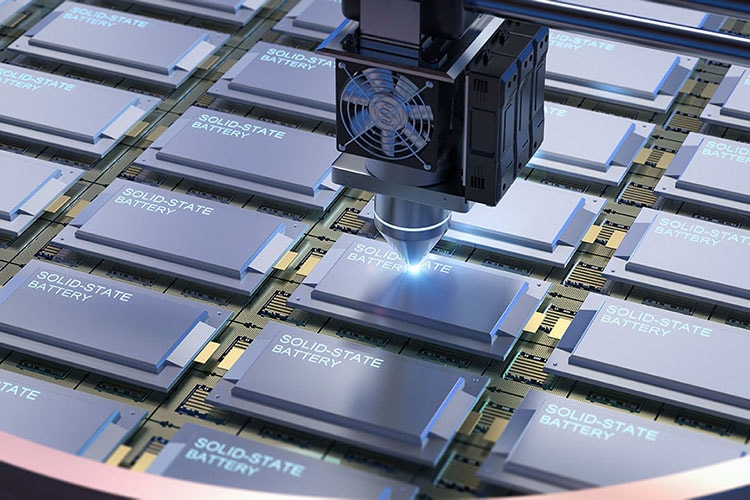
According to sources, Ruigu currently has stable production with a production line capacity of hundreds of tons, capable of producing four different lines of electrolytic products, and aims to reach a capacity of thousands of tons by 2028.
The roadmap for "installation on vehicles": expectations for 2027–2028, but researchers remain cautious.
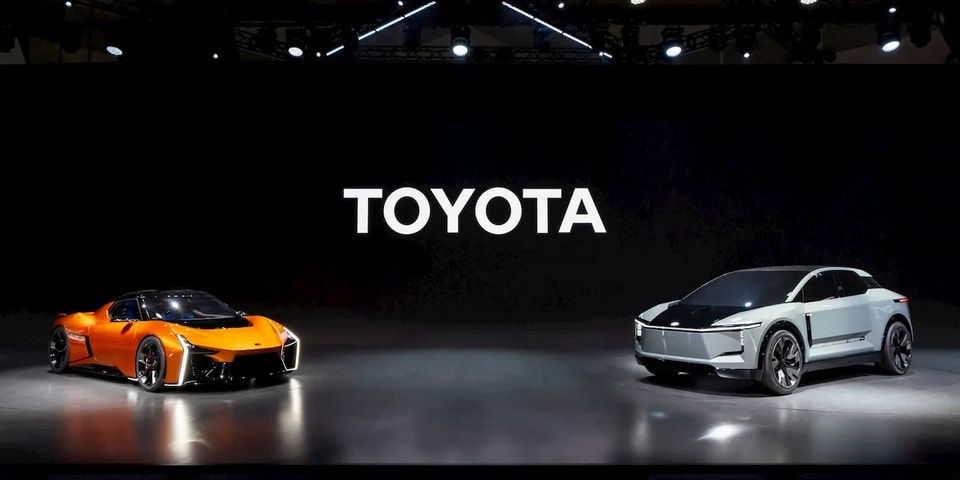
The source outlines an ambitious roadmap for the industry: Toyota plans to launch a solid-state battery electric vehicle in 2027, with a range of 1200 km and a 10-minute charge; BMW plans to launch a prototype in 2025, aiming for mass production before 2030; Changan Automobile plans to launch a functional vehicle in 2025, complete installation validation in 2026, and begin mass production in 2027.
However, a cautious stance was also expressed. Professor Ai Xinping from Wuhan University stated that, based on personal experience, he was not as optimistic as the 2027-2030 roadmap and maintained a cautious attitude. Professor Pham Tuan Linh also said it was difficult to give a specific timeframe; semi-solid-state batteries could be tested in some fields first, while large-scale installation of solid-state batteries requires further research.
For electric vehicle buyers, what to watch out for is not just the mileage, but also reliability and standards.
Mr. Zhou's story in Hangzhou reflects a common sentiment: "When solid-state batteries are mass-produced, I'll feel confident buying an electric car." But to move from expectation to a purchase decision, the key factor is that the batteries must undergo rigorous validation and prove reliability throughout their entire lifecycle.
In the short term, solid-state batteries may appear first in high-value-added segments, where performance and safety are prioritized over cost. In the long term, the speed of adoption will depend on material costs, the scalability of production, and the refinement of standards – as cautioned in the source: pilot production does not mean it is ready for the mass market.