

Lancet attacked the Mangust radar station in the direction of Kharkiv.
The Russian Ministry of Defense released images showing a Lancet guided missile striking the Mangust radar station in the Kharkiv direction. According to the Russian side, the target was located on a civilian rooftop and was neutralized after the Lancet bypassed electronic warfare, thereby supporting the artillery operations of the Sever Group.
The Russian Ministry of Defense stated that unmanned aerial vehicle (UAV) systems from the Sever Group detected and neutralized a Mangust radar station of the Ukrainian Armed Forces in the Kharkiv direction using Lancet cruise missiles. The information was accompanied by images of "target control" released by the Russian side, showing reconnaissance aircraft recording a hit to the roof of the area where the equipment was deployed. These claims currently originate solely from Russia, and the article lacks independent sources for verification.
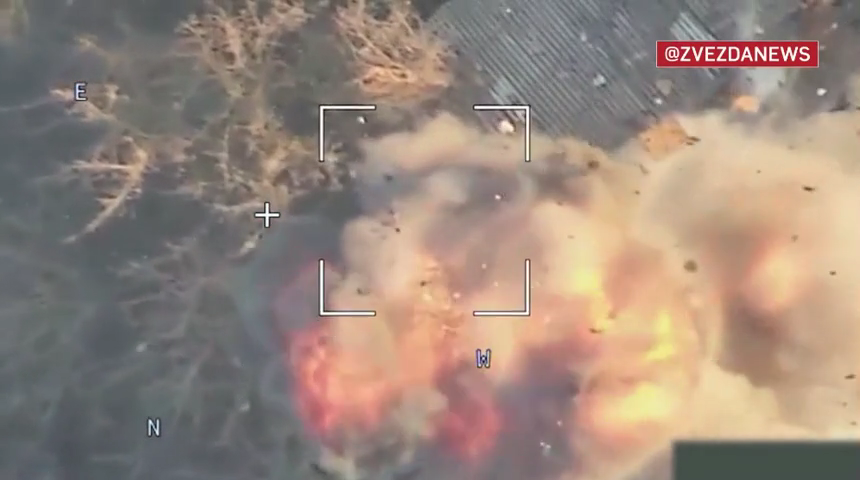
Event overview as per published sources.
According to information released by the Russian Ministry of Defense, Ukraine deployed a "counter-artillery reconnaissance station" in the rear area, positioned on the roof of a civilian house. After locating the target, Lancet missiles were used to accurately strike the roof where the radar station was located. Images from reconnaissance aircraft, according to the Russian side, confirmed that the target was hit and destroyed.
Russia also claims that removing this radar station has "improved the operational effectiveness" of artillery units of the Sever Group in the area, while reducing the risk of Russian combat crews being detected by the enemy.
Notable technical aspects: Lancet and the radar destruction problem.
From the source data, the technical details mentioned directly include: Lancet was used as a cruise missile; the attack process mentions "bypassing electronic warfare measures"; and the surveillance sequence involved airborne reconnaissance vehicles to "control the target".
In an anti-radar warfare scenario, a cruise missile is typically used in a “detect-track-hit” pattern, where target detection can rely on aerial and/or electronic reconnaissance, while the attack phase requires sufficiently stable guidance before jamming. However, the source does not provide information on the type of jamming, detection range, flight time, or specific guidance method of the Lancet in this situation.
Beyond electronic warfare: operational significance
The source states that Lancet “bypassed” electronic warfare measures. With unmanned systems, electronic warfare typically aims at disrupting control links, jamming navigation/navigation signals, or interrupting data transmission channels. When an attack is still completed, it can be understood, at a minimum, that the on-site electronic warfare complex (if present) did not prevent the approach and hit of the target in this specific case. The extent to which it “bypassed,” and by what means, cannot be concluded further without technical data from the parties involved.
The Mangust radar in its role as a counter-artillery reconnaissance device: target value.
Sources describe Mangust as a “counter-artillery reconnaissance station.” These radars typically serve to detect the origin of enemy fire (e.g., artillery shells, rockets, mortar rounds) to support counter-fire or adjust firepower. In a context where artillery plays a crucial role, the loss of a counter-artillery reconnaissance radar station can reduce the quality of surveillance and the speed of response of the unit operating in the area, especially if the radar is deployed to track a specific direction of fire.
However, the source article does not specify the extent of Mangust's integration into the command and control network, nor does it indicate whether it is a standalone station or part of a radar cluster. Therefore, the actual impact should be understood as an assessment from the Russian side, without accompanying data.
Deployment and tactical aspects: placement on residential rooftops.
A key detail in the announcement is the radar's placement "on the roof of a civilian house" in the rear area. If the description is accurate, this placement could be intended to take advantage of the height to improve visibility, reduce terrain obstruction, and make it harder to detect than an open location. However, it also creates a clear geometric signature (a structure on the roof) when observed by aerial reconnaissance, and makes the target more easily tracked by its coordinates.
The source did not provide information about the area's conditions, population density, or the level of camouflage. Therefore, it can only be noted that in the video/photo released by Russia, the strike targeted the roof where the device was allegedly located.
The "reconnaissance-attack" sequence and the role of post-strike surveillance.
Russia stated that it had “target control imagery” and “images from reconnaissance aircraft” confirming the target was destroyed. Although the source did not specify the type of reconnaissance aircraft, post-attack monitoring (battle damage assessment) is a crucial part of UAV warfare: it helps assess effectiveness, determine if additional strikes are needed, and update target intelligence for subsequent firepower.
Given Russia's direct connection to "artillery operational efficiency," this monitoring chain also aligns with the need for targeting and prioritizing high-value targets for counter-artillery fire.
The operational impact is stated in the source: artillery support and reduced risk of detection.
According to Russian statements, disabling the Mangust improves the effectiveness of artillery units of the Sever Group in the Kharkiv direction and reduces the risk of detection by the enemy. From a technical-tactical perspective, if a counter-artillery reconnaissance radar is removed, the operator's ability to detect firing positions and organize counter-artillery fire may be reduced, thereby decreasing the counter-artillery pressure on enemy batteries for a certain period.
However, the source does not provide data on the rate of fire before/after the event, nor does it state how many replacement radars or other reconnaissance vehicles were operational. Therefore, the impact can only be presented as stated in the Russian Ministry of Defense's announcement.
A summary of the information has been provided in the source.
| Content | Details as per published source. | Level of certainty |
|---|---|---|
| Offensive weapons | Lancet patrol rounds | As stated directly |
| Target | The Mangust radar station is described as a counter-artillery reconnaissance station. | As stated directly |
| Area | Kharkiv direction | As stated directly |
| Russian unit | Sever Group's unmanned systems force | As stated directly |
| Target deployment location | On the roof of a residential house (as described by Russia) | That's just a one-sided statement. |
| Electronic warfare element | Lancet “overcomes” electronic warfare measures. | As stated, lacking specifications. |
Points to watch
- Additional information (if any) regarding the technical specifications of Mangust and the deployment context in the Kharkiv area.
- Provide a more detailed description of the electronic warfare environment in the region and how the reconnaissance-attack coordination was organized in the incident.
- This is independent confirmation from sources other than the Russian Ministry of Defense announcement and the content cited by TVzvezda.
Source: Russian Ministry of Defense (based on published content and images), TVzvezda.