

Guaíba: The story of a replica of the Statue of Liberty in the storm.
In Guaíba, Rio Grande do Sul state, a replica of the Statue of Liberty, approximately 24 meters tall, collapsed at around 3 PM on December 15th when winds reached 88 km/h. There were no casualties, but the incident illustrates why tourists need to closely monitor weather warnings when exploring southern Brazil.
If you're planning a trip to southern Brazil, the city of Guaíba (Rio Grande do Sul state) recently had a memorable "stopover" story: a replica of the Statue of Liberty, approximately 24 meters tall, unexpectedly collapsed during a strong storm, thankfully without any casualties.
The incident occurred at approximately 3 PM (local time) on December 15th. According to authorities, the area experienced wind gusts of up to 88 km/h at that time; videos circulating on social media show the statue tilting sharply before collapsing into the parking lot, causing many vehicles to quickly leave the scene.
An unexpected landmark in the middle of the parking lot.
The statue is located in the parking lot of a Havan chain superstore and has been installed since 2020. Although not a classical structure or part of a dedicated tourist attraction, the presence of this tall replica once made the place a recognizable landmark when passing by.
During the storm, the impact caused the statue's head to shatter upon hitting the ground, while the approximately 11-meter-tall pedestal below remained intact. This detail illustrates the impact of strong winds and the risks faced by tall, outdoor structures in extreme weather conditions.
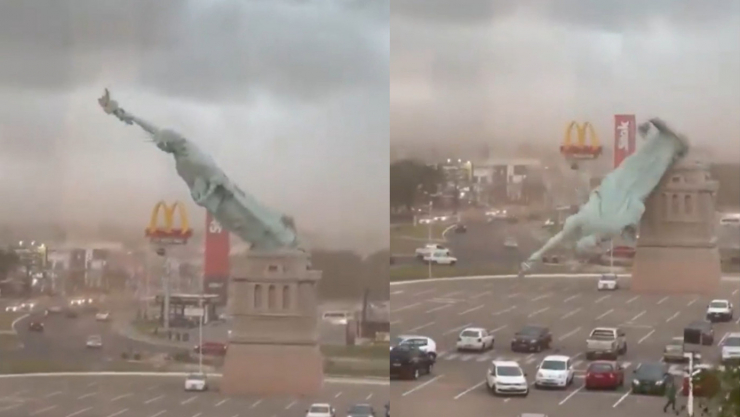
The storm didn't just knock down statues: it caused power outages, hailstorms, and flooding.
According to authorities, before the storm hit, Brazil's Civil Defense Agency issued a statewide warning of dangerous weather. The storm not only caused the statue to collapse but also inflicted other damage: widespread power outages, fallen trees, damaged roofs, and hail.
The prolonged heavy rain also caused flooding in some nearby areas such as the city of Lajeado. For tourists, this is a practical reminder that the "weather experience" is sometimes more than just a few raindrops on the street, but can be a series of disruptions directly affecting schedules, safety, and mobility.
The scene was cordoned off and cleared.
A representative from Havan stated that the area where the incident occurred was immediately sealed off to ensure the safety of employees and customers. Specialized teams were also dispatched to the scene to clear the debris and assess the safety of the area.
Mr. Marcelo Maranata, Mayor of Guaíba, confirmed that no casualties were reported. He praised the timely coordination between the civil defense forces and local units in securing the scene, mitigating the consequences, and assessing the damage caused by the storm in the area.
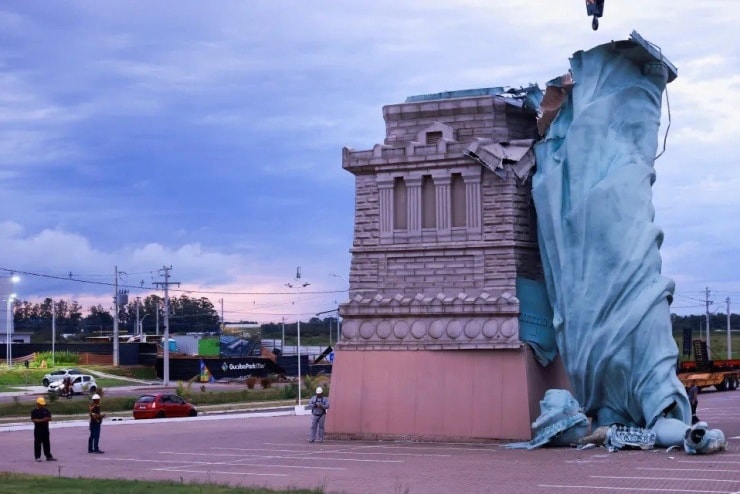
Practical information for travelers: travel and safety in extreme weather conditions.
Because the incident occurred in the parking lot and the area was immediately cordoned off, visitors should prioritize following on-site instructions, avoid approaching the barricades, and refrain from parking under tall structures during strong winds. In conditions with strong gusts of wind, such as the recorded 88 km/h, being outdoors near billboards, large trees, lampposts, or tall structures can be risky.
If you're traveling in bad weather, factor in extra time as fallen trees, power outages, and hail can slow traffic. When civil defense agencies issue severe weather warnings, the best way to "travel" is sometimes to pause: prioritize safe shelter, wait for updates, and only resume your journey when conditions permit.
Suggested experiences that will leave a lasting impression.
Guaíba in this story doesn't appear as a must-see on a list of tourist attractions, but as a moment that shows how nature can change the landscape in minutes. If your journey takes you through the Rio Grande do Sul, consider this a reminder to observe the city more closely: weather warnings, the rhythm of the response forces, and how quickly the local authorities sealed off and cleaned up to ensure community safety.
And if you enjoy documenting the side stories of your travels, sometimes ordinary "landmarks" like a retail store's parking lot become the most memorable glimpses: quiet, unpretentious, but enough to give you a deeper understanding of the place you're passing through.