

Su-75 Checkmate: Russian fighter jet project stuck in design phase.
American analysts believe the Su-75 Checkmate light stealth fighter is merely a media showpiece, unlikely to become a real aircraft, while others still consider the project plan promising.
Russia's Su-75 Checkmate light stealth fighter is being viewed by some Western analysts as a far-fetched project, stuck in the design phase and unlikely to attract customers, although some still consider the program's development plan promising. The debate surrounding the Su-75 highlights the gap between technological ambition and feasibility in the defense industry.
Skeptical assessment: Su-75 stuck in the design phase.
According to Andrew Latham, a commentator for the American National Security Journal (NSJ), the Su-75 Checkmate – a single-engine fighter jet touted as promising – is merely a Russian fantasy program and "impossible to realize." He argues that the project is stuck in the design phase, and the program's goals are only good in theory.
This commentator assessed that the Su-75 failed to attract potential foreign customers, questioning: "Why is no country interested in partnering with such an aircraft?" According to Latham, the lack of procurement commitments is a sign that the project's actual appeal is very low.
Modern fighter jet market: price is no longer the deciding factor.
According to Latham's analysis, in today's multipolar world, the procurement of advanced fighter jets is no longer a market dominated primarily by initial price. He argues that three key factors for countries to mitigate risks when choosing to purchase fighter jets are: long-term support, program autonomy, and industrial partnerships.
Long-term support relates to the ability to guarantee operation, maintenance, and upgrades over many years. Program autonomy refers to the degree of initiative of the purchasing country in using, improving, and controlling the system. Industrial partnerships reflect the involvement of domestic businesses in production, technology transfer, and supply chain security.
According to Latham, these factors are the deciding criteria for many customers, rather than just looking at the initial cost of the aircraft. From that perspective, he believes the Su-75 has not yet proven that the program can fully meet these requirements.
The focus of innovation in the Russian defense industry.
Latham argues that the real innovation in the Russian defense industry today lies in relatively affordable products, such as drones, electronic warfare systems, and unguided munitions. These weapons are suitable for attrition warfare, requiring large quantities and low cost per unit.
According to his assessment, Moscow is still "trying to cling to the old logic of attrition" – relentless attacks, weakening, and suppression. That approach focuses on firepower density and the number of attrition vehicles, rather than investing heavily in complex, expensive platforms like a large-scale next-generation fighter program.
Su-75: Prototype or media show?
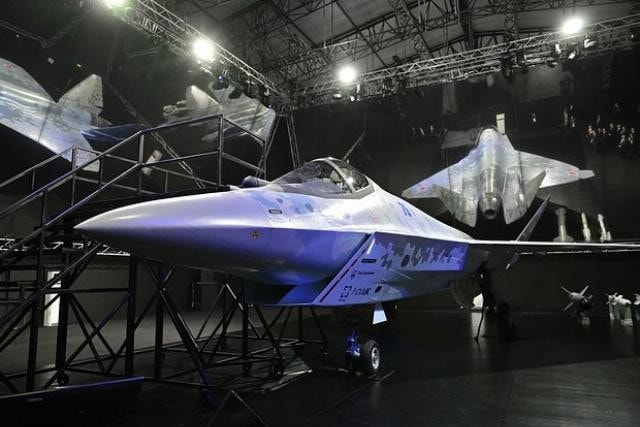
The critic quoted by the NSJ suggested that the Su-75 will likely continue to appear at air shows for years to come, but its "true role" has already been revealed. According to him, "this is not a prototype. This is a show." This implies that the Su-75 is now primarily used as a tool for technological and media demonstrations, rather than a sign that a development program is nearing production.
The source also noted that the Su-75 Checkmate, a lightweight fifth-generation fighter jet, is being seen as merely a marketing campaign, lacking concrete steps at the technical and industrial level such as flight testing, purchase contracts, or a clearly publicized production roadmap.
The gap between the plan and the reality of "miracle weapons"
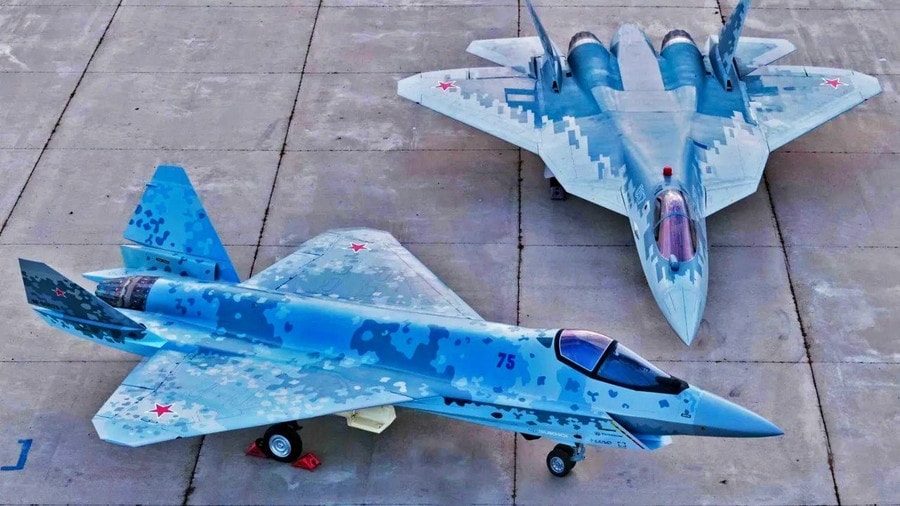
Prior to the Su-75, journalist Jack Buckby of 19FortyFive magazine noted that a series of "wonder weapons" promoted by Russia – including the T-14 Armata tank, the Su-57 stealth fighter, the MiG-35 medium fighter, and the PAK DA strategic bomber – were experiencing problems with discrepancies between planned and actual implementation.
According to Buckby, this gap is evident in the fact that programs are presented with very ambitious goals, but the progress of deployment and the level of actual presence do not match the initial statements. His inclusion of the Su-75 in the same context as these projects reflects the skepticism of some observers regarding Russia's ability to simultaneously realize multiple next-generation weapons programs.
Contrasting viewpoint: The Su-75 is still considered very promising.
However, not all Western analysts are pessimistic about the Su-75. In November, Joseph Trevithick, a commentator for The War Zone (US), remarked that the Su-75 project "looks promising." He argued that the blueprint for this fighter jet, released by the CEO of the state-owned technology corporation Rostec, Sergei Chemezov, "is generally accurate."
Trevithick's assessment suggests that there is still a belief that the Su-75 has a sound conceptual foundation and, if implemented as planned, the program could offer a competitive option in the light stealth fighter market. However, specific technical details regarding the implementation roadmap, production capacity, or accompanying support package have not been fully disclosed by the manufacturer.
Summary: Su-75: Between ambition and feasibility
Analytical sources indicate that the debate surrounding the Su-75 Checkmate revolves around three main points: the project is still in the design phase and lacks concrete procurement commitments; the modern fighter market demands support packages, autonomy, and close industrial partnerships; and Russia is simultaneously pursuing multiple ambitious weapons programs.
Skeptics have highlighted the risk that the Su-75 might remain merely a demonstration model, serving only for media purposes. Conversely, positive opinions consider Rostec's plan reasonable, arguing that if implemented according to schedule, the Su-75 could still become a real product.
From a technical-industrial perspective, the future of the Su-75 will depend on whether the program can transition from a "demonstration" to a flightable prototype, attract customers with long-term support packages, and achieve a sufficiently appealing level of industrial involvement. Until concrete progress is announced, the Su-75 Checkmate will remain a subject of debate among military analysts.