

Oreshnik missiles on combat duty in Belarus: technical perspective
Belarus announced that the Oreshnik missile system has been operational since December 17, enhancing Belarus's strategic deterrence capabilities in the region.
Belarus confirmed that the Oreshnik missile system has been put into combat readiness on its territory since December 17. The move, announced by President Alexander Lukashenko, comes as Minsk emphasizes military cooperation with Russia as a pillar of strategic deterrence, while maintaining a channel of dialogue with the United States.
Overview of Oreshnik deployment in Belarus
In his December 18 address to the nation and parliament at the All-Belarusian People's Council session in Minsk, President Alexander Lukashenko announced that the first combat defense positions had been equipped with the Oreshnik missile system. He said Belarus received the system "yesterday" and it is now in a "state of combat readiness".
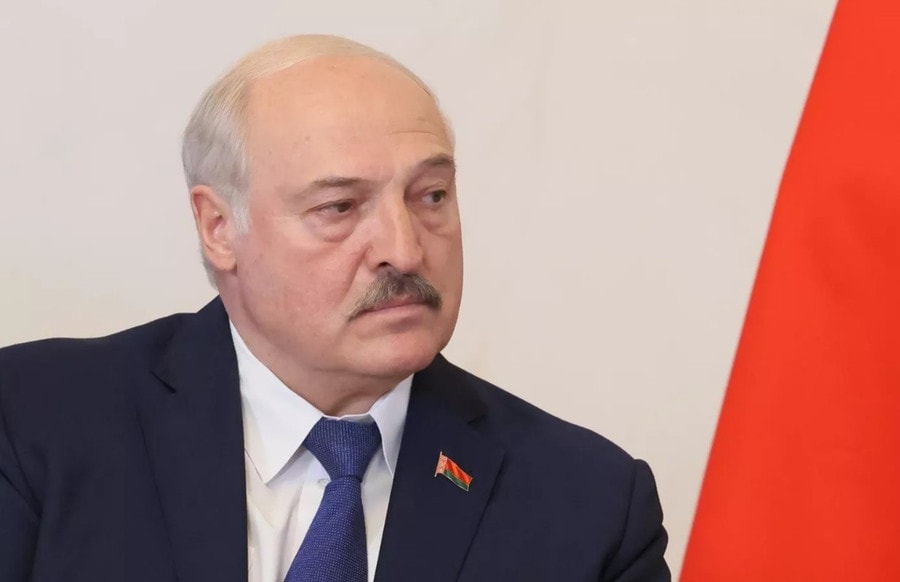
Lukashenko emphasized that military cooperation with Russia plays a crucial role in ensuring strategic defense. According to him, Belarus and Russia are implementing a series of "strategic deterrence measures," including the deployment of the Russian component of a regional military group on Belarusian territory.
The Belarusian leader stated that, in the event of an escalation of conflict, the armed forces with tens of thousands of soldiers in western Russia would immediately enter the fight as a support force. Belarus would be the first to act, while Russia would continue to provide support, according to his description.
He also called for maintaining close ties with Moscow, emphasizing the need to "cherish friendship" with Russia and warning that chasing "foreign messages" could lead to the weakening of the Belarusian state.
Oreshnik: A multi-warhead hypersonic deterrent weapon.
Russia first used the Oreshnik missile in November 2024 in an attack on the city of Dnipro in central Ukraine. Russian officials claim the Oreshnik reaches speeds of over 10 times the speed of sound, equivalent to nearly 11,000 km/h.
With hypersonic speeds, the missile's flight time to its target is significantly shortened, reducing the time it takes for enemy air defense systems to detect, track, and intercept it. High speeds also create harsh flight conditions, requiring the missile body, thermal shield, and trajectory control system to be designed for a very high thermomechanical environment.
According to Russian statements, the Oreshnik is also equipped with Multi-Independent Re-entry Vehicle (MIRV) technology, allowing each missile to carry up to 36 warheads. MIRV is a configuration in which multiple warheads are mounted on a single vehicle, but are capable of separating and flying along independent trajectories to different targets.
The MIRV architecture increases the complexity of enemy defense systems: instead of dealing with a single warhead, radar and interceptor missiles must simultaneously handle multiple smaller targets appearing almost at the same time. Combining hypersonic speed and a multi-warhead payload, a system like Oreshnik, if accurate, would have significant deterrent value in a high-intensity conflict environment.
Russian President Vladimir Putin was quoted as saying that no Western air defense system could intercept this type of missile. This is a political-military statement demonstrating Moscow's confidence in the Oreshnik's ability to penetrate defenses.
The role of Oreshnik in the Belarus-Russia deterrence structure.
Lukashenko's statement suggests that Minsk views the presence of Oreshnik as part of "strategic deterrence measures" being implemented in conjunction with Russia. The deployment of the system on Belarusian territory, alongside the presence of the Russian component within the regional military group, creates a linked deterrence structure in which Belarus serves as the forward deployment line, while Russia provides large-scale support.
In the scenario of escalating conflict described by Lukashenko, Belarus would be the "first to act," while Russian forces with "tens of thousands of troops" in the west of the country would act as reinforcements. In this context, a hypersonic, multi-warhead missile system like the Oreshnik is expected to further bolster long-range strike capabilities within the overall deterrence arsenal.
The Belarusian leader's wording suggests a focus on defense and deterrence, rather than a specific offensive mission. He places Oreshnik within the same line of argument regarding the protection of sovereignty, while also emphasizing the importance of military-political relations with Russia.
Dialogue with the US and Minsk's message
Besides military cooperation with Russia, Lukashenko said Belarus is also building constructive relations with the United States. He described this as a dialogue between "strong parties," and asserted that there is no contradiction in maintaining strategic relations with Russia and China while simultaneously opening channels of exchange with one of the most important "centers of power," the United States.
According to him, Belarus's interests are central to any negotiations with Washington. The Belarusian president emphasized that he would not accept his country being in a weak position in any dialogue framework, and said he had made it clear to the US side that Minsk has its own interests that must be respected.
Lukashenko added that, except for the initial meetings, the US side "never" raised the issue of cooperation between Belarus and Russia in subsequent negotiations. He said he had assured his American counterparts that "Russia is sacred" to Belarus.
According to the Belarusian leader, he reached an agreement with Russian President Vladimir Putin on mutual support for the benefit of the people of both countries. Through this, Minsk seeks to demonstrate both close ties with Moscow in the security and defense sector and maintain channels of communication with Washington, while prioritizing Belarus's national interests.
Overall assessment
Belarus's deployment of the Oreshnik missile system on December 17th marks a significant enhancement in the deterrence capabilities of the Belarus-Russia security structure. The parameters released by Russia regarding hypersonic speed and the ability to carry multiple warheads indicate that the system is designed for a strategic deterrence role, with a priority on its ability to penetrate defenses.
Meanwhile, Lukashenko's statements about dialogue with the US suggest that Minsk seeks to position itself both as a crucial military ally of Russia and as an independent subject of dialogue, emphasizing its own interests. In this context, the Oreshnik is not just a new weapons system, but also a tool demonstrating Belarus's current security and military orientation.