

The Volga-Don Canal faces the risk of Tomahawk missile attacks.
An analysis by the Hudson Institute suggests using long-range missiles such as the Tomahawk, Storm Shadow, and ATACMS to attack the Volga-Don canal and Russian strategic infrastructure, prompting Moscow to issue a tactical nuclear deterrence warning.
A new report by the Hudson Institute in Washington suggests that the West could use long-range cruise missiles to strike strategic infrastructure targets in Russia, with the Volga-Don canal described as a crucial link that could cripple Moscow's military logistics. Russia views these scenarios as a serious escalation risk and warns of the possibility of using tactical nuclear weapons if attacked.
The Volga-Don Canal in military calculations
According to the Hudson Institute's analysis, the proposal aims to "break the stalemate" on the Ukrainian battlefield by expanding the scope of attack into Russian territory. Among the targets specifically mentioned, the Volga-Don canal is considered one of the most crucial points.
The Volga-Don Canal connects two strategic waterways, the Volga and Don rivers, allowing Russia to transport weapons, warships, and goods between the Caspian Sea and the Black Sea. The report estimates that approximately 15% of Russia's domestic shipping traffic passes through this route, carrying more than 12 million tons of goods annually. If dams or sluice gates along the route are destroyed, the entire transport corridor could be paralyzed for months.
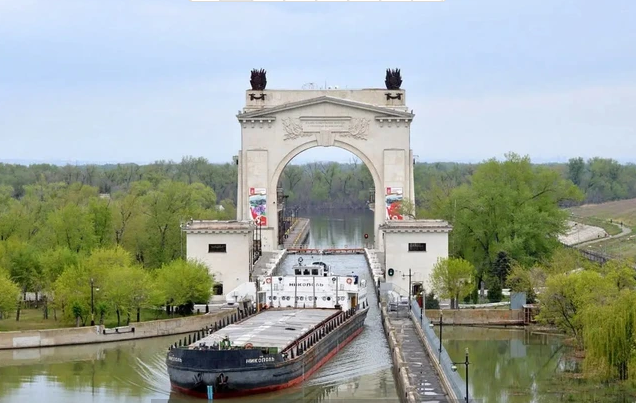
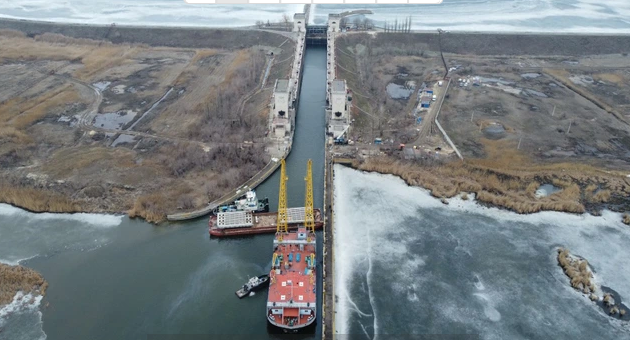
Analysts at the Hudson Institute, including Luke Coffey and Can Kasapoglu, specifically identified perceived vulnerabilities along this route, such as sluice gate No. 1 near Volgograd, sluice gate No. 13 near Kalach-na-Donu, and the cluster of sluice gates No. 8-9 in the highlands. According to their assessment, missile systems such as Storm Shadow, ATACMS, or Tomahawk could be used to precisely strike these locations, thereby completely severing the waterway between the Caspian Sea and the Black Sea.
Logistical, economic impacts and civil risks
The Russian side estimates that, in the event of an attack on the Volga-Don canal, direct losses to infrastructure could reach 15 billion rubles. In addition, indirect losses are estimated at around 50 billion rubles per quarter due to shipping disruptions and supply chain disruptions.
Economists quoted suggest that such damage could be enough to push inflation in Russia up by 2-3% annually. This indicates that the impact of a strike on the Volga-Don is not only military, but also puts significant pressure on domestic transport capacity and economic stability.
Besides economic losses, the Russian side emphasized the risk of humanitarian and environmental catastrophe. Destroying dams or irrigation structures along the route could cause widespread flooding, submerging hundreds of square kilometers of farmland, depriving many communities of water, and forcing thousands to evacuate. These factors make any attack on the Volga-Don canal highly risky in terms of its long-term consequences.
Russia's nuclear deterrence and enhanced defenses.
In response to increasingly bold proposals from some analytical groups in the US, many Russian military experts, quoted by the country's media, warned that any attack on strategic infrastructure on Russian territory could be considered a direct act of aggression. According to them, this could become grounds for Russia to consider using tactical nuclear weapons as a deterrent.
According to Russian media, the country's Ministry of Defense is placing air defense systems around Volgograd and the Rostov region on a higher state of readiness to counter the threat of long-range missile attacks. At the same time, options for what it calls "flexible nuclear deterrence" are being discussed internally to prepare for a worst-case scenario.
Russian analysts believe that if attacks like those described in the Hudson Institute report were actually carried out, the conflict would extend beyond the fighting in Ukraine and move closer to a direct confrontation between Russia and NATO. In this context, scenarios involving tactical nuclear missile strikes targeting "decision-making centers" have been repeatedly mentioned by Russia as a warning.
Other strategic objectives in the Hudson Institute report
Besides the Volga-Don canal, the Hudson Institute report also lists several targets considered to have military and economic significance for Russia. Among these is the Nizhnekamsk thermal power plant in Tatarstan, which is believed to supply electricity to a military UAV production facility.
The report also mentions strategic bridges at Chonhar and Genichesk, which connect Crimea with the Kherson region, along with several Russian naval bases in Abkhazia and the Far East. According to the analysis's logic, attacking these key energy lines and bridges could significantly impair Russia's military logistical capabilities and operational sustainability.
Escalation of proxy wars and the concept of "soft total force"
Observers in Moscow believe that the Hudson Institute's proposal is part of a deliberate escalation strategy that Washington is pursuing in the conflict. The fact that some Western countries are allowing Kyiv to use long-range weapons, along with speculative reports and articles in the American media, is seen as a move to gauge Russia's reaction and prepare public opinion for further steps.
A notable point in the report is the proposal to attack civilian targets of economic value, such as power plants or bridges. This approach is described as pushing the war into a "soft total force" phase, where the goal is not only to control territory, but also to break the will and resilience of the enemy by putting pressure on their socio-economic infrastructure.
However, according to warnings from some experts, a strategy of attacking civilian infrastructure or transport routes linked to Iran and China could backfire, drawing anti-American forces closer together. At the same time, using Western weapons to strike territory that Russia considers its own would further clarify NATO's role in the conflict.
Moscow has repeatedly stated that attacks by Western weapons on Russian territory would be crossing a "red line." If scenarios involving attacks on the Volga-Don canal or the Nizhnekamsk power plant were to materialize, Russian analysts fear the world could enter a new cycle of confrontation, considered even more dangerous than the Cold War era.