

Russia showcases Yars missiles, US uses lasers to counter drones.
Russia deploys the RS-24 Yars mobile missile system for exercises in Siberia, the US receives the LOCUST laser system mounted on the JLTV to counter UAVs, while the UK's Type 26 frigate HMS Glasgow surpasses a key technical milestone before sea trials.
In the December 20th arms news, three notable developments include: Russia deploying mobile RS-24 Yars intercontinental ballistic missile launchers in Siberia for a planned exercise; the US Army receiving LOCUST high-energy laser systems mounted on JLTV tactical vehicles; and the British anti-submarine frigate HMS Glasgow reaching a key technical milestone ahead of its sea trials.
RS-24 Yars: Russia is practicing its survivability and nuclear counterattack capabilities.
According to the TASS news agency and the Russian Ministry of Defense, mobile RS-24 Yars missile launchers have been deployed to combat patrols in Siberia as part of exercises by the Strategic Missile Forces. This move demonstrates Moscow's continued high focus on nuclear survivability and counterattack capabilities, alongside its military operation in Ukraine.
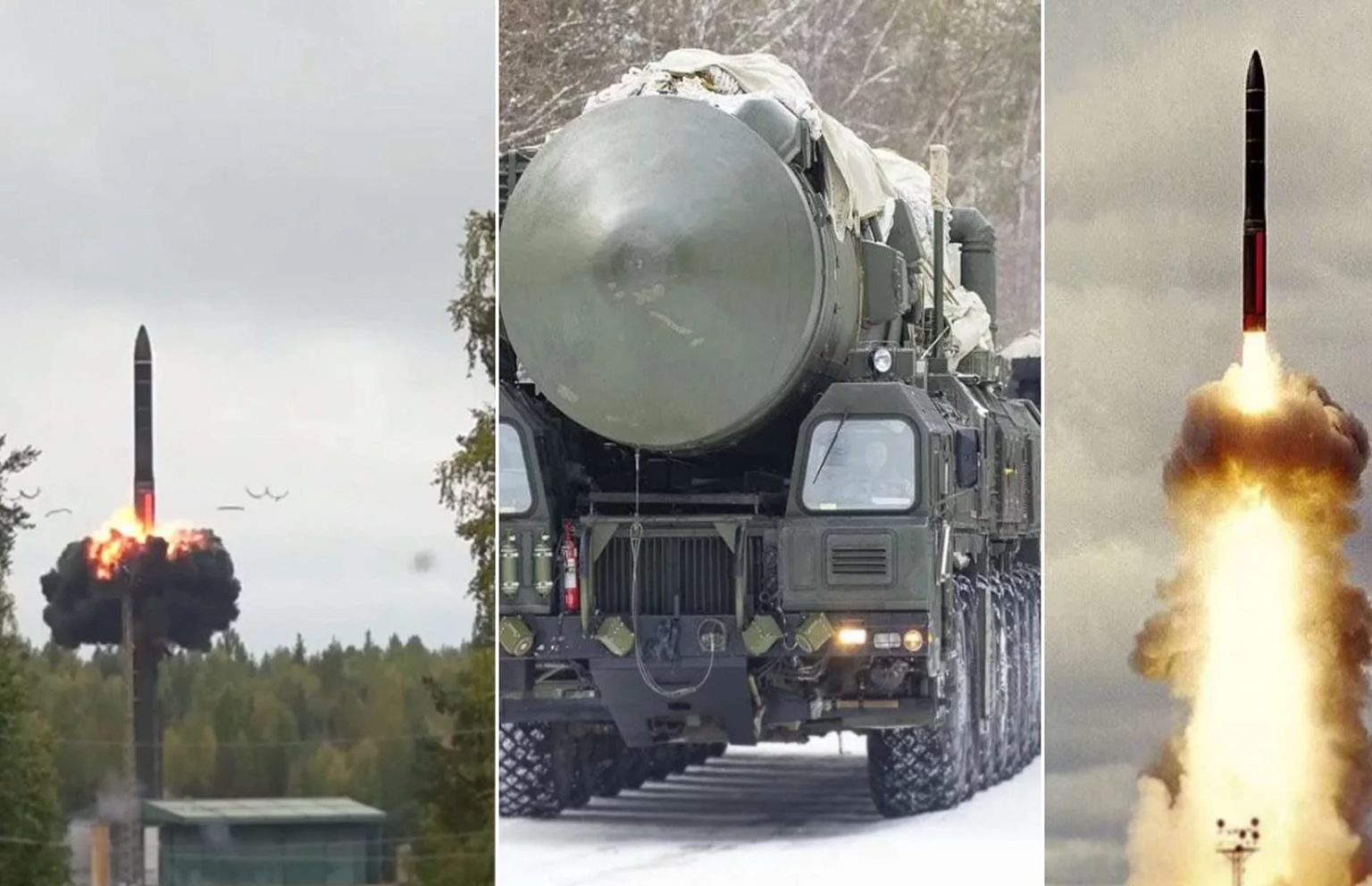
The Russian Ministry of Defense stated that the exercises included night marches, rapid maneuvers between field positions, dispersal of missile battalion formations, and the use of fixed-wing Eleron reconnaissance UAVs to monitor routes and protect deployment areas. These were direct tests of stealth capabilities, continuous movement, and multi-layered security – vital elements for mobile nuclear missile units.
With mobile-launched ICBM systems, survivability largely depends on avoiding reconnaissance from UAVs, ground-based systems, and satellites. Integrating Eleron UAVs provides units with an advance reconnaissance layer, enabling early detection of ambushes or unusual activity, reducing the risk of being tracked along patrol routes.
The RS-24 Yars is a three-stage, solid-fuel intercontinental ballistic missile that can be launched from fixed silos or mobile launchers. According to cited open-source assessments, the Yars has a range of approximately 10,500 km, carries multiple independently targetable reentry vehicles (MIRVs), and incorporates missile defense penetration measures. The launcher typically uses a heavy-duty MAZ or MZKT 79221 chassis with high mobility, allowing for deployment across extensive road networks and complex terrain.
Siberia was chosen not only for its symbolic significance, but also for its practical strategic value: its vast territory, dense forests, harsh climate, and lower reconnaissance density compared to western Russia made surveillance and preemptive strikes more difficult. This region was already a regular deployment site for numerous Yars units, playing a central role in Russia's nuclear counterattack strategy.
Even as Russia concentrates its resources on the Ukrainian battlefield, its nuclear forces operate within a relatively separate system, with their own training cycles, budgets, and strategic priorities. The exercises in Siberia do not signal an immediate escalation, but underscore that Russia's nuclear deterrence capabilities remain high, impacting the strategic calculations of NATO and potential adversaries.
Laser Locust on JLTV: US strengthens defenses against low-cost UAVs.
The U.S. Army has officially received the first LOCUST high-energy laser systems mounted on JLTV light tactical vehicles, marking the transition from the testing phase to the actual deployment of directed energy weapons.
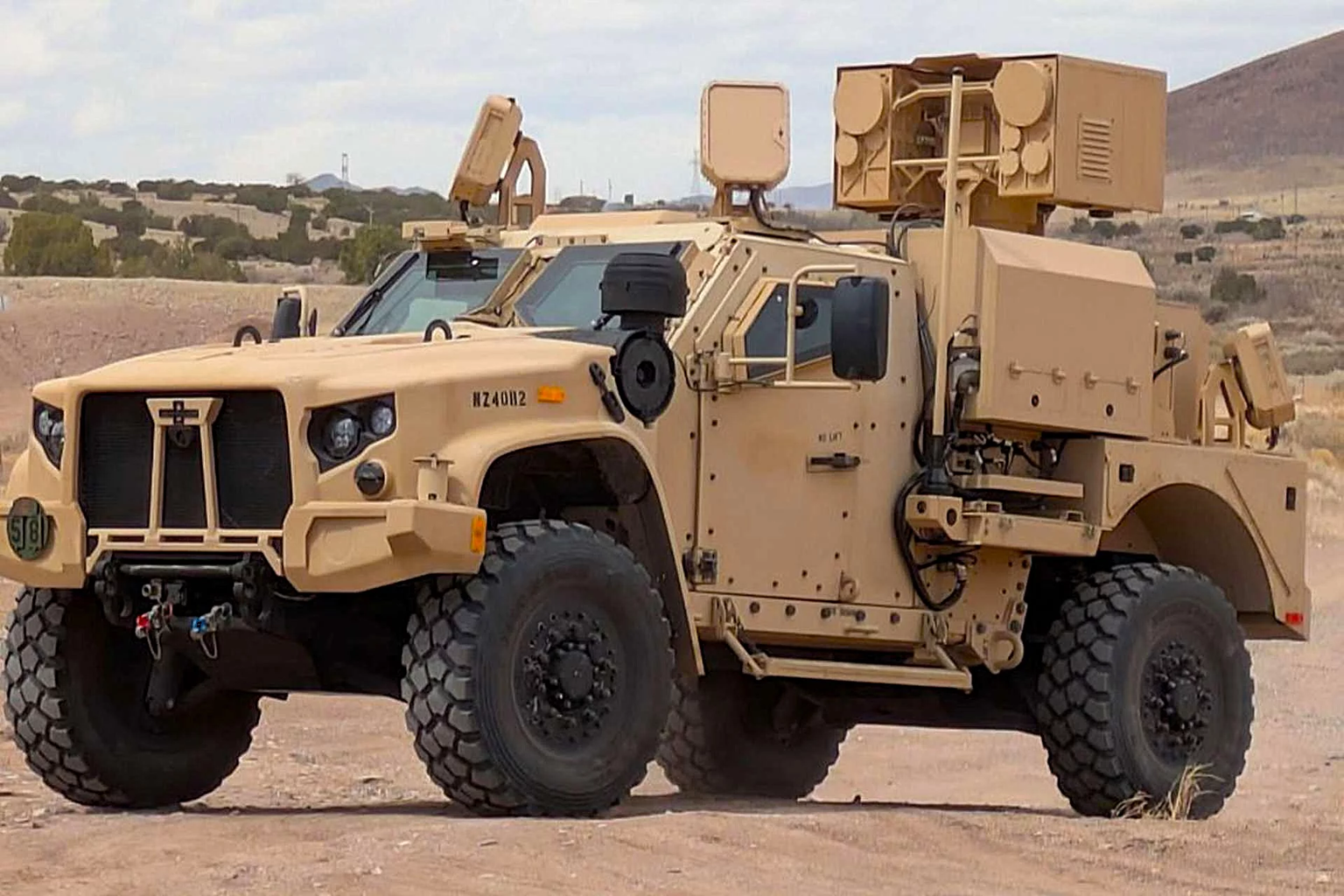
On December 18, AeroVironment announced the delivery of two LOCUST laser systems based on the JLTV platform to the U.S. Army under the AMP-HEL program. These systems were received by the U.S. Army's Rapid Capabilities and Critical Technologies Office (RCCTO), currently under Portfolio Acquisition Executive Fires. This marks the first time LOCUST has been deployed on the JLTV chassis – a key tactical vehicle widely used in mobile units.
In a battlefield saturated with inexpensive UAVs and suicide missiles from Ukraine to the Middle East, integrating short-range air defense lasers onto mobile platforms is seen as a way to fill a gap in current defenses. Instead of relying entirely on expensive anti-aircraft missiles or artillery, lasers allow for the interception of UAVs at a very low cost per shot and with virtually no collateral damage.
The AMP-HEL version on the JLTV uses a LOCUST laser with a power of approximately 20 kW, combined with a beam steering system with a larger aperture than the previous configuration, increasing target destruction efficiency. The modular architecture allows the system to be integrated onto various platforms and connected to the existing US Army command and control network, enabling the laser to track mobile units instead of just protecting fixed positions.
LOCUST is not entirely new technology. AeroVironment delivered an earlier version to the US military in 2022 as part of the P-HEL program. According to the company, these systems have been deployed outside the US for over three years, maintaining a high readiness rate and participating in combat operations against UAVs under real combat conditions. This experience has been directly transferred to the AMP-HEL configuration.
From a tactical perspective, equipping the JLTV with a laser provides frontline commanders with a close-range air defense system whose "ammunition magazine" relies almost entirely on electrical power rather than limited ammunition. The system can be operated by a single person with a controller-like interface, reducing the need for complex training and supporting rapid deployment to combat units.
HMS Glasgow and Type 26: Upgrading Britain's anti-submarine warfare capabilities.
The Royal Navy has just reached a significant milestone in its next-generation flagship program with the successful activation of the first diesel generator on board the frigate HMS Glasgow. An announcement on December 18th stated that this marks the first time electricity has officially flowed through the entire hull of the Type 26 vessel, signifying a transition from structural assembly to system integration.
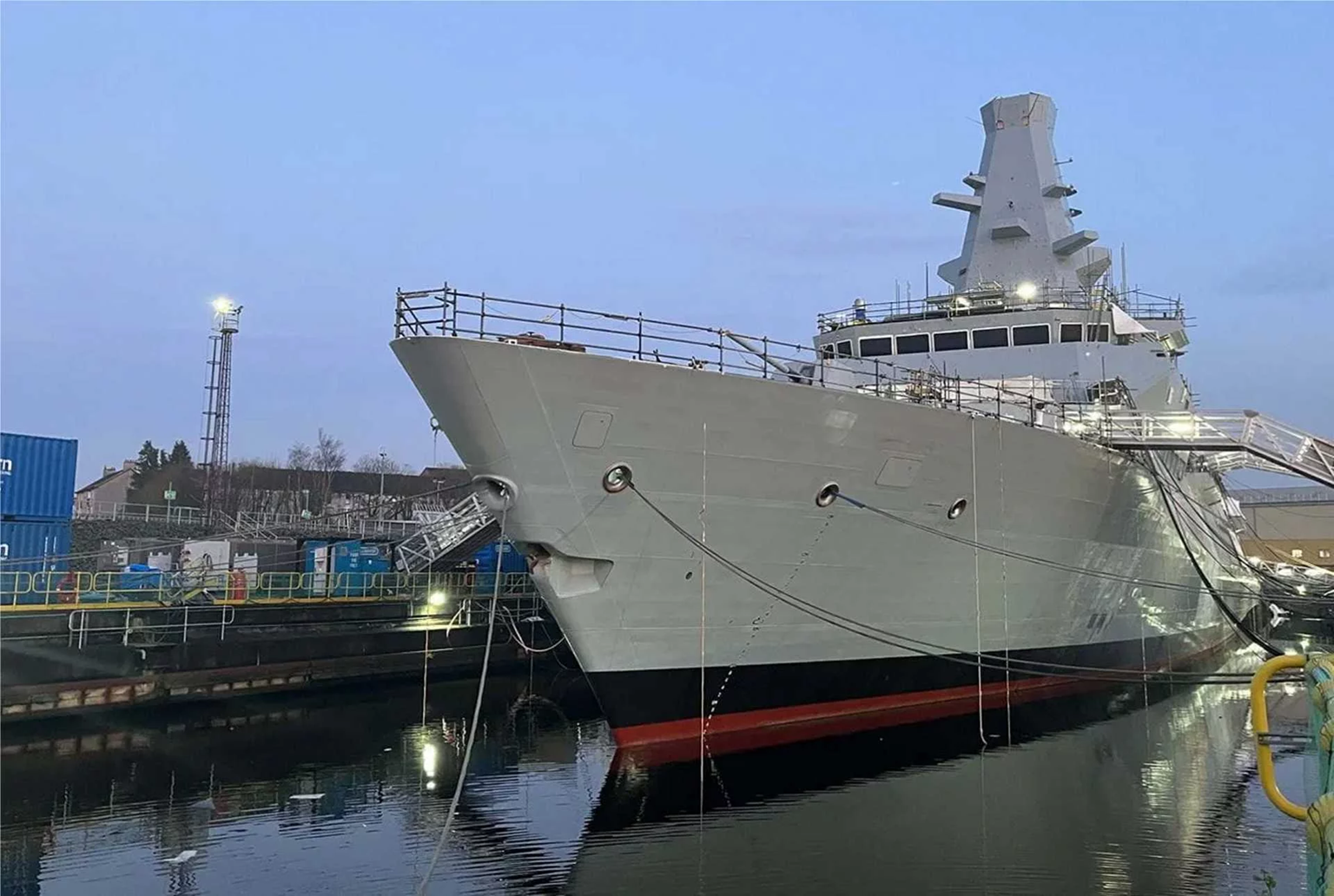
According to the Royal Navy, engineers at BAE Systems' Scotstoun shipyard on the River Clyde have successfully commissioned one of the four MTU generators installed on HMS Glasgow. This serves as the basis for testing key systems such as propulsion, electrical networks, sensors, and combat systems, bringing the ship closer to sea trials.
The Type 26, or Global Combat Ship, is one of Britain's largest shipbuilding programs in decades. Managed by the UK Ministry of Defence and undertaken by BAE Systems, the program involves eight anti-submarine frigates built in Glasgow, with a total budget of nearly £8 billion (US$10.6 billion). The Type 26's role is to maintain and enhance maritime combat capabilities, particularly in anti-submarine warfare.
Designed to replace the Type 23 class, which had been in service since the early 1990s, each Type 26 submarine has a displacement of approximately 8,000 tons and is nearly 150 meters long. The design focuses on acoustic signature reduction, maneuverability, and effectiveness in anti-submarine warfare – an area increasingly important as submarine activity increases across a wider range of seas.
The Type 26's technical highlight is its integrated electric propulsion system, combining four MTU diesel generators with Rolls-Royce MT30 gas turbines. This configuration allows the vessel to operate smoothly at cruising speeds, reducing underwater noise while still maintaining rapid acceleration. The electric motors significantly reduce the acoustic signature, supporting anti-submarine warfare missions.
In terms of weaponry, the Type 26 is equipped with a 127mm naval gun, Sea Ceptor anti-aircraft missiles, and a flexible vertical launch system capable of integrating cruise missiles or anti-ship weapons in the future. A modular mission bay and helicopter hangar allow for the deployment of UAVs, unmanned underwater vehicles, or for performing humanitarian support missions when needed.
The successful activation of the power generation system on HMS Glasgow indicates that the Type 26 program is entering a crucial phase. The ship is expected to undergo sea trials in 2026, paving the way for a new class of anti-submarine frigates that will play a core role in the UK's naval strategy for decades to come.
Summary table of weapon systems
| System | Type | Key specifications by source | prominent role |
|---|---|---|---|
| RS-24 Yars | Intercontinental ballistic missiles (ICBMs) | Solid fuel, three-stage; range approximately 10,500 km; carries multiple MIRV warheads; deployed from fixed silos or mobile launchers. | Strategic nuclear deterrence and counterattack, emphasizing mobility and survivability. |
| LOCUST on JLTV (AMP-HEL) | High-energy laser system on tactical vehicles | Approximately 20 kW power output; large aperture beam steering; modular architecture; integration with the US Army command and control network. | Close-range defense against UAVs and other threats, affordable and mobile, deployed in frontline units. |
| HMS Glasgow (Type 26) | Anti-submarine frigate | Displacement of approximately 8,000 tons; nearly 150m long; electric propulsion integrated with MTU generators and Rolls-Royce MT30 gas turbines; equipped with a 127mm cannon, Sea Ceptor missiles, and a vertical launch system. | A key anti-submarine platform, enhancing the UK's naval combat capabilities. |