

Belarus sets Oreshnik ceiling, NATO and Indonesia increase military presence.
Belarus has unveiled its first lineup of 10 Oreshnik hypersonic missile systems, while Denmark is purchasing AMRAAM ER and Indonesia is receiving PPA vessels to upgrade its defenses.
Three notable arms developments on December 24 included: Belarus publicly announcing for the first time the ceiling number of Russian-developed Oreshnik hypersonic ballistic missiles; Denmark receiving US approval to purchase AMRAAM ER missiles to upgrade its air defense; and Indonesia receiving its second PPA-class multi-purpose combat vessel, bolstering its offshore naval presence.
Belarus sets a ceiling on the number of Oreshniks for the first time.
On December 22, President Aleksandr Lukashenko confirmed that Belarus possesses “no more than ten” Oreshnik hypersonic ballistic missile systems. According to the BelTA news agency, this statement in St. Petersburg marks the first time Minsk has set a specific quantitative limit on its missile capabilities, which are being closely monitored by NATO and European missile defense agencies.
The release of the ceiling figure shifts the message from previously vague statements to concrete data, clarifying the scale of Belarus's role in acquiring and deploying Russian-developed missile capabilities. This information also provides a basis for European and NATO military planners to assess the extent of Belarus's contribution to the regional deterrence structure.

System specifications and structure
The Oreshnik is presented as a medium-range ballistic missile system, touted as capable of flying at hypersonic speeds and posing significant difficulties for interception. According to the Russian side, the missile can reach speeds exceeding 10 times the speed of sound, equivalent to approximately 11,000 km/h, with the capability to carry conventional or nuclear warheads depending on the configuration.
In addition to its speed, the Oreshnik is also believed to be equipped with multiple independently targetable re-entry vehicle (MIRV) technology, allowing each missile to carry up to 36 warheads. This increases the complexity of enemy missile defense systems, which must simultaneously deal with multiple targets flying at very high speeds.
The concept of "a system" that Lukashenko referred to most likely includes missiles, mobile launchers, command and control systems, and logistical support components. This structure allows for deployment, mobility, and maintaining combat readiness in the field, not simply a number of individual missiles.
Operational implications and defensive challenges
Last year, Lukashenko said Belarus could receive “ten systems in the immediate future,” or even more if Russia so desired, but later clarified that this was a joke, emphasizing the high cost and limitations in production capacity. Even though the number of systems isn't large, the effective deployment of several medium-range launchers could still significantly impact the operational landscape in the region.
The Oreshnik's intermediate range allows it to cover large areas of Europe, while its short warning time and mobility put pressure on existing defense networks. Another challenge lies in the difficulty of early identification of the warhead type (conventional or nuclear), as this information is likely only determined in the final stages of its trajectory, complicating the response decision-making process.
Ukrainian Army Commander Oleksandr Syrsky acknowledged in January that very few air defense systems in the world are considered capable of countering the Oreshnik, and Ukraine currently does not possess such systems. This assessment reflects the level of technological challenge for air defense systems, although no further technical details were provided.
Denmark upgrades its air defense with AMRAAM ER.
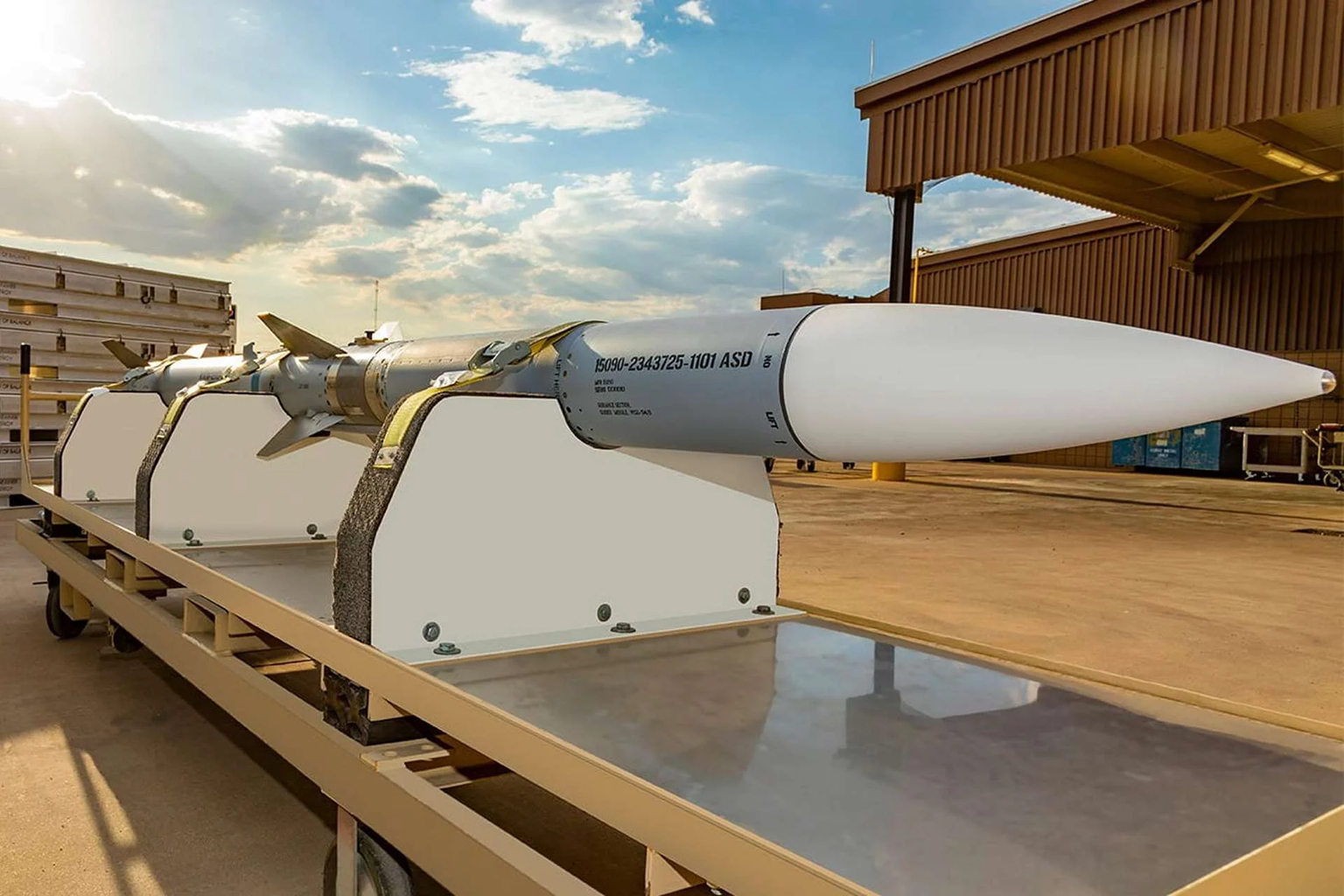
The U.S. Defense Security Cooperation Agency (DSCA) announced on December 22nd that the U.S. State Department has approved Denmark's Foreign Military Sales (FMS) proposal, which includes AMRAAM ER missiles and accompanying support items, with an estimated total value of up to $951 million. The goal is to enhance Denmark's air defense and missile defense capabilities, while also strengthening interoperability within NATO amidst increasing security pressures in Northern Europe.
According to the proposal, Denmark will purchase 236 AMRAAM ER missiles along with 5 AIM-120C-8 guidance systems, including loading training equipment, containers, support equipment, spare parts, consumables, repair and return services, weapon software, classified software support, and technical documentation. The DSCA emphasized that the $951 million figure is an estimated ceiling; the final cost will depend on detailed requirements, approved budget, and the formal sales agreement. The main contractor is RTX Corporation, based in Arlington, Virginia.
Characteristics and role in the air defense network
Technically, the AMRAAM ER is presented as a ground-launched missile with a range of 40-50 km, capable of intercepting targets at greater distances and higher altitudes than its predecessor thanks to its larger engine and optimized flight control algorithm. The use of the AIM-120C-8 guidance system maintains the legacy of the AMRAAM family, which is described as a radar-guided missile, operating in all weather conditions and employing a "fire and forget" principle.
The new AMRAAM ER configuration combines American guidance technology with engines manufactured by Nammo and control systems from Kongsberg Defence & Aerospace, aligning with the trend of defense industry cooperation between the US and its allies. Denmark has selected the NASAMS air defense system developed by Kongsberg, which can utilize the AMRAAM ER to expand its protection area and create a flexible medium-range air defense layer.
| Key specifications | AMRAAM ER (according to DSCA) |
|---|---|
| Nominal range | 40 - 50km |
| Launch platform | Fighter aircraft, ground-based air defense units |
| Navigation mechanism | Radar guidance, the "fire and forget" principle. |
The DSCA assessed that the deal would enhance Denmark's ability to counter current and future threats, while strengthening its ability to coordinate operations with the US and NATO without significantly altering the regional military balance. The selection of a missile suitable for both air force and ground-based air defense forces allows Copenhagen to optimize ammunition logistics and increase flexibility in resource allocation.
Indonesia receives second PPA vessel, bolstering maritime security.
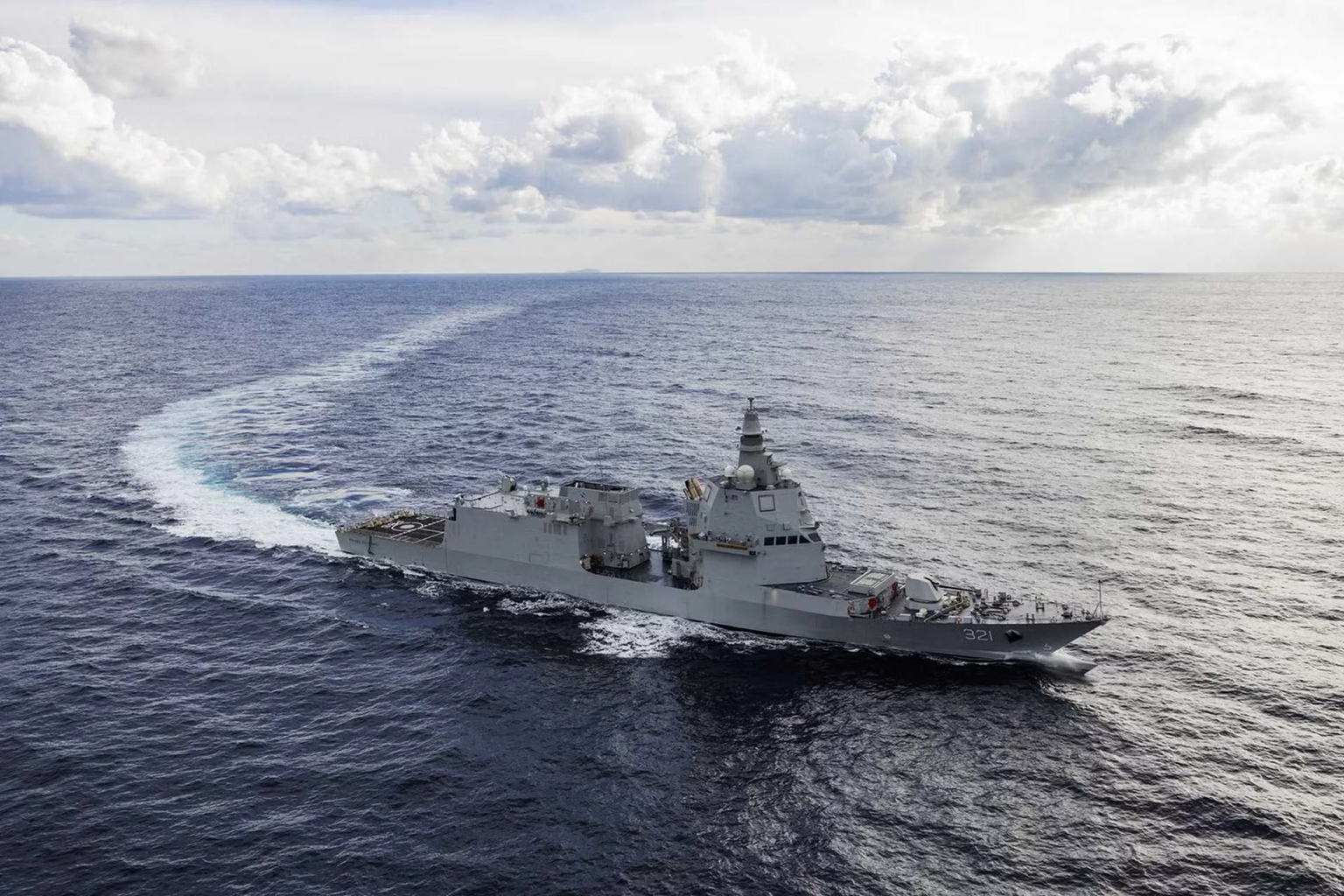
The Indonesian Navy has officially received its second and final PPA-class multi-purpose combat vessel, KRI Prabu Siliwangi-321, built by the Italian company Fincantieri. The handover ceremony took place at the Muggiano shipyard in La Spezia, marking a significant completion of Indonesia's naval modernization program and demonstrating its ambition to expand its offshore combat capabilities in the Indo-Pacific region.
This is the second vessel in a procurement package of two Pattugliatore Polivalente d'Altura (PPA) ships, originally designed for the Italian Navy but configured to meet Indonesia's operational requirements. The deal is part of a contract worth approximately $1.3 billion signed in March 2024 between the Indonesian Ministry of Defence and Fincantieri, with the backing of the Italian Ministry of Defence. Fincantieri is responsible for ship delivery, coordinating the integration of the Leonardo-supplied combat systems, and providing long-term logistical, training, and technical support packages.
Light Plus configuration and combat capabilities
Indonesia's two PPA ships, KRI Prabu Siliwangi-321 and its sister ship KRI Brawijaya-320 (delivered July 2025), are both in the Light Plus configuration. This version is described as balancing firepower, range, and cost, capable of handling a wide range of missions from high-intensity naval combat and maritime patrol to humanitarian assistance, disaster relief, and civil protection.
Technically, the ship is equipped with a Kronos Grand Naval active phased array radar, 127/64 LW naval guns, a vertical launch system capable of using Aster anti-aircraft missiles, close-in defense weapon systems, and a modern electronic warfare system. The flight deck and hangar design allow for the operation of medium-sized naval helicopters, and also include ramps and cranes for deploying high-speed boats for special missions or search and rescue.
The commissioning of two PPA vessels enables the Indonesian Navy to strengthen its presence on key shipping lanes, providing greater flexibility in allocating forces between maritime security missions, sovereignty patrols, and civilian support operations. The modular structure allows for adjustments to mission configurations as needed, thereby optimizing efficiency within a limited budget.