

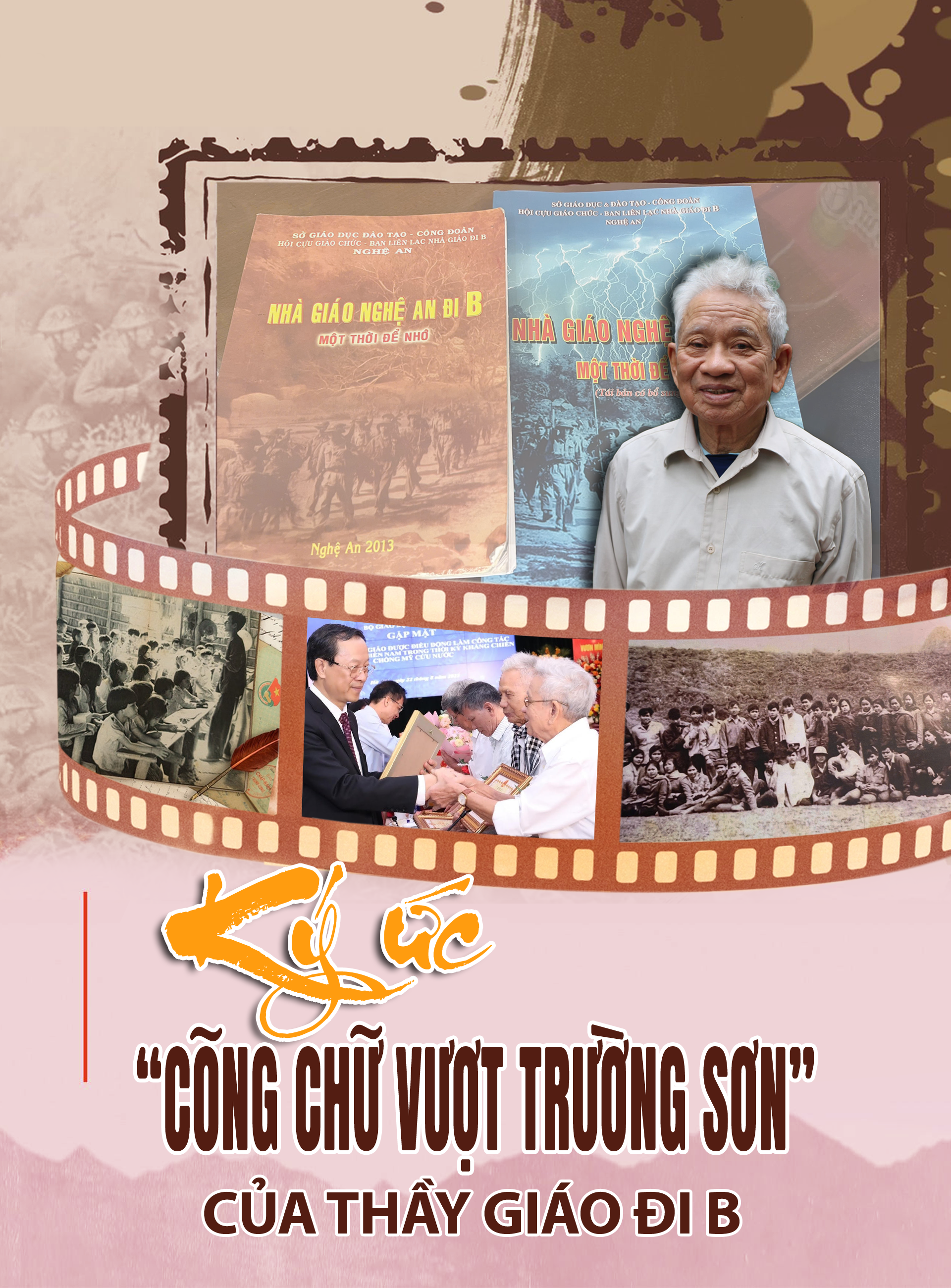
The memories of a teacher "carrying knowledge across the Truong Son Mountains" to the South.
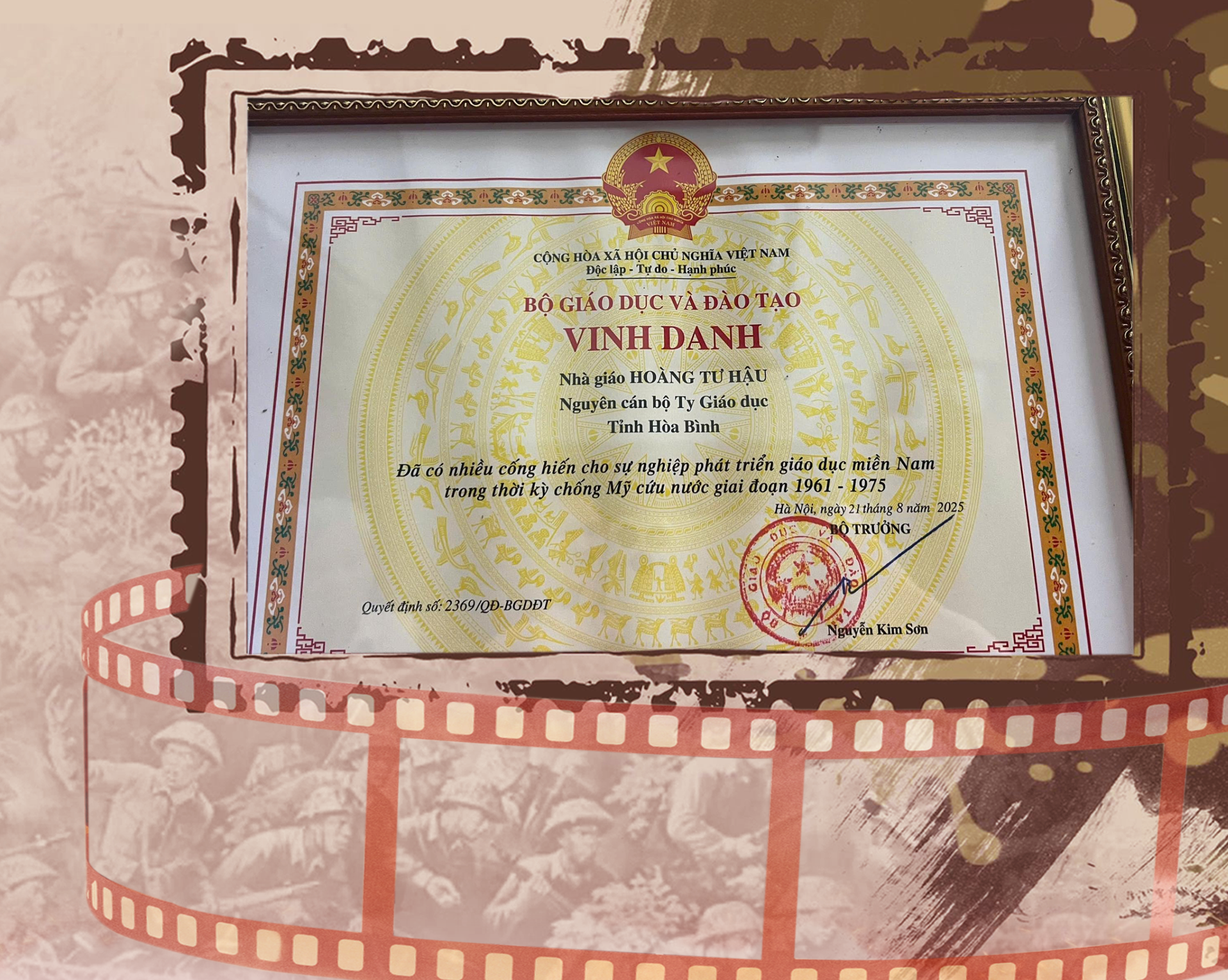
In 2025, among the educators who served in the South and were honored by the Ministry of Education and Training for their significant contributions to the development of education in the South during the anti-American war (1961-1965), was teacher Hoang Tu Hau from Vinh Phu ward. Nearly 40 years of service in the education sector, whether in wartime or peacetime, he has always maintained the exemplary conduct of a dedicated and silent "ferryman," guiding generations of students across the shores of knowledge…
Content:Khanh Ly/Technique:Hong ToaiDecember 28, 2025
------------o0o------------
In 2025, among the educators who served in the South and were honored by the Ministry of Education and Training for their significant contributions to the development of education in the South during the anti-American war (1961-1965), was teacher Hoang Tu Hau from Vinh Phu ward. Nearly 40 years of service in the education sector, whether in wartime or peacetime, he has always maintained the exemplary conduct of a dedicated and silent "ferryman," guiding generations of students across the shores of knowledge…

The small house of teacher Hoang Tu Hau (born in 1942) is nestled deep in a quiet alley in Vinh Phu ward (Nghe An province). The front yard is shaded by trees and adorned with simple potted flowers, reflecting the life of the teacher who has experienced many ups and downs but always chosen calmness and tranquility.
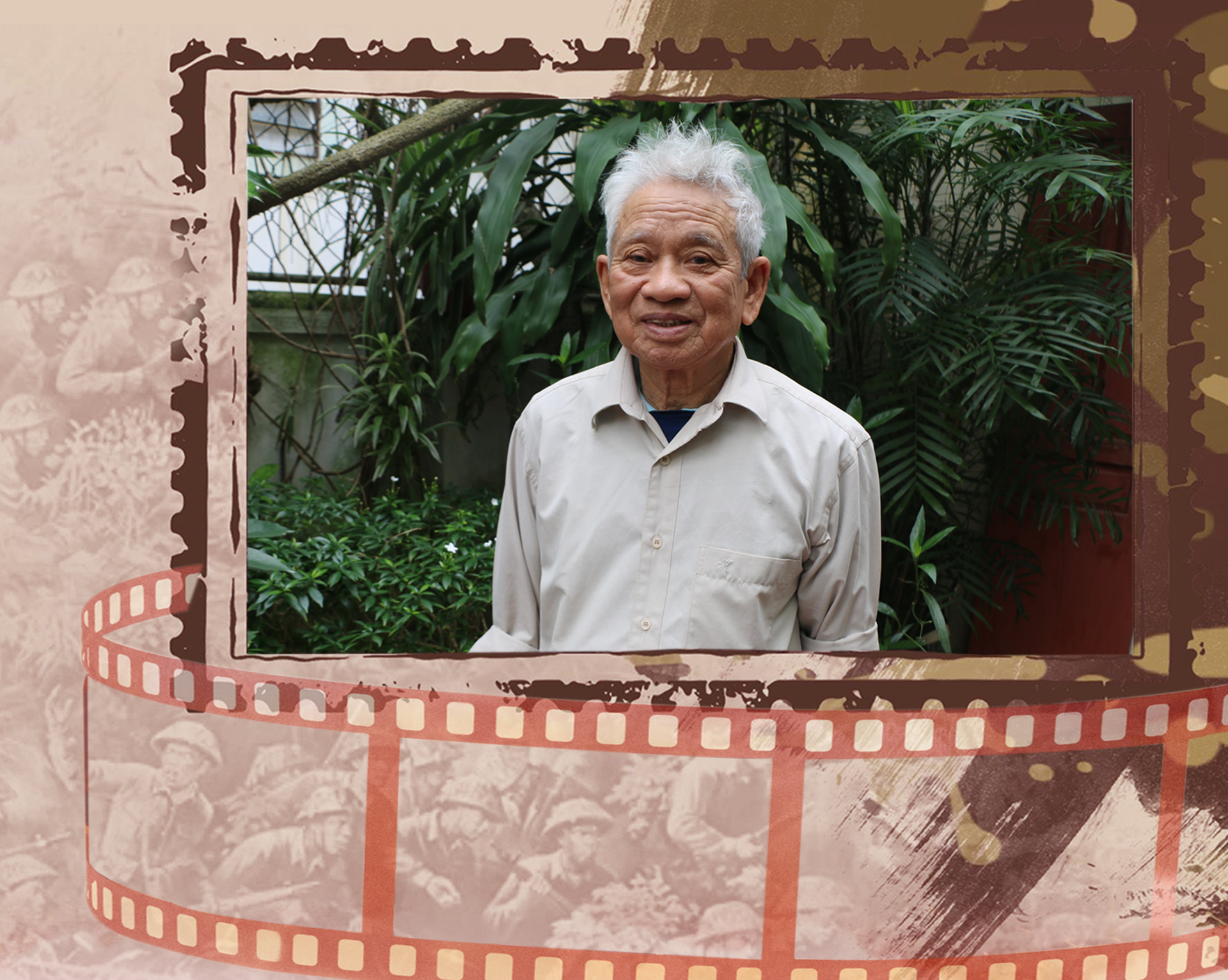
In our year-end conversation, over a pot of fragrant jasmine tea, he spoke very little about himself. His story revolved around his colleagues, his students, the places he had traveled, and the unforgettable memories of a time when he "marched across the Truong Son Mountains to save the country."
Born into a family with a strong tradition of scholarship and patriotism in the former Yen Thanh district, Nghe An province, four out of eight siblings directly participated in the Southern battlefield. Although his father worked in the judicial system, Hoang Tu Hau chose the path of teaching, following in the footsteps of his eldest brother, with the simple belief that being a teacher was also a way to contribute to the country.
In 1962, he passed the entrance exam for the Chemistry Department at Vinh Pedagogical University (now Vinh University). Three years later, while in his third year, the student movement to "put aside their studies" and head south was in full swing. He was assigned by the Ministry of Education and Training to work in Hoa Binh - a difficult and deprived region.
The journey to the North to receive my assignment was an unforgettable experience. “The sun was halfway up the west, and I was alone, carrying a brown backpack, walking along the dike down to Dien Chau beach, crossing the Bung River by ferry at dusk. The Bung Bridge had been destroyed by air raids. I got onto Highway 1 and joined a group of strangers silently walking north… The most difficult part was crossing the border between Thanh Hoa and Nghe An provinces because this treacherous stretch of road was constantly bombed by the Americans day and night. I had to run quickly to get through the area riddled with bomb craters. Around Phu Ly, there was a bus going to Hanoi. I waited in line all day at the bus station to buy a ticket to Hoa Binh,” recalled teacher Hoang Tu Hau.
Those hardships were just the beginning of a long and challenging journey. During his nearly nine years working in Hoa Binh (1965-1973), Mr. Hau was assigned to teach at the Teacher Training College, Hoang Van Thu High School, and then served as Deputy Principal of Ky Son High School (Hoa Binh). Classes were sometimes held in stilt houses, sometimes in the middle of the mountains and forests; teachers and students taught and worked together in makeshift shelters.
In the evenings, he also taught supplementary literacy classes for workers and for concentrated artillery officer training courses. From September 1970, teacher Hoang Tu Hau was assigned to work as a professional staff member at the Hoa Binh Education Department. In August 1972, he was sent to study abroad as part of a selection process for postgraduate studies.
In 1972, when the US used B52s to heavily bomb Hanoi, he was summoned to the Ministry of Education and Training to participate in a special training course to prepare for deployment to the South – to the battlefield in Southern Vietnam to perform educational duties. In March 1973, before going to the South, he held a simple wedding with teacher Trinh Thi Oanh, originally from Nam Dinh. Shortly after, the young teacher left, leaving behind his pregnant wife. He said: "NIf you have a son, name him Nam Son - to remember that his father is in the South. Truong Son.
.jpg)
At that time, the US Air Force was still heavily bombing the area, and it took the group of teachers two months of trekking through forests and crossing streams to reach Southern Vietnam. The presence of these teachers on the Southern battlefield during those years of fighting and simultaneously carrying out educational duties demonstrated the spirit that, no matter how difficult or arduous the circumstances, the revolutionary cause of education would continue to exist and develop, the children of the people would still have access to education, and the cultural level of the people would always be raised.
The members of the delegation were divided among various localities, and Mr. Hoang Tu Hau was assigned to Tan Bien district (Tay Ninh province) - the base of the Central Committee of the Southern Region. “Our first task was to go into the forest to cut bamboo, trees, and thatch to build shelters for the education office and several other shelters to train teachers on the spot (called the Teacher Training School). In 1974, I was assigned to set up several classrooms in Binh Thanh commune. Around the classrooms, we dug shelters… for many days and nights, enemy planes roared, and the sound of bombs and bullets echoed, sometimes near, sometimes far,” shared teacher Hoang Tu Hau.
Besides teaching, Mr. Hau also had the responsibility of providing food, shelter, production, and disease prevention for the newly established hamlets. Despite the hardships, what he remembers most is the kindness and generosity of the people of Southern Vietnam.
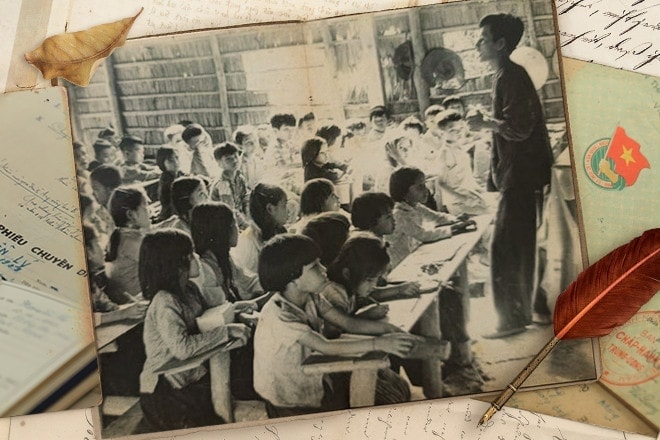
He stayed at the home of Mr. and Mrs. Tư Thôi – a simple thatched house in the middle of the forest. They lent him a broken bicycle frame, picked up the rims discarded at the edge of the forest, and welded them together to make a makeshift "three-no" bicycle for his work trips. At the end of 1974, upon receiving news that his wife had given birth to a son in the North, he only had time to write a few lines to send with someone to the rear, hoping the letter would reach his family.
After April 30, 1975, teacher Hoang Tu Hau and his colleagues took over the educational facilities, organized teacher training, completed the unfinished school year, and built a new education system under extremely difficult conditions.
The teacher training sessions in Phu Khuong, Go Dau… are his most memorable experiences. “Initially, everyone was hesitant to interact with the liberation army soldiers, but gradually the atmosphere became harmonious thanks to the interesting lectures and the sincere, friendly conversations. I prepared thoroughly, occasionally illustrating with a few poems or passages from the new liberation textbooks. I also mentioned some scientific and technological achievements in the world that I knew. After a few sessions, during breaks, many teachers gathered around to chat happily. Another time, the district arranged for all teachers to eat and rest together, and in the evening, there was a cultural exchange. The teachers asked me to sing, so I recited the poem "Fire and Light" by poet Pham Tien Duat: “…tomorrow, tomorrow complete victory. You lead my hand, the sky is full of stars and moon…” At this point, there was thunderous applause that never stopped; that sound still lingers in my mind to this day,” wrote teacher Hoang Tu Hau in his memoir “The Journey”.

For nearly 40 years, whether on the battlefield or in peacetime, teacher Hoang Tu Hau always maintained the character of an exemplary teacher. After 12 years of service in both the South and the North, in 1997, teacher Tu Hau returned to his hometown and was assigned by the Nghe Tinh Department of Education to teach at the Teacher Training School.
In addition, he was also invited by a specialized school to participate in university entrance exam preparation. Although he was assigned by the Nghe An Department of Education and Training to be the Deputy Head of the Teacher Training and Development Department, his passion for Chemistry and teaching still compelled him to return to the classroom.
The school where teacher Hoang Tu Hau was affiliated until his retirement in 2003 was Huynh Thuc Khang High School. Many generations of his students have grown up to become lecturers, scientists, engineers, doctors, etc. Some students have won national awards, while others have become associate professors and doctors at major universities in Vietnam and abroad.
But what generations of students of teacher Hoang Tu Hau remember most is not just the knowledge, but the kind, selfless heart of a teacher who loved his students like his own children. Ms. Mai Hoa from Truong Vinh ward, a student of the 75th graduating class of Huynh Thuc Khang High School, shared: “…In our class, there were two students from disadvantaged backgrounds. Knowing their circumstances, the teacher provided free tutoring at his home. Afraid that the students would feel embarrassed or ashamed in front of their classmates, he kept it a secret from the other students. It wasn't until the graduation ceremony, when the two students tearfully revealed the secret and expressed their gratitude to the teacher, that the whole class found out....".
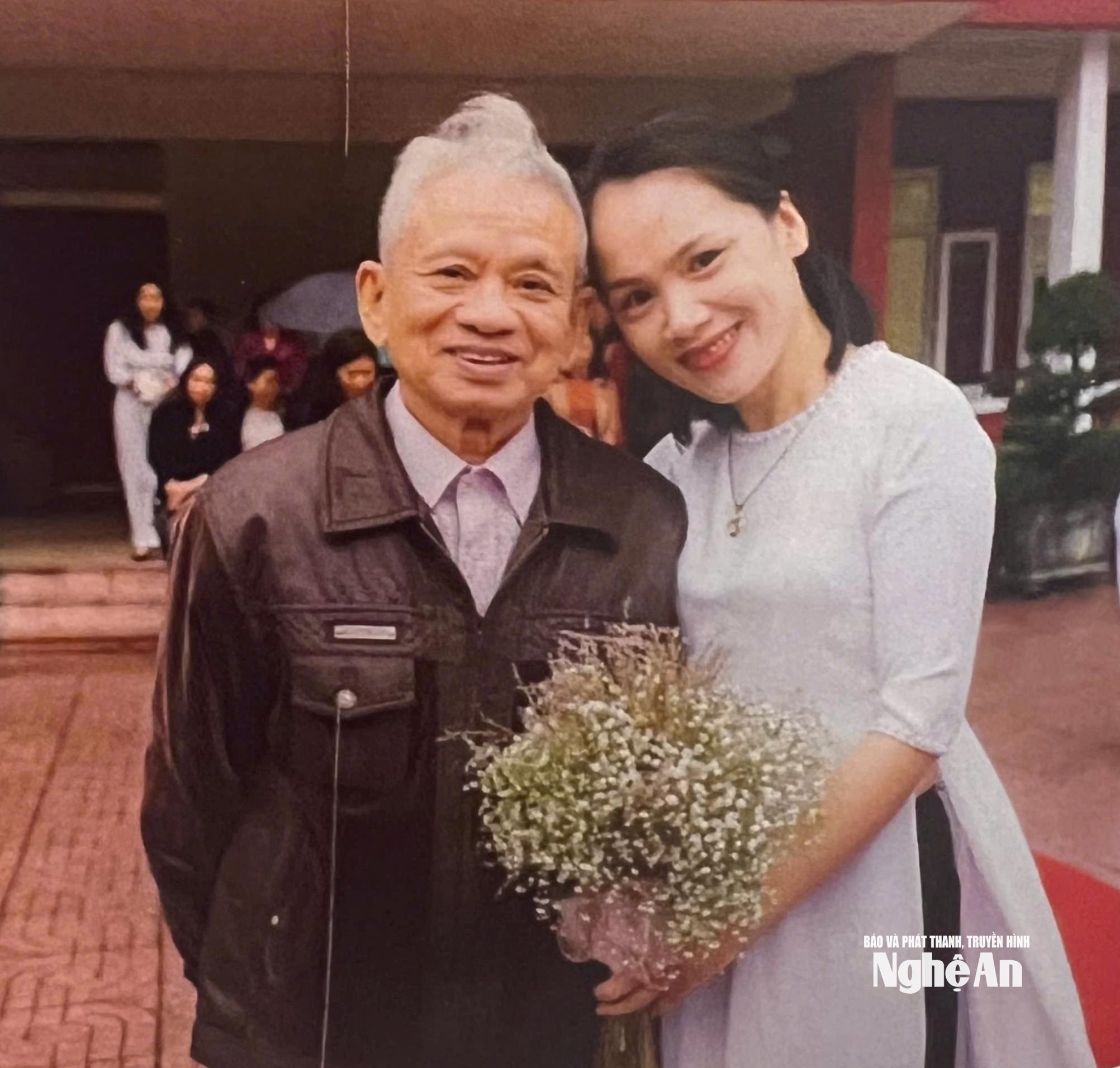
Another former student, a professor of chemistry from a university in the South, wrote these touching words: "BLooking back on the path I've taken, I'm always silently grateful to Mr. Hau – without him, I certainly wouldn't be who I am today – a person who lives for my passion in researching and teaching Chemistry. I always think that Mr. Hau truly treated us like his own children. He understood us so well that he knew which profession would suit which student… even though I'm a very shy person, he made me believe that I could become a good teacher.…”.
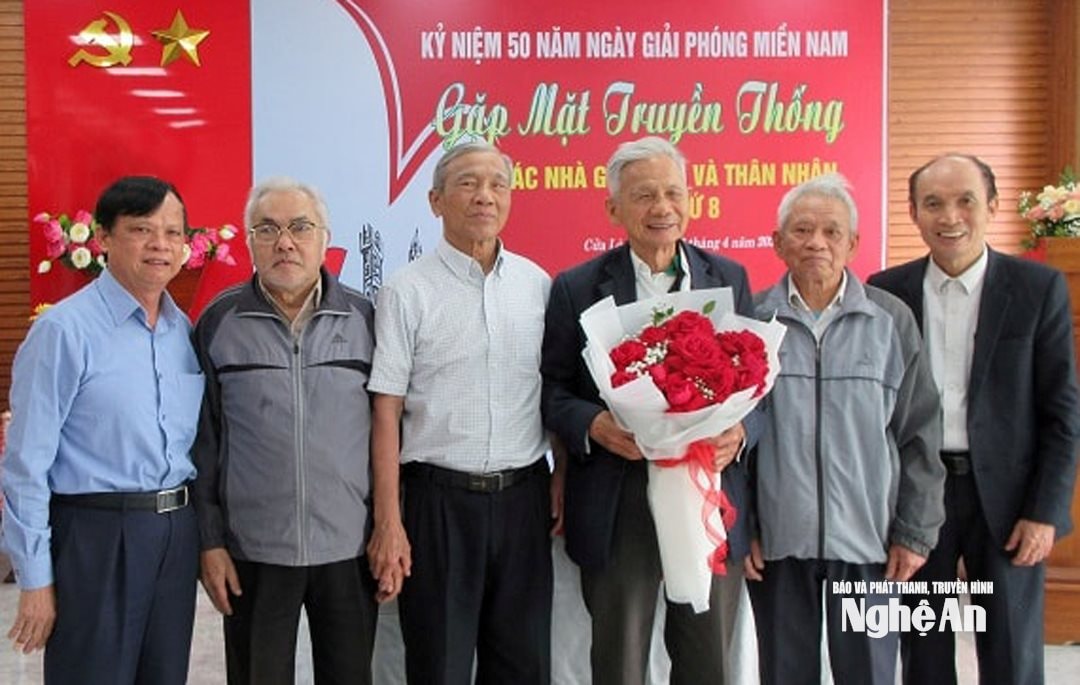
Not only is he a dedicated teacher, but he is also the "connecting link" for the teachers who "went to the South" in Nghe An. In a conversation with us, teacher Hoang Tu Hau said: Nghe An is a land of learning, a province with a fairly large teaching force that contributed about 200 teachers to the battlefields to work in propaganda, building and developing revolutionary education (called "going to the South") during the years of the resistance war against the US to save the country. Among them, 14 were martyrs, 4 were captured and imprisoned by the enemy, and many returned bearing the wounds of war. In 2000, these teachers who went to the South sought each other out and voluntarily established a liaison committee. Since then, with the support of the Provincial People's Committee, the Department of Education and Training, the Provincial Association of Retired Teachers, and generations of former students…
The liaison committee has repeatedly organized reunions to reminisce about traditions and to visit colleagues who are ill or bereaved. In particular, all the teachers who went to the South signed a petition to the Government, the Central Committee, and the Ministry of Education and Training to posthumously award the title of Hero to martyr and teacher Le Thi Bach Cat – a daughter of the coastal region of Cua Lo, who participated in the Saigon-Gia Dinh guerrilla movement (codename Sau Xuan); former District Party Committee member, former District Youth Union Secretary, and former Secretary of the Armed Propaganda Party Branch of Districts 2-4 (now District 1, Ho Chi Minh City).
In the fierce battle on May 5, 1968, Six Xuan bravely and strategically commanded her comrades, holding out against the enemy for many hours before heroically sacrificing her life. On September 20, 2024, her efforts were rewarded when the President signed Decision No. 934/QD-CTN posthumously awarding the title of "Hero of the People's Armed Forces" to martyr Le Thi Bach Cat.
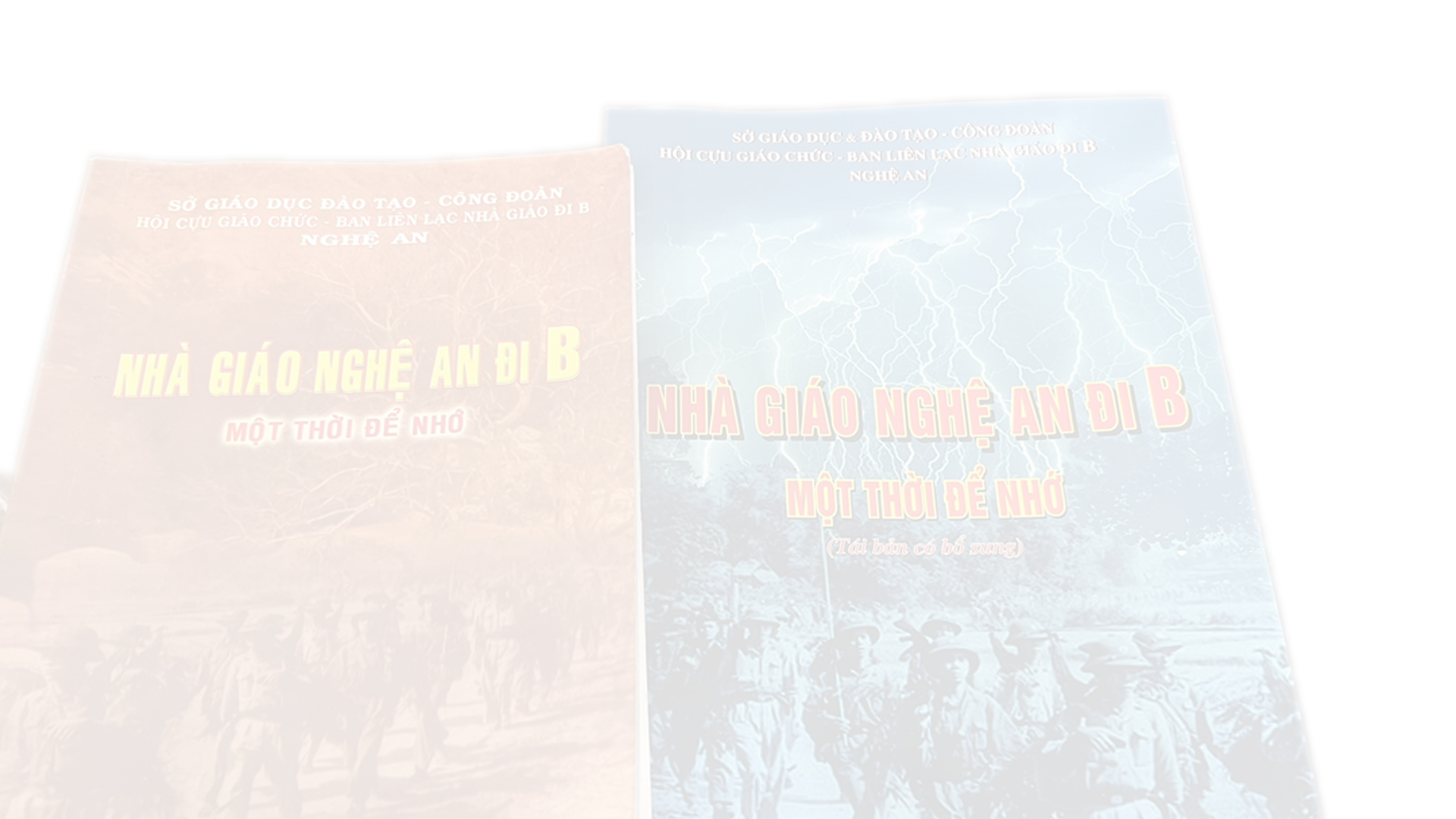
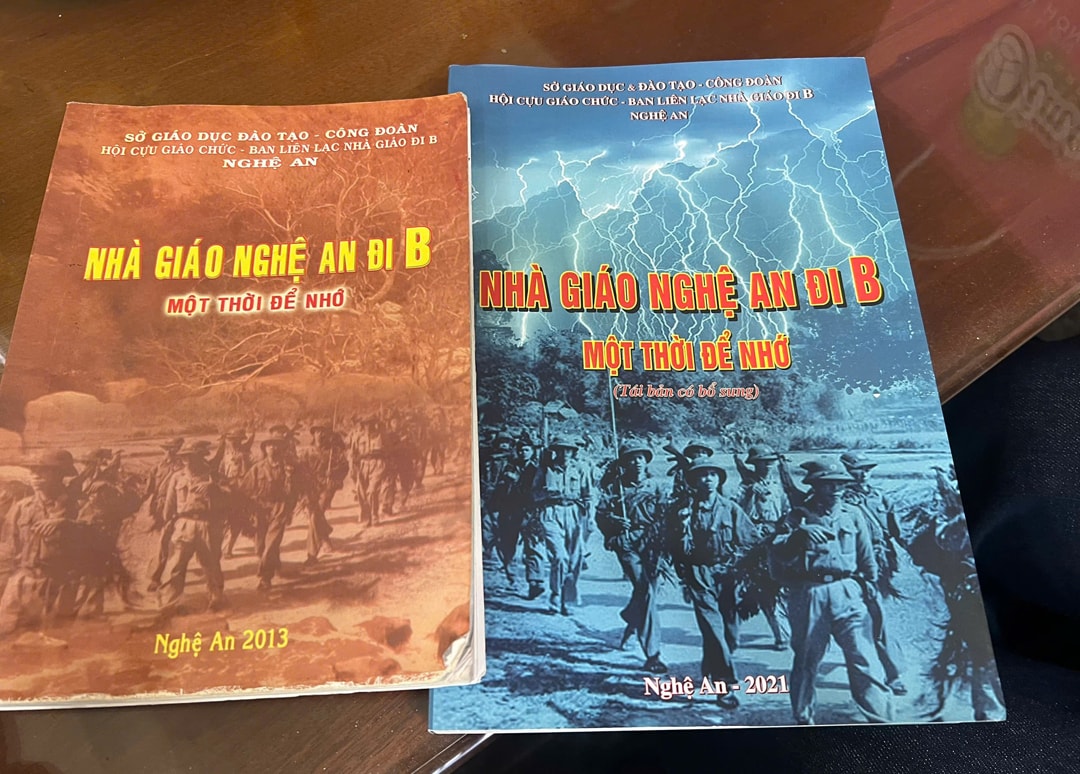
Furthermore, remembering the arduous but heartwarming days of war in Truong Son, amidst the bombing and shelling, teacher Hoang Tu Hau, along with core members of the Liaison Committee of Teachers Who Went to the South, such as Chu Cap and Ngo Duc Tien, meticulously compiled and collaborated with the Nghe An Department of Education and Training and the Association of Retired Teachers to publish the book "Teachers Who Went to the South: A Time to Remember," a revised and supplemented edition from 2021. This book has been recognized and awarded by the Nghe An Provincial People's Committee for its innovative scientific and technological work. The book is a valuable document about the silent contributions of the teacher-soldiers in the resistance war.
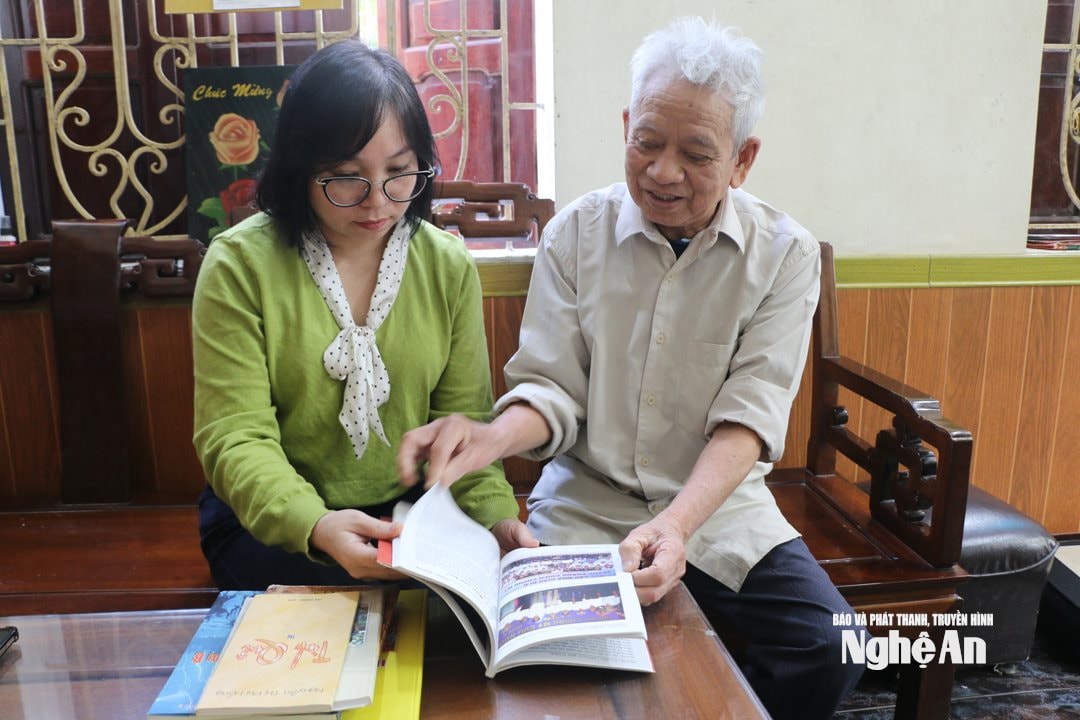


Always humble and not boasting much about himself, from the war-torn Trường Sơn battlefield to the peaceful lecture hall, this teacher has dedicated his life to "carrying knowledge," silently and persistently sowing the seeds of knowledge and character for future generations. And in his nearly 40-year career of nurturing people, teacher Hoàng Tư Hậu always remembered and followed President Ho Chi Minh's advice: "The more you love your profession, the more you should love your students."

A good teacher is not just..."He not only imparted good teachings but also "sown seeds of goodness," helping his students learn to live honestly, compassionately, and with aspirations to strive for excellence and serve the nation. Not only was he a shining example for generations of students, but teacher Hoang Tu Hau was also an exemplary father and grandfather. Therefore, his children and grandchildren were all filial and upheld the family traditions and values.
We also learned that sound engineer Hoang Thi Thu Thuy (lecturer in the Department of Technology - Film and Television, School of Theatre and Film) - who was responsible for supervising the sound and guiding the emotional flow, contributing to the success of the famous film "Red Rain" - is the youngest daughter of teacher Hoang Tu Hau.
.png)
Now at a venerable age, teacher Hoang Tu Hau still writes books, composes poetry, shares teaching experiences, and records memories of his time serving in the South amidst the gunfire. For him, recalling the past is not about nostalgia, but about appreciating the present even more.
"Recalling a difficult yet glorious time, I am now able to live happily and healthily in my old age, feeling excited and proud of my country and homeland which is constantly changing, and whose people are enjoying a freer, more prosperous, and happier life," teacher Hoang Tu Hau confided.
