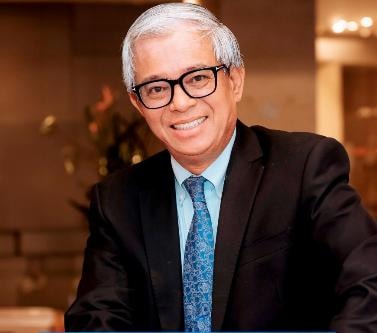
Maintain a proactive stance, collaborate, and foster innovation in diplomatic work.
Hong Nguyen•January 4, 2026 07:37
Vietnam's foreign policy during the 2020-2025 term unfolded in a unique context: a global pandemic, intensified great power competition, widespread geopolitical conflicts, and numerous challenges to international law and multilateralism. In this "headwind," according to former Deputy Minister of Foreign Affairs Pham Quang Vinh, the most important achievement for Vietnam was maintaining and strengthening its strategic initiative through confidence, proactiveness, and increasingly evident constructive capabilities.
Maintaining strategic initiative in a volatile world.
Looking back on the past term, Mr. Pham Quang Vinh believes that this was a period of "profound and unpredictable" global upheaval, placing all countries, including Vietnam, before unprecedented challenges. However, in this context, the outstanding mark of Vietnam's foreign policy lies not only in its ability to adapt, but also in the crucial shift from adaptation to problem-solving, and then from problem-solving to constructive action.
"
The most important thing that Vietnam has achieved is maintaining and strengthening its strategic initiative through increasing confidence, proactiveness, and a clearly evident capacity for innovation.
Former Deputy Minister of Foreign Affairs Pham Quang Vinh
According to him, in the context of the pandemic, great power competition, and geostrategic crisis, Vietnam not only responded promptly but also effectively handled negative impacts, gradually transforming challenges into opportunities for cooperation. Vietnam has maintained stable relations with all major countries, despite their fierce competition; and has preserved relatively stable supply chains while many other economies have suffered serious disruptions.
From that foundation, Vietnam's foreign policy has gradually shifted to a proactive and constructive stance, thereby maintaining strategic initiative even during the most challenging times."Be confident, proactive, and maintain strategic initiative."According to Mr. Pham Quang Vinh, these three keywords best summarize the hallmarks of Vietnam's foreign policy during the 2020-2025 term.
Strategic balancing through righteousness and international prestige.
Another highlight of the past term was Vietnam's simultaneous expansion and upgrading of relations with a series of important partners, forming more than 40 partnership frameworks ranging from comprehensive to strategic and comprehensive-strategic, encompassing major countries, including the five permanent members of the United Nations Security Council, economic and political partners, key partners in various continents, and all neighboring countries in the region.
According to Mr. Pham Quang Vinh, this success stems from both sides: Vietnam's proactive efforts and the increasing recognition from international friends. What partners see in Vietnam, first and foremost, is...a consistent foreign policy based on justice, in a context where many universal values and international laws are eroding. It is this consistency that forms a solid foundation for strategic trust.
Furthermore, Vietnam's position is increasingly prominent in the region and internationally. Vietnam is recognized as a crucial link in ASEAN, APEC, and the Asia-Pacific regional cooperation structure, while also making responsible contributions to multilateral mechanisms, from the United Nations system and the Human Rights Council to international peacekeeping and humanitarian assistance, and global initiatives such as the Convention against Cybercrime.
More importantly, partners found in Vietnama reliable partner and opportunities for mutually beneficial collaboration.Based on an increasingly improved investment environment, reform policies, and major resolutions that create new impetus for development, this explains why many countries are proactively reaching out to Vietnam, wishing to deepen and upgrade their relations.
Economic diplomacy: from leveraging resources to creating growth drivers.
During the 2020-2025 term, diplomacy is increasingly linked to economic development goals, becoming a crucial pillar supporting growth, attracting investment, and shifting supply chains. According to Mr. Pham Quang Vinh, this is not just about leveraging external resources, but about seizing opportunities and overcoming challenges.
First of all, foreign relations have made a significant contribution toMaintain a peaceful and stable environment.This is an essential foundation for development and attracting investment. Vietnam's expansion and deepening of relations with more than 40 partners during the past term is clear evidence of this role.
Secondly, economic diplomacy has been upgraded both qualitatively and quantitatively, particularly through the creation ofintertwining of interestswith key partners. The message of "harmonious interests, shared risks, mutual benefit" is not just a guideline, but has become concrete action in high-level diplomacy, expanding the scope for substantive cooperation.
Third, Vietnam is utilizing the system more effectively.17 free trade agreementsThis includes new-generation FTAs such as CPTPP, EVFTA, and RCEP. In the context of increasing trade protectionism and disrupted global supply chains, leveraging high-quality FTAs is crucial for Vietnam to maintain and expand its markets.
At the same time, Vietnam is proactively expanding its cooperation into new regions such as Latin America, the Middle East – especially the Gulf region – and Africa, while simultaneously strengthening the depth of cooperation with traditional partners.
Notably, in the last two years, Vietnam has effectively addressed challenges related to tariffs, trade protectionism, and supply chain disruptions, thereby maintaining its position as an attractive investment destination. According to the Ministry of Industry and Trade's assessment, by 2025, Vietnam's trade will still grow by over 20%, and for the first time, total bilateral trade will exceed US$900 billion – a result considered a "miracle" in a world full of instability.
Strategic priority for the next phase: Partnership and creation.
Looking ahead to the period after 2025, according to Mr. Pham Quang Vinh, Vietnam's foreign policy faces two parallel requirements: serving the long-term development aspirations until 2030-2045 and dealing with the increasingly complex "headwinds" of the international situation.
Mr. Pham Quang Vinh believes that the top strategic priority remains...Maintaining an environment of peace, cooperation, and development.This is closely linked to the task of defending the Fatherland from early on and from afar. The close coordination between the three pillars of National Defense, Security, and Foreign Affairs, along with economic ministries and sectors, will continue to be an important strategic foundation.
Simultaneously, diplomacy serving development needs to be elevated to a new level: deeper but higher-quality integration; strong participation in science and technology, innovation, digital transformation, green transformation, and especially...Shifting from "taking advantage" to "partnering and creating"together with partners.
According to Mr. Pham Quang Vinh, in the new era, Vietnamese diplomacy not only seeks opportunities but also proactively creates a peaceful environment, fosters development opportunities, and participates in building global norms of conduct based on international law.
Looking back on his long journey in Vietnam's foreign affairs, Mr. Pham Quang Vinh summarized the core message sent to the world:Vietnam continues to be a reliable and responsible partner for peace, cooperation, and development.but with new capabilities, a new mindset, and a new stature.
Vietnam is not merely seeking opportunities; it is ready to work alongside its partners to create mutually beneficial cooperation spaces for peace, security, and sustainable development – this is the spirit of Vietnam's foreign policy in the new era.