

These "handshakes" help elevate the value of OCOP products in Nghe An.
To adapt and improve production and business efficiency, people and many businesses and cooperatives in Nghe An are currently undergoing a strong shift in their production mindset. Farmers, businesses, and cooperatives are linking up to lease land and produce raw materials, thereby promoting the development of OCOP products and keeping pace with the modernization trend of agricultural production.
Change mindsets, increase connections.
For many years, the province's agricultural production has faced the challenge of fragmentation. Farmers cultivate their crops on small, scattered plots, leading to inconsistent quality and difficulties in applying machinery. However, with guidance from various levels of government, especially since the implementation of the two-tiered local government model, many farmers and cooperative businesses have changed their mindset, choosing more suitable and effective approaches by linking production and leasing land for raw material production.
For over three years, dozens of households in Tay Hieu ward have earned higher incomes than traditional agricultural production thanks to their partnership with the Tay Hieu Agricultural Cooperative. “Our partnership with the cooperative involves leasing land, and the cooperative provides technical guidance and supplies seeds for us to grow. After planting mung beans in 2024, we have been planting chili peppers since 2025, and the plants are now flowering,” said Mr. Duong Hoang Duc from Tan Phu block, Tay Hieu ward.
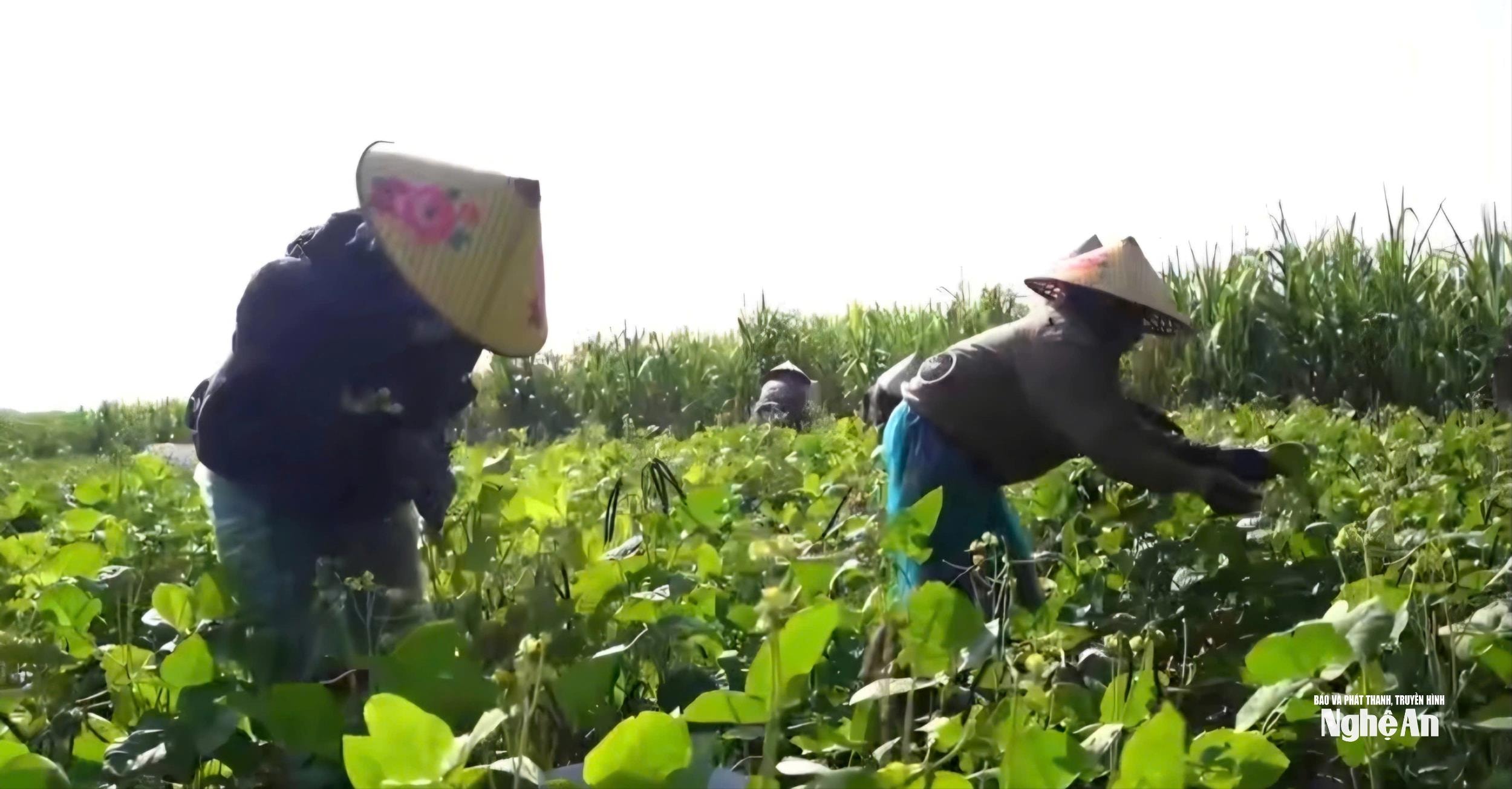
According to Nguyen Quang Trung, Director and Chairman of Tay Hieu Agricultural Cooperative, Mr. Duc is one of 15 households that signed a contract with the cooperative to grow chili peppers for export to South Korea. The cooperative signs a contract to supply raw materials to the company, then leases land from local people and hires the landowners as laborers for production. Through this contract with the partner, the cooperative will support farmers in planting, caring for, and harvesting, and control the quality of raw materials to meet customer requirements. Harvest is expected in March 2026 with a guaranteed minimum price of 7,500 VND/kg for fresh chili peppers, which may be adjusted upwards at a certain rate when market prices rise.
Following the same approach, in early 2025, Tay Hieu Agricultural Cooperative also completed an order for 8 hectares of VietGAP-certified mung beans for a company processing nutritional cereal products. Four participating households harvested 1.5-1.8 tons per hectare, earning 50-60 million VND per hectare. “This is a company specializing in processing functional food products, so they have very strict requirements for the raw material cultivation process according to the VietGAP standards. Therefore, every stage of production must be recorded and regularly communicated with the partner and participating households,” Mr. Trung added.
In Chau Khe commune, Mr. Nguyen The Dung from village 2/9 said that since his family switched from growing sugarcane to growing Solanum torvum, their income has increased significantly and they no longer worry about finding buyers. Mr. Dung, like nearly 20 other households in village 2/9, has signed contracts to grow Solanum torvum medicinal herbs with Pu Mat Medicinal Herbs Company for many years. On average, each household cultivates 4-7 sao (approximately 0.4-0.7 hectares), earning 12-15 million VND/hectare/year.
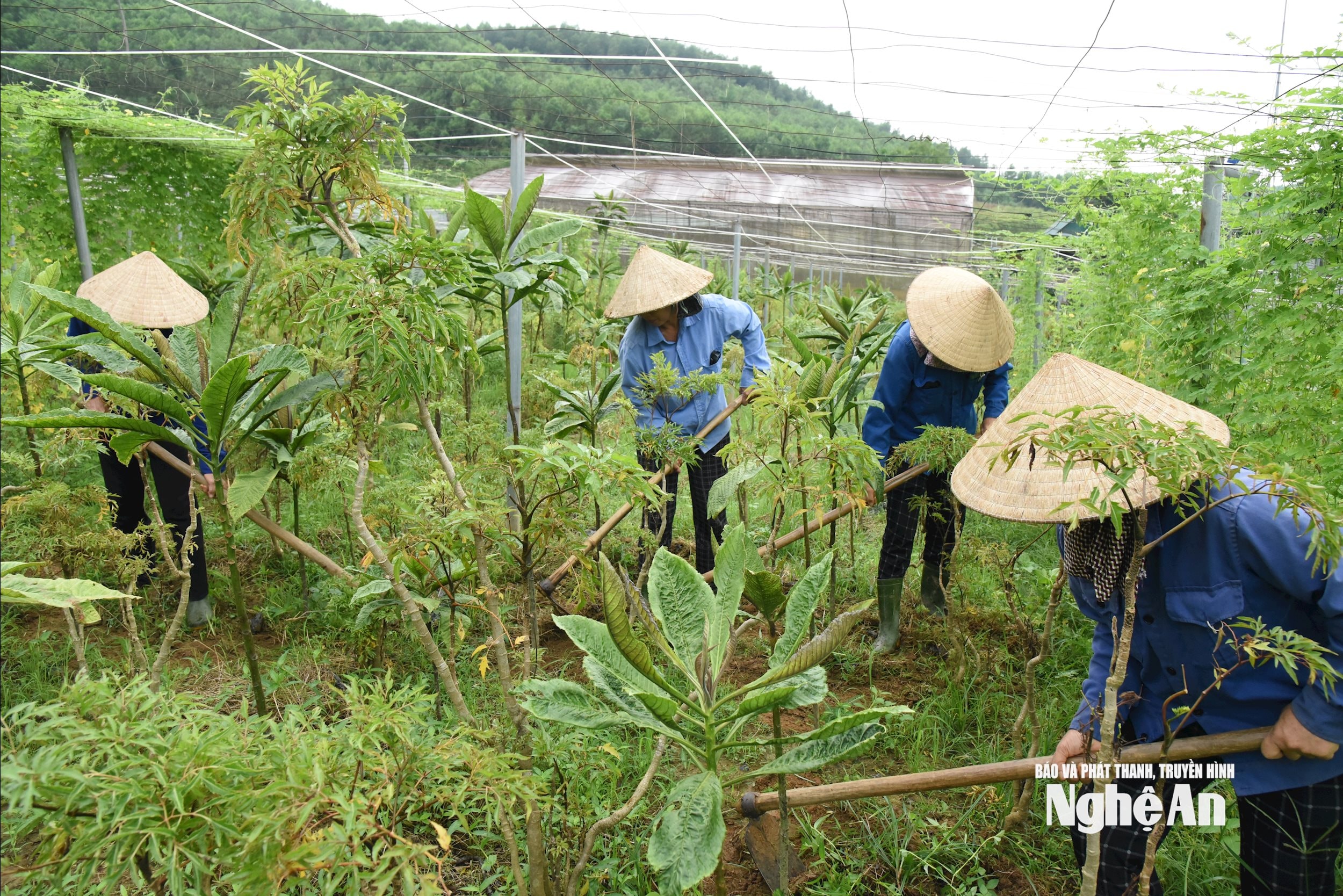
Ms. Ho Thi Ai, representative of Pu Mat Medicinal Herbs Company, said that to ensure self-sufficiency in raw material supply, in addition to self-cultivation, the company also leases land in many villages in Con Cuong commune to grow medicinal plants such as Solanum torvum and Rhus chinensis, and combines this with natural beekeeping. The cooperative plays the role of the unit responsible for supplying raw materials to the company. This allows the company to focus on post-production stages such as deep processing and brand management, developing product markets, and building 15 products that have achieved OCOP 3-star and 4-star standards.
Requirements from traceability
Regarding government policy support, Ms. Ho Thi Ai added that when leasing land for production, the company receives a land lease subsidy of 15 million VND/hectare/year. Recently, from the National Target Program for New Rural Development, the company received 500 million VND in support, including funding and items such as raw materials and seedlings, to develop a project after being recognized by the Provincial People's Committee as a "Pù Mát Medicinal Herb Agricultural Tourism Experience Destination" (September 10, 2025).
Following a similar approach, Hang Moon Herbal Import-Export Company in Bach Ngoc commune is expanding its production by increasing the area of agricultural land leased to cultivate raw materials for the company's OCOP products. Currently, this enterprise has 10 products that have achieved 3-star OCOP certification. Starting with processing local agricultural products in a 150m² production workshop, the company has now built a second workshop of nearly 1,000m², and the quantity and quality of its products are gradually being upgraded and innovated towards specialization, increasing linkages with relevant agencies, localities, and people.
Mr. Nguyen Kim Nam, Vice Chairman of the People's Committee of Bach Ngoc commune, said that Hang Moon Herbal Import-Export Company is currently a successful enterprise, creating jobs for local people and actively collaborating with the locality in exploiting agricultural land. Currently, Bach Ngoc commune is implementing a project on economic development combined with spiritual tourism, both promoting local cultural identity and supporting people and businesses in economic development. "Introducing OCOP products and raw material areas of Hang Moon Herbal Import-Export Company is one of the contents we are including in this project in building tourism tours to experience temples, pagodas, and local scenic spots associated with the characteristic agricultural products of Bach Ngoc commune," Mr. Nguyen Kim Nam emphasized.
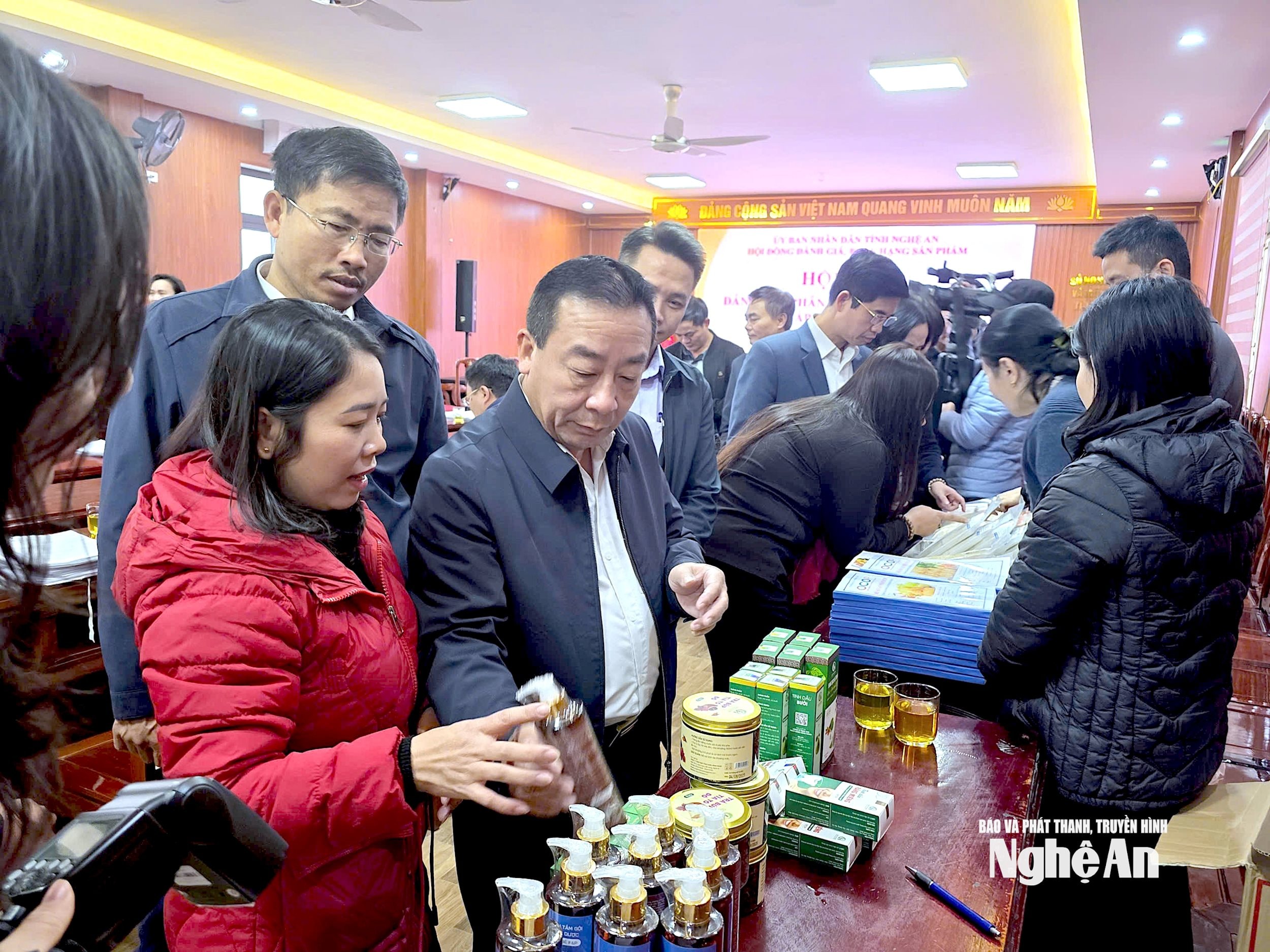
Mr. Le Van Luong, Head of the Nghe An Provincial Department of Cooperative Economics and Rural Development, and a permanent member of the Council for evaluating and classifying OCOP products, affirmed that in the process of appraising and classifying OCOP products, to ensure accuracy through on-site inspections, the Council focuses on considering all mandatory criteria, especially requirements regarding production scale and supply capacity, production linkages, and the creation of raw material areas, particularly for OCOP products. The development of OCOP products must be linked to promoting local strengths, prioritizing the use of local raw materials and human resources, and preserving the cultural identity of the region.