Farmers in Nghe An province are competing in production linked to economic transformation.
Thanh Phuc•January 14, 2026 15:28
These days, in many rural areas of Nghe An province, the pace of work is more intense than usual. The emulation movement in labor and production to welcome the National Party Congress is no longer just a slogan, but is being concretized through each harvest season, each model, and each determination to innovate the farming methods of the farmers.
When the pace of production carries the goal of development.
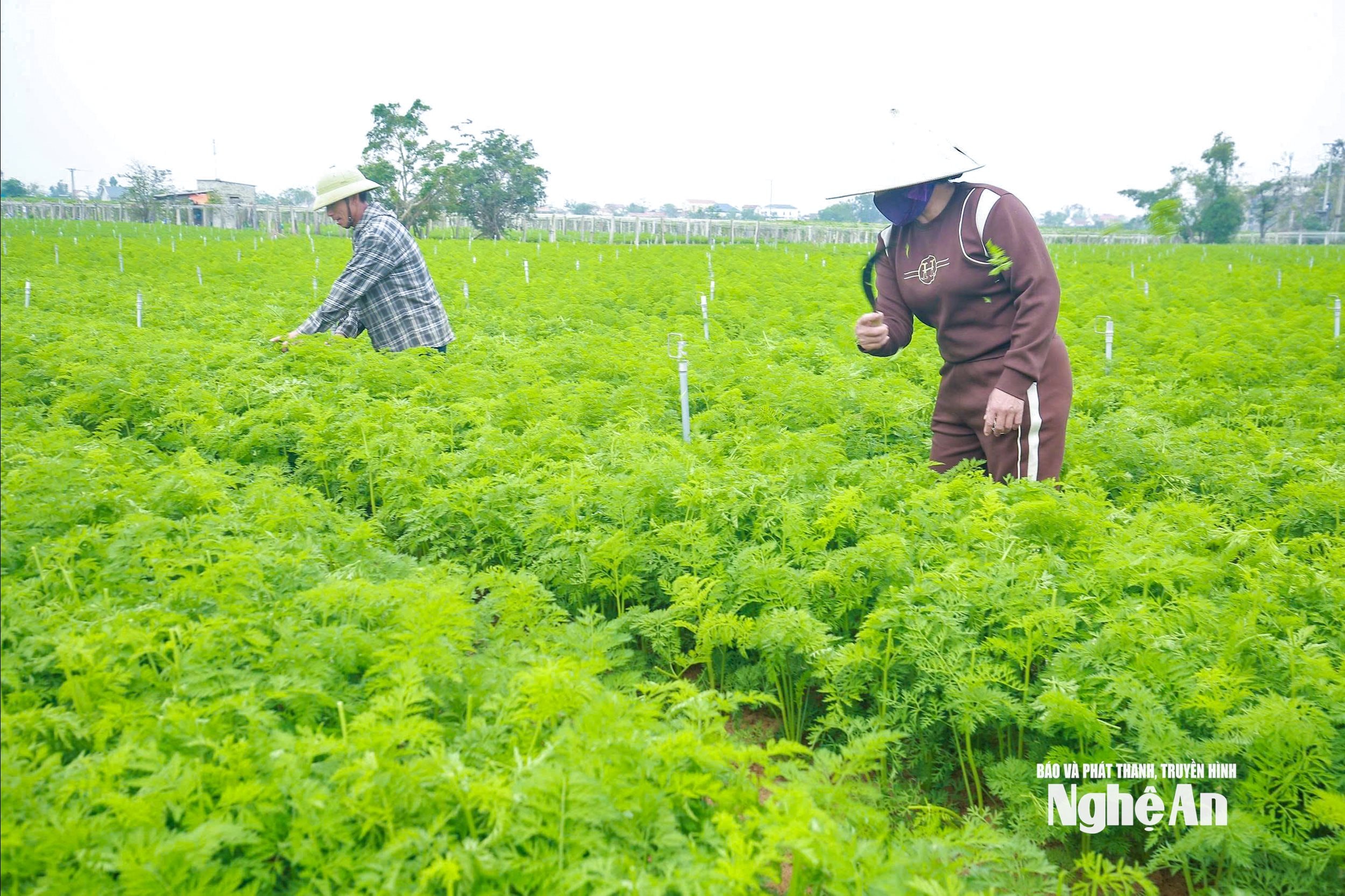
Farmers in Quynh Anh commune tending to carrots. Photo: TP
In the spirit of labor and production emulation to welcome the National Party Congress, the atmosphere in the vegetable fields of Quynh Anh commune in the early days of 2026 clearly shows this movement. From early morning, people have been out in the fields tending to the winter-spring vegetable crop, checking the irrigation system, and monitoring the growth of the plants. The pace of work is not only urgent to meet the Tet market demand, but also demonstrates a more proactive and systematic approach to production organization.
In the context of the widespread emulation movement to celebrate the National Party Congress, the Farmers' Association of Quynh Anh commune, in coordination with the Quynh Bang General Agricultural Cooperative, is implementing a project on organic vegetable and root crop production for the 2025 winter season. The choice of organic production is not a seasonal decision, but stems from the need to enhance product value and build a sustainable production area.
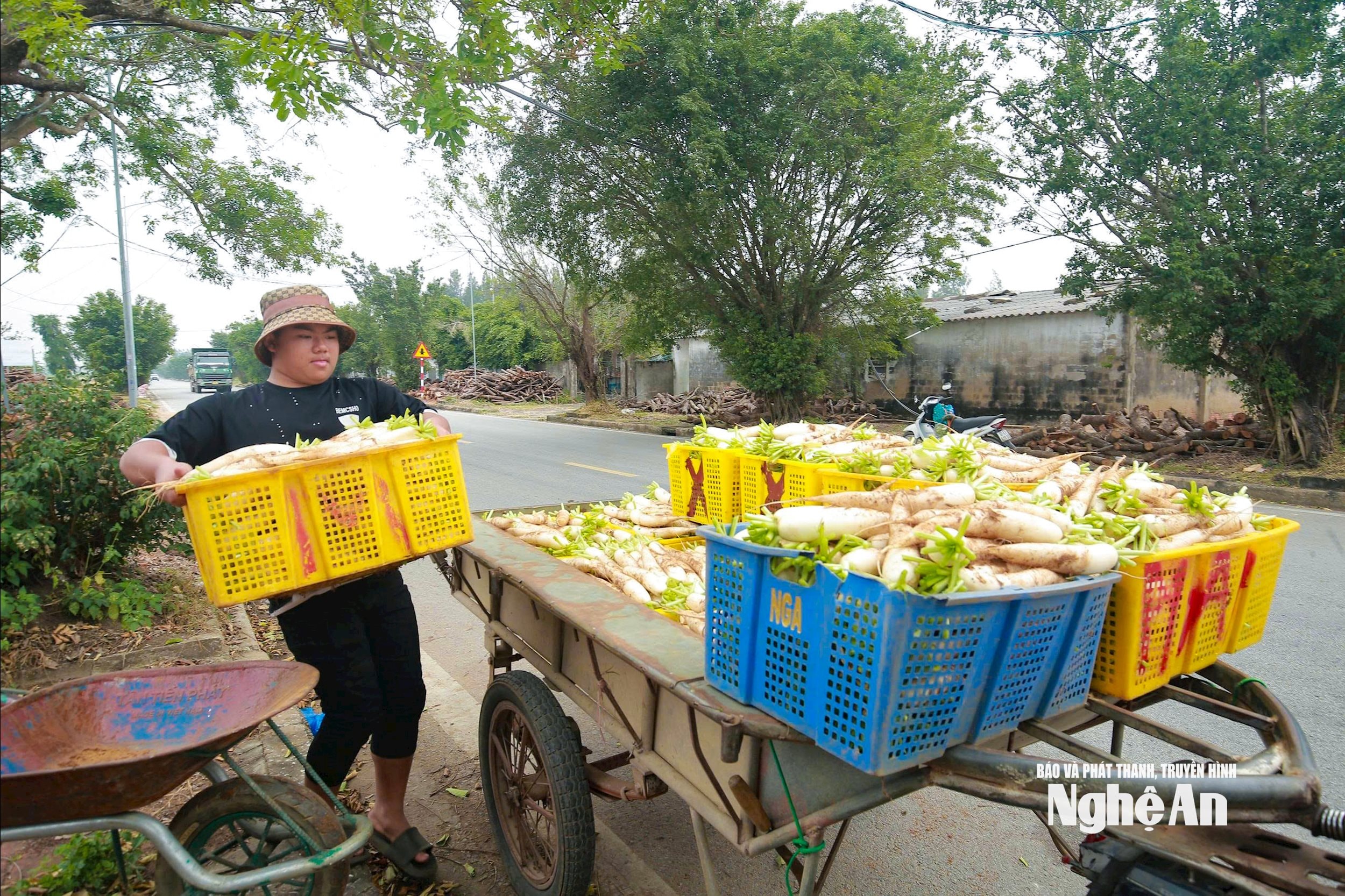
Accordingly, 4 hectares of radishes and carrots were planted simultaneously, strictly adhering to organic farming procedures. From land preparation and furrowing to the installation of automatic irrigation systems and the use of organic fertilizers, everything was agreed upon from the beginning of the season. Competition here is not measured by area or yield alone, but by the level of adherence to procedures and the ability to produce products that meet market demands.
Radishes and carrots are grown organically, meeting market standards. Photo: TP
This approach has gradually overcome long-standing limitations in agricultural production. Mr. Ho Van Tam, a household participating in the model, said: “When land is consolidated, a sprinkler irrigation system is invested in, and the same main crop is grown, costs are significantly reduced, and yields are more stable. The competition now isn't about doing more, but about doing it right and sustainably.”
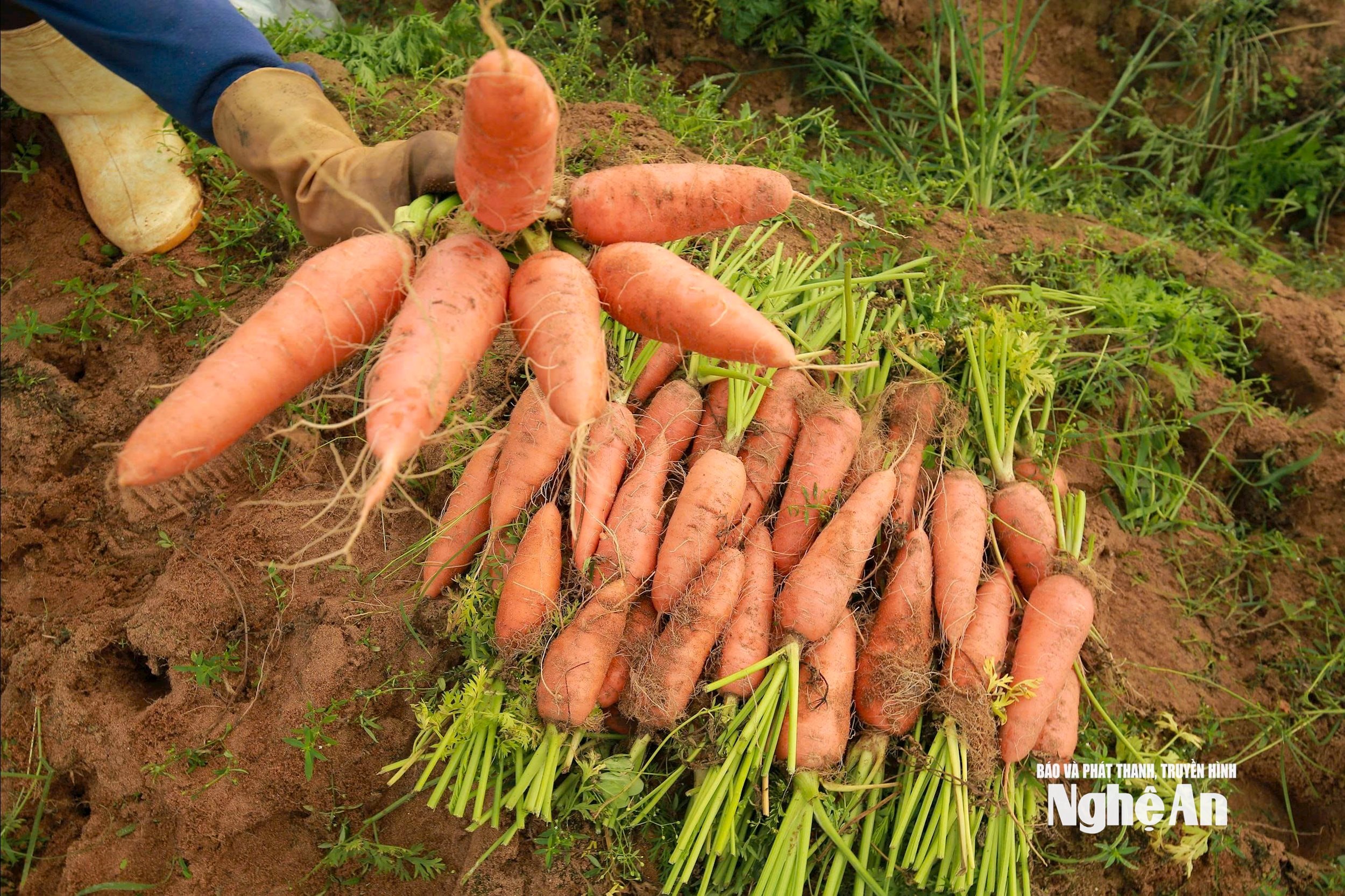
This spirit is also clearly evident in Quynh Mai ward, where many households have boldly switched from short-term vegetable crops to growing carrots – a key OCOP (One Commune One Product) product. Mr. Hoang Lien Sinh's family invested in improving the soil, applying organic fertilizer, installing an automatic sprinkler irrigation system, and strictly controlling everything from seed selection to cultivation. When each plot of carrots yields nearly 8 million VND in income, significantly higher than their previous crops, farmers gain more confidence to commit to this new production direction.
Carrots are an OCOP (One Commune One Product) product and are becoming a key crop in the vegetable-growing areas of Quynh Anh and Quynh Mai districts. Photo: TP
In favorable regions, the emulation movement is reflected in the steady pace of production, but in areas severely affected by natural disasters, it is measured by the will to overcome difficulties. After typhoons No. 5 and No. 10, the Hung Long Agricultural Service Cooperative (Than Linh commune) suffered heavy losses when its greenhouse collapsed and its crops were flooded. However, in the spirit of emulation to welcome the Congress, the cooperative members quickly regained their spirits, cleaned up, reclaimed the land, and rebuilt the greenhouses in time for the planting season.
Mr. Bui Dinh Hoi, Director of Hung Long Agricultural Service Cooperative, said that the spirit of emulation to celebrate the National Party Congress helped the cooperative members not to falter after the natural disaster, quickly restoring production in a more proactive and flexible manner. Instead of returning to traditional crops, the cooperative boldly chose high-economic-value crops with short growing seasons, suitable for post-storm conditions.
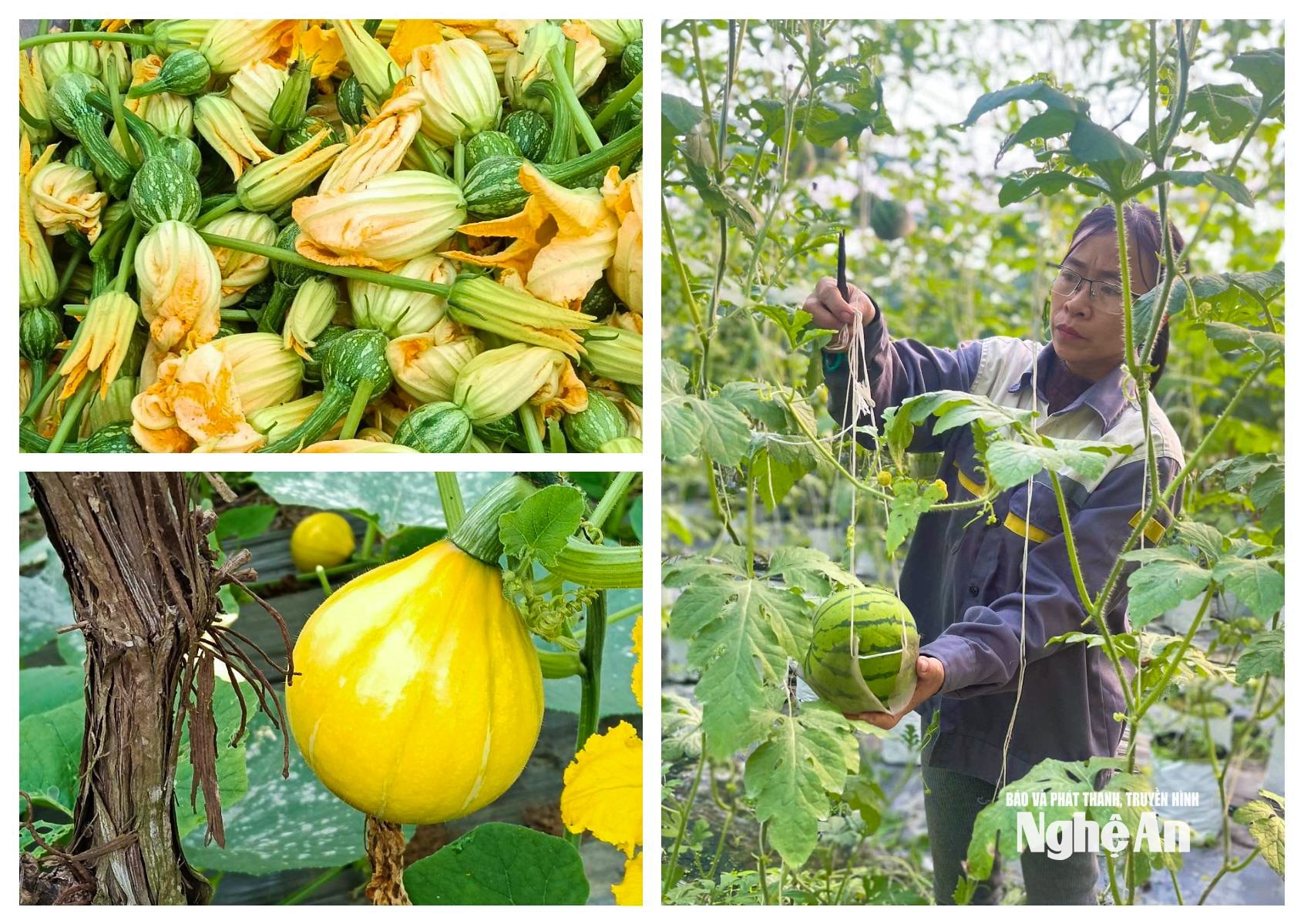
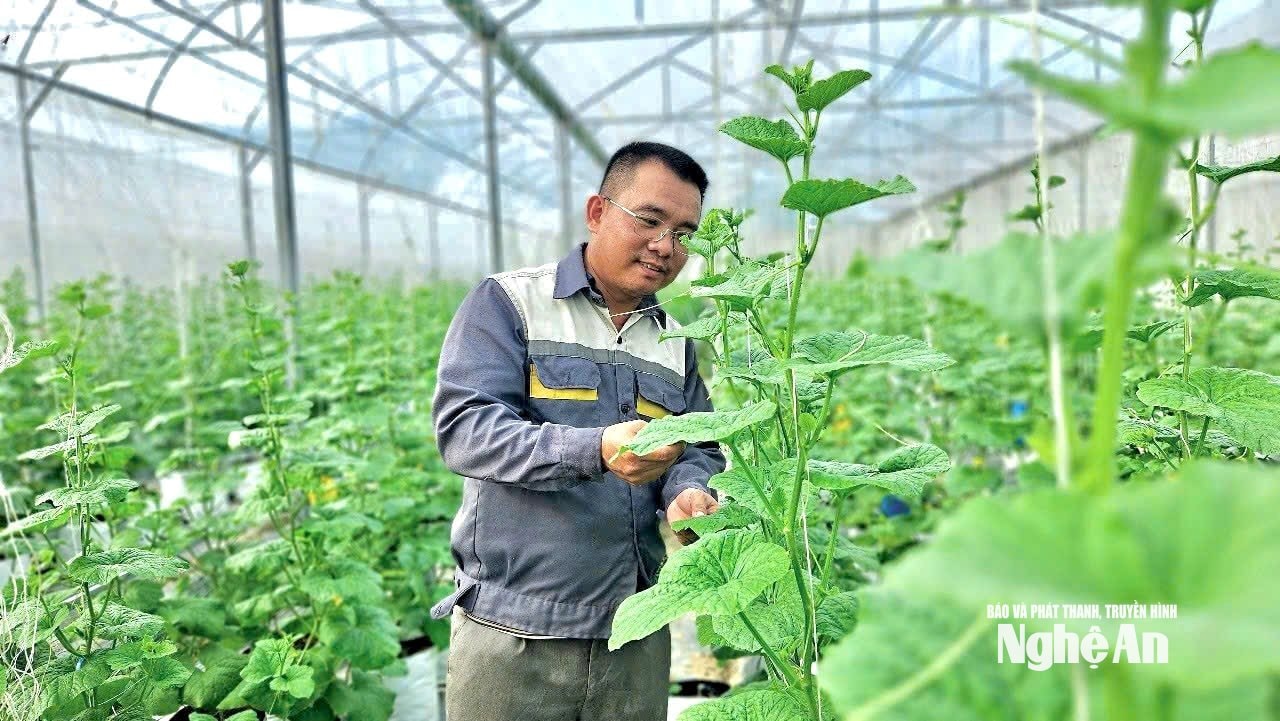
Many new varieties have been introduced for trial cultivation by Hung Long Agricultural Services Cooperative. Photo: TP
For the first time, yellow melons for Tet (Lunar New Year) celebrations are being cultivated on an area of 2,000 m² with approximately 5,000 plants, expected to supply nearly 7 tons of finished melons to the market. Simultaneously, round, small-sized watermelons (1.2–1.5 kg/fruit) are being grown on 2,000 plants, with an estimated yield of about 3 tons, meeting the demand for Tet celebrations. For outdoor production areas, the cooperative has switched from growing pumpkins for fruit to baby pumpkins, shortening the growing time and increasing the selling price to 70,000 VND/kg, nearly doubling the income per unit area. In addition, the cooperative is piloting the cultivation of chestnut pumpkins to evaluate yield, quality, and market demand, as a basis for expansion in subsequent seasons. From these specific choices, the emulation movement has truly become a driving force promoting innovation in thinking and methods in agricultural production.
Based on these specific models, the emulation movement only truly creates an effect when it is closely linked to the development requirements of each locality, each cooperative, and each farming household. When emulation is "measured" by economic efficiency and changes in methods, it becomes an endogenous driving force that promotes production.
Transforming and creating a sustainable foundation for the rural economy.
Caring for Kim Long melons to supply the Tet market at Hung Long Agricultural Service Cooperative. Photo: TP.
While the most noticeable manifestation of the emulation movement is the rapid pace of production, at a deeper level, it is noteworthy that the movement is promoting the transformation of the rural economic development model. This transformation is primarily reflected in the selection of suitable crops and livestock. The formation of organic vegetable and OCOP carrot growing areas in Quynh Anh and Quynh Mai not only increases the value of products but also helps farmers participate in organized production chains. When production is linked to standards, markets, and brands, the emulation movement has been concretized through practical economic benefits.
Simultaneously, the emulation movement is also strongly promoting the transformation of production methods towards modernization, reducing dependence on manual labor. In Binh Minh commune, Mr. Vo Van To's model of tray seedling cultivation and machine transplanting is a clear example of the effectiveness of introducing mechanization and science and technology into the fields.
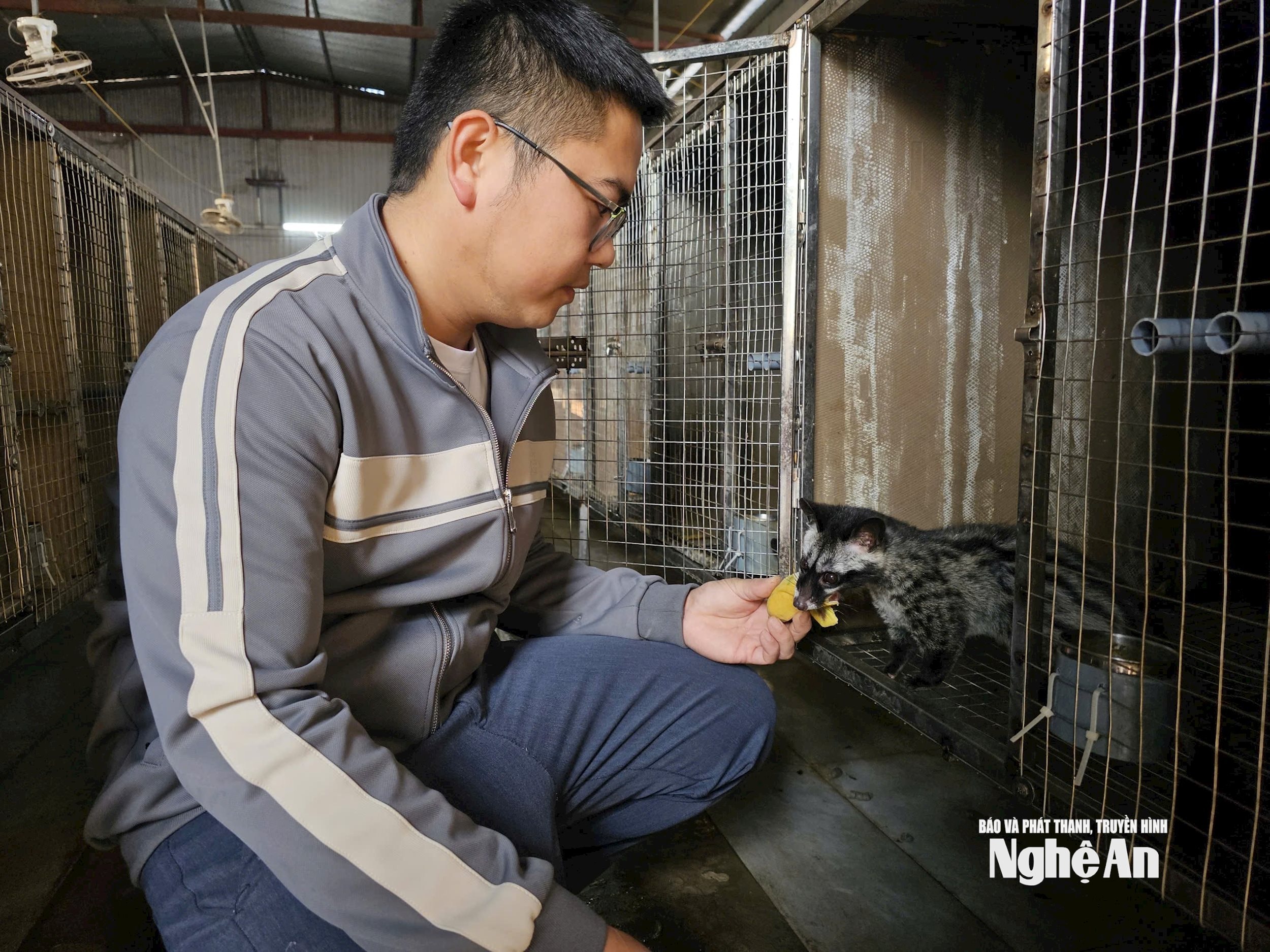
A model of commercial civet farming by farmer Le Minh Tu, Vinh Hung ward. Photo: TP.
With an area of over 1.8 hectares of tray seedlings, the model supplies approximately 37,000 trays of seedlings each season, meeting the needs for planting nearly 180 hectares of rice in the region. The synchronized application of seedling sowing machines, transplanting machines, and automatic irrigation systems significantly reduces labor costs, shortens production time, ensures timely planting, and simultaneously creates concentrated commercial rice farming areas, something that was difficult to achieve with the fragmented production methods of the past.
The emulation movement has also opened up new directions in livestock farming, especially among young farmers. The civet breeding model of Mr. Le Minh Tu (Vinh Hung ward) shows a clear shift from small-scale farming to planned, high-value production.
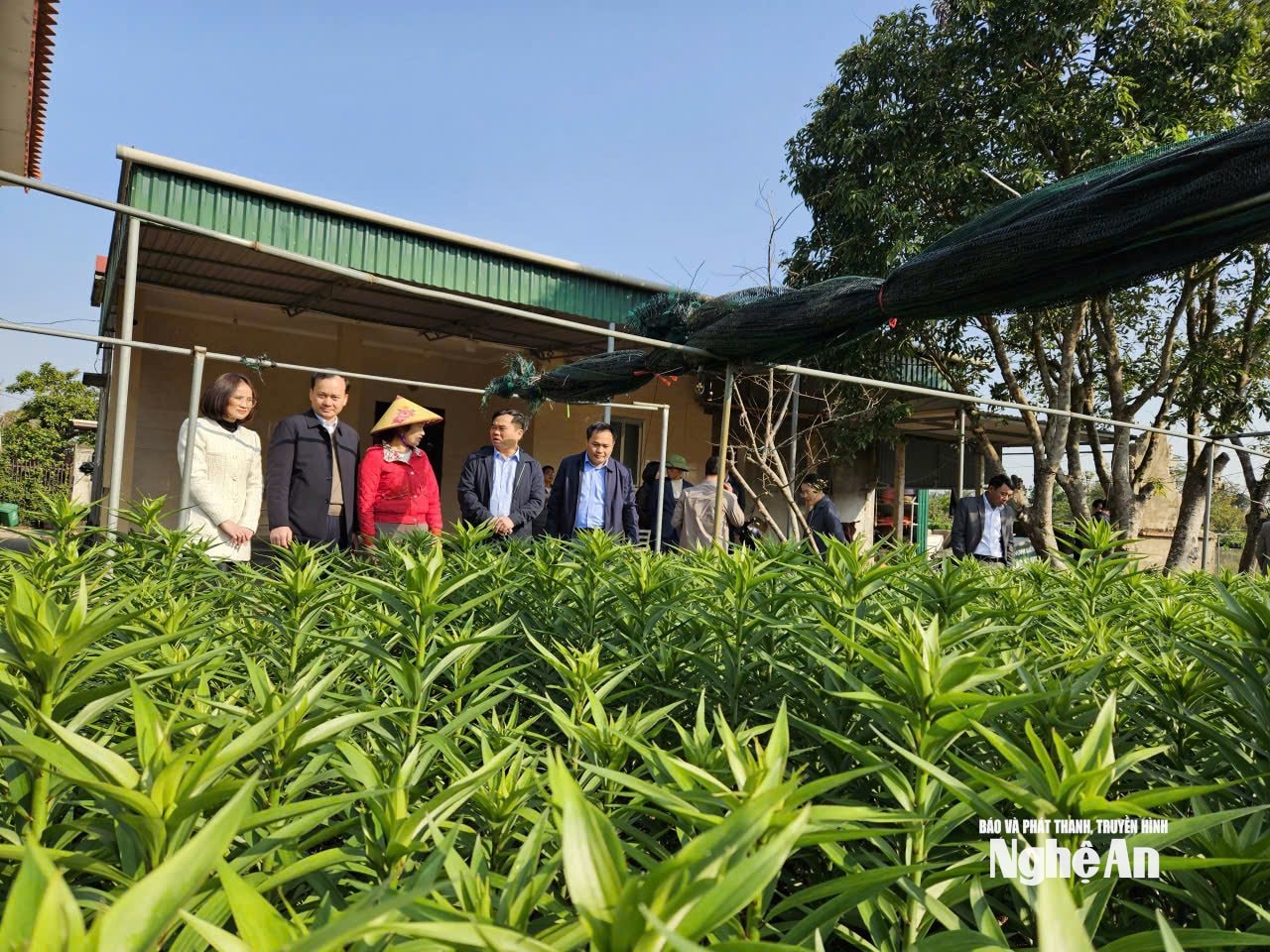
The delegation from the Provincial Farmers' Association visits a model of Tet flower cultivation in Vinh Hung ward. Photo: TP.
"
A highlight of the current movement is the emulation linked to innovative thinking, using economic efficiency and farmers' income as the benchmark. Annually, over 60% of member households register for the title of excellent producers and business operators; each year, 1,000 outstanding farmers receive training to improve their skills; and each local branch of the Association supports the development of at least two high-tech or value chain-linked economic models. Alongside this, the movement to develop the collective economy is implemented comprehensively, aiming to support the establishment of 20 cooperative groups and 5 agricultural cooperatives operating effectively each year.
Comrade Nguyen Viet Hung – Chairman of the Nghe An Provincial Farmers' Association
With a total herd of over 200 animals, including approximately 120 breeding animals already pre-ordered by customers, the model generates hundreds of millions of VND in revenue annually. Investing in enclosed barns, fully complying with legal regulations, and proactively learning and mastering techniques not only ensures stable output but also demonstrates that today's competition is not about quantity alone, but about the ability to grasp the market and develop an efficient and sustainable livestock farming model.
From that foundation of emulation, many new production models have emerged, and many farmers have boldly switched crops and livestock, formed production linkages, and gradually increased their income.
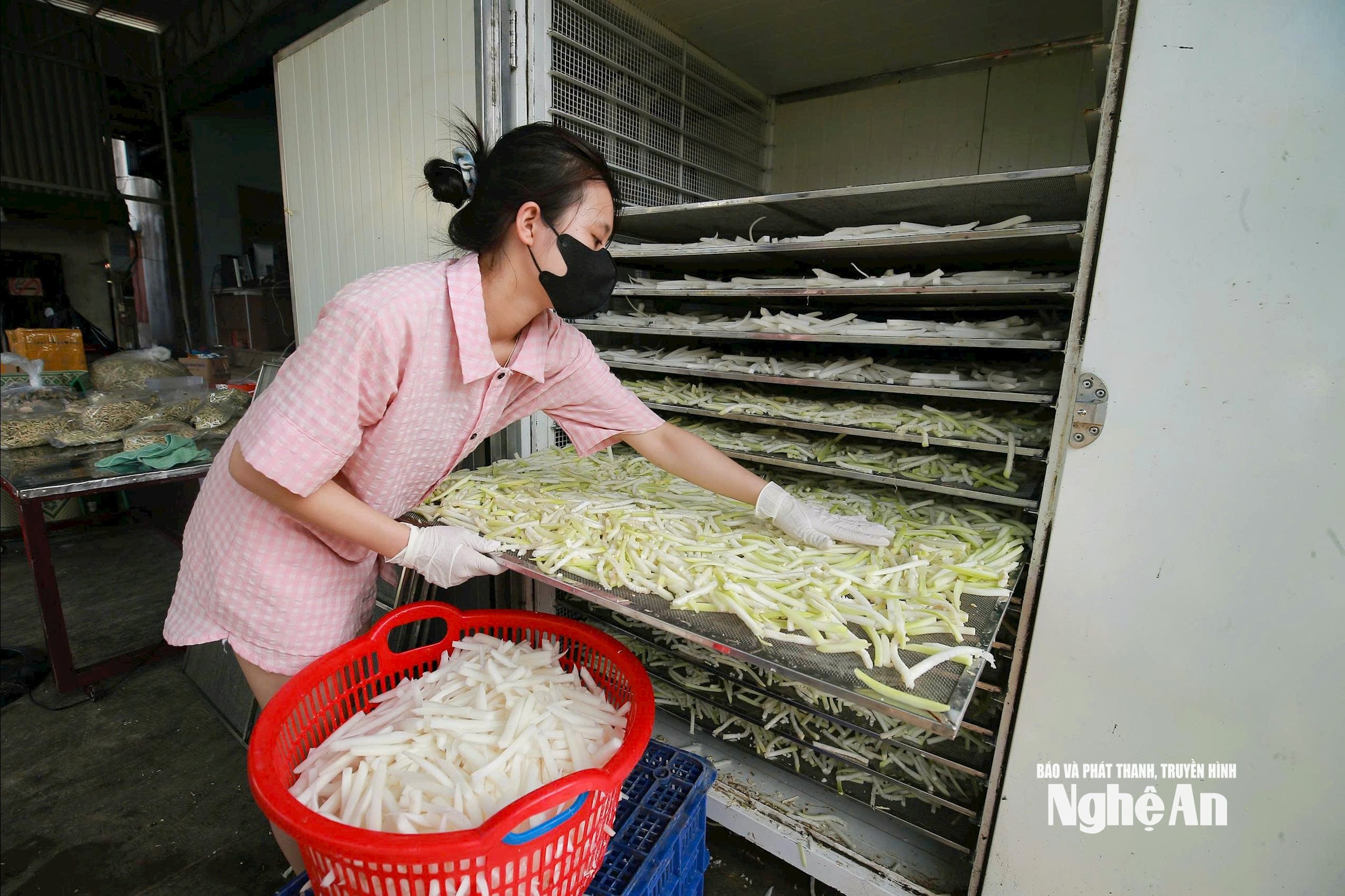
Many households are investing in processing and enhancing the value of agricultural products after harvest. Photo: TP
More importantly, the emulation movement is strengthening farmers' confidence in the province's rural economic development policies and directions, creating a solid foundation to enter the new term with a proactive, confident spirit and a desire to excel.