

Thanh Tien Paper Flower Village: A 300-year-old heritage site bursting with spring colors in the heart of the ancient capital of Hue.
Overcoming the harsh weather conditions of Central Vietnam, Thanh Tien paper flower village has maintained its craft for over 300 years, creating unique spiritual works of art for Tet (Lunar New Year).
While other vibrant flowers quickly fade, in the lower reaches of the Perfume River, there is a special type of flower that endures frost and heavy rain. This is the Thanh Tien paper flower, where artisans in Hue pour their hearts into lifeless sheets of paper, creating "everlasting" flowers that adorn ancestral altars throughout the year.
The enduring vitality of a 300-year-old traditional craft village.
Thanh Tien paper flower village, located in Phu Mau commune (now Duong No ward, Hue City), has a history of over 300 years. The craft of making paper flowers here originated from the tradition of valuing religious worship among the people of the ancient capital. In the harsh weather conditions of the late months of the year with prolonged drizzle, fresh flowers became a luxury and difficult to preserve their beauty, so the people of Thanh Tien village created paper flowers for offerings.
The philosophy of life in every flower branch.
The uniqueness of Thanh Tien paper flowers lies not in their mechanical craftsmanship but in their profound philosophical significance. Each branch typically includes three large flowers in the center representing the Three Cardinal Principles (Ruler, Parent, Teacher) and five smaller flowers surrounding them symbolizing the Five Virtues (Benevolence, Righteousness, Propriety, Wisdom, and Trust). For the people of Hue, displaying paper flowers is not just for decoration but also a way to remind their descendants of moral conduct and traditional values.
Meticulous handcrafted process
To create a high-quality flower branch, artisans must prepare from the twelfth lunar month of the previous year. The bamboo used for the branches must be mature, dried, whittled into small pieces, and treated with tree resin to prevent insect infestation. Notably, the villagers do not use chemical dyes but instead use colors extracted from plants such as leaves, fruit peels, and pine resin. This natural method ensures the flower colors are durable and do not fade in the harsh sunlight or high humidity of the ancient capital region.
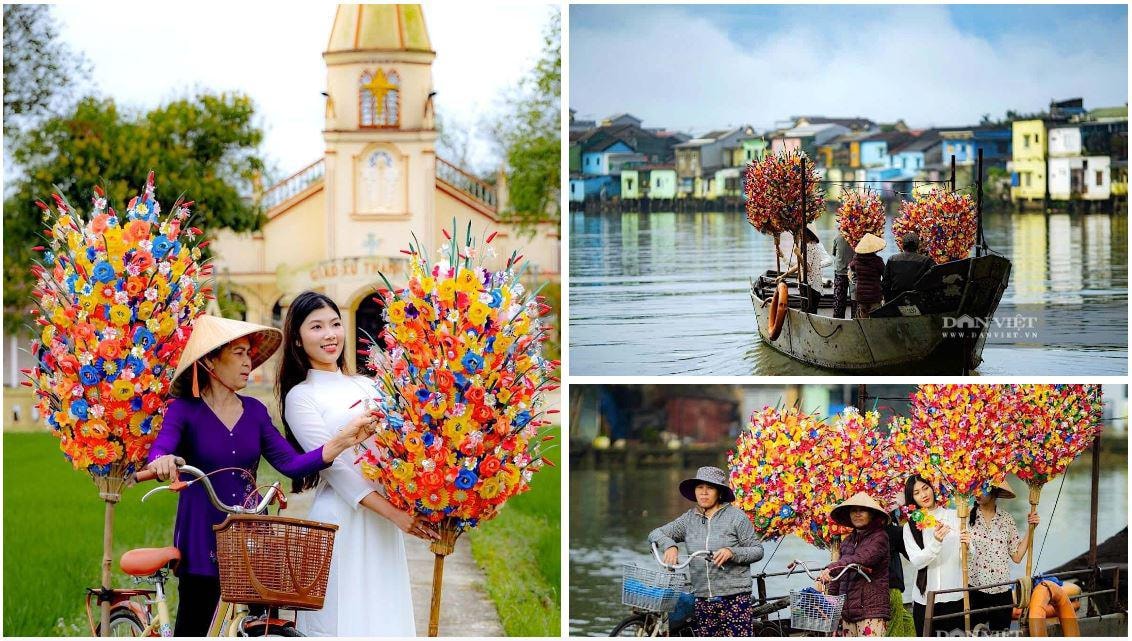
The technique of creating creases is also an important factor. The tiny wrinkles on the petals of lotus or chrysanthemum flowers are created using simple but precise wooden tools, giving them a lifelike, fluffy appearance.
Revival and international expansion
There was a time when the craft village seemed on the verge of extinction due to the dominance of cheap plastic flowers, but it has strongly revived thanks to the dedication of artisans like Mr. Than Van Huy in Duong No ward, Hue City. The creation of paper lotus flowers has brought Thanh Tien's reputation far beyond the borders of Vietnam.
Currently, Thanh Tien paper flowers are not only found on altars but also in tea ceremony spaces, festivals, and are even transported by tourists to the United States, France, and Japan. The product is also widely consumed in many major cities such as Hanoi, Ho Chi Minh City, Da Nang, and Hai Phong.
Thanh Tien paper flower village was officially recognized as a traditional craft village by the Thua Thien Hue Provincial People's Committee in 2013 and became a traditional craft village tourist destination in 2019, affirming its position as a vibrant cultural heritage in the ancient capital.