

14th National Congress: Strategic Choices on AI - A Breakthrough Opportunity for Vietnam
Assessing the significance of the 14th National Congress of the Communist Party of Vietnam, Professor Dr. Nguyen Van Tam, Head of the Department of Computer Science, Data and Artificial Intelligence (AI) at the Paris Polytechnic Institute (IP Paris) - one of Europe's leading training and research centers in high technology - believes that this is a pivotal moment in the country's development process.
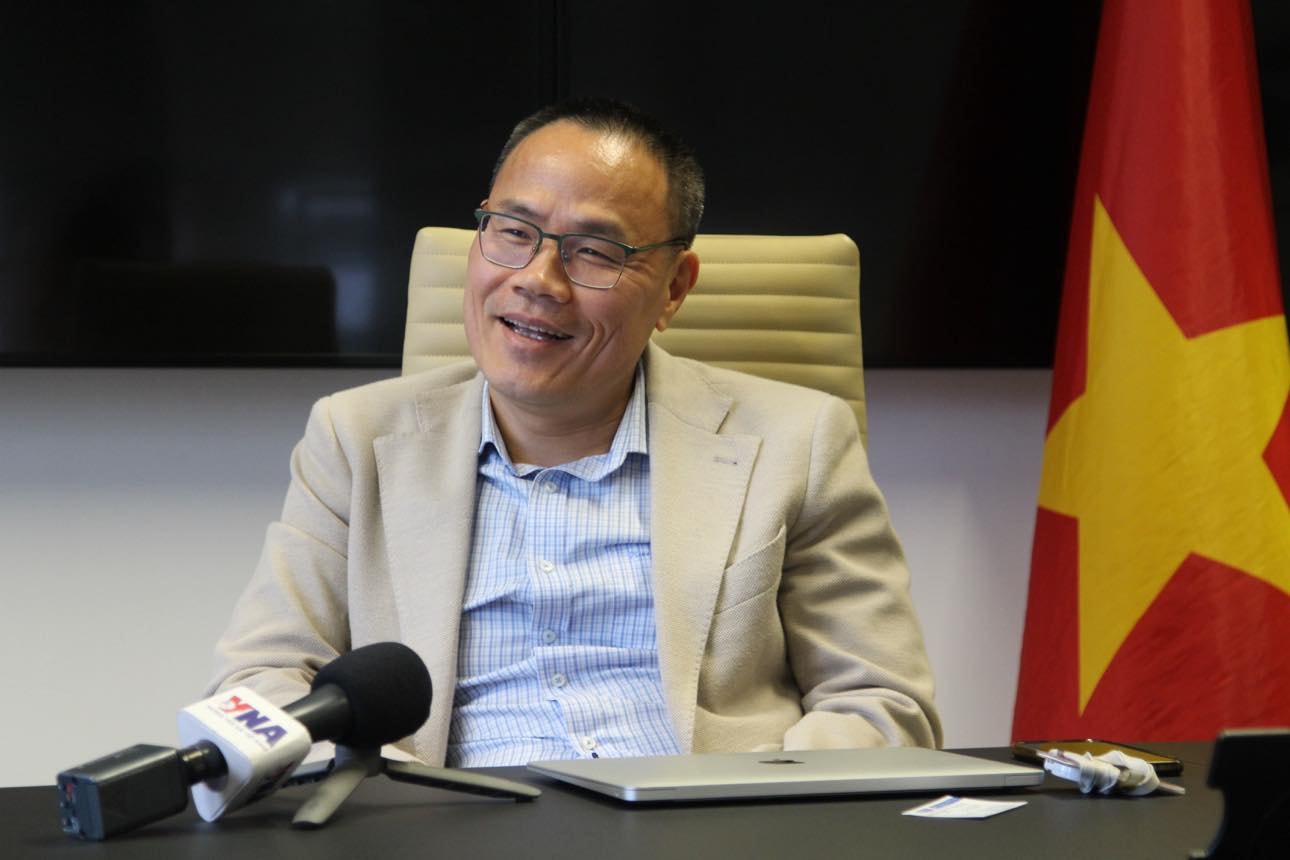
According to him, the message of a nation "rising to prominence" can only be realized when it is backed by clear goals, strong political determination, sound scientific methodology, and especially genuine and effective implementation capabilities. In that development landscape, science and technology, with AI at its core, play a crucial role. AI is not only a cutting-edge industry with high potential value, but also a foundation for boosting national competitiveness, helping Vietnam strengthen its self-reliance and establish its position in the new era.
AI: A key element in the era of "growth"
Speaking with a Vietnam News Agency (VNA) reporter in France, Professor Nguyen Van Tam stated that, with the convergence of objective and subjective conditions, Vietnam is facing a historic opportunity to create a genuine breakthrough based on science, technology, and innovation. The core issue, according to him, is not just identifying the opportunity, but choosing the right strategic priorities, concentrating sufficient resources, and persistently implementing each step systematically and scientifically, in order to transform the aspiration for development into concrete and sustainable results.
According to Professor Nguyen Van Tam, AI is no longer a standalone technology but has become a core technology, a fundamental technology, and a breakthrough technology of the 21st century. In the course of history, AI is considered a great turning point, on par with the invention of the printing press in disseminating knowledge, or the steam engine, electricity, and the internet in reshaping human productivity.
However, the impact of AI is far more profound and comprehensive, as it not only changes production methods and communication but also restructures how people think, learn, and work. Furthermore, AI is directly impacting cultural and social values, people's lives, and becoming a key factor in profoundly shifting the global geopolitical landscape.
Therefore, AI is becoming a central factor in strategic competition among nations. Today, a nation's strength and influence are not only measured by territory, population, or resources, but are increasingly linked to its technological capabilities, especially its ability to master foundational technologies such as AI. In this context, Professor Nguyen Van Tam considers the XIV National Congress's identification of science, technology, and innovation as key drivers of development to be a correct and timely strategic choice.
Strategy for mastering core technologies: Overcoming passive dependence and focusing on specialized areas.
However, according to him, having the right goals is only a necessary condition. The sufficient condition lies in the methodology and implementation capacity. An effective development strategy needs to be implemented in three clear steps: defining the right and sufficiently ambitious goals; building a scientific, systematic, and coherent methodology; and organizing effective implementation, in which people and mechanisms play a decisive role. If any of these three elements are missing, even the right strategy is unlikely to create a real breakthrough.
Professor Nguyen Van Tam believes that AI offers unique opportunities for developing countries, including Vietnam. Unlike many traditional industries that require large capital investments and long-term accumulation, AI is a field where the starting point gap between countries has not widened too much.
Regarding Vietnam, he emphasized its unique advantages such as a strong mathematical tradition, a diligent and persistent spirit, and a young generation capable of quickly absorbing new knowledge. These are fundamental factors that are very suitable for the development of AI – a field that demands solid mathematical thinking, high abstraction skills, and perseverance in research.
According to Professor Nguyen Van Tam, to take advantage of this, Vietnam needs to pay special attention to developing mathematics at a higher level, not just at the level of general mathematics or "trick" techniques, but aiming for foundational and advanced mathematics, linked to long-term thinking and strategic applications. With the right direction in education and training, Vietnam is fully capable of building a solid position on the world's AI map in the medium and long term.
A recurring theme emphasized by Professor Nguyen Van Tam is that AI development cannot simply rely on existing technologies and models from abroad, but must aim to master core technologies. According to him, within the next 10-20 years, if Vietnam sets clear goals, adopts a scientific approach, and perseveres, it can absolutely develop its own core AI technologies. The key is to correctly identify priority areas and avoid spreading resources too thinly.
Given limited resources, Professor Nguyen Van Tam believes that Vietnam should first focus on specialized fields where reliance on foreign technology poses significant risks. He cites examples of areas directly related to human health, such as healthcare, biodata, genetics, as well as safety and security issues.
According to him, data is a vital element of AI, while data about people and societies in each country has very different characteristics. Mechanically applying external models is not only ineffective but can also lead to unpredictable long-term consequences.
From an application perspective, Professor Nguyen Van Tam assesses that AI has enormous potential in the healthcare sector in Vietnam, especially in the context of an overloaded hospital system and limited healthcare human resources. According to him, if implemented correctly, AI can help solve many difficult problems, from diagnosis and treatment to healthcare system management. However, this is a field that needs to be approached with extreme caution, based on a solid scientific foundation and a clear ethical framework; it cannot be applied simply or blindly following trends.
Besides healthcare, Professor Nguyen Van Tam particularly emphasized the cultural and social aspects of AI development. As younger generations increasingly access knowledge through global AI systems, the risk of distortions in perceptions, values, and cultural identity cannot be underestimated. Therefore, AI development is not just a technological challenge, but also an interdisciplinary one, requiring the participation of experts in social sciences, humanities, and culture.
Combining the best of East and West: A groundbreaking approach.
A key point in Professor Nguyen Van Tam's discussion was his approach to AI from the perspective of the fundamental nature of human intelligence. According to him, AI is essentially a "mirror" reflecting human intelligence. Therefore, to develop AI profoundly, a thorough understanding of human cognitive, psychological, and behavioral mechanisms is necessary. He argued that modern Western science is very strong in researching and observing the external world, but this is not always the optimal method for exploring the inner world of human beings – a nearly closed system where observation can alter the very nature of the object.
From that perspective, Professor Nguyen Van Tam argues that the East, including Vietnam, possesses a philosophical and intellectual heritage accumulated over thousands of years. Many concepts that modern Western cognitive science is only just beginning to prove and systematize were actually approached by the East very early on. If Vietnam can harmoniously combine modern Western scientific methods with the intellectual essence of the East, it can open up new, groundbreaking approaches in AI research and development.
Training elite human resources and connecting intellectuals from around the world.
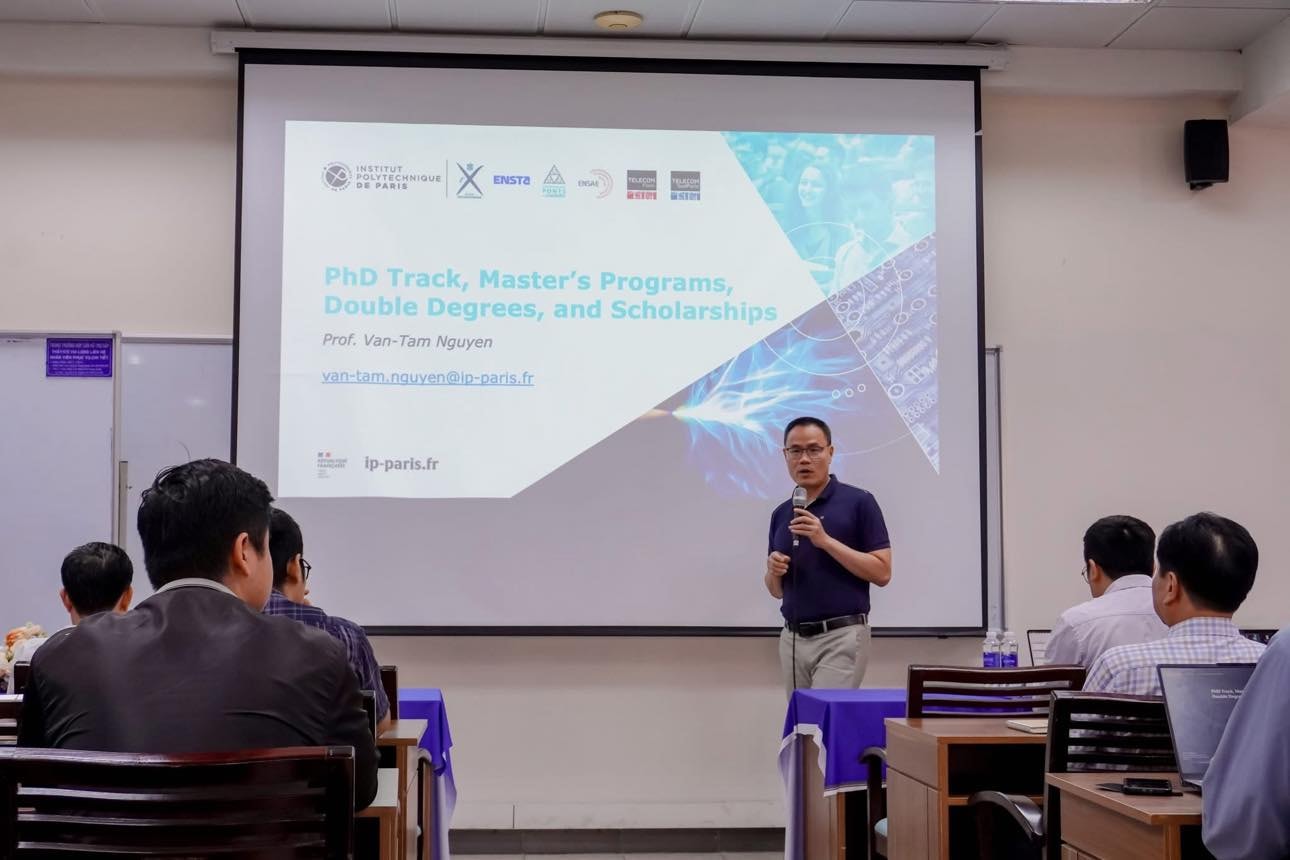
Discussing human resource training, Professor Nguyen Van Tam affirmed that this is the core foundation for developing cutting-edge technologies. According to him, mastering core technologies, especially AI, cannot rely solely on undergraduate training; a strong focus on postgraduate training, particularly at the master's and doctoral levels, is necessary. In fact, at leading global research and development centers for core technologies, the key research and development workforce consists of scientists with doctoral degrees.
Based on his personal experience, Professor Nguyen Van Tam suggested that Vietnam needs to closely integrate domestic and overseas training. Sending students and researchers abroad should be organized in groups, aiming to form teams with shared training backgrounds, working methods, and scientific thinking, thereby enhancing the effectiveness of cooperation upon their return to the country. At the same time, it is necessary to select truly excellent training institutions that encourage creative thinking and groundbreaking research.
Besides training, the working environment and physical and mental conditions are also key factors for scientists. Core technology research requires long periods of time, intense concentration, and a free academic space. Therefore, policies to attract and utilize talent should focus on creating a favorable working environment and ensuring basic living conditions so that scientists can fully dedicate themselves to research.
Regarding the mobilization of Vietnamese intellectual resources abroad, Professor Nguyen Van Tam believes the potential is enormous, while current forms of cooperation are much more flexible thanks to technological advancements. It's not necessary to require scientists to return to Vietnam to work full-time from the outset; instead, models of remote cooperation can be implemented, including co-supervising doctoral students, participating in teaching, developing training programs, and gradually expanding cooperation when conditions are ripe.
Overall, according to Professor Nguyen Van Tam, with the convergence of objective and subjective conditions, Vietnam is facing a historic opportunity to create a genuine breakthrough based on science, technology, and innovation. The remaining issue is choosing the right priorities, concentrating sufficient resources, and persistently implementing each step so that the aspiration for development can soon become a reality in the new era.